Yielding to Loaded Trucks
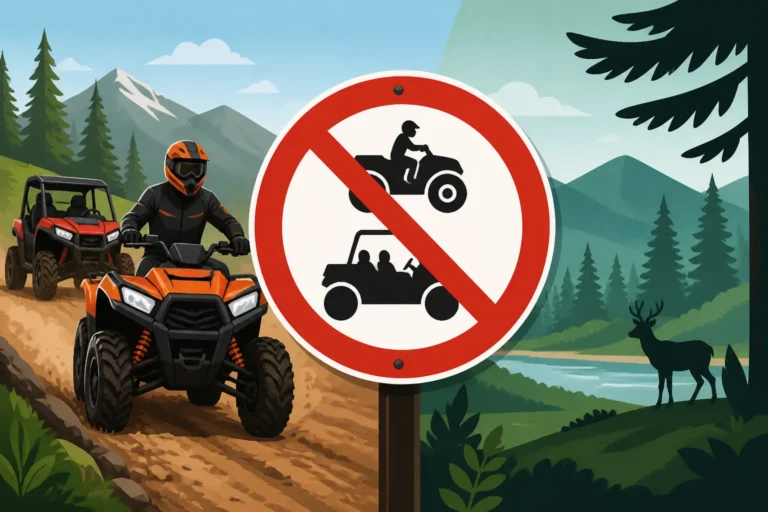
Riding an ATV or UTV in beautiful British Columbia offers some of the most exhilarating backcountry experiences imaginable, but it also comes with unique responsibilities, especially when you find yourself on a resource road. Encountering a fully loaded logging truck or industrial vehicle can be a truly heart-stopping moment if you're not prepared, and understanding how to safely yield to these titans of the forest is not just good practice—it's absolutely critical for your safety and for maintaining access for all riders. This guide will walk you through everything you need to know about navigating these shared spaces and ensuring you and everyone else gets home safely.
The Harsh Realities of BC's Resource Roads and Why Trucks Rule
It's easy to get caught up in the thrill of exploring vast forests and winding trails, imagining yourself alone with nature. However, many of the gravel roads we love to ride on, particularly those marked as Forest Service Roads (FSRs) or resource roads, are not just recreational trails. They are, first and foremost, active industrial arteries, the lifeblood of BC's resource economy. Ignoring this fundamental truth can put you in a very dangerous situation.
More Than Just Trails: A Working Landscape
Picture this: you're cruising down a scenic gravel road, the trees towering overhead, maybe a stream bubbling alongside. It feels like pure wilderness, a private playground. But in reality, that very road might be a critical haul route for timber, minerals, or other resources. Think of the enormous scale of these operations – entire mountainsides of logs being brought down, massive loads of ore extracted from mines, or heavy machinery being transported to remote worksites. These aren't isolated events; they're daily occurrences, sometimes around the clock, depending on the season and demand.
These roads are purpose-built for heavy-duty industrial traffic, not necessarily for the nimble, lightweight machines we love to ride. They are often unpaved, dusty, and can have limited visibility around corners or over hills. The sheer volume of industrial traffic can be astounding, especially during peak operating hours. While we cherish these roads for recreation, it's vital to remember that we are guests in a working environment, and our presence must not impede the flow of commerce or, more importantly, endanger ourselves or the industrial workers.
The Weight of Responsibility (and the Trucks Themselves)
When we talk about "loaded trucks," we're not talking about your buddy's pickup with a few bags of camping gear. We're referring to colossal vehicles—logging trucks, rock haulers, lowbed trailers carrying excavators—that can weigh upwards of 60,000 kilograms, sometimes much more, when fully laden. To put that in perspective, your average ATV might weigh 250-400 kilograms. The physics of a collision between these two types of vehicles are brutal and unforgiving.
A loaded truck, especially when traveling downhill or at speed, simply cannot stop on a dime. Its braking distance is exponentially longer than that of an ORV, and its ability to swerve or maneuver quickly is almost nonexistent. The drivers of these trucks are professionals, often operating on tight schedules, and they are acutely aware of the dangers these roads present. They expect, and frankly, need, recreational users to understand and respect the operational realities. The responsibility to avoid a collision overwhelmingly falls on the smaller, more agile vehicle—that's us, the ORV riders. Their cargo is their livelihood, and their safety, as well as yours, depends on your vigilance and willingness to yield.
Understanding the Rules of the Road (Resource Road, That Is)
While BC's Off-Road Vehicle Act and its associated regulations provide guidance on things like registration and basic operation, the specific rules for sharing resource roads with industrial traffic are often a blend of legal requirements, industry standards, and plain old common sense. It's not just about what's written in a book; it's about a culture of safety that keeps everyone safe.
Legal Expectations for ORV Riders
On [BC Forest Service Road Requirements], the law generally states that industrial traffic has the right-of-way. This isn't just a suggestion; it's a legal expectation designed to minimize risk and maintain the efficiency of essential industries. While you might have registered your machine and feel like you have every right to be there, your rights come with a heavy dose of responsibility. The law recognizes the inherent dangers posed by large industrial vehicles and places the onus on smaller vehicles to yield.
If an incident occurs, authorities will look closely at whether the ORV rider took all reasonable steps to avoid a collision. This includes being aware of your surroundings, driving defensively, and proactively yielding to larger vehicles. Ignoring these expectations can lead to severe consequences, including significant fines under the Off-Road Vehicle Act or other provincial statutes, and even criminal charges in the event of serious injury or fatality. Understanding [BC Riders Meeting a Logging Truck] is paramount, as specific etiquette and rules apply to these encounters. Remember, while some roads might feel abandoned, they are likely still under the jurisdiction of regulations that prioritize industrial operations.
The Unspoken Code: Respect and Awareness
Beyond the explicit legal requirements, there's an unspoken code of conduct on BC's resource roads. It’s a culture born of necessity and mutual respect among those who work and play in these environments. Industrial drivers operate heavy equipment in often challenging conditions, and they appreciate riders who demonstrate awareness and consideration. This "unspoken code" means being highly visible, predictable, and cooperative.
One of the most effective ways to adhere to this code is through communication. On many active resource roads, industrial traffic uses radios to call out their positions, direction of travel, and any hazards. [BC Resource Road Radio Practice] is not just for the pros; it's a vital tool for recreational riders as well. Knowing what channel is used in your area and having a radio – even a handheld one – can literally be a lifesaver. You can [Renting a Radio in a Small Town] for your trip, or invest in a robust ORV communication system that includes a radio. Learning how to [Calling Kilometres on a Channel] allows you to understand the flow of traffic and anticipate encounters, providing ample time to find a safe pull-out. This proactive approach is a cornerstone of safe riding on these shared roads.
Your Action Plan: How to Safely Yield
Being prepared is half the battle when it comes to safely navigating BC's resource roads. Developing a solid action plan, from pre-trip preparations to immediate responses, will significantly reduce your risk and make your riding experience much more enjoyable.
Pre-Trip Planning and Communication is Key
Before you even load up your ORV, good planning can make all the difference. Start by researching your intended route. Are there active logging operations in the area? Are there specific road closures or restrictions due to industrial activity? Websites for BC Wildfire Service, local forestry companies, or even regional ATV clubs often have up-to-date information on [Active Hauling and Closed Roads]. Knowing the lay of the land, including potential blind corners or narrow sections, will help you anticipate hazards.
Equipping yourself with the right communication tools is non-negotiable for serious resource road riding. As mentioned, a two-way radio capable of tuning into industry channels is invaluable. Even if you don't have one, consider using a high-quality GPS device with detailed topo maps, or apps that show resource road networks, so you can track your position and identify potential pull-out spots. For improved visibility, especially on dusty roads or in low light, consider upgrading your ORV's lighting. Products like powerful LED light bars or auxiliary lights from SuperATV can make a huge difference in how quickly industrial traffic spots you, giving both you and the truck driver more time to react. Always tell someone your route and expected return time, especially when heading into areas with limited cell service.
When You See (or Hear) Them Coming
This is the moment of truth. Your senses need to be on high alert.
Visual Cues:
- Dust Clouds: On dry days, a massive dust cloud appearing in the distance is almost always the first sign of an approaching heavy vehicle. Don't underestimate how quickly these vehicles can cover ground.
- Lights: In low light or fog, or on heavily shaded sections, you might spot headlights or marker lights before hearing the engine.
- Actual Sight: Once they're closer, you'll see the sheer scale of the vehicle. Do not hesitate.
Auditory Cues:
- Engine Noise: The deep rumble of a heavy diesel engine is distinct. Listen for it, especially when approaching crests or corners.
- Air Brakes: The distinctive hiss of air brakes can indicate a truck slowing down or staging.
- Radio Calls: If you have a radio tuned to the local resource road channel, you'll hear drivers calling out their location (e.g., "Logging truck at 15 km, heading down"). This is your golden ticket to early warning.
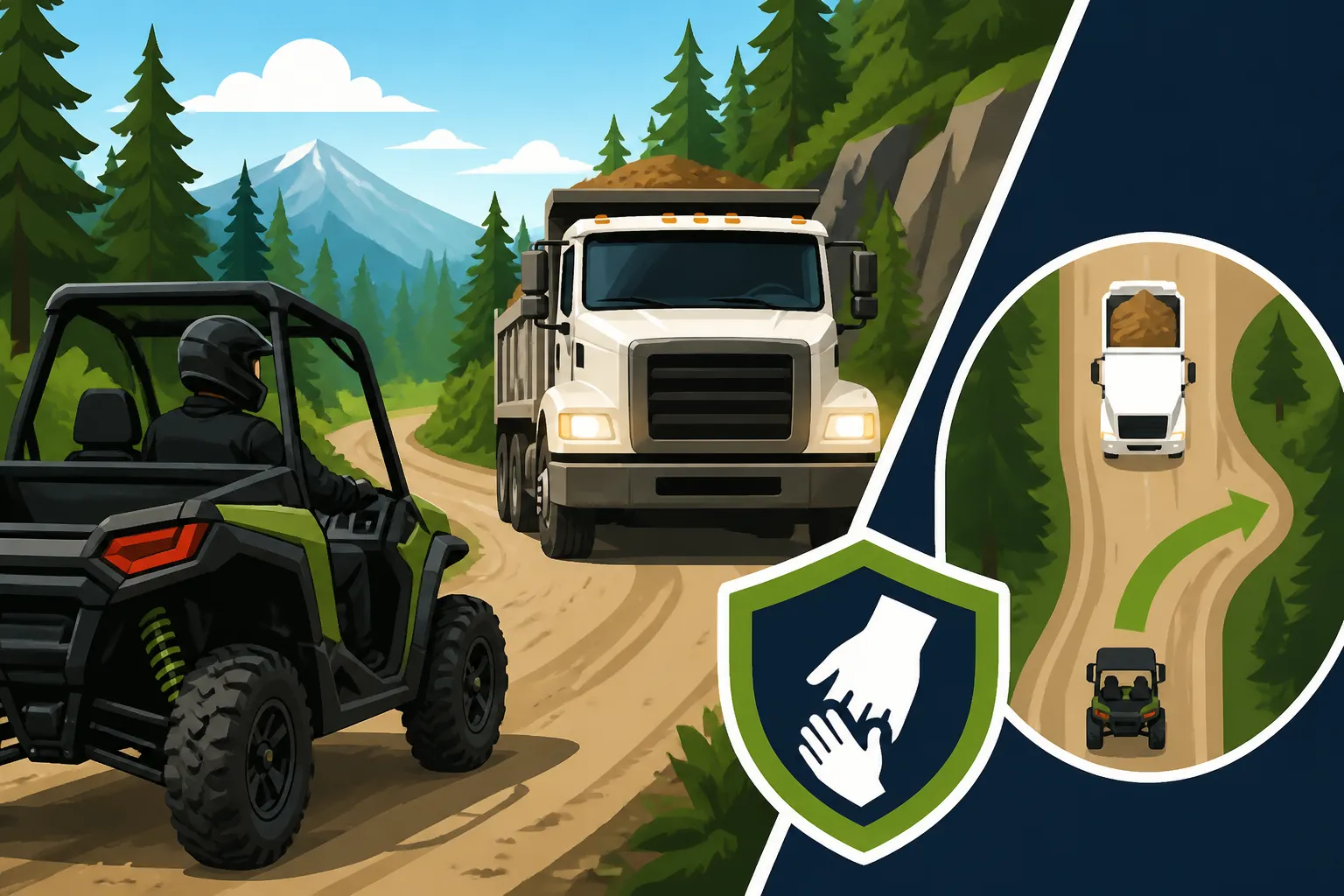
Your Immediate Actions: As soon as you detect an approaching industrial vehicle, your primary goal is to get out of its way safely and quickly.
- Slow Down: Immediately reduce your speed.
- Signal (if possible): If you have turn signals, activate the right one to indicate you're pulling over.
- Find a Safe Pull-Out: Look for the nearest wide spot, shoulder, or designated pull-out. This means getting completely off the traveled portion of the road. Don't just hug the edge; clear the entire lane. If possible, choose a spot where the truck driver will have a clear line of sight to you. Sometimes, this means reversing slightly to a better, wider section you just passed.
- Stop Completely: Bring your ORV to a full stop. Turn off your engine if you're going to be waiting for more than a few moments; this reduces noise and makes it easier to communicate.
- Face Traffic (Optional but Recommended): Some riders recommend turning your ORV slightly so your headlights (if on) are facing the oncoming truck, increasing your visibility.
- Stay Put: Do not move until the truck has fully passed.
Remember, patience is a virtue here. A few extra moments of waiting are a small price to pay for your safety and avoiding a serious incident. Always be mindful of [Due Care on a Blind Corner], and ensure your pull-out doesn't create a new hazard.
Making Eye Contact and Waiting for the "All Clear"
Once you've pulled over and stopped, try to make eye contact with the truck driver as they approach. A simple wave or nod acknowledges that you see them and are yielding. This small gesture helps build goodwill between recreational users and industrial operators. They're often scanning the road intently, and your clear signal that you're safely out of the way provides them with valuable peace of mind.
Wait until the entire truck and any trailers have completely passed your position. Don't pull out too early, especially if there's a dust cloud behind them that could obscure your vision or their rear-view mirrors. If there are multiple trucks in convoy, wait for all of them to pass before re-entering the road. This is why having that radio is so helpful – drivers will often call out "convoy of two," or "last truck," letting you know when it's truly clear. Once the air is clear and the road is empty, proceed cautiously, always scanning for any other unexpected traffic. The small courtesy of yielding completely and clearly helps maintain positive relationships and ensures continued access to these magnificent areas.
The Consequences of Not Yielding: More Than Just a Fender Bender
Ignoring the rules of the road and failing to yield to loaded trucks carries a heavy price, far beyond a simple inconvenience. The repercussions can range from devastating personal injury to legal headaches and even threaten the future of ORV access on these vital routes.
Catastrophic Accidents and Personal Safety
Let's be blunt: when an ATV or UTV collides with a loaded logging truck, the ORV and its occupants stand virtually no chance. The weight, momentum, and sheer size difference mean that even a low-speed impact can be catastrophic. We're talking about severe injuries, permanent disabilities, and fatalities. This isn't just about property damage; it's about lives. Imagine the grief and trauma for your family, the truck driver, and the emergency responders. It’s a preventable tragedy.
The physics are undeniable. A fully loaded truck takes a massive distance to stop, often hundreds of feet, especially on gravel or downhill. If you suddenly pull out, misjudge its speed, or fail to yield, the truck driver has very little recourse. Their options for evasive action are minimal due to the vehicle's size and the nature of the road. Your personal safety, and the safety of any passengers, should be your absolute top priority, and that means respecting the power of these industrial machines by giving them an undisputed right-of-way.
Legal Ramifications and Damage to Your Reputation
Beyond the physical danger, there are significant legal and financial consequences for failing to yield. If you're involved in an accident where you were clearly at fault for not yielding, you could face hefty [BC Fines for Careless Riding], potential criminal charges depending on the severity of the incident, and significant liability for any damage to the truck or injuries to the driver. Your insurance might not cover you, leaving you personally responsible for enormous costs.
Furthermore, these incidents reflect poorly on the entire ORV community. Each preventable accident strengthens the argument for tighter restrictions or even outright bans on recreational vehicles on resource roads. Public perception matters, and a reputation for recklessness can lead to a loss of access for everyone. Showing respect for industrial traffic isn't just about avoiding a ticket; it's about demonstrating responsible recreation and safeguarding access for future generations of riders. Issues like [Posted Restrictions on a Road] can often stem from a history of irresponsible behavior.
Protecting Access for All Riders
Every time an ORV rider acts irresponsibly on a resource road, the ripple effect impacts the entire community. Industrial operators, who rely on these roads for their livelihood, become understandably frustrated and may advocate for stricter regulations. This can lead to increased [BC Motor Vehicle Prohibitions Explained], road closures, or more stringent permitting processes for recreational users. What might seem like a minor oversight or a moment of impatience can jeopardize access to vast networks of trails and riding areas that we all cherish.
The continued enjoyment of BC's backcountry for ATV and UTV enthusiasts depends on a collective commitment to safety and responsible conduct. By consistently yielding to loaded trucks, communicating effectively, and riding with awareness, we help maintain a positive relationship with industrial stakeholders and ensure that these incredible landscapes remain open for everyone to explore responsibly. It's a small act with profound implications for the future of our sport.
| Feature | ORV (ATV/UTV) | Loaded Industrial Truck (e.g., logging truck) |
|---|---|---|
| Weight | ~250-1000 kg (relatively light) | ~20,000-60,000+ kg (extremely heavy) |
| Braking | Quick and agile braking | Very long braking distances, especially downhill |
| Maneuverability | Highly agile, can easily swerve/pull over | Limited maneuverability, wide turning radius |
| Visibility | Smaller profile, harder to see | Large profile, often has many lights for visibility |
| Purpose | Primarily recreational | Essential industrial transport, time-sensitive |
| Right-of-Way | Expected to yield to industrial traffic | Implied right-of-way on resource roads |
| Impact | High risk of severe injury/fatality in collision | Significant damage, potential for injury/liability |
Disclaimer
This article is for general informational purposes only and does not constitute professional advice. Laws, prices and regulations vary by location and change over time. Consult a qualified professional for guidance on your specific situation.