What a Violation Ticket Actually Costs
Ah, the dreaded violation ticket. It's a sinking feeling, isn't it? You're out enjoying the stunning BC backcountry on your quad or side-by-side, maybe pushing your limits a little, or perhaps just unaware of a specific regulation, and then you see those flashing lights. Suddenly, your fun day turns into a stressful encounter, and you're left wondering not just about the immediate fine, but what that piece of paper really means for your wallet and your riding future. This guide is here to shed light on what a violation ticket actually costs you in BC, going far beyond just the dollar amount written on the ticket itself.
The Real Cost of an ORV Violation Ticket in BC: More Than Just a Fine
When you receive a violation ticket for an off-road vehicle (ORV) in British Columbia, it's easy to focus solely on the number staring back at you. We've all been there, mentally calculating how much less gas we'll buy, or what piece of gear we'll have to put off purchasing. But the truth is, the financial sting of an ORV violation ticket often extends far beyond that initial stated fine. There are administrative penalties, potential court costs, and even the very real risk of your machine being seized. It's not just about a single payment; it's about understanding the cascading effects that can hit your budget and your ability to enjoy the trails you love.
Consider a situation where you're riding on Crown land without your [BC Riders Must Carry the Certificate] and [BC Riders Must Carry Photo ID]. An officer stops you. Not having these documents on hand is a relatively common infraction, and while the initial fine might seem manageable, it's a stark reminder of the importance of being prepared. This isn't just about an officer having a bad day; these rules are in place to ensure accountability and safety across our vast provincial trail networks. The intent behind the Off-Road Vehicle Act and its associated regulations is to ensure that everyone who ventures out knows the rules and is traceable if an incident occurs.
Moreover, the "cost" can also be measured in lost time and convenience. If you have to spend hours dealing with the aftermath, whether it's going to court, contacting ICBC, or even retrieving a seized machine, that's time you could have spent riding, working, or with family. It’s a significant disruption to your life, and that kind of inconvenience certainly has a hidden price tag. Think about the peace of mind you lose, the uncertainty that hangs over your head until the matter is resolved. It’s a real burden, and understanding the full scope of potential penalties can help you avoid them in the first place.
Common ORV Violations and Their Potential Financial Impact in BC
British Columbia has specific regulations governing off-road vehicles, and understanding them is crucial to avoiding tickets. Many violations stem from seemingly minor oversights or a lack of awareness, but they all carry a financial consequence. The Off-Road Vehicle Act in BC has been mandatory since [BC Registration Became Mandatory in 2015], meaning you can no longer plead ignorance about needing to register your machine.
Let's look at some of the most frequent reasons riders get ticketed:
Unregistered ORV Operation
This is arguably one of the most common tickets issued, and it’s a big one. Since 2015, every ORV operated on Crown land (which includes most recreational trails and [BC Forest Service Road Rules for ORVs]) must be registered with ICBC. Failing to do so can result in a significant fine. It’s not just a small slap on the wrist; this is seen as a foundational requirement for responsible ORV use. An unregistered machine essentially flies under the radar, and the province wants to ensure all machines operating in public areas are accounted for. This isn't just about a one-time payment for [BC ORV Registration You Pay Once]; it's about avoiding a much larger penalty down the line.
Imagine you just bought a used quad from a private seller, and you’re excited to hit the trails. You might think, "Oh, I'll get the registration done next week." But then, on your first ride, a Conservation Officer stops you. If that machine isn't registered, you're facing a fine. The officer isn't going to care that you intended to register it; the rule is about current compliance. So, before you even think about heading out, make sure your machine has its [BC ORV Number Plates and Decals] properly displayed and that you have your [BC's Certificate of Registration Explained] on hand. This small step can save you a significant amount of money and stress.
Careless Operation and Reckless Riding
This category is broad and covers a range of behaviors that put yourself, others, or the environment at risk. Think about riding too fast for conditions, performing stunts in inappropriate areas, or riding in a manner that shows a blatant disregard for safety. [BC Fines for Careless Operation] are not minor. These types of infractions are taken very seriously because they often lead to accidents, injuries, or environmental damage. Conservation Officers and RCMP are empowered to issue tickets for these behaviours, and the fines can be substantial.
For example, tearing through a sensitive riparian area, creating excessive erosion, or endangering wildlife could easily fall under careless operation. Even making excessive noise with a modified exhaust could draw attention and a ticket. While aftermarket parts like those from SuperATV can enhance performance and durability, riders must ensure any modifications, especially to exhaust systems or lighting, comply with BC's regulations. An exhaust system that exceeds sound limits, for instance, could lead to a fine, negating any perceived performance benefit. It's always best to check local bylaws and provincial regulations before making modifications that could impact compliance.
Non-Compliance with Equipment or Safety Rules
British Columbia has specific requirements for ORV equipment, especially when riding on Crown land or Forest Service Roads. This includes everything from proper lighting and [BC Spark Arrestor Rules and Fines] to [BC Helmet Law Covers Every Rider]. Failing to meet these standards can result in a ticket. For instance, if you're riding at dusk or dawn and your ORV doesn't have the required lights, you could be fined. Similarly, riding a side-by-side without seatbelts engaged, or a quad without an approved helmet, puts you at risk of a penalty.
Consider a scenario where you've installed some powerful aftermarket lights, but they don't meet the specific brightness or beam pattern regulations for BC, or perhaps your spark arrestor is missing or not properly maintained. An officer conducting a routine check might identify these issues. These types of tickets are issued not just for safety, but also for environmental protection. For example, a missing spark arrestor significantly increases the risk of [BC Wildfire Penalties for Riders], a concern BC takes incredibly seriously. Even a small piece of missing gear can lead to a fine.
Here's a quick look at common violations and their general cost implications:
| Violation Type | General Cost Implications | Potential Other Consequences |
|---|---|---|
| Unregistered ORV | Significant fine | Machine seizure, inability to continue ride |
| Careless/Reckless Operation | Substantial fine | Machine seizure, court appearance, license points, driving prohibitions |
| No Valid Driver's Licence (on FSR) | Moderate to significant fine | Impoundment of machine, license points |
| No Helmet (ride-astride) | Moderate fine | Safety risk, potential for injury |
| No Spark Arrestor | Significant fine | Fire hazard, large administrative penalties if fire results |
| Not Carrying Certificate/ID | Minor to moderate fine | Delay, inconvenience, potential for further checks |
| Exceeding Sound Limits | Moderate fine | Bylaw enforcement, community complaints |
| Riding in Prohibited Area | Moderate to significant fine | Environmental damage fines, machine seizure |
| Impaired Operation | Extremely severe fines & penalties | Criminal charges, license suspension, jail time, machine seizure, lifelong record |
Beyond the Ticket: Administrative Penalties, Seizures, and Court Fines
The immediate fine on a violation ticket is often just the beginning. Depending on the severity and nature of the offense, you could be facing a whole host of additional consequences that escalate the financial and personal cost significantly. These "hidden" costs can be far more impactful than the initial ticket amount, leading to substantial expenses and long-term implications.
Administrative Penalties and Environmental Damage Fines
Some infractions, particularly those related to environmental damage or safety hazards, can trigger administrative penalties that are separate from the initial ticket. For example, if your actions lead to significant damage to Crown land, you could face hefty fines from agencies like the Ministry of Forests, Lands, Natural Resource Operations and Rural Development. These aren't minor violation tickets; these can be administrative sanctions ranging into the thousands, or even tens of thousands, of dollars depending on the extent of the damage. This applies to things like riding in closed areas, damaging sensitive ecosystems, or causing erosion that impacts waterways.
[BC Wildfire Penalties for Riders] are a particularly stark example of these higher-level penalties. If your ORV is found to be responsible for starting a wildfire—perhaps due to a missing spark arrestor, or by riding in a fire-ban area—the financial penalties can be staggering, potentially reaching hundreds of thousands or even a million dollars, in addition to potential jail time. This isn't fear-mongering; it's the reality of the province's commitment to protecting its forests. The administrative penalties here are meant to recover the immense costs of fighting fires and rehabilitating damaged landscapes.
Machine Seizure and Impoundment
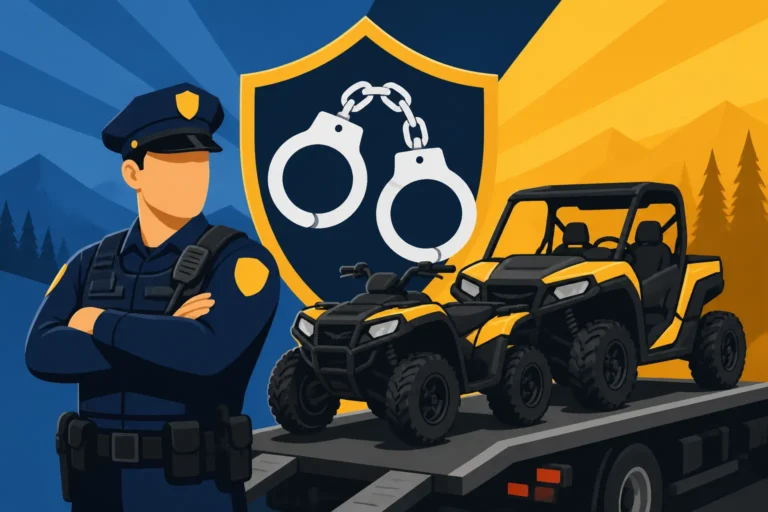
One of the most immediate and impactful consequences, beyond the fine itself, is the [BC Seizure Powers Under the ORV Act]. Law enforcement officers have the authority to seize your off-road vehicle for certain serious offenses. This could happen for things like operating an unregistered machine, severe careless operation, or, most critically, [BC Impaired Riding Penalties]. If your machine is seized, you're not only out your ride for an indefinite period, but you'll also incur towing and storage fees. These fees add up quickly, sometimes costing hundreds or even thousands of dollars before you can even attempt to get your machine back.
Think about it: your machine gets towed from a remote staging area, stored at an impound lot, and every day it sits there, the bill grows. This can easily double or triple the effective cost of your initial violation, not to mention the monumental inconvenience and frustration. It's a powerful deterrent designed to make riders think twice about breaking serious rules. And when it comes to impaired riding, the consequences are even more severe, linking directly to criminal charges that affect far more than just your ability to ride an ORV. This is where investing in quality maintenance and ensuring your machine is always compliant is critical. A reliable SuperATV winch, for instance, might help you out of a sticky situation on the trail, but it won't help you retrieve a seized machine from an impound lot if you've broken serious laws.
Court Fines and Criminal Charges
For more serious offenses, or if you choose to dispute a ticket and are unsuccessful, the matter might move to court. Here, fines can be significantly higher than those initially listed on a violation ticket. Beyond the fine, you could face court costs, victim surcharges, and even more severe penalties like driving prohibitions or, in extreme cases (such as impaired operation), criminal charges that can lead to jail time. A criminal record for an ORV offense has lifelong implications, affecting employment, travel, and personal freedoms.
This escalation underscores the seriousness with which some ORV infractions are treated. What starts as a simple violation ticket can, through a series of choices or the gravity of the offense, transform into a legal battle with far-reaching consequences. It's a reminder that respecting the rules isn't just about avoiding a small fee; it's about protecting your freedom, your finances, and your future.
Disputing a BC ORV Violation Ticket and Understanding Non-Compliance
So, you've received a ticket and you believe it was issued unfairly, or perhaps there's a misunderstanding of the circumstances. You have the right to dispute the violation ticket, but it's important to understand the process and the potential outcomes. This isn't a decision to take lightly, as a dispute requires your time and effort, and an unsuccessful dispute can lead to even higher costs.
How to Dispute a Violation Ticket
If you decide to dispute a ticket, you generally have a specific timeframe (often 30 days) to indicate your intention to do so. This typically involves marking the "dispute" option on the ticket and submitting it to the address provided, or through an online portal if available. You will then be notified of a court date. At court, you'll have the opportunity to present your case, explain your side of the story, and potentially call witnesses. The officer who issued the ticket will also be present to provide their account.
It's crucial to be prepared. Gather any evidence you have, such as photos, videos, or witness statements. Clearly articulate your argument and focus on factual discrepancies or legal arguments, rather than just emotional appeals. For example, if you received a ticket for not having your registration certificate, but you can prove it was in your secure pack just out of reach, or that you had it digitally, that might be a basis for a dispute. However, simply saying you didn't know the rule is generally not a valid defense in court.
The Risks of Disputing (and Losing)
While you have the right to dispute, there are risks involved. If you dispute a ticket and the court finds you guilty, you could face the original fine plus additional court costs, which can increase the overall financial burden. Furthermore, you've spent valuable time preparing and attending court, time that could have been used for other pursuits. It's a balancing act: is the potential saving of the fine worth the time, effort, and risk of a higher penalty?
In some cases, a prosecutor might offer a reduced fine or an alternative resolution if you can demonstrate genuine mitigating circumstances or a commitment to rectifying the issue (e.g., getting registered immediately after an unregistered ticket). However, this is not guaranteed, and you should always prepare for a full hearing.
Consequences of Ignoring a Ticket
Ignoring a violation ticket is perhaps the worst course of action you can take. If you don't pay the fine by the due date and don't dispute it, the ticket will enter default. This typically results in:
- Increased Fines: The initial fine might be increased, and additional penalties for late payment can be applied.
- Collections: The outstanding fine may be sent to a collections agency, negatively impacting your credit score and potentially leading to further collection fees.
- Driving Restrictions: For some ORV offenses, particularly those tied to your driver's licence, an unpaid ticket can lead to your driver's licence being suspended or renewed under conditions, even if the offense wasn't on a public road.
- Machine Registration Issues: Unpaid fines related to your ORV can sometimes create hurdles when you attempt to register another machine or conduct other transactions with ICBC.
The system is designed to ensure compliance, and simply hoping a ticket goes away is a surefire way to escalate a manageable problem into a much larger, more expensive headache. It's always best to address a ticket promptly, either by paying it or formally disputing it within the stipulated timeframe. Understanding these processes ensures that you're making informed decisions about your riding, your finances, and your legal responsibilities.
Disclaimer
This article is for general informational purposes only and does not constitute professional advice. Laws, prices and regulations vary by location and change over time. Consult a qualified professional for guidance on your specific situation.