Why You Need a Driver’s Licence on Pavement
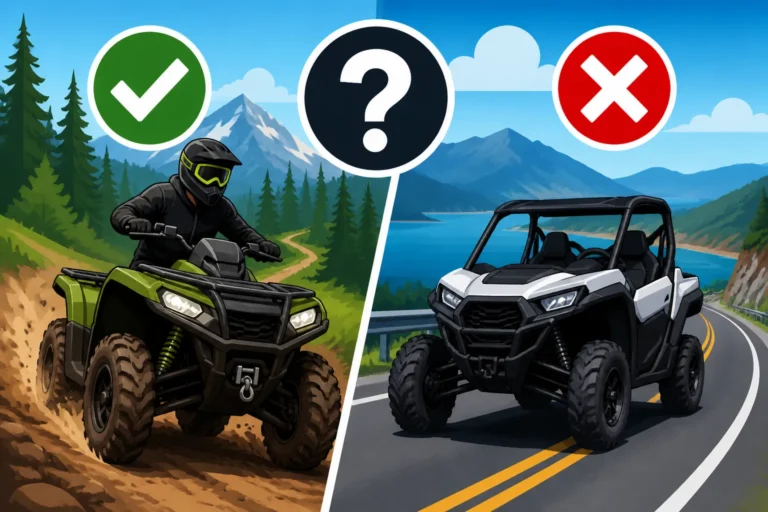
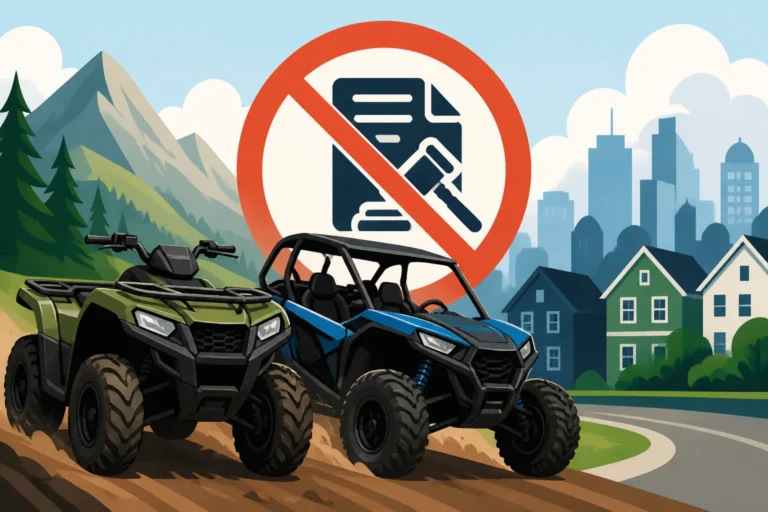
There's a common misconception among off-road vehicle enthusiasts in British Columbia: that an ATV or UTV is just an "off-road" machine, and the rules of the road don't really apply to it, even if you're just quickly crossing a paved section. This thinking can lead to serious trouble, including hefty fines and even your machine being impounded. This guide will unpack exactly why a valid driver's licence is an absolute necessity if your off-road machine touches any paved road in BC, explaining the legal distinctions and what you need to know to stay on the right side of the law.
The Core Rule: Why a Driver's Licence is Required on Pavement in BC
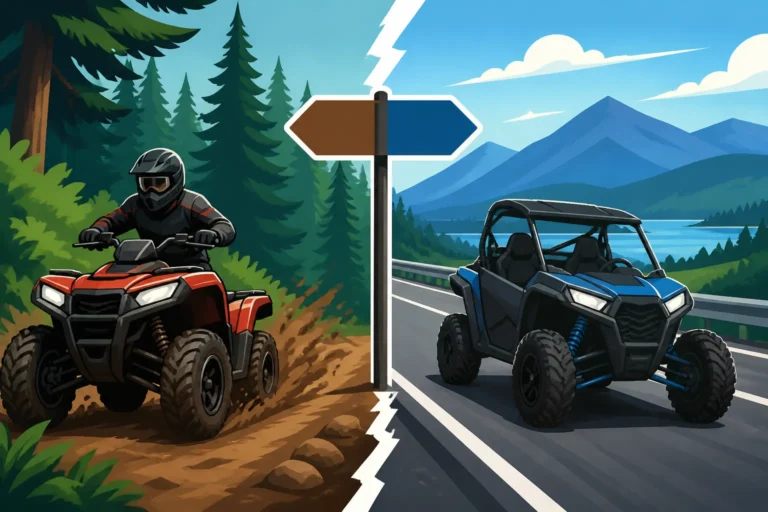
It's easy to assume that because your ATV or UTV is designed for trails and rough terrain, the standard rules of the road don't apply when you're just hopping from one gravel road to another across a small patch of blacktop. But this assumption is a trap many riders fall into. The truth is, once your tires hit pavement in British Columbia, you're generally entering the domain of the Motor Vehicle Act, and that brings with it a whole new set of responsibilities – chief among them, the requirement for a valid driver's licence.
The moment your machine is on a "highway" – and this includes virtually all paved roads, whether they're city streets, rural routes, or even parking lots connected to them – it is treated, for all intents and purposes, like any other motor vehicle on that highway. This fundamental shift in legal classification is where the requirement for a driver's licence stems from. It's not about what your machine is (an ORV), but where it is (on a highway). The BC government has clearly established that [BC Has No Street-Legal Path for an ATV], meaning you can't simply register it and drive it like a car. However, that doesn't exempt you from licence rules when you briefly touch pavement.
This can be a frustrating reality for riders who just want to get from one trail network to another and might only have a few metres of pavement to navigate. You might have your ORV properly registered and displaying its [BC ORV Number Plates and Decals], and you might be an experienced rider, but the law doesn't make exceptions for short distances or good intentions when it comes to licence requirements on a highway. The provincial framework clearly distinguishes between operating an ORV on Crown land or designated trails under the Off-Road Vehicle Act and operating any vehicle on a public road under the Motor Vehicle Act. The moment you transition, even briefly, the rules transition with you.
Understanding the "Highway" Definition in BC
The term "highway" in BC's Motor Vehicle Act is much broader than just a multi-lane freeway. It encompasses almost any public road or thoroughfare, and understanding this broad definition is crucial for ORV riders. It includes streets, roads, lanes, bridges, and even parking areas intended for public use that are accessible from these roads. So, if you're pulling your side-by-side out of your driveway and rolling down the asphalt street to load it onto a trailer, you're on a "highway" in the eyes of the law.
This expansive definition is a key point of confusion for many. Riders often think of "highways" as places they would never take their quad, like major arteries or freeways. However, even a quiet residential street, a paved road through a rural town, or the paved section of a logging road that connects to a provincial highway all fall under this definition. Unlike [BC Crown Land Triggers the Registration Rule] or the rules that govern [BC Forest Service Road Rules for ORVs], which have their own specific regulations, anything paved and publicly accessible is generally a "highway" where standard motor vehicle rules apply.
Imagine you're at a staging area for a popular trail network, like Bear Creek OHV near Kelowna. You've parked your truck and trailer, unloaded your ATV, and need to cross a short paved section to reach the gravel access road leading to the trails. That short paved section, even if it feels like part of the staging area, is often considered part of the "highway" system. This means that for those few moments, you're subject to the Motor Vehicle Act, and that demands a valid driver's licence. Ignoring this distinction can lead to immediate consequences, regardless of how brief your time on the pavement might be.
Limited Exceptions: When an ORV Can Touch Pavement (and the Licence Rules)
While the general rule is "no street-legal ORVs on highways," there are very specific, limited circumstances where an ORV can legally operate on a paved road, but even then, a driver's licence is required. These aren't loopholes for regular riding; they're narrow allowances for necessary movements.
Crossing a Highway
The most common scenario is crossing a paved highway. The Off-Road Vehicle Act allows for an ORV to cross a highway at an intersection where traffic is controlled by a stop sign or traffic light. This isn't permission to ride along the highway, but purely to go from one side to the other. Even during this brief act of crossing, the operator must hold a valid driver's licence. It's a critical detail often overlooked. For example, [BC Rules for Crossing a Highway] clearly stipulate that you must come to a complete stop, yield to all traffic, and proceed safely. But just as importantly, the person at the controls needs to be licensed.
Many riders, especially those who come from areas with more permissive ORV laws, find this requirement frustrating. They might think, "I'm not driving on the road, I'm just getting across!" But the moment you enter that intersection, you're considered a driver of a motor vehicle on a highway. This means that if you're taking your [BC Registration for a Side-by-Side] or a quad on an organized ride that requires crossing a minor paved road, every driver in your group needs to have their Class 5 (or equivalent) driver's licence with them. Even if you're driving a highly accessorized machine with lights and turn signals from a brand like SuperATV, designed for maximum off-road capability, it does not confer street-legal status or remove the licence requirement for these brief crossings.
Operation Permits from Police
In some very specific situations, a local police detachment can issue an "Operation Permit" for an ORV to travel on a highway for a specific purpose, route, and duration. This is not a general pass to ride your ORV on any road you choose. These permits are typically granted for things like community parades, special events, or perhaps to move a piece of equipment for work purposes where no other practical transport exists. Even with one of these rare permits, the operator of the ORV must possess a valid driver's licence. [BC Operation Permit Application Steps] detail the process, but they underscore that these permits are exceptional and do not override the fundamental licence requirement.
It's important to understand that these permits are discretionary and police departments are not obligated to issue them. They come with strict conditions on speed, time of day, and the specific route. If you are fortunate enough to obtain one for a specific need, remember that it's a privilege, not a right, and it absolutely relies on you having a valid driver's licence. Without that licence, the permit is meaningless, and you'd be operating an unregistered (for highway use) and unlicensed vehicle on a public road, which carries significant penalties. In short, while you can get a permit to operate an ORV on a highway, [BC Requires a Driver's Licence on a Highway] to do so.
Consequences of Riding on Pavement Without a Licence
Ignorance of the law is never a defence, and when it comes to riding an ORV on pavement without a driver's licence in BC, the consequences can be swift and severe. It's not just a minor slap on the wrist; you could be facing significant financial penalties, legal repercussions, and the inconvenience of having your machine seized.
Fines and Penalties
Operating any motor vehicle on a highway without a valid driver's licence in British Columbia is a serious offence under the Motor Vehicle Act. The fines are substantial, and they can quickly add up. Beyond the immediate fine for driving without a licence, you could also face additional tickets for operating a vehicle that is not properly insured for highway use, or for not having your [BC ORV Registration You Pay Once] certificate in your possession, even if your ORV is registered for off-road use. [BC Fines for Careless Operation] on an ORV might apply if your conduct is deemed reckless, but the underlying issue of no licence on pavement is a separate, significant charge.
Consider a scenario where you've just installed some heavy-duty protection and suspension upgrades from SuperATV on your UTV, making it ready for the toughest trails. You're excited to hit the backcountry, but you decide to take a shortcut by driving a few blocks down a paved road to the trailhead, thinking it's just a quick hop. If pulled over by law enforcement, not having a driver's licence for that paved stretch means a ticket for operating an unlicensed vehicle on a highway. This is a common situation that catches riders off guard, as they focus on their machine's off-road capabilities rather than the legalities of road use.
Vehicle Seizure and Impoundment
One of the most immediate and impactful consequences of operating an ORV on pavement without a licence is the potential for vehicle seizure and impoundment. Police have the authority to impound vehicles operated by unlicensed drivers. This means your prized quad or side-by-side could be towed away on the spot, leaving you stranded. You would then be responsible for all towing and storage fees, which can quickly accumulate into hundreds, if not thousands, of dollars, on top of any fines. This is a very real power under acts like [BC Seizure Powers Under the ORV Act], and it's applied rigorously to maintain road safety.
Having your machine impounded is not only expensive but also a major hassle. You'll need to arrange for its release, which often requires you to present a valid driver's licence (or have someone with one pick it up) and pay all outstanding fees. This could mean a significant delay in getting your machine back, disrupting your plans and adding considerable stress. It's a harsh lesson that many riders learn the hard way: the convenience of a short paved shortcut is rarely worth the risk of impoundment. Even if your ORV is perfectly compliant with [BC ATV Registration Requirements], that doesn't shield you from impoundment if you're unlicensed on pavement.
Insurance Implications
Beyond fines and impoundment, there are serious insurance ramifications. Your standard ORV insurance policy, even if it includes liability coverage for off-road use or [BC Insurance Bought With Registration], typically does not cover you for operation on a public highway if you are unlicensed. If you are involved in an accident while driving on pavement without a valid licence, your insurance company could deny your claim, leaving you personally liable for all damages, injuries, and legal costs. This could be financially devastating.
Imagine colliding with another vehicle while making an illegal highway crossing without a licence. Not only would you be facing charges for driving without a licence, but the financial burden of repairing both vehicles, covering medical expenses for any injured parties, and potentially facing a lawsuit could fall entirely on you. This makes the risk of a simple "quick hop" onto pavement without a licence exponentially greater. It's not just about avoiding a ticket; it's about protecting yourself from potentially life-altering financial exposure. This is why understanding [BC ATV Insurance Requirements] is so crucial, and why specific coverage for resource roads or Crown land differs dramatically from highway use.
To summarize the requirements for different riding areas in BC:
| Riding Area | Driver's Licence Required? | ORV Registration Required? | Liability Insurance Required? |
|---|---|---|---|
| Paved Public Highway | Yes | No (unless police permit) | Yes (Autoplan for permit) |
| Forest Service Road | No | Yes | Yes (minimum $200,000) |
| Crown Land (non-FSR) | No | Yes | No (voluntary, but highly recommended) |
| Private Property | No | No (unless moving off-site) | No (voluntary, but highly recommended) |
This article is for general informational purposes only and does not constitute professional advice. Laws, prices and regulations vary by location and change over time. Consult a qualified professional for guidance on your specific situation.