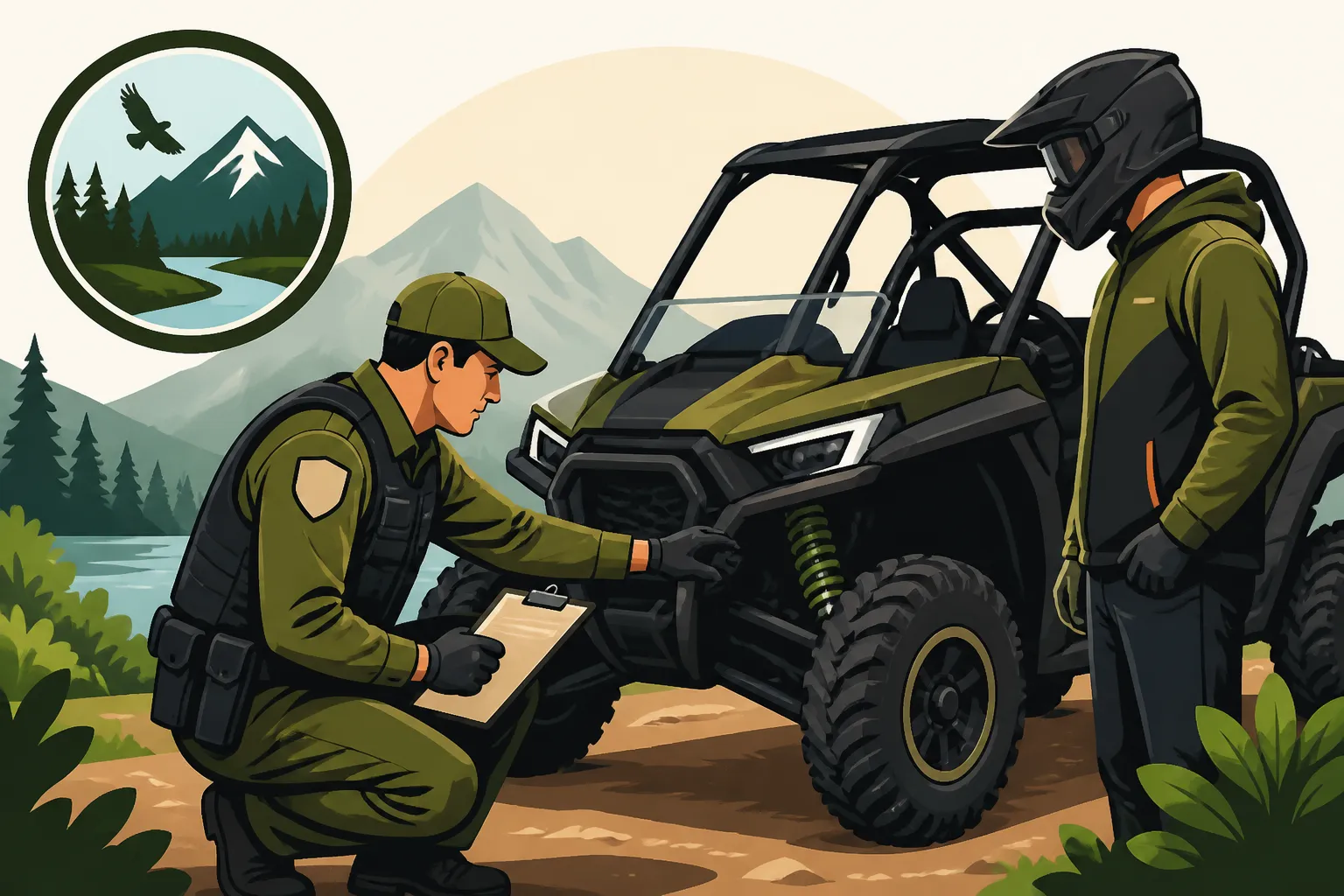
BC Equipment Checks by Conservation Officers
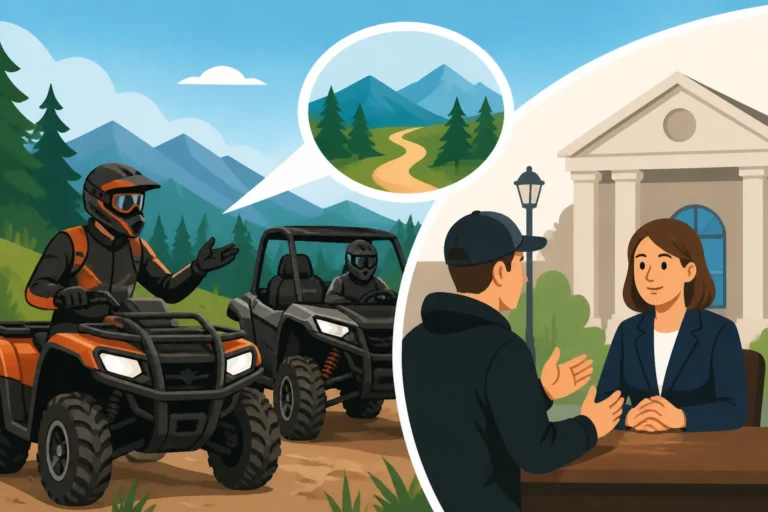
Riding your ATV or UTV in British Columbia's vast and beautiful backcountry is an incredible experience, but it also comes with responsibilities, and sometimes, a little anxiety about who you might encounter on the trail. One of the common worries I hear from fellow riders is about being stopped by a Conservation Officer (CO). Many wonder what exactly COs are looking for and if their machine is up to snuff. This guide is here to shed light on what a CO's equipment check entails, helping you ride confidently and avoid any unwanted surprises or fines.
The Role of Conservation Officers in BC's Backcountry
When you picture a Conservation Officer, you might immediately think of fishing licenses or hunting regulations. And while those are certainly part of their job, their mandate in British Columbia is far broader, especially when it comes to protecting our precious natural resources and ensuring responsible recreation. Understanding their role helps you understand why they might be scrutinizing your ATV or UTV.
Beyond Wildlife – A Broad Mandate
Conservation Officers in BC are fully authorized peace officers with a wide range of responsibilities. They don't just enforce the Wildlife Act or the Angling and Sport Fishing Regulations; they also uphold legislation related to environmental protection, waste management, and critically for us riders, the Off-Road Vehicle Act. This means that when you're out on Crown land, whether it's an expansive open area or a winding forest service road, a CO has the authority to stop you and check for compliance with all relevant laws and regulations.
Their presence is crucial for maintaining the integrity of BC's natural spaces. They're tasked with ensuring that all users, including those of us on ATVs and UTVs, are doing so in a way that minimizes environmental impact, respects other users, and doesn't jeopardize public safety. So, while you might be focused on the thrill of the ride, a CO is looking at the bigger picture of how your activity fits into the careful balance of our provincial lands.
Why Equipment Matters to a CO
From a Conservation Officer's perspective, the equipment on your ATV or UTV isn't just about making your ride more enjoyable; it's often directly tied to safety, environmental protection, and legal operation. A missing piece of safety gear, an unauthorized modification, or an improperly maintained component can have significant consequences. For example, a faulty exhaust system could spark a wildfire, endangering vast tracts of forest and potentially homes, not to mention creating excessive noise that disturbs wildlife and other recreational users.
Proper lighting ensures you're visible to others on shared trails or resource roads, especially during periods of low light. And your machine's registration status ensures accountability and contributes to the management of ORV use across the province. For a CO, these checks are about preventative measures and ensuring everyone plays by the rules to protect both people and the environment we all share. It's not about spoiling your fun; it's about making sure the fun is sustainable and safe for everyone involved.
Key Equipment Checks COs Will Perform on Your ATV/UTV
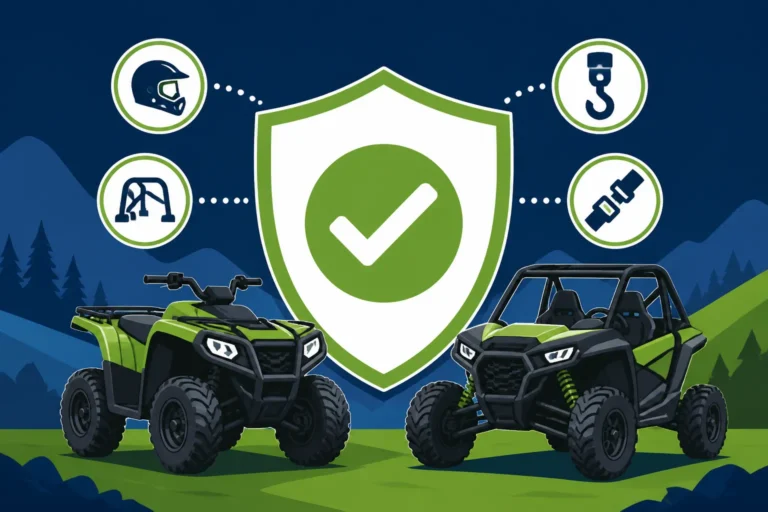
When a Conservation Officer waves you over, it's natural to feel a bit of apprehension. But knowing what they're likely to look for can help you prepare and ensure your machine is always compliant. They're focused on specific elements that are critical for safety, environmental protection, and legal operation under the Off-Road Vehicle Act.
Spark Arrestors and Exhaust Systems
This is often at the top of a CO's checklist, and for very good reason in a province like British Columbia that experiences wildfire seasons. A spark arrestor is a critical safety device designed to prevent hot carbon particles from escaping your exhaust system and igniting dry grass, leaves, or forest debris. Think about how easily a tiny ember can start a devastating fire. COs are extremely vigilant about this.
They will inspect your exhaust system to confirm that a functional spark arrestor is present and properly maintained. This usually means looking for a metal screen or baffle within the muffler, often stamped with a US Forest Service (USFS) approval. Many aftermarket exhaust systems, while they might sound great or boost performance, sometimes lack a certified spark arrestor, or it might have been removed or damaged. If you've modified your exhaust, double-check that it still meets the [BC Spark Arrestor Rules and Fines]. Running without one isn't just a risk; it's a serious ticket waiting to happen, with administrative penalties that can be hefty.
Lighting and Signaling Equipment
Visibility is paramount for safety, especially if you find yourself riding at dawn, dusk, or in low-light conditions. Conservation Officers will check your ATV or UTV's lighting and signaling equipment to ensure it's in good working order. This includes your headlamps, taillamps, and brake lights. The Off-Road Vehicle Regulation specifically outlines requirements for lighting, so it's not just a suggestion.
Imagine navigating a twisty trail or crossing a resource road where logging trucks operate; functional lights aren't just for your benefit, but for the safety of everyone else around you. While BC doesn't have a province-wide daytime running light requirement for ORVs, having working lights at all times is a smart practice. COs will also often check for reflectors, which help make your machine visible even when your lights are off. Ensure all your bulbs are working and lenses are clean and intact. For more on this, you might want to review [BC Lighting and Seat Belt Requirements].
Helmets and Safety Gear
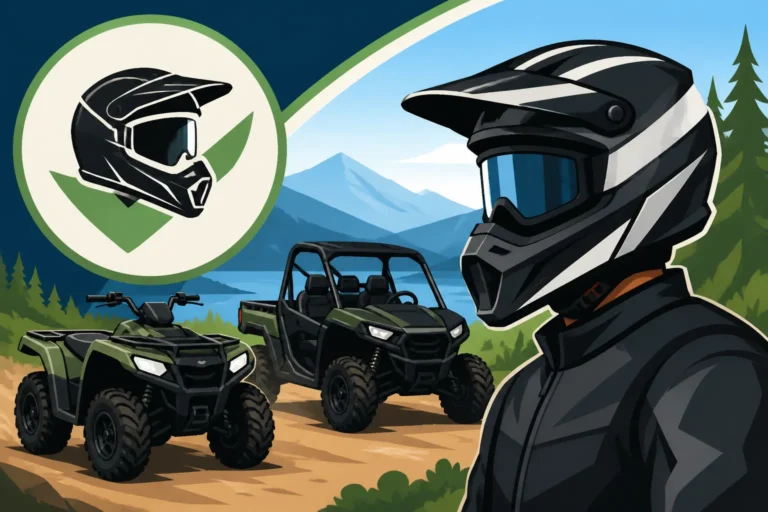
While not on your machine, safety gear worn by riders and passengers is absolutely critical and falls under the purview of a CO's inspection. In BC, wearing an approved helmet is mandatory for anyone riding an ATV or dirt bike (ride-astride machines). This rule is in place for obvious reasons – head injuries are among the most severe in ORV accidents.
A CO will confirm that you, and any passengers, are wearing a helmet that meets recognized safety standards (e.g., DOT, ECE, Snell). They'll also be looking at proper fit and condition. For side-by-sides (UTVs) where seat belts are present, helmets are generally not required if seat belts are worn and the machine has a rollover protective structure (ROPS). However, it's always wise to err on the side of caution. If you have youth riders, COs will also pay close attention to ensure they are wearing appropriate gear and are riding within the [BC Youth Riding Rules and Supervision]. Understanding [BC Helmet Law Covers Every Rider] is non-negotiable for every BC rider.
Registration and Ownership Documentation
This is the legal backbone of operating an ORV in BC, and COs will definitely verify it. Since November 2015, most ORVs operating on Crown land (which includes forest service roads and most recreational trails) must be registered with ICBC. When a CO stops you, they will ask for your Certificate of Registration. This isn't just a formality; it confirms that your machine is legally allowed to operate in the backcountry and links the machine to you, the operator.
Alongside the Certificate of Registration, you should always carry valid government-issued photo identification. This allows the CO to confirm that you are the rightful owner or are authorized to operate the machine. Failure to produce these documents can lead to fines and could even result in further investigation. For a detailed rundown, check out [BC Riders Must Carry the Certificate] and [BC Riders Must Carry Photo ID]. Getting caught without proper registration can lead to significant fines, as highlighted in [BC Fines for Riding an Unregistered Machine].
Other Compliance Areas a CO May Examine
Beyond the core equipment and documentation, Conservation Officers have a keen eye for other aspects of your ORV operation that impact the environment, wildlife, and public safety. These checks often reflect the broader mandate of protecting BC's natural resources.
Sound Levels and Modified Exhausts
Noise pollution is a growing concern, especially in areas frequented by both motorized and non-motorized users, or near sensitive wildlife habitats. While there isn't a widespread roadside decibel check program for ORVs across all of BC, Conservation Officers are empowered to address excessive noise under various regulations. Often, a modified or aftermarket exhaust that significantly amplifies sound also points to a potential issue with the spark arrestor.
COs are trained to recognize exhaust systems that appear to be tampered with or are clearly designed for competition and not recreation on public lands. Excessive noise can disturb wildlife, negatively impact the experience of hikers or campers, and contribute to conflicts between different user groups. Be aware that managed riding areas, like some ORV parks, often have strict sound limits, for instance, [BC Sound Limits of 96 Decibels], and a CO would absolutely enforce those. Keep your exhaust system as close to stock as possible, or ensure any aftermarket system is designed for recreational use and remains quiet enough not to draw undue attention.
Machine Width and Trail Restrictions
Many trails, especially those managed for specific recreational use or within sensitive ecosystems, have width restrictions. This is often to prevent damage to fragile flora, keep riders from accessing closed areas, or to ensure compatibility with shared-use trails. If your ATV or UTV is wider than the specified limit for a particular trail, a CO can issue a ticket. This is where modifications to your machine, such as installing wider A-arms or specific offset wheels and tires, can sometimes cause problems if you're not careful about where you ride.
Companies like SuperATV offer a fantastic range of aftermarket parts, including wider suspension components and portal gear lifts, which can significantly enhance your machine's capabilities and stance. However, it's crucial for riders who've made such modifications to understand the dimensions of their machine and cross-reference them with any posted trail restrictions. Always check signage at trailheads or maps for specific width limitations. Ignorance of these restrictions isn't an excuse, and a CO will measure your machine if they suspect a violation.
Environmental Impact and Trespass
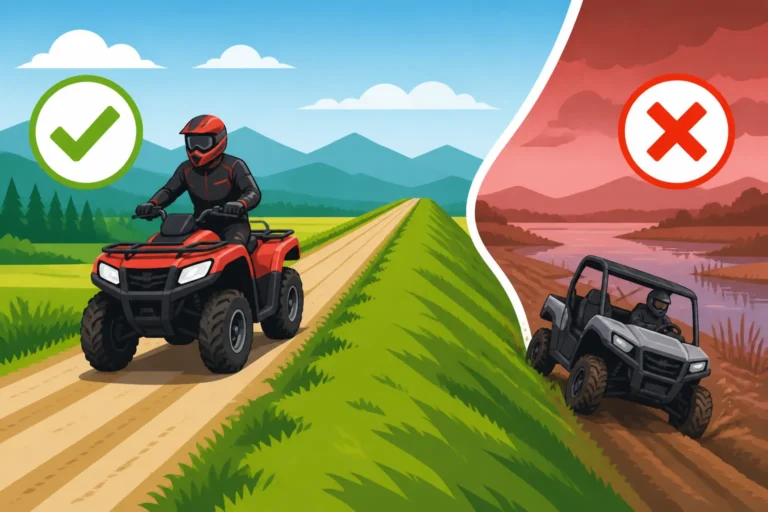
Conservation Officers are, first and foremost, protectors of the environment. Their checks often extend to how your riding impacts the land itself. This includes looking for signs of riding in sensitive areas like wetlands, riparian zones (areas alongside streams or lakes), alpine meadows, or designated [BC Motor Vehicle Closed Areas]. Causing damage to these fragile ecosystems, intentionally or unintentionally, can lead to serious fines.
A CO might observe your tire tracks, the cleanliness of your machine (to prevent the spread of invasive species), or even the contents of your gear for waste. Trespassing on private land is also a serious concern that COs can address, as landowners often rely on their enforcement to protect their property. Always stay on designated trails and roads, and be mindful of where you're riding. A good rule of thumb is "Tread Lightly," and always respect posted signs. For guidelines on avoiding sensitive areas, read up on [BC Riparian Areas to Avoid].
How to Prepare for a CO Check and Avoid Fines
The best way to handle a Conservation Officer check is to be prepared. Knowing your machine is compliant and having your documents in order will not only make the interaction smooth but will also give you peace of mind while exploring BC's stunning backcountry.
Pre-Ride Checklist
Before every ride, make it a habit to go through a quick checklist. This ensures you're ready for anything, including a CO check:
- Spark Arrestor: Is it present and in good condition? Give it a quick visual inspection.
- Lights: Are all headlamps, taillamps, and brake lights working? Clean any mud off the lenses.
- Horn (if equipped): Does it work?
- Helmets: Are you and all passengers wearing approved, properly fitting helmets (for ride-astride machines)? For UTVs, are seatbelts functional and being used?
- Registration: Do you have your physical [BC Riders Must Carry the Certificate] with you?
- ID: Do you have valid photo identification? [BC Riders Must Carry Photo ID]
- Insurance: While not always required by COs on all Crown land, having proof of your ICBC Autoplan and any additional liability coverage (especially for [BC Forest Service Road Insurance]) is a good idea.
- Machine Cleanliness: Is your machine reasonably clean to prevent the spread of invasive species?
- Trail Knowledge: Are you aware of any specific trail restrictions, like width limits, for the area you're riding in? Remember those awesome SuperATV wider A-arms might be too wide for some spots.
- Environmental Awareness: Are you sticking to designated trails and avoiding sensitive areas?
Being Prepared and Polite
If a Conservation Officer signals you to stop, do so safely and promptly. Pull over to the side of the trail or road in a clear, visible location. Turn off your engine. Keep your hands visible, perhaps on the handlebars or steering wheel.
A calm, polite, and cooperative attitude goes a long long way. The CO is just doing their job to ensure everyone's safety and the protection of our environment. Have your registration and ID ready when they ask for it. Answer their questions honestly and directly. If you have a question about a regulation, it's a great opportunity to ask respectfully. This professional approach will ensure the check is quick and smooth, allowing you to get back to enjoying your ride.
Understanding Common Infractions
Knowing what commonly leads to fines can help you avoid them. Here's a quick table summarizing frequent issues Conservation Officers encounter:
| Infraction Category | What a CO Looks For | Potential Consequences | Relevant BC Link |
|---|---|---|---|
| No Registration | Missing or expired Certificate of Registration | Violation ticket, fine, potential impoundment | [BC Fines for Riding an Unregistered Machine] |
| Missing Spark Arrestor | Absence or damage to the spark arrestor screen | Violation ticket, significant fine, fire risk | [BC Spark Arrestor Fines] |
| No Helmet (ride-astride) | Rider/passenger not wearing an approved helmet | Violation ticket, fine | [BC Helmet Law Covers Every Rider] |
| Improper Lights | Non-functional head/tail/brake lights, no reflectors | Violation ticket, fine | [BC Lighting and Seat Belt Requirements] |
| Excessive Noise | Clearly modified exhaust, unusually loud operation | Violation ticket, fine, especially in managed areas | [BC Sound Limits of 96 Decibels] |
| Riding Off-Trail/In Closed Area | Tracks in sensitive areas, ignoring closure signs | Violation ticket, substantial fine, environmental damage | [BC Motor Vehicle Closed Areas], [BC Riparian Areas to Avoid] |
| No Photo ID | Unable to produce valid government-issued ID | Violation ticket, further questioning | [BC Riders Must Carry Photo ID] |
Where to Find More Information
Staying informed is your best defense against unexpected fines or issues during a CO check. The Off-Road Vehicle Act and its associated regulations are your primary source of truth. You can find these on the BC government's website. Additionally, many local ATV and UTV clubs are excellent resources for local rules, trail conditions, and changes in regulations.
Another great way to stay current is to regularly check the BC Wildfire Service website, especially during fire season, for any regional fire bans or [BC Fire Centre Closures for ORVs] that might impact your riding plans. Ultimately, responsible riding means being aware of the rules, respecting the environment, and ensuring your machine and gear are always compliant. By doing so, you're not just avoiding a ticket; you're contributing to the sustainability of ORV recreation in British Columbia for years to come.
Disclaimer
This article is for general informational purposes only and does not constitute professional advice. Laws, prices and regulations vary by location and change over time. Consult a qualified professional for guidance on your specific situation.