Do You Need a Licence for an ATV in BC?
It's a question that trips up so many new (and even seasoned!) off-road vehicle riders in British Columbia: Do you actually need a driver's licence to operate an ATV or UTV? The rules around off-road vehicle (ORV) use in BC can feel like a tangled web, especially when you consider how often we see these machines used in various settings, from deep in the backcountry to brief crossings of public roads. This guide aims to unravel that confusion, helping you understand precisely when that piece of plastic in your wallet becomes absolutely essential for your BC adventures.
The Core Question: Do You Need a Driver's Licence for an ORV in BC?
Let's get right to the heart of it, because this is where a lot of riders get mixed up. Generally speaking, to operate an ATV or UTV strictly on Crown land, private property (with permission, of course), or designated off-road trails in British Columbia, you do not need a driver's licence. That's right, many of the places we love to ride, where our machines truly shine, don't demand you hold a standard driver's licence. This is fantastic news for younger riders who meet the age requirements for operating an ORV but aren't old enough to get a car licence yet, or for those who simply choose not to drive cars.
However, and this is a big "however," the moment your wheels touch certain public infrastructure, the rules shift dramatically. It's not about the machine itself, but where you are operating it. Many riders assume "off-road" means completely unregulated by typical road rules, but that's a dangerous misconception. The province has specific regulations for what it considers a "highway" (which includes public roads, streets, and even certain shoulders) and crossing one. This is where the need for a driver's licence kicks in, and ignoring it can lead to hefty fines and a very unwelcome interaction with law enforcement. Understanding these distinctions is crucial, especially when planning a route that might involve moving from one trail system to another across a paved road.
Understanding the Nuances: When a Licence Becomes Essential
While the open trails and vast expanse of Crown land might not demand a driver's licence for your quad or side-by-side, there are very specific scenarios in British Columbia where that piece of plastic becomes non-negotiable. These are the situations where your off-road machine momentarily steps into the world of regulated highway use, even if it's just for a few moments.
Highway Crossings and Driver's Licence Requirements
This is arguably the most common situation where ORV riders unexpectedly find themselves needing a driver's licence. The Off-Road Vehicle Act in British Columbia clearly differentiates between riding off-road and making a legitimate crossing of a highway. A "highway" in BC isn't just a multi-lane freeway; it includes most public roads, streets, and even the paved or gravel shoulders alongside them. If your incredible SuperATV UTV needs to cross a paved road to get from one section of a trail to another, or to access a staging area, you are undertaking a highway crossing.
During such a crossing, the ORV operator must hold a valid driver's licence appropriate for the class of vehicle they would typically drive on a highway (e.g., a Class 5 for most passenger vehicles). This isn't about driving your ORV down the highway; it's about the temporary interaction with a highway environment. You must also obey all traffic laws, stopping at stop signs or traffic lights, yielding to traffic, and crossing as directly and safely as possible. Think of it like a pedestrian crossing a street: they have to obey the rules of the road for that specific action. For an ORV, that includes having the proper licence. Failure to possess a valid driver's licence during a highway crossing can result in significant penalties, turning a quick hop across the road into a very expensive learning experience. It's a critical rule to remember, particularly when exploring popular riding areas that might be bisected by public roads. [BC Rules for Crossing a Highway] lays out the specifics here.
Operation Permits and Police Discretion
Beyond simple crossings, there's another, less common, scenario where a driver's licence is required: when operating an ORV on a highway under the authority of an "Operation Permit." While the general rule is that ORVs are not street legal, there are provisions for local police detachments to issue temporary permits for specific purposes, such as accessing a particular area for maintenance, a community event, or even for commercial use where no other access is feasible.
These permits are not for casual joyriding on public roads. They are issued at the discretion of the police and come with strict conditions about the route, time of day, and duration of travel. If you are granted one of these permits, you must have a valid driver's licence to operate your ORV on the highway, even with the permit in hand. The permit effectively grants you temporary, conditional access to a highway, which then invokes the standard driver's licence requirement. It's also important to note that these permits are typically free [BC Permits Cost Nothing] and can be valid for a substantial period [BC Permits Valid Up to Two Years], but they are always specific to a purpose and route, not a blanket permission to cruise around town on your machine. For more details on these, check out [BC Police Operation Permits for Highway Travel].
Age, Supervision, and Training: Beyond Just a Licence
While the focus might often be on whether you need a driver's licence, operating an ORV responsibly in British Columbia involves much more than just a piece of plastic. There are crucial considerations around age, supervision, and safety training that are equally important for ensuring a safe and legal ride for everyone, especially our younger enthusiasts.
Youth Riders and Supervision Rules
British Columbia has specific rules governing who can operate an ORV based on age, and these rules often come with supervision requirements that don't hinge on having a driver's licence. For instance, children under 16 years old have particular restrictions. Generally, a child under 16 needs to be supervised by an adult who is at least 19 years old. This supervising adult must be capable of providing "immediate direction," meaning they need to be close by, clearly visible, and able to intervene if necessary. They don't necessarily need to be riding the same machine, but they must be actively supervising.
Furthermore, there are age-specific requirements for passengers. A child operator cannot carry a passenger, regardless of the machine's capacity. For riders aged 14 and 15, there's an additional requirement: they must carry written permission from a parent or guardian if riding unsupervised. However, the definition of "unsupervised" for this age group still often implies adherence to manufacturer's age and weight recommendations, and they still cannot carry passengers. It's critical for parents and guardians to be fully aware of [BC Youth Riding Rules and Supervision] to ensure their kids are riding safely and legally. These rules aim to protect young riders, recognizing that while they might be eager to tackle trails, they may lack the judgment and experience of an adult.
Training and Safety: While Not a Licence, Still Important
It's a common misconception that because no "licence" is required for off-road riding, formal training isn't necessary. This couldn't be further from the truth for safe and responsible ORV operation. While BC does not mandate a specific training course to simply ride off-road (unlike some jurisdictions), actively pursuing safety training is highly recommended for all riders, regardless of age or experience.
These courses, often offered by organizations like the Canada Safety Council or the BC Forest Safety Council, teach crucial skills such as proper machine control, emergency braking, navigating varied terrain, and understanding the ORV Act. For example, a new rider might struggle with understanding the dynamics of cornering on loose gravel, or how to safely traverse a steep incline, an area where proper training shines. Many riders, especially those exploring the capabilities of their SuperATV accessories, benefit immensely from learning advanced techniques from certified instructors. While [BC Safety Courses Are Voluntary for Adults], they instill the confidence and practical knowledge that significantly reduces the risk of accidents. Think of it as investing in your safety and the longevity of your riding enjoyment. It’s an invaluable step that can prevent serious injury and promote a much more enjoyable experience on the trails.
Other Important Documents and Responsibilities
Having the right physical documents on you is just as crucial as having the right skills or knowing when a driver's licence is needed. Ignoring these can lead to fines, inconvenience, and even machine seizure. It's about more than just personal liability; it's about being a responsible member of the riding community.
Registration and Proof of Ownership
Since November 1, 2015, all ORVs operating on Crown land (which includes most backcountry areas and [BC Forest Service Road Rules for ORVs]) in British Columbia must be registered with ICBC and display a valid ORV plate and decal. This is a mandatory requirement, and it applies whether you're riding a brand-new machine or an older, cherished quad. When you register, you'll receive a Certificate of Registration.
It is absolutely vital that you carry this physical Certificate of Registration with you whenever you operate your ORV. Law enforcement, conservation officers, and park rangers have the authority to ask for it. Along with your Certificate of Registration, you must also carry valid photo identification [BC Riders Must Carry Photo ID]. This combination proves that you are the rightful operator of a legally registered machine. If you're riding a borrowed machine, you should also carry written permission from the owner. Don't underestimate the importance of these documents; riding an unregistered machine on Crown land can lead to tickets [BC Tickets for an Unregistered Machine] and other enforcement actions. [BC ORV Registration Became Mandatory in 2015] marked a significant change for riders, and compliance is key.
Insurance Requirements for Different Riding Areas
The question of insurance often goes hand-in-hand with registration and licensing. In BC, ORV insurance requirements vary depending on where you're riding, and it's not a one-size-fits-all situation.
- On Crown Land (excluding Forest Service Roads): For general Crown land use, liability insurance is voluntary. While not legally mandated, it is highly recommended. Imagine an unfortunate incident where your quad causes damage to someone else's property or injures another rider; without liability coverage, you could be on the hook for substantial costs. Many riders opt for private insurance providers to cover this gap.
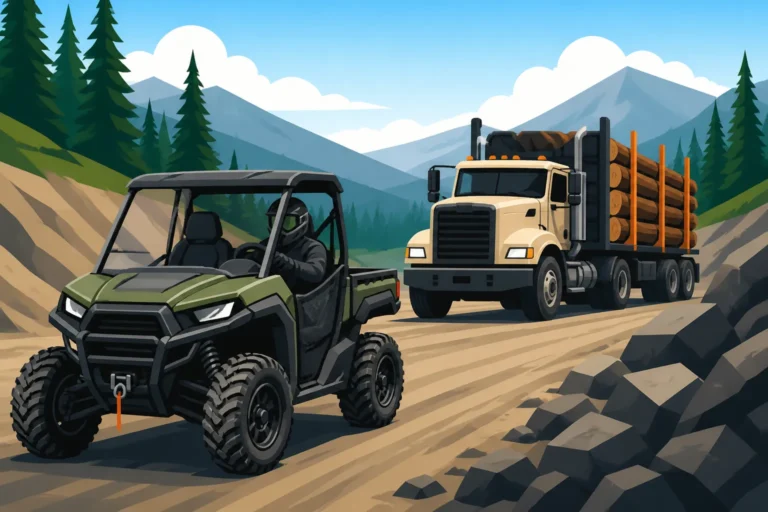
- On Forest Service Roads (FSRs): This is where it gets more specific. If you plan to operate your ORV on a Forest Service Road, you are legally required to carry a minimum of $200,000 in third-party liability insurance [BC Requires $200,000 on a Forest Service Road]. FSRs are often used by industrial traffic (like logging trucks) and other recreational users, and the risk of significant incidents is higher. This specific requirement ensures that you have basic financial protection in case of an accident involving other users or infrastructure.
- Highway Crossings: As mentioned earlier, if you are making a legal highway crossing (where a driver's licence is also required), your ORV must have the equivalent of Basic Autoplan coverage [BC Requires Basic Autoplan on a Highway]. This is the same basic insurance coverage any road-going vehicle needs, typically obtained through ICBC. This ensures you're covered for the brief period your machine interacts with the highway.
Understanding these tiered insurance requirements is crucial for protecting yourself and others. It's not just about avoiding fines; it's about responsible riding. Always check your policy and consider what type of riding you'll be doing.
Here's a quick overview of ORV operator document requirements in BC:
| Scenario | Driver's Licence Required? | Registration Certificate Required? | Photo ID Required? | Minimum Insurance Required? |
|---|---|---|---|---|
| Strictly Off-Road (Crown Land) | No | Yes | Yes | Voluntary (Liability Recommended) |
| Strictly Off-Road (Private Land) | No | No (unless accessing via Crown Land) | No | Voluntary (Liability Recommended) |
| Forest Service Road (FSR) Use | No | Yes | Yes | $200,000 Third-Party Liability |
| Highway Crossing | Yes | Yes | Yes | Basic Autoplan Equivalent |
| Highway Use with Operation Permit | Yes | Yes | Yes | Basic Autoplan Equivalent |
| Youth Rider (Under 16) | No | Yes | Yes | Varies by location |
Disclaimer
This article is for general informational purposes only and does not constitute professional advice. Laws, prices and regulations vary by location and change over time. Consult a qualified professional for guidance on your specific situation.