What Lights BC Requires Front and Rear
It’s a common misconception among off-road vehicle enthusiasts in British Columbia that because ATVs and UTVs aren’t street legal, they don’t need proper lighting. This couldn't be further from the truth, and this oversight can lead to serious safety risks and hefty fines. Navigating BC's diverse terrain, from dense forests to open resource roads, demands adequate visibility for your safety and the safety of others. This guide will shine a light on exactly what front and rear lighting requirements you need to meet for your ATV or UTV in BC, helping you ride confidently and compliantly.
The Basics of BC's ORV Lighting Rules
Riding an off-road vehicle in British Columbia isn't just about throwing on a helmet and hitting the trails. There are specific rules designed to keep everyone safe, and lighting is a huge part of that. While the freedom of off-roading feels miles away from highway driving, the principles of visibility and safety remain paramount. Many riders get caught off guard, assuming "off-road" means "no rules," especially when it comes to something as basic as lights. But the Off-Road Vehicle Act is quite clear on this.
Why Lights Are Mandatory, Even Off-Road
Think about it: even in broad daylight, a quad kicking up dust on a forest service road can be surprisingly hard to spot, especially if it's blending into the natural environment. Add in shadows from towering trees, the glint of sun off leaves, or even just the sudden dip into a gully, and your machine can disappear from view in an instant. The primary reason lights are mandatory, regardless of whether you’re on a public road or deep in the backcountry, is visibility. It's about ensuring that other riders, hikers, industrial workers, and even wildlife have a better chance of seeing you coming, and you seeing them.
The intent behind these regulations isn't to hinder your fun, but to prevent accidents. Many of us have experienced that heart-stopping moment when another machine suddenly appears from around a blind corner or over a crest. Proper lighting drastically reduces those kinds of surprises. It's also a critical component of responsible riding, showing respect for shared spaces and other users. The fact is, the wild spaces we love to ride are often shared, and not everyone is expecting a quiet ATV to emerge from the trees. Having your lights on helps bridge that gap, making your presence known without the need for a noisy exhaust. This often goes hand-in-hand with understanding [What the Off-Road Vehicle Act Covers in BC].
Front Light Requirements: Seeing and Being Seen
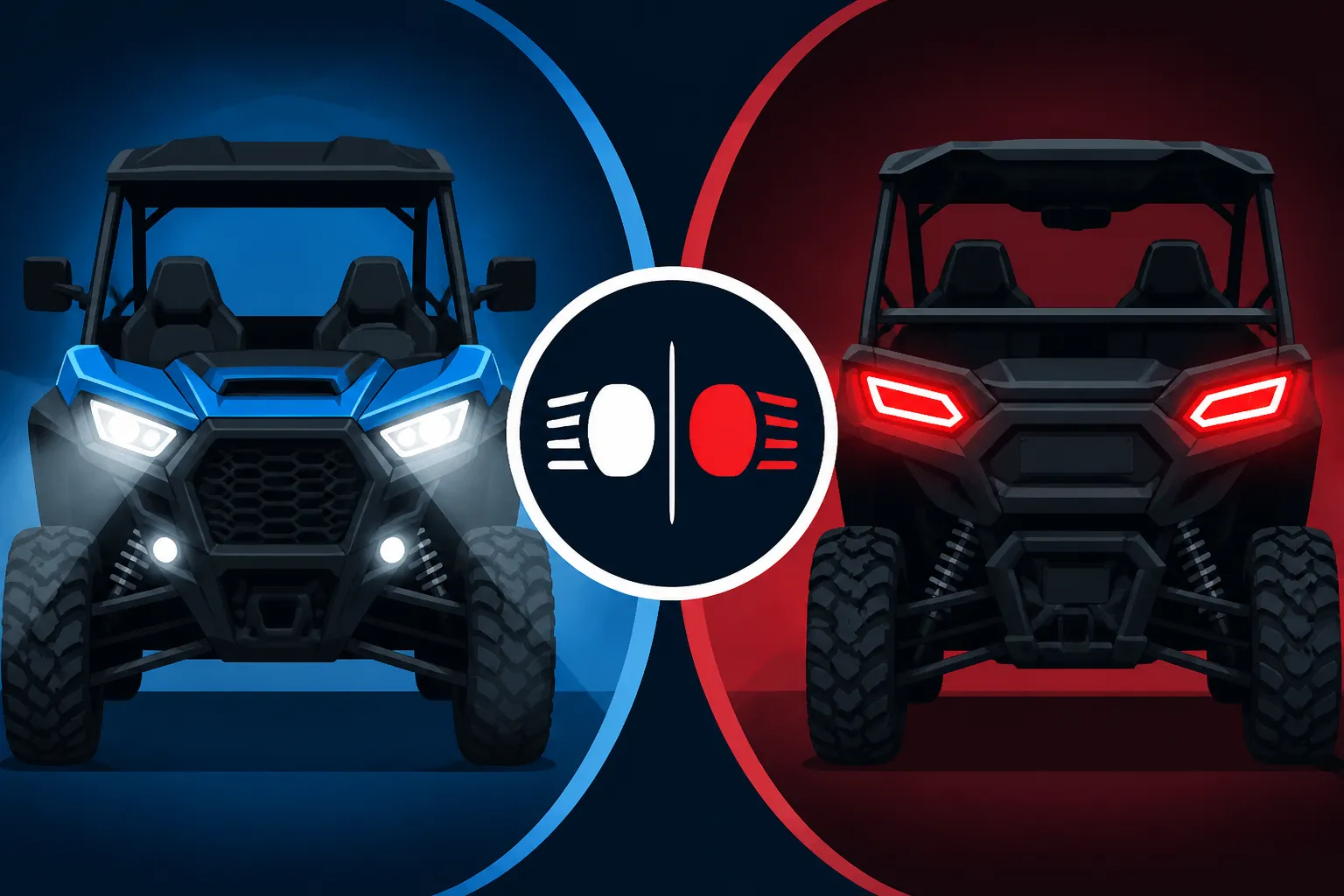
When it comes to the front of your ATV or UTV, the Off-Road Vehicle Act and its regulations specify that you must have at least one headlamp that emits a white or amber light. This isn't just a suggestion; it's a legal requirement if you're riding between 30 minutes before sunset and 30 minutes after sunrise, or at any other time when there's insufficient light or atmospheric conditions make it difficult to see persons or vehicles at a distance of 150 metres. That 150-metre rule is a key one – think about fog, heavy rain, or even just dense tree cover on a cloudy day.
But beyond the legal minimum, let's talk practicalities. "At least one headlamp" is the bare minimum, and for many riders, it's simply not enough to safely navigate diverse BC terrain. Modern ATVs and UTVs often come with decent factory headlights, but when you're hurtling down a dark trail or trying to spot hazards like fallen logs or deep ruts, more light is often better. Many riders opt for auxiliary lighting, such as LED light bars or cube lights, to supplement their main headlights. These additions, often offered by brands like SuperATV, can dramatically improve your field of vision, casting a wider or longer beam that original equipment often can't match. When choosing auxiliary lights, consider their beam pattern (spot for distance, flood for width, or a combo) and make sure they're aimed correctly to avoid blinding oncoming riders while still illuminating the trail effectively. Remember, the goal is to see clearly and make yourself clearly seen.
Rear Light Requirements: Crucial for Following Riders
Just as important as seeing where you're going is ensuring that riders behind you can see you. The rear lighting requirements are all about preventing rear-end collisions, especially when riding in groups, on dusty trails, or during low-visibility conditions. The regulations mandate at least one taillamp that emits a red light to the rear. This light must be visible from a certain distance, typically 150 metres, to alert those following you.
In addition to a basic taillamp, most modern ATVs and UTVs also come equipped with brake lights. These are absolutely essential, as they provide an immediate visual cue to the rider behind you that you're slowing down or stopping. Imagine riding in a tight formation on a winding trail; without brake lights, the person behind you might only realize you've stopped when they're almost on top of you. For machines that might not have come with a dedicated brake light system, it's highly advisable to install one. This could be a simple aftermarket LED bar that incorporates brake functionality, or a more integrated system. The red light requirement extends to any time you'd need your front lights – essentially, whenever visibility is compromised. These rear lights are a fundamental safety feature, much like the lights on a car, and they're often the unsung heroes of group rides, silently preventing countless close calls.
Specific Scenarios Requiring Lights
Understanding what lights you need is one thing, but knowing when they are absolutely critical is another. BC's diverse landscape and varied riding conditions mean that "daylight" isn't always enough to ensure safety. The law recognizes this, and so should every responsible rider. Neglecting to use your lights in these specific scenarios isn't just a legal misstep; it's a gamble with your safety and the safety of everyone else around you.
Riding at Night or in Low Visibility
This is the most obvious scenario, but it bears repeating because the definition of "night" isn't always clear-cut. The law explicitly states that lights are required between 30 minutes before sunset and 30 minutes after sunrise. But it goes further: [BC Lighting Rules in Low Visibility] are triggered "at any other time when there is insufficient light or atmospheric conditions make it difficult to see persons or vehicles at a distance of 150 metres." This clause is where many riders get into trouble.
"Insufficient light" can mean a lot of things in BC. Think about riding under the dense canopy of old-growth forests, where even at noon, it can feel like dusk. Or consider those classic BC weather days: heavy fog rolling in off the coast, a sudden downpour in the mountains, or even wildfire smoke from a distant blaze. All these conditions significantly reduce visibility and necessitate the use of your lights, both front and rear. It's not just about seeing the trail; it's about being a visible presence in an environment where your machine can easily blend in. Turning your lights on as a default, even on a bright day, is a great habit to adopt, especially if you're venturing into areas where conditions can change rapidly.
Forest Service Roads and Industrial Zones
Forest Service Roads (FSRs) are a lifeline for accessing vast tracts of BC's backcountry, offering incredible riding opportunities. However, they are also active industrial zones, often frequented by heavy equipment and, most notably, logging trucks. These behemoths are large, fast, and cannot stop quickly. Meeting a loaded logging truck on a blind corner can be one of the most terrifying experiences for an off-road rider. This is precisely why your lights are not just a courtesy but a critical safety device on FSRs.
Even in broad daylight, having your lights on, both front and rear, makes you much more visible to these industrial vehicles. A high-vis vest for the rider also helps. Many FSRs are dusty, and your lights help cut through the haze you or other vehicles might kick up. When you hear that characteristic "chatter" on the radio, indicating an oncoming truck, your lights become even more important as you pull over to let them pass. This proactive approach to visibility is a core component of [BC Resource Road Radio Practice] and is critical for safe riding in these dynamic environments. Remember, these roads are working roads first, and recreational trails second, so every measure to enhance your visibility is a responsible one. These FSRs are often subject to [BC Forest Service Road Requirements], which your lighting helps meet.
Crossing Highways or Shoulders
While ATVs and UTVs are not street-legal in British Columbia – indeed, [BC Has No Street-Legal Path for an ATV] – there are specific, limited circumstances where you might legally cross a highway or ride briefly on its shoulder. These are precisely the moments when your machine, which is typically confined to off-road environments, suddenly shares space with much faster, heavier highway traffic. The risk of an accident skyrockets during these brief transitions.
The regulations are very clear that during these crossings or shoulder uses, your vehicle must meet minimum equipment standards for visibility, which absolutely includes functioning front and rear lights. Imagine pulling out from a trail onto a highway shoulder to cross, perhaps at a stop sign or a traffic light, as outlined in [BC Rules for Crossing a Highway]. Highway vehicles are moving at speed, and drivers are often not expecting to see an ATV. Your bright headlights and taillights act as an immediate warning, grabbing their attention and allowing them time to react. Without them, you're relying purely on chance and the alertness of distracted drivers, which is a gamble you should never take. Even for these short bursts of on-pavement travel, your lights are your most effective defense against being overlooked by highway traffic.
Practical Considerations for Choosing and Installing Lights
So, you understand why lights are crucial and when you need them. Now, let's get down to the practical side of choosing and installing them effectively. It’s not just about bolting on the brightest thing you can find; there's a balance between functionality, legality, and not becoming a nuisance to other riders.
Lumens, Beam Patterns, and Wattage
When you start looking at aftermarket lights, you'll quickly encounter terms like "lumens," "beam patterns," and "wattage." Understanding these can help you make an informed choice for your specific riding needs.
- Lumens: This is a measure of the total amount of visible light emitted by a source. More lumens generally mean a brighter light. For off-road riding, especially at night, higher lumen output for your front lights is often desirable to illuminate the trail clearly. However, too many lumens can create excessive glare, especially if not properly aimed. While there isn't a specific lumen requirement in BC, enough to see 150 metres ahead in dark conditions is a good practical benchmark.
- Beam Patterns: This refers to how the light is distributed.
- Spot beams are focused and narrow, designed to project light far down the trail. Great for high-speed riding where you need to see distant obstacles.
- Flood beams spread light widely and evenly, illuminating the immediate area around your machine. Ideal for technical, slow-speed riding where you need peripheral vision to navigate roots, rocks, and tight turns.
- Combo beams combine both, offering a good balance of distance and width. Many light bars, including those from SuperATV, offer these versatile patterns.
- Wattage: This measures the power consumed by the light. While higher wattage often correlates with higher lumen output, modern LED technology means you can get incredible brightness from relatively low wattage compared to older halogen bulbs. This is important for managing your machine's electrical system, especially if you plan to add multiple accessories.
When selecting lights, consider the type of riding you do most often. If you're primarily on open FSRs, a spot or combo beam might be best. If you're crawling through dense forest, a flood beam could be more beneficial. And always ensure your choices don't draw too much power, leaving your battery drained, or exceed what your stator can handle.
Auxiliary Lighting: Beyond the Bare Minimum
While your machine's factory lights might meet the minimum legal requirement, experienced riders often find them inadequate for truly safe and enjoyable night riding in BC's challenging terrain. This is where auxiliary lighting comes in. Investing in a quality light bar, some robust cube lights, or even specialized rock lights can transform your night riding experience.
- Light Bars: These are perhaps the most popular auxiliary lighting option. Available in various lengths and lumen outputs, light bars mounted on the front bumper or roof of your UTV, or handlebars of your ATV, provide a massive boost in forward illumination. They often feature combo beam patterns, giving you both distance and spread. Brands like SuperATV offer a wide range of light bars known for their durability and performance, designed to withstand the rigours of off-road use. They can significantly improve your ability to spot wildlife, assess trail conditions, and navigate confidently in the dark.
- Cube Lights: Smaller and more versatile, cube lights can be mounted almost anywhere – on the A-pillars of a UTV for side illumination, on the rear for backup lights, or even as rock lights under the machine to see obstacles during technical climbs or descents at night. Their compact size makes them less obtrusive but still highly effective.
- Whip Lights/Dust Lights: While not legally required as primary front/rear lights, brightly coloured whip lights (especially LED ones) can drastically increase your visibility to other riders, particularly in dusty conditions or open areas. These are typically mounted high on the rear of the machine and can flash or change colours, making you stand out from a distance. They're an excellent safety add-on, particularly for group rides, as they help prevent riders from getting lost in the dust cloud of the machine in front.
The goal with auxiliary lighting is to enhance your situational awareness and provide a margin of safety beyond what the law strictly demands. It’s about proactive protection rather than just meeting a checklist.
Wiring, Mounting, and Power Draw
Once you've chosen your lights, proper installation is key. A shoddy wiring job can lead to short circuits, drained batteries, or even fire hazards.
- Wiring: Always use appropriately gauged wiring for the wattage of your lights. It's crucial to run power through a fused circuit to protect your electrical system. For higher-wattage lights, like large light bars, a relay harness is highly recommended. This allows the light switch to trigger the relay, which then draws power directly from the battery through a heavier gauge wire, protecting your switch and machine's delicate electrical components. Secure all wiring away from moving parts, heat sources, and sharp edges. Waterproof connectors are also essential for BC's often wet environment.
- Mounting: Your lights need to be securely mounted to withstand the bumps, vibrations, and occasional impacts of off-road riding. Use sturdy brackets and hardware. Ensure front lights are aimed correctly – too high, and you'll blind oncoming riders or reflect off fog; too low, and your effective range is limited. Rear lights should be mounted where they are clearly visible from behind, not obscured by cargo or mud flaps. For UTVs, roof mounts for light bars offer excellent line of sight, while bumper mounts on ATVs are common.
- Power Draw: Before adding multiple powerful lights, assess your machine's electrical system. Your ATV or UTV has a stator (alternator) that generates a certain amount of power. Adding accessories that collectively draw more power than your stator can produce will eventually lead to a drained battery and potential breakdowns. Always calculate the total wattage of your planned additions and compare it to your machine's available output. If you're pushing the limits, consider upgrading your stator or battery, or being mindful of how many accessories you run simultaneously. Overloading your electrical system is a common mistake that can leave you stranded in the backcountry.
The Role of Reflectors and Other Visibility Aids
While powered lights are the stars of the show when it comes to ORV visibility, they're not the only players on the team. Sometimes, the simplest solutions can provide surprising benefits, acting as backups or enhancements to your primary lighting. Don't underestimate the power of passive visibility aids and responsible rider gear.
Why Reflectors Still Matter
Reflectors are often overlooked in the era of powerful LED lights, but they still play a vital role in passive safety. Unlike powered lights, reflectors don't rely on your machine's electrical system, meaning they're always "on" as long as there's an external light source to hit them. In BC, off-road vehicles are typically required to have reflectors on the rear, and sometimes on the sides.
Think about a scenario where your electrical system fails, or you're parked on the side of a trail in dense fog with your engine off. In these situations, your powered lights are useless. However, any passing machine or vehicle with its own lights will illuminate your reflectors, making your presence known. Red reflectors on the rear are standard, much like on bicycles or trailers. Some machines might also benefit from amber reflectors on the sides, especially for wider UTVs, to help define their overall length and width in low light conditions. Ensure your reflectors are clean and free from mud or dirt, as their effectiveness is entirely dependent on their ability to bounce light back. They're a low-cost, high-impact safety feature that complements your active lighting.
High-Visibility Gear for Riders
Beyond the machine itself, the rider's gear significantly contributes to overall visibility. While [BC Helmet Law Covers Every Rider] and safety is paramount, selecting high-visibility clothing is an additional layer of protection, particularly useful when you're off the machine or in situations where your machine's lights might be obscured.
Wearing a bright, fluorescent jacket or vest, especially in colours like lime green, orange, or yellow, makes you stand out against natural backdrops. This is critical for group rides, where you might be temporarily separated from your machine, or if you're pulling over on a busy FSR and need to be seen by industrial traffic. Many riders also choose helmets with bright colours or reflective decals. While this isn't a machine lighting requirement, it's an essential personal safety consideration. In scenarios like [BC Riders Meeting a Logging Truck], every bit of visual advantage helps. The more visible you are – both your machine and yourself – the safer your riding experience will be for everyone sharing BC's beautiful, but sometimes challenging, wild spaces.
What Happens If Your Lights Aren't Compliant
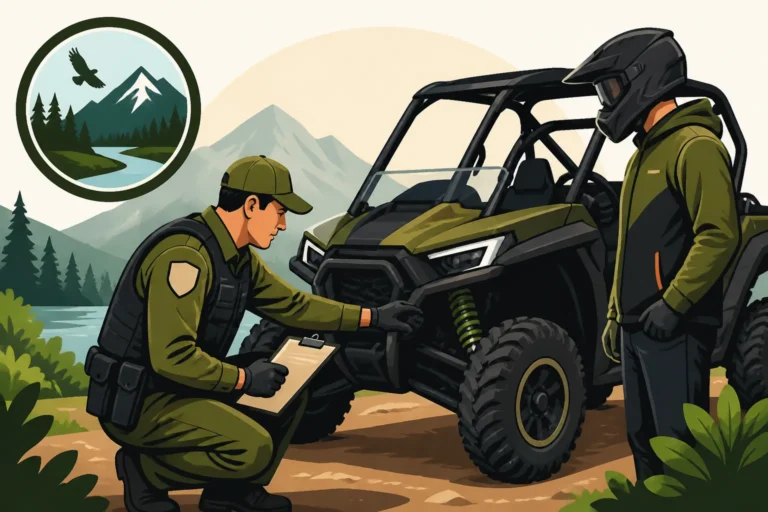
Ignoring BC's ORV lighting requirements isn't just a minor oversight; it carries real consequences, both legally and in terms of safety. Conservation officers, RCMP, and other enforcement personnel are authorized to pull over off-road vehicles and check for compliance with the Off-Road Vehicle Act. When they do, functioning and appropriate lighting is a key item on their checklist.
Tickets, Fines, and Enforcement
If you're caught riding your ATV or UTV in conditions that require lights without them, or with inadequate lighting, you could face a violation ticket. These aren't trivial warnings; they come with financial penalties that can quickly dampen the fun of your ride. The exact amount can vary depending on the specific infraction and the discretion of the issuing officer, but rest assured, it's money you'd rather spend on fuel or new gear. These fines fall under the broader category of [BC Fines for Careless Operation] or equipment violations.
Enforcement isn't just limited to busy weekends at popular staging areas. Officers conduct patrols in remote areas, on FSRs, and even observe trails from vantage points. They are particularly vigilant during periods of low light, such as dusk and dawn, or in adverse weather conditions like fog or heavy rain. Beyond a ticket, an officer might also deem your machine unsafe to operate until the lighting issue is rectified, potentially impounding it or requiring you to trailer it out. In more severe cases, or if other infractions are present, officers have significant powers, including [BC Machine Seizures by Police], which could lead to a very long walk home and a costly recovery process for your machine. It's simply not worth the risk to save a few bucks on proper lighting or to neglect a quick pre-ride check.
Safety Risks of Inadequate Lighting
Beyond the legal ramifications, the most profound consequences of inadequate lighting are the safety risks. This is where the rubber meets the road, or rather, where your machine might meet an unexpected obstacle or another vehicle.
- Collisions with Obstacles: Imagine hitting a fallen log, a hidden rock, or plunging into an unseen ditch because your headlights weren't powerful enough or properly aimed. These can lead to serious injuries, extensive damage to your machine, or even leave you stranded in a remote location.
- Collisions with Other Riders/Vehicles: On shared trails and FSRs, visibility is a two-way street. If your front lights are insufficient, you might not see an oncoming rider or a hiking group until it's too late. Conversely, if your rear lights are dim or non-existent, the rider behind you might not register your presence or braking action, leading to a rear-end collision, especially common in dusty conditions or at speed. This risk is amplified when interacting with industrial traffic on resource roads.
- Getting Lost or Stranded: Losing your way can be disorienting enough, but doing so in the dark without adequate lighting to navigate or signal for help adds a whole new layer of danger. A dead battery from overdrawing your system with poorly chosen lights is also a common cause of being stranded.
- Reduced Enjoyment: Ultimately, riding with the constant worry of not seeing or being seen takes away from the experience. Proper lighting allows you to relax, enjoy the scenery, and focus on the thrill of the ride, knowing you’ve taken proactive steps to ensure your safety and compliance.
The message is clear: investing in and maintaining effective front and rear lighting for your ATV or UTV in BC isn't just about avoiding a ticket; it's about safeguarding your life, your machine, and the experience of everyone else who shares the trails and roads with you. Make it a priority to check your lights before every ride, ensuring they're clean, functional, and meet all the necessary requirements.
Summary of BC ORV Lighting Requirements
To help clarify the various aspects of lighting for ATVs and UTVs in British Columbia, here's a quick reference table summarizing the key requirements and considerations for both front and rear lights. This should serve as a handy checklist before your next ride.
| Feature | Front Lights | Rear Lights | Considerations |
|---|---|---|---|
| Legal Minimum | At least one headlamp | At least one taillamp | Required from 30 min before sunset to 30 min after sunrise, or in low visibility (less than 150m clear sight). |
| Colour | White or Amber | Red | Maintain correct colours for compliance and clear signaling. |
| Visibility | Must be visible from 150 metres | Must be visible from 150 metres | Aim lights correctly; ensure they are clean and unobstructed. |
| Brake Lights | Not applicable | Required on most modern machines; highly recommended for all. | Crucial for signaling deceleration to following riders. |
| Reflectors | Not explicitly required at front, but can enhance passive visibility | Required (typically red) | Provide passive visibility if powered lights fail; keep clean. |
| Auxiliary Lights | Recommended for enhanced visibility (light bars, cube lights) | Whip lights/dust lights for increased group visibility | Choose appropriate beam patterns (spot/flood/combo); manage power draw effectively. Brands like SuperATV offer options. |
| Wiring & Mounting | Secure, fused wiring; proper aiming for effectiveness and to avoid blinding others | Secure wiring; mounted where clearly visible and unobstructed by cargo | Use relays for high-wattage lights; ensure waterproof connections. |
| Compliance Risk | Tickets/fines for insufficient or non-existent lighting; safety hazard | Tickets/fines for insufficient or non-existent lighting; increased risk of rear-end collisions | Officers check compliance, especially in low light and on FSRs. |
This table serves as a handy reminder of your obligations and best practices for ORV lighting in BC. Always ride safe, be seen, and stay compliant.
Disclaimer
This article is for general informational purposes only and does not constitute professional advice. Laws, prices and regulations vary by location and change over time. Consult a qualified professional for guidance on your specific situation.