BC Impaired Riding and the Criminal Code
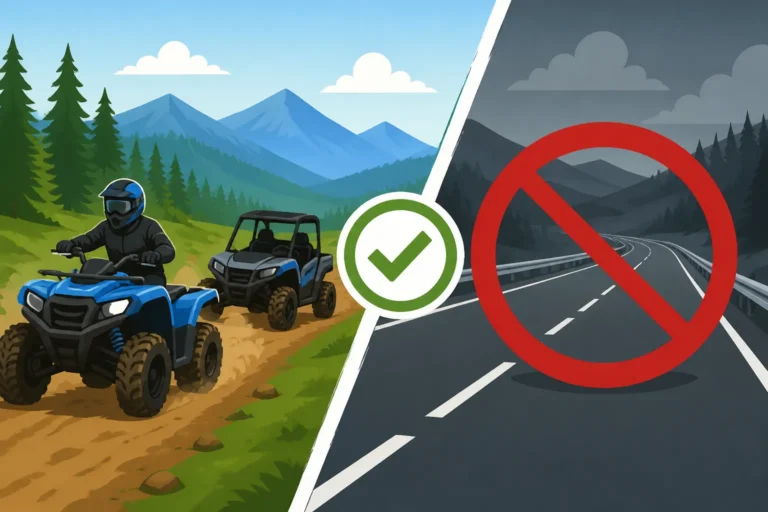
It's a common misconception, particularly for those who love escaping into the vast B.C. wilderness on their ATV or side-by-side, that the rules around impaired driving somehow don't apply when you're off the pavement. Many riders mistakenly believe that because they're not on a public highway, or maybe they're just on their own property, they're exempt from the serious consequences of operating a vehicle while impaired. This couldn't be further from the truth. This comprehensive guide will meticulously break down why the Criminal Code of Canada considers your off-road vehicle just as seriously as a car, where you can be charged with impaired riding in British Columbia, the life-altering penalties you face, and crucial advice for making responsible choices every time you ride.
The Harsh Reality: How the Criminal Code Views Your ATV
When you fire up your ATV or side-by-side, you're hopping onto a powerful machine, and regardless of where you plan to ride it, the law recognizes the inherent risks if it's operated by someone who's impaired. The Criminal Code of Canada is unambiguous on this point, treating off-road vehicles with the same gravity as any other mode of transport.
Your Off-Road Vehicle is a "Conveyance" in the Eyes of the Law
Let's cut right to the chase: under the Criminal Code, an ATV, UTV, dirt bike, or snowmobile is unequivocally considered a "conveyance." This legal term covers any motor vehicle, vessel, aircraft, or railway equipment, and your off-road machine fits squarely within that definition. This means that all the serious laws pertaining to impaired operation that apply to cars, trucks, and boats also apply to your quad or side-by-side, plain and simple.
There's a persistent myth out there that because you're "off-road," you're somehow "off-law" when it comes to impairment. Riders often think that the remote nature of the trails or the lack of traditional road infrastructure somehow grants them immunity. This simply isn't true. The legislation is designed to ensure public safety, and a 500-pound ATV hurtling through the bush under the control of an impaired operator is just as dangerous, if not more so, than a car on the highway. The physical location of the incident does not change the application of federal criminal law.
The underlying purpose of this legal definition is to protect everyone, including the impaired rider themselves. Operating a heavy, powerful, and often high-speed machine in environments that are already challenging – like rugged backcountry trails or logging roads – demands full attention, quick reflexes, and sound judgment. Any impairment drastically compromises these abilities, dramatically increasing the risk of accidents, severe injuries, or even fatalities, not only to the operator but also to passengers and other trail users.
Impairment is More Than Just Alcohol
When we talk about impaired driving, most people immediately think of alcohol, and it's certainly a major factor. However, the scope of "impairment by any means" is far broader than just a few beers. It encompasses any substance or condition that diminishes your ability to safely operate your off-road vehicle. This includes, but isn't limited to, cannabis, illegal drugs like opioids or stimulants, and even many prescription medications that carry warnings about operating heavy machinery. Mixing any of these substances, or combining them with alcohol, can create an even more dangerous and unpredictable level of impairment.
British Columbia, like the rest of Canada, has robust and continually evolving laws around drug impairment. Police officers are trained in specialized techniques, such as the Standardized Field Sobriety Test (SFST) and the more in-depth Drug Recognition Expert (DRE) evaluation, to detect impairment from substances other than alcohol. So, don't mistakenly believe that if you're not drinking, you're in the clear. Impairment from cannabis, for example, is taken just as seriously and carries the same severe penalties as alcohol impairment.
Furthermore, impairment can extend beyond substances. Extreme fatigue, certain medical conditions, or a combination of these factors can also severely compromise your ability to operate an ATV safely. If your judgment, reaction time, or coordination is impaired to the point where your operation of the vehicle becomes dangerous, it falls under the umbrella of criminal impairment. The key is whether your ability to safely control the "conveyance" is compromised.
Where the Law Patrols: Impaired Riding Anywhere in BC
One of the most persistent and dangerous myths surrounding ATV and UTV use in British Columbia is the belief that remote areas, private land, or non-public roads offer a "safe" haven from impaired driving laws. This is a critical misunderstanding that can lead to devastating consequences. The Criminal Code's reach extends far beyond paved highways, encompassing virtually every corner of our vast province where an off-road vehicle might be operated.
Crown Land and Forest Service Roads: No Sanctuary for Impaired Riding
For many B.C. riders, the allure of the backcountry—the sprawling [BC Crown Land Riding Explained] and extensive [BC Forest Service Road Rules for ORVs]—is the ultimate escape. It's easy to imagine that because you're far from city lights and traffic, the rules might be relaxed. This is a perilous assumption. RCMP, Conservation Officers, and even local police where their jurisdiction extends, have full authority to enforce the Criminal Code on all Crown land, including every kilometre of forest service roads and every twisty backcountry trail.
Consider a scenario: you and your buddies are camping deep in the Okanagan wilderness. After a long day of riding, you decide to crack open a few cold ones around the campfire. Later, someone remembers they forgot something crucial back at the truck, or perhaps just wants to "go for a quick rip" before bed. If an officer, whether RCMP or a Conservation Officer, encounters you operating your quad or side-by-side under the influence in that situation, you are just as liable for impaired driving charges as if you were on Main Street. The remote location offers no legal shield.
Law enforcement agencies often conduct joint operations or work in conjunction. While a Conservation Officer might initially be checking for things like [BC Spark Arrestor Requirements] or proper [BC ORV Registration You Pay Once], if they observe signs of impairment, they are obligated to involve the RCMP, who will then proceed with criminal charges. These agencies are actively patrolling these areas, not just for environmental infractions or hunting violations, but for all criminal activities, including impaired operation of vehicles. You'll also see this applies to [BC Motor Vehicle Closed Areas], where riding is prohibited anyway.
The Reach of the Criminal Code on Private Property
Another deeply ingrained misconception is the "my land, my rules" mentality. Many individuals believe that if they are operating their ATV or UTV on their own private property, such as a large acreage, a farm, or a gravel pit they own, they are immune from impaired driving laws. While some provincial ORV regulations might have limited exceptions for private land (for instance, not requiring registration if the machine never leaves private property), the federal Criminal Code does not differentiate based on land ownership. If you are impaired and operating a conveyance, it is a criminal offence, regardless of whose land you are on.
Imagine a situation: you're hosting a party on your rural property. Drinks are flowing, and someone decides it would be "fun" to take the quad for a spin around the field. A neighbour, disturbed by the noise or erratic driving, calls the police. When the RCMP arrive and observe you operating the machine while impaired, the fact that you're on your own property will not prevent them from laying charges. The law's primary concern is the safe operation of a conveyance, and impairment renders that operation inherently unsafe, no matter the locale.
This specific application of the law highlights the inherent dangers of assuming immunity. On private property, riders might be even more reckless, believing there are no consequences. This can be especially hazardous if there are untrained riders, children, or unexpected obstacles present. The potential for serious injury or death in such scenarios is very real, and the law is designed to deter such dangerous behaviour regardless of property lines. Remember, BC Impaired Riding and the Criminal Code extends to every machine and every square inch of the province.
The Crushing Fallout: Penalties and Long-Term Consequences
An impaired riding charge under the Criminal Code is not a minor infraction; it's a serious criminal offence with immediate, significant, and long-lasting repercussions that can fundamentally alter your life. The penalties extend far beyond a simple fine, impacting your finances, freedom, and future opportunities.
Immediate Actions: Seizure, Prohibitions, and Costs
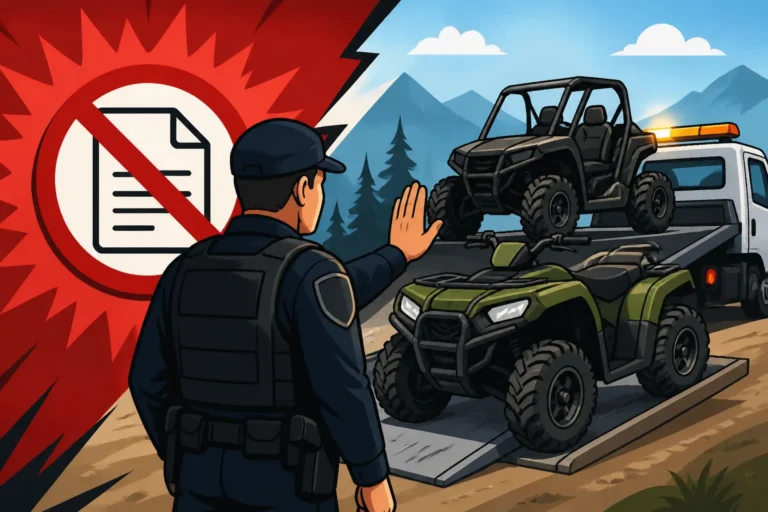
The moment an officer has reasonable grounds to believe you are operating your ATV or UTV while impaired, they can take immediate, decisive action. Your vehicle—your beloved quad or side-by-side—can be seized and impounded on the spot. This means it will be towed away, and you'll be on the hook for substantial towing and daily storage fees that can quickly accumulate, even before you've seen a judge. This is a very real power under [BC Seizure Powers Under the ORV Act]. Getting your machine back will be a costly and complicated process, if it's even returned to you before court proceedings are resolved.
Adding to the immediate headache, you will likely face an immediate roadside driving prohibition. These administrative penalties are distinct from, and in addition to, any criminal charges. Often, this results in an automatic 90-day driving ban across all classes of motor vehicles, regardless of whether you're facing a criminal charge for impaired driving. This means your driver's licence is suspended on the spot, you're issued a hefty fine, and you cannot legally operate any motor vehicle, including your car, truck, or motorcycle, for that period. Your right to drive is taken away before you've even had your day in court.
The practical nightmare that unfolds is immense. How do you get home if your machine is impounded and your licence is suspended? Who will pick you up from a remote Forest Service Road? The logistical challenges alone are a massive source of stress and expense, not to mention the hit to your independence. This immediate financial and personal disruption serves as a stark warning of the much greater consequences that lie ahead.
Criminal Conviction: A Life-Altering Event
If you are convicted of impaired driving under the Criminal Code, the penalties are severe and mandatory. For a first offence, you're looking at a substantial mandatory minimum fine, often around $1,000 for alcohol impairment, and potentially higher for drug impairment or if your blood alcohol content (BAC) was particularly high. Crucially, a first conviction also carries a mandatory minimum one-year prohibition from operating any motor vehicle in Canada. This means you lose your driver's licence for at least a year, impacting every aspect of your daily life.
Repeat offences escalate dramatically. A second conviction for impaired driving carries a mandatory minimum jail sentence, typically 30 days, along with a driving prohibition of at least two years. If you're convicted a third time or more, the mandatory jail time increases significantly (minimum 120 days), and your driving prohibition extends even further, often for three years or longer. These are not discretionary sentences; judges are legally bound to impose these minimums. These are serious [BC Impaired Riding Penalties].
Beyond the immediate fines and jail time, the most profound and permanent consequence is acquiring a criminal record. This isn't something that fades away. A criminal record can severely impact your employment opportunities, making it difficult to find or keep jobs, particularly in fields that require driving, security checks, or professional licensing. It will also restrict your ability to travel to many countries, including the United States, as you may be deemed inadmissible. This permanent mark on your record can affect housing applications, volunteer positions, and your overall social standing, creating a ripple effect across your entire life.
Skyrocketing Insurance Costs and Social Repercussions
Even after you've paid your fines, served your jail time, and regained your driving privileges, the financial consequences of an impaired driving conviction will continue to haunt you for many years through your insurance rates. An impaired driving conviction is considered a major driving offence, and it will cause your vehicle insurance premiums—not just for your ATV, but for all your vehicles, including your car and truck—to skyrocket. You might find yourself paying thousands of dollars more per year for coverage, and some insurance providers may even refuse to cover you at all, forcing you into high-risk pools.
This massive and ongoing financial burden is just one aspect of the long-term impact. The social and personal toll can be equally devastating. An impaired driving conviction can damage your reputation within your community, strain relationships with family and friends, and cause immense stress as you navigate the complexities of the legal system and try to rebuild your life. The stigma associated with such a conviction can be difficult to overcome, affecting your self-esteem and future prospects.
And what about your passion for riding? Even if you manage to keep your quad or side-by-side, getting affordable insurance for it, or even just dealing with the lingering shame and regret, can strip away the joy of hitting the trails. You might have invested significantly in your machine, perhaps outfitting it with premium upgrades from companies like SuperATV to enhance its performance and durability. But all that investment in components like heavy-duty axles, lift kits, or specialized tires feels utterly meaningless when you're facing astronomical insurance rates, a potential loss of your driving privileges, and the constant reminder of a life-altering mistake.
Making Responsible Choices: Preventing Impaired Riding
The potential consequences of impaired riding are far too severe to take lightly. The good news is that preventing these outcomes is entirely within your control. Making responsible choices every time you consider operating your ATV or UTV is the simplest, most effective way to ensure your safety, protect your future, and continue enjoying the incredible riding opportunities British Columbia has to offer.
The "Don't Drink and Ride" (or Drug) Rule is Non-Negotiable
When it comes to operating any motor vehicle, including your ATV or UTV, the safest and only legally sound approach if you plan to consume alcohol or any impairing drug is to simply not ride. There is no acceptable level of impairment, no "just a short ride" excuse that will hold up in court, and no amount of alcohol or drugs that won't compromise your ability to safely control your machine. This rule should be non-negotiable for every rider.
To help implement this, practical planning is key. If you're heading out for a day or weekend of riding and anticipate having drinks, make arrangements beforehand. Designate a completely sober rider for the day, someone who commits to not consuming any impairing substances and will be responsible for operating the machines. Alternatively, plan to camp overnight and ensure your ATV remains parked and untouched until you are absolutely certain you are sober and clear-headed. Your judgment, reaction time, and coordination are paramount for navigating challenging off-road terrain, and even subtle impairment compromises these vital skills, putting yourself and others at serious risk.
Remember, the goal isn't just to avoid legal trouble; it's to stay alive and keep everyone around you safe. The exhilaration of riding through B.C.'s beautiful landscapes should never be overshadowed by the profound regret of an impaired decision. You'll find other ways to relax and socialize at camp. The trails will still be there tomorrow. For more on general safety, consider checking out resources like [BC ATV Safety Training Options].
Education, Awareness, and Peer Pressure
Knowledge is a powerful tool in staying safe and legal. It's crucial for riders to educate themselves on the current laws surrounding alcohol and drug impairment, especially with the evolving legislation concerning cannabis. Understanding what constitutes impairment, how it's detected by law enforcement, and the specific legal thresholds will empower you to make informed decisions. Don't rely on outdated information or campfire rumors; consult official sources for accurate legal guidance.
Peer pressure, both positive and negative, plays a significant role in group activities. If you're riding with friends, foster a culture of responsible riding. If you see a fellow rider about to make a poor decision—perhaps reaching for their keys after having a few drinks—intervene. A moment of awkwardness or direct conversation is infinitely better than witnessing an accident, facing legal repercussions, or dealing with the tragic aftermath. Everyone in the group has a responsibility to look out for one another and ensure safe practices, including adherence to [BC Alcohol Rules While Riding].
Effective planning for any off-road excursion should always include a commitment to sober riding. Discuss expectations with your group before you even leave home. This ensures everyone is on the same page about safe practices, route planning, carrying emergency supplies, and, crucially, avoiding any form of impairment. Even if you're excited to try out some new performance parts or heavy-duty protection from SuperATV, doing so safely and legally should always be the absolute top priority.
The Importance of Other Safety Practices
While directly addressing impaired riding, it's worth noting that a holistic approach to safety on your ATV or UTV reinforces responsible behavior across the board. Always wear appropriate safety gear. This includes a certified helmet, which is mandatory under [BC Helmet Law Covers Every Rider] for all ride-astride machines, along with goggles, gloves, sturdy footwear, and protective clothing. This gear is your first line of defense in the event of an unforeseen incident.
Beyond personal protective equipment, practice responsible machine operation. Ride within your skill level, never push beyond your limits or those of your machine. Keep your ATV or UTV well-maintained, ensuring all safety systems are functioning correctly. Respect the terrain, local signage, and wildlife, adhering to rules that apply on all public lands like [BC Rules for Riding Crown Land]. Many areas, for instance, have specific rules about speed, noise, or access.
Ultimately, a truly enjoyable and sustainable ATV/UTV lifestyle in British Columbia is built on a foundation of respect. Respect for the law, for other riders, for the environment, and critically, for your own well-being. Choosing to ride unimpaired is the single most important decision you can make to uphold this respect. Whether your machine is a stock model or a customized powerhouse equipped with top-tier accessories from SuperATV, the true joy and freedom of off-road riding hinges entirely on making smart, sober choices every time you hit the trails.
| Misconception About Impaired Riding in BC | Reality Under the Criminal Code of Canada |
|---|---|
| "It's an off-road vehicle, so it's not like a car." | An ATV/UTV is legally a "conveyance," subject to the same impaired driving laws as a car, boat, or truck. |
| "I'm only on Crown land/FSRs, so police can't charge me." | RCMP, Conservation Officers, and police have full authority to enforce the Criminal Code on all Crown land, including Forest Service Roads and remote trails. |
| "I'm on my own private property, so it doesn't count." | The Criminal Code applies universally; land ownership does not exempt you from impaired driving laws. |
| "Impairment only means alcohol." | Impairment includes alcohol, cannabis, illegal drugs, many prescription medications, and even severe fatigue. |
| "I just had a couple of beers, I feel fine." | Your perception of impairment is irrelevant; legal limits (e.g., BAC) and observable signs of impairment are what matter to law enforcement. |
| "The worst that can happen is a small fine." | Penalties include immediate vehicle seizure, driving prohibitions, mandatory minimum fines (thousands of dollars), jail time (mandatory for repeat offences), and a permanent criminal record. |
| "It only affects my ATV riding." | A criminal conviction for impaired driving prohibits you from operating any motor vehicle (car, truck, motorcycle) for extended periods and dramatically increases insurance for all your vehicles. |
| "A criminal record isn't a big deal for off-roading." | A criminal record impacts employment, international travel, professional licensing, and community standing, affecting far more than just your riding hobby. |
Disclaimer
This article is for general informational purposes only and does not constitute professional advice. Laws, prices and regulations vary by location and change over time. Consult a qualified professional for guidance on your specific situation.