Registration Mistakes Brokers See
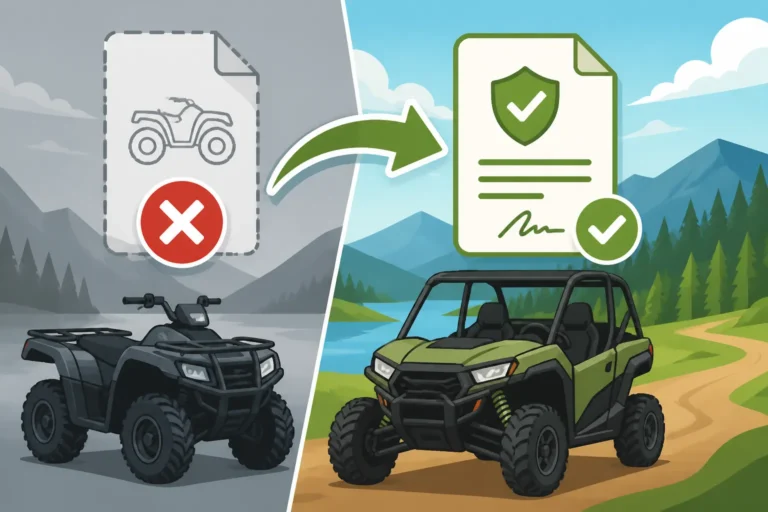
Registering an off-road vehicle (ORV) in British Columbia can feel like a labyrinth, especially if you're dealing with a machine that's changed hands a few times. Many riders walk into an Autoplan broker's office expecting a quick process, only to be met with roadblocks. This guide will shine a light on the most common registration mistakes brokers encounter and offer practical advice to help you navigate the system smoothly and get your quad or side-by-side legally registered.
The Sticky Wicket of Missing or Incomplete Paperwork
One of the biggest headaches for both riders and brokers alike stems from missing, incomplete, or poorly executed paperwork. Unlike registering a car, where there's usually a clear paper trail, ORVs, especially older ones, often come with a patchy history. People often buy machines with handwritten receipts, or even just a handshake, not realizing the implications down the road.
The Elusive Bill of Sale Chain
You might think a bill of sale from the person you bought your quad from is enough, but BC's registration system demands more. Brokers frequently see riders presenting a single bill of sale when the machine has clearly had several owners. The rule of thumb in BC is that you need a bill of sale for every prior owner in the machine's history, all the way back to the original purchase from a dealership, or at least to November 17, 2015, when ORV registration became mandatory. This can be a huge shock for someone who bought an older machine and only has a scrap of paper from their immediate seller. The broker needs to see a continuous chain of ownership to confirm where the machine came from and that it wasn't stolen or otherwise acquired improperly. This is why you'll often hear us talking about [BC Ownership Chains Going Back Decades].
Imagine you buy a used ATV from a friend, who bought it from a stranger a few years back, who in turn got it from their uncle. If you only have a bill of sale from your friend, the broker will hit a wall. They need a bill of sale from the uncle to the stranger, and then from the stranger to your friend, and finally from your friend to you. It's a meticulous process, but it's essential for proving legitimate ownership. Without this unbroken line, the broker can't move forward, and you'll be left scratching your head, wondering how to track down people who may have vanished years ago. This is a common pitfall and can cause significant delays in getting your ORV registered.
When a Statutory Declaration Becomes Your Best Friend
So, what happens when you just can't track down all those previous owners, or perhaps the bills of sale were lost in a move, or even worse, never existed? This is where a statutory declaration becomes your lifeline. Many people come into the broker's office without knowing this option exists, or they don't understand how to properly execute one. A statutory declaration is a legal document where you solemnly declare, under oath, that you are the rightful owner of the ORV and explain the circumstances surrounding the missing paperwork. It's essentially you telling your story in a legally binding way.
A common mistake is trying to write one out yourself without proper legal wording, or simply stating "I own this quad" without the necessary details. A broker will guide you on what needs to be included: details about when and where you acquired the machine, from whom (even if you only know their first name), how much you paid, and why the original bills of sale are missing. You then sign this document in front of a Commissioner for Oaths, which many Autoplan brokers are, or a notary public. Services like LawDepot can be incredibly useful here, as they provide clear, customizable templates for statutory declarations, helping you ensure all the necessary legal language is present. This can save you a lot of time and potential rejections from the broker. Remember, [BC Statutory Declarations Cost $15] (for the commissioner fee) and are a vital tool when you're missing that crucial link in your ownership chain.
Misunderstanding the BC Registration System
Another frequent source of confusion and subsequent mistakes stems from a fundamental misunderstanding of how ORV registration works in British Columbia, especially compared to other provinces or vehicles. Many people come in with expectations based on car titling, which simply doesn't apply to quads and dirt bikes here.
The "No Title" Revelation
Perhaps the most common misconception is the expectation of receiving a "title" for their ORV, similar to how cars are titled in many jurisdictions. Riders often arrive asking, "Where's the title?" or "I lost the title, what now?" The reality in BC is that ORVs do not have titles. Instead, when you successfully register your machine, you receive a [BC's Certificate of Registration Explained]. This Certificate of Registration is your official proof of ownership and registration.
This distinction is crucial because it affects everything from how you prove ownership to what happens when you sell your machine. Without a title, the continuous chain of bills of sale becomes even more vital for establishing ownership. The mistake here isn't yours for expecting a title – it's a common and understandable assumption – but rather not knowing that BC operates differently for ORVs. Brokers spend a significant amount of time explaining [Why BC Does Not Title an ATV] and why the Certificate of Registration, along with your bills of sale, is the gold standard for your ORV. It’s a subtle but important difference that can trip up even experienced vehicle owners.
The "Register Once, Forever" Myth (or Truth!)
Many people also get confused about the ongoing costs and renewal process. They often ask, "How much does it cost to renew my ORV registration this year?" or they might bring in their old car insurance renewal slips, thinking it's the same. A significant point of confusion brokers address is that [BC Registration Lasts as Long as You Own It]. Once you've paid the initial registration fee and received your Certificate of Registration, there are no annual renewal fees or stickers for the registration itself.
This is different from how car insurance and registration work, where you typically renew annually. While you might need to renew your insurance annually if you choose to have it (and you should!), the core registration of the ORV in your name is a one-time event per owner. The mistake here is anticipating an annual administrative hurdle that simply doesn't exist for the registration itself. It’s a pleasant surprise for many, but the initial misunderstanding can lead to unnecessary questions and even a delay if you’re trying to renew something that doesn't need renewing. Always remember that while your registration is a one-and-done for ownership, your liability insurance for riding on Crown land, especially [BC Resource Roads Count as Crown Land], will need annual attention.
Overlooking Critical Details and Identifying Your Machine
Even with the right paperwork, small but significant details can derail the registration process. These often involve verifying the machine itself against the documents.
VIN Discrepancies and Illegible Serial Numbers
Every ORV has a unique Vehicle Identification Number (VIN) or serial number, usually stamped on the frame. This number is the machine's identity, and it needs to match exactly across all your bills of sale and the registration application. Brokers frequently encounter situations where the VIN on a bill of sale is incorrect, illegible, or has been written down inaccurately. Sometimes, an older machine might have a VIN that's faded, rusted, or even partially obscured by modifications.
If the VIN on your paperwork doesn't match the actual VIN on the machine, the broker cannot proceed. It's a red flag for potential fraud or a clerical error that needs to be rectified. It's your responsibility to physically verify the VIN on your machine matches all your documents before you even head to the broker. If you're buying a used machine, take a photo of the VIN. If it's unreadable, you've got a much bigger problem. In severe cases where the [BC Registration When the VIN Is Gone], it can make registration almost impossible without extensive verification and potentially a police report, which no one wants to deal with. Always double-check this critical detail!
The Importance of Correct Owner Information
Finally, ensuring all owner details are accurate and consistent across all documents is vital. This seems obvious, but small mistakes can cause big delays. For instance, sometimes a bill of sale might have a slightly different spelling of a name, or an old address, or perhaps it lists only one owner when the machine is intended for co-ownership. These minor inconsistencies force the broker to pause and clarify.
If you're registering an ORV with [BC Registration With Two Owners], make sure both owners are clearly named on the bill of sale and are present with their photo ID. If a machine was gifted within a family, a simple handwritten note isn't sufficient. You'll need a proper [BC Gift Letters Between Family] or a statutory declaration stating the circumstances of the gift. The broker needs to ensure that the person registering the vehicle is indeed the rightful owner(s) and that their identity matches the documentation. A small discrepancy might seem minor to you, but to a broker, it’s a potential roadblock that needs to be resolved before your ORV can hit the trails legally.
Here's a quick summary of common mistakes and how to avoid them:
| Mistake Category | Common Problem | How to Avoid / Solution | Key Documents/Actions Needed |
|---|---|---|---|
| Paperwork Gaps | Missing bills of sale from previous owners (broken chain of ownership). | Obtain all bills of sale back to the original purchase or Nov 2015. | [BC Bills of Sale for Every Prior Owner] |
| Lost or non-existent bills of sale. | Use a statutory declaration. Ensure it's detailed and signed before a Commissioner for Oaths (LawDepot can help). | [BC Statutory Declaration for an ORV], [BC Statutory Declarations Cost $15] | |
| System Misunderstanding | Expecting a "title" for the ORV. | Understand BC issues a Certificate of Registration, not a title. | [BC's Certificate of Registration Explained], [Why BC Does Not Title an ATV] |
| Believing registration needs annual renewal fees. | Remember registration is a one-time fee for as long as you own the machine (insurance is separate). | [BC Registration Lasts as Long as You Own It], [BC Has No Annual Renewal Sticker] | |
| Machine Identification | VIN on documents doesn't match the machine, or VIN is illegible. | Physically verify VIN on machine matches all paperwork before visiting the broker. Take photos if buying used. | Clear, legible VIN on machine and all documents. |
| Owner Information Errors | Incorrect name spelling, outdated address, or missing co-owner details. | Ensure all personal details are consistent across all documents and match your photo ID. Both owners present for joint registration. | Valid photo ID, accurate personal information on all bills of sale/declarations. [BC Registration With Two Owners] |
Disclaimer
This article is for general informational purposes only and does not constitute professional advice. Laws, prices and regulations vary by location and change over time. Consult a qualified professional for guidance on your specific situation.