Running a Stolen Vehicle Check Before You Hand Over Cash
There's nothing quite like the excitement of finding that perfect ATV or UTV – maybe it’s a rugged workhorse for your acreage, or a zippy sport model for hitting the backcountry trails. You picture yourself out there, feeling the wind, exploring British Columbia's incredible wilderness. But that excitement can quickly turn into a financial and legal nightmare if the machine you've just handed over your hard-earned cash for turns out to be stolen. This guide will walk you through the absolutely critical steps of running a stolen vehicle check before you buy, ensuring your dream machine doesn't become a very expensive problem.
Why a Stolen Vehicle Check is Non-Negotiable in BC
In the world of off-road vehicles, the stakes are surprisingly high, and the pitfalls are deep. Unlike cars or trucks, ATVs and UTVs often change hands with less formal paperwork, making them prime targets for thieves and a potential minefield for unsuspecting buyers. Ignoring a stolen vehicle check is like walking blindfolded into a busy intersection – you might get lucky, but the risks are astronomical.
The Nightmare Scenario: Losing Your Machine and Money
Imagine this: you've just bought what you thought was a fantastic deal on a used quad. You’ve had it for a few weeks, maybe even a few months, enjoying rides with your friends or tackling chores around the property. Then, a knock on the door, or a stop by a Conservation Officer on a trail, and suddenly you're told your machine is stolen. The police confiscate it, you lose every penny you paid, and you're left with nothing but regret and an empty spot in your garage. This isn't just a hypothetical scenario; it happens to people in BC more often than you might think.
The truth is, if you buy a stolen machine, you don't legally own it. Even if you bought it in good faith, you're not protected. The original owner, or their insurance company, has the rightful claim. You'll be out the purchase price, and you won't get compensation for any improvements or maintenance you've done. On top of that, you could face legal scrutiny, having to prove you weren't involved in the theft. It’s a huge headache and a complete financial write-off. This is compounded by the fact that [Why BC Does Not Title an ATV], meaning the standard titling process you might be used to with cars isn't there to offer additional layers of verification.
The Hidden Dangers of an Unknown Past
Beyond outright theft, an undocumented or poorly vetted purchase can hide a whole host of other problems. Perhaps the machine has an undeclared lien on it, meaning the previous owner still owes money on it. If they default on their loan, the lender could repossess your machine, even though you paid for it. Or, maybe the machine was involved in an accident, salvaged, and poorly repaired, making it unsafe to ride. Without a proper check, you're buying into someone else's problems, and these issues can surface long after the sale, causing significant stress and expense. A thorough check isn't just about theft; it's about uncovering any red flags that could devalue your investment or make it unusable. When you finally go to [How to Register an ATV in BC], any undisclosed issues can quickly halt the process.
How to Conduct a Stolen Vehicle Check in BC
Okay, so you understand the risks. Now, let’s talk about how to protect yourself. The process for checking an ATV or UTV is a bit different than for a car, mainly because many off-road vehicles don't have the same extensive public records databases. However, there are still crucial steps you can and should take.
Start with the VIN: Your First Line of Defense
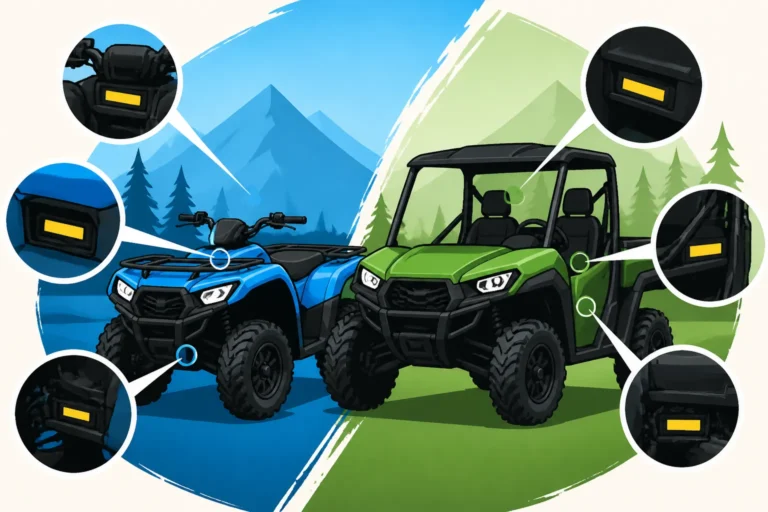
Every ATV and UTV has a Vehicle Identification Number (VIN). This unique 17-character code is like the machine's fingerprint. It tells you the manufacturer, model, year, and a specific serial number. Your very first step is to locate this VIN on the machine itself and make sure it matches any paperwork the seller provides. Be incredibly suspicious if the VIN on the machine is missing, obscured, or appears to have been tampered with. This is a massive red flag.
You can usually find the VIN stamped into the frame, often on the lower front left side near the wheel, or sometimes on the frame near the engine. It might also be on a sticker on the frame. If you're having trouble locating it, do a quick online search for your specific make and model, and "VIN location." Make sure the VIN is clearly legible and shows no signs of grinding, welding, or restamping. [Serial Numbers and Where They Hide] can give you more detailed instructions on where to look.
Official Channels: Local Police and CPIC
The most authoritative source for checking if a machine is stolen is the police. The Canadian Police Information Centre (CPIC) database is the national repository for all stolen property, including vehicles.
Here’s the catch: police departments generally won't run a CPIC check for you on a private sale unless you are an officer of the law. They're usually reluctant to get involved in private transactions. However, you can try this approach:
- Ask the Seller to Get the Check: Politely ask the seller if they would be willing to go to a local police detachment (non-emergency line or front desk) and request a stolen vehicle check themselves. They can then show you the documentation. If they refuse, that's a red flag.
- Request a "Non-Emergency" Attendance (Last Resort): In some very specific circumstances, if you have a strong suspicion, you might be able to request a police officer attend the viewing or sale location to verify the VIN against their database. This is rare and often only possible if you have a legitimate reason for concern, not just general caution. Don't count on this, as police resources are stretched thin.
Remember, even if a police officer checks the VIN and confirms it's not stolen, they won't disclose any personal information about the current owner or previous owners. Their role is strictly to verify the stolen status.
Online Services: What They Offer and Their Limitations
Several third-party online services offer VIN checks. These services can sometimes access databases that flag stolen vehicles, report liens, or even provide accident history. Examples might include services popular for cars and trucks that are expanding to ORVs.
When considering these services, keep these points in mind:
- Coverage for ORVs: Not all services have comprehensive data for ATVs and UTVs. Many focus primarily on highway-legal vehicles. Confirm that the service you choose specifically covers off-road vehicles for BC.
- Cost: Most of these services charge a fee, ranging from a few dollars to considerably more, depending on the depth of the report.
- Information Depth: A good report will ideally include:
- Stolen vehicle check against national databases.
- Lien check (to see if the vehicle has outstanding debt). [BC Registration and Lien Records]
- Accident history (if available).
- Previous registration details (though this is less common for ORVs in BC).
- Limitations: These services are only as good as the data they can access. Sometimes, information for older or less common ORVs might be sparse or non-existent. Always cross-reference with other checks.
While no single online service is a silver bullet, they can provide a valuable layer of protection. Always ensure you are on a reputable site and understand what data they claim to access.
Essential Steps Beyond the Stolen Vehicle Check
A stolen vehicle check is foundational, but it’s only one piece of the puzzle. To truly protect yourself, you need to combine it with other crucial due diligence steps.
Verifying the Seller and Their Ownership
This is where many private sales fall apart. Don't be afraid to ask for identification and to see proof that the seller actually owns the machine.
- Seller's Identification: Always ask to see the seller's valid government-issued photo ID (like a BC driver's licence). Verify that the name on the ID matches the name on the ownership documents. If they refuse, walk away.
- Certificate of Registration: In BC, an ATV or UTV should have a [BC's Certificate of Registration Explained] issued by ICBC. This document is proof of ownership. Ensure the VIN on the certificate matches the VIN on the machine and the seller’s ID. This is paramount!
- Bill of Sale: Even with a Certificate of Registration, a detailed bill of sale is critical. This legal document proves the transfer of ownership from the seller to you, specifies the agreed-upon price, and should include declarations that the machine is free of liens and is not stolen. You can find excellent, legally sound templates for a bill of sale on platforms like LawDepot. Using a structured template from LawDepot ensures all necessary legal clauses are included, protecting both parties. [BC Bills of Sale for Every Prior Owner] explains why this document is so important.
Dealing with Missing or Questionable Paperwork
What if the seller doesn't have a Certificate of Registration, or the ownership history is murky, perhaps with gaps in the bills of sale going back decades? This situation is unfortunately common with older machines.
- Proceed with Extreme Caution: This is a huge red flag. If the seller can't provide a clear chain of ownership, you are taking on significant risk.
- Statutory Declaration: In some cases, if a previous bill of sale or the Certificate of Registration is truly lost, the seller might suggest completing a [BC Statutory Declaration for an ORV]. This is a sworn legal document where the declarant states, under oath, that they are the rightful owner and how they acquired the machine. While this can be used for registration, it's not a guarantee against a stolen vehicle claim. It simply states the seller's claim of ownership. A template for a statutory declaration can also be found on platforms like LawDepot, but remember, signing one doesn't absolve you of responsibility if the machine is later found to be stolen. It is a document that must be taken seriously, and ideally, you should seek legal advice if you're relying solely on one.
- Walk Away: If the paperwork is severely lacking, and you can't verify the machine's history through other means, the safest option is often to walk away. No deal is worth the potential legal and financial headache.
The Importance of a Physical Inspection
Beyond the paperwork, a physical inspection can reveal a lot about the machine's true history.
- VIN Tampering: Carefully examine the VIN plate or stamped area. Look for any signs of grinding, welding, or an attempt to re-stamp a different number. If the area looks suspicious, uneven, or altered, this is a major warning sign.
- Ignition and Locks: Check the ignition and any storage compartment locks. Are there signs of forced entry? A damaged ignition could indicate it was hot-wired.
- Overall Condition: While not directly related to theft, a machine in suspiciously poor condition for its age or a machine that seems to have parts from different models can sometimes hint at a troubled past. Trust your gut.
Protecting Your Investment After the Purchase
Congratulations! You’ve done your due diligence, run all the checks, and found a legitimate machine. But your protection doesn't end when you hand over the cash.
Registering Your New-to-You Machine
As soon as you’ve completed the purchase, your next crucial step is to register the machine in your name at an ICBC Autoplan broker. This isn't just a suggestion; it's a legal requirement if you plan to ride on Crown land, which includes most trails and [BC Forest Service Road Requirements]. [BC Registration Became Mandatory in 2015].
Take all your paperwork – especially the previous owner's Certificate of Registration (or the statutory declaration, if applicable) and your new, detailed bill of sale (ideally created with a reliable tool like LawDepot) – to a broker. They will guide you through the [BC Transfer of Ownership Steps]. Prompt registration solidifies your legal claim to the machine and ensures you comply with BC law.
Understanding Liens and Encumbrances
Even if a stolen vehicle check comes up clear, always consider a separate lien check. A lien means someone else has a financial claim on the machine. If the seller has outstanding debt secured by the ATV or UTV, and they don't pay it, the lender could repossess the machine from you. Some online VIN check services include a lien check, but it's always good to confirm. When you use a comprehensive bill of sale, particularly one crafted with the legal precision offered by LawDepot, you can include clauses where the seller explicitly declares the machine is free of any liens, offering an additional layer of legal recourse if a lien were to surface later. This helps protect you from unexpected financial burdens.
Summary of Stolen Vehicle Check Methods
To help you keep track of your options, here's a quick summary of the methods for checking a used ATV or UTV in BC:
| Method | What it Checks For | Pros | Cons | Cost |
|---|---|---|---|---|
| Police/CPIC | Stolen status (primary) | Most authoritative source for theft data. | Difficult to get directly for private sales; no owner info given. | Free (indirect) |
| Online VIN Service | Stolen, liens, accident history (variable) | Convenient, can offer broad range of data. | Coverage for ORVs can be limited; data completeness varies. | Varies (Paid) |
| Physical VIN Check | Tampering, alteration | Direct visual inspection for fraud. | Only detects obvious physical manipulation, not database status. | Free |
| Verification of Seller | Identity, proof of ownership (via ID, Certificate, Bill of Sale) | Ensures seller is authorized to sell, creates legal paper trail. | Relies on seller cooperation; can be challenging with missing docs. | Free |
| Lien Check | Outstanding debt on the machine | Crucial to prevent repossession by creditors. | Often a separate check; may not be included in all stolen reports. | Varies (Paid/Free) |
By combining these methods, you build a robust shield against the significant risks of buying a used ATV or UTV in British Columbia. Don't let the excitement of a new machine overshadow the critical importance of due diligence. Protect your money, protect your peace of mind, and ensure your time on the trails is nothing but fun.
Disclaimer
This article is for general informational purposes only and does not constitute professional advice. Laws, prices and regulations vary by location and change over time. Consult a qualified professional for guidance on your specific situation.