BC Dealer Paperwork at Delivery
Bringing home a shiny new (or new-to-you) ATV or UTV from a BC dealership is an exciting moment, but it often comes with a bit of a headache: a stack of paperwork. Navigating what all those documents mean, what you absolutely need, and why it's all so important for legal ownership and registration in British Columbia can feel overwhelming. This guide will walk you through the essential paperwork you should receive at the time of delivery, why each piece matters, and what steps to take to ensure a smooth transition from dealer lot to trail.
What Paperwork Should You Expect When You Take Delivery of Your ATV or UTV?
When you’re finally ready to drive away with your new off-road vehicle, the last thing you want is a surprise later when you try to register it. Dealers in British Columbia are generally pretty good about preparing the necessary documentation, but it's always wise to be informed. You should expect a few key documents that are crucial for proving ownership, registering your machine, and understanding your warranty. Missing even one of these can lead to frustrating delays and extra trips.
The Bill of Sale: Your Proof of Purchase
This is, without a doubt, the most critical document you'll receive from a dealer. The bill of sale is the legal record of your purchase. It formally transfers ownership of the ATV or UTV from the dealership to you. Think of it as the foundational piece of your ownership puzzle. Without a proper bill of sale, proving you legitimately own the machine becomes incredibly difficult, especially when it comes time to register it with an Autoplan broker.
A good bill of sale from a dealer will include several key pieces of information. It should clearly state the full legal names and addresses of both the seller (the dealership) and the buyer (you). The date of the sale is also essential, as is a detailed description of the off-road vehicle itself. This description should include the make, model, year, and, most importantly, the Vehicle Identification Number (VIN) or serial number. Double-check that this VIN matches the actual VIN stamped on your machine. Any accessories or additional items included in the sale, like a winch or a trailer, might also be listed, along with the purchase price, any applicable taxes (like PST), and the total amount paid. Some dealers might use generic forms, but a comprehensive one is always better. If you ever need a supplementary personal bill of sale for a private transaction down the road, resources like LawDepot offer templates that can help you create one that includes all the necessary details.
New Vehicle Information Statement NVIS or Statement of Origin
For brand-new ATVs or UTVs, you'll receive something called a New Vehicle Information Statement (NVIS) or, sometimes, a Manufacturer’s Statement of Origin (MSO) or Certificate of Origin (MCO). This document is the manufacturer's official declaration of the vehicle's birth, so to speak. It certifies that the vehicle is new and has never been registered before. The NVIS or MSO acts as the very first link in the ownership chain for a brand-new machine.
The NVIS will contain vital information about your machine, mirroring much of what's on the bill of sale but directly from the manufacturer. This includes the full VIN, make, model, year, and often the engine size and type. It essentially confirms that the vehicle is legitimate and ready for its first registration. In British Columbia, because we don't have a traditional "title" system for ORVs like many other jurisdictions, this document is incredibly important. It's the ultimate proof that your vehicle is indeed factory-fresh and has a clean slate for its first owner. [Why BC Does Not Title an ATV] explains more about why our system is different from others you might be familiar with.
Manufacturer's Warranty Information and Owner's Manual
While not strictly required for registration, the manufacturer's warranty information and the owner's manual are incredibly important for you as a new owner. The warranty details outline what components are covered, for how long, and under what conditions. Understanding your warranty is crucial for protecting your investment against potential manufacturing defects or issues that might arise early in your ownership. Make sure you get a physical copy or clear instructions on how to access this information online.
The owner's manual is your go-to guide for everything about your new machine. It contains essential information on operation, maintenance schedules, safety warnings, and troubleshooting tips. Take the time to flip through it; you'll learn about recommended oil types, tire pressures, break-in procedures, and specific controls you might not have encountered before. Getting familiar with your machine through the manual can save you a lot of headaches (and repair bills) down the road. While these don't factor into the official [BC ATV Registration Requirements], they are vital for responsible ownership.
Why Each Piece of Paperwork Matters for BC Registration
It might feel like a lot of paper, but each document serves a specific, crucial purpose, especially when it comes to getting your machine legally registered for use on Crown land and Forest Service Roads in British Columbia. Unlike highway vehicles, ORVs have their own distinct registration process, and the paperwork you receive from the dealer is foundational to that. Remember, [BC Registration Became Mandatory in 2015], so these steps aren't optional anymore.
Establishing Your Ownership Chain
In British Columbia, the registration system for off-road vehicles focuses heavily on proving a continuous chain of ownership. Since there isn't a "title" document that gets transferred, every transaction from the manufacturer to the current owner needs to be accounted for. The bill of sale from the dealer, combined with the NVIS or MSO for new machines, forms the initial links in this chain.
When you go to an Autoplan broker to register your ATV or UTV, they will meticulously review these documents to ensure there are no gaps or ambiguities in who has owned the machine. They need to be confident that you are the rightful owner before issuing a Certificate of Registration and an ORV plate. If you bought a used machine from a dealer, they should have collected the previous owner's bill of sale or registration documents when they acquired the vehicle. This means the dealer effectively becomes a link in the chain, passing that proof of ownership to you. This is why [BC Bills of Sale for Every Prior Owner] is such a critical concept in our province. Without this clear history, you might face significant hurdles.
Verifying Machine Details for ICBC/Autoplan Brokers
The detailed information on your bill of sale and NVIS is directly used by Autoplan brokers to accurately record your off-road vehicle in the provincial registry. The VIN, make, model, and year are all crucial data points. Any errors or discrepancies between your paperwork and the physical machine can cause major issues during the registration process.
For instance, if the VIN on your bill of sale doesn't perfectly match the VIN stamped on the frame of your ATV, the broker won't be able to process the registration. They need exact matches to prevent fraud and ensure accurate record-keeping. This attention to detail is part of why [BC Autoplan Brokers Handle ORV Registration] – they are trained to spot these potential problems. They'll also use this information to determine the correct classification of your ORV and to calculate any provincial sales tax (PST) that might be due if it wasn't already paid at the dealership. Accuracy here is key to getting your [BC's Certificate of Registration Explained] without a hitch.
Protecting Your Investment with Warranties
While the warranty information doesn't directly impact your ability to register the machine, it's absolutely vital for protecting your financial investment. Off-road vehicles can be complex machines, and issues can arise, especially with new models. Knowing the terms of your warranty means you understand what the manufacturer is responsible for if something goes wrong.
The dealer should explain how to activate your warranty, if necessary, and what steps to take if you experience a problem. Often, service must be performed by an authorized dealership to keep the warranty valid. Keep these documents in a safe place, alongside your registration papers. Ignoring warranty details could leave you on the hook for expensive repairs that would have otherwise been covered. Think of it as another layer of security for your purchase, ensuring that your machine runs smoothly long after you've completed your [How to Register an ATV in BC] process.
What to Do If Something is Missing or Incorrect at Delivery
It's a perfect world where every piece of paper is precisely where it should be, and every detail is correct. Unfortunately, mistakes happen, or sometimes, a used machine might come with a less-than-perfect paper trail. Being proactive and knowing what to do in these situations can save you a world of stress and frustration. The last thing you want is to be held up from enjoying your new machine because of a simple oversight.
Reviewing the Documents Before You Leave the Dealership
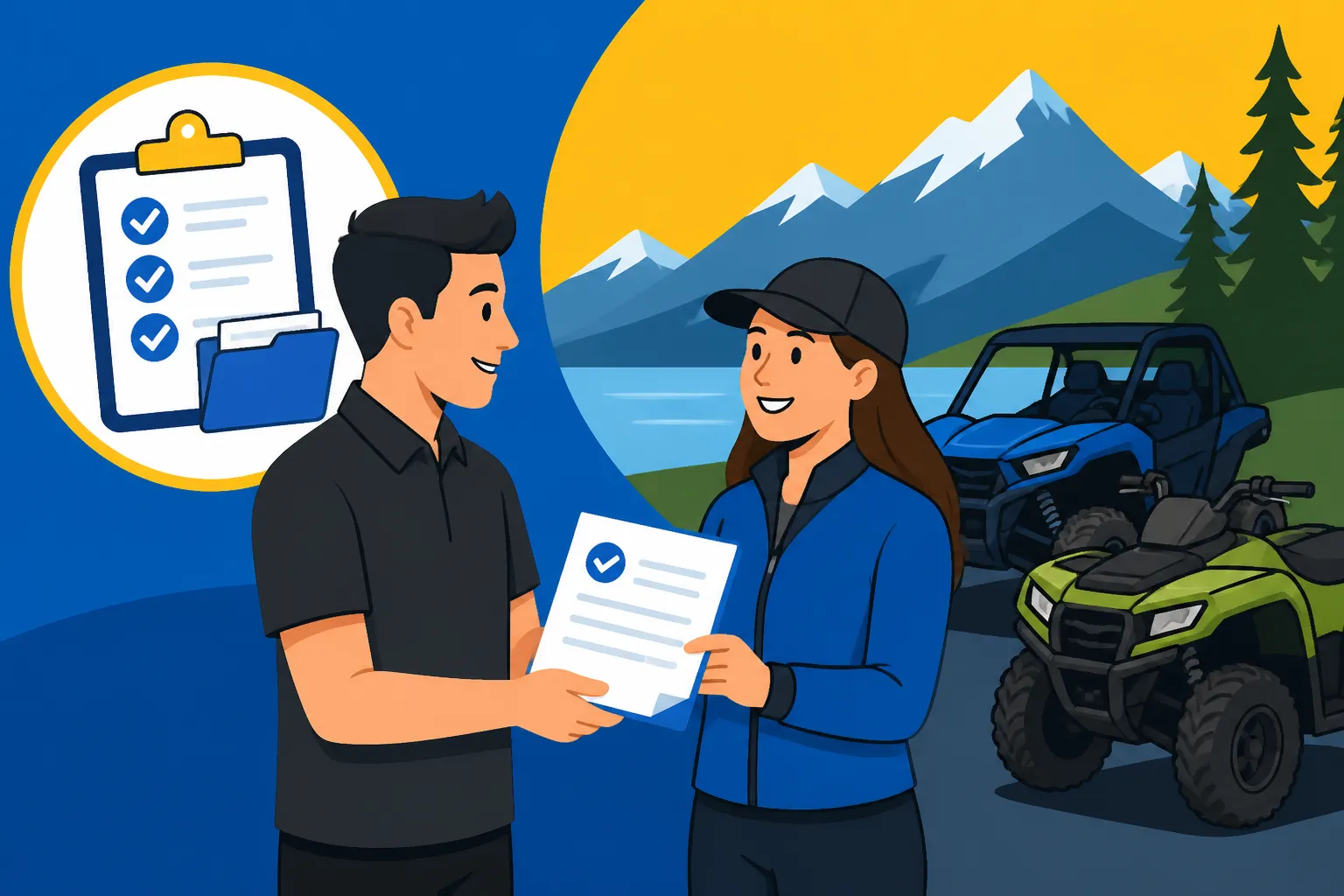
This step is arguably the most important. Before you sign off on everything and drive your new machine home, take a few minutes to carefully review all the paperwork the dealer hands you. This means checking your bill of sale, the NVIS/MSO, and any other relevant documents.
Here’s a quick checklist of things to verify:
- Your Name and Address: Are they spelled correctly and up-to-date?
- Vehicle Information: Does the make, model, year, and especially the VIN on the paperwork exactly match the machine you're taking home? Locate the VIN on the vehicle and physically compare it.
- Purchase Price and Taxes: Does the final amount match what you agreed to? Is PST clearly indicated if applicable?
- Signatures: Are all necessary signatures present from the dealership?
- NVIS/MSO: For new machines, confirm you have this document and that its details align with the machine.
- Warranty: Do you have the warranty information, or clear instructions on how to access it?
If you find an error at this stage, it's much easier to correct it. The dealer staff are right there, and they can usually make immediate amendments or provide missing documents. It’s significantly harder to get these corrections made once you’ve left the premises.
Dealing with Discrepancies or Missing Information
What if you get home and realize something is off, or a crucial document like the NVIS is missing? Don't panic, but act swiftly. Your first point of contact should always be the dealership where you purchased the machine. Explain the issue clearly and provide them with all the details you have. They should be able to track down missing paperwork or correct errors. Keep a record of who you spoke with, when, and what was discussed.
If the dealership is unresponsive or unable to help, things can get a bit more complicated. For issues with a new machine's NVIS, you might need to reach out to the manufacturer, though the dealership should facilitate this. For used machines, missing past bills of sale can create a true headache, as [BC Transfer of Ownership Explained] relies on a clear trail. In some cases, if you purchased a used ORV and there are missing links in the ownership chain that the dealer can't rectify, you might eventually need to consider more drastic steps, like a statutory declaration, but this is usually a last resort when purchasing from a reputable dealer.
The Role of a Statutory Declaration for Missing Papers
Sometimes, despite everyone's best efforts, a critical piece of the ownership puzzle is simply gone. This is more common with older, privately purchased machines, but even a dealer might sometimes acquire a used machine with less-than-perfect paperwork. In British Columbia, a Statutory Declaration can be a powerful tool to bridge gaps in the ownership chain, particularly if you're missing a bill of sale.
A statutory declaration is a sworn statement, made under oath, declaring certain facts to be true. In the context of ORV registration, you would declare that you are the rightful owner of the machine, how you acquired it, and why certain documents (like a previous bill of sale) are unavailable. This declaration must be signed in front of a Commissioner for Oaths or a Notary Public. While it won't replace a dealer-provided bill of sale or NVIS for a new machine, it can be invaluable for an older machine where the paper trail has truly vanished. Resources like LawDepot can provide templates for statutory declarations, which can then be completed and sworn before an official. Keep in mind that [BC Statutory Declarations Cost $15] (or similar modest fee) and are a serious legal document. However, they are generally accepted by Autoplan brokers as proof of ownership in specific circumstances when other documents are genuinely unobtainable.
Disclaimer
This article is for general informational purposes only and does not constitute professional advice. Laws, prices and regulations vary by location and change over time. Consult a qualified professional for guidance on your specific situation.