Registering a Quad Bought for Cash Decades Ago
It's incredibly common to find yourself in a bit of a pickle when you're trying to register an off-road vehicle (ORV) that you've owned for ages, especially one you picked up in a casual cash transaction back when "paperwork" often just meant a handshake. This guide is here to walk you through the unique challenges of registering a quad, side-by-side, or dirt bike bought decades ago in British Columbia, offering clear steps and solutions to help you get your beloved machine legally on the trails.
The Unique Challenges of Registering an Older Quad in BC
So, you’ve got that trusty old quad in the garage, maybe a vintage Yamaha or a classic Honda, that you bought back when flip phones were cutting-edge tech. It’s been your faithful companion for countless adventures, but now you hear talk about needing to register it, and a chill runs down your spine. Where do you even start when the "paperwork" is a distant memory, or perhaps never existed beyond a scribbled note on a napkin?
The "Cash Transaction, No Paper Trail" Dilemma
Back in the day, especially in rural communities across BC, buying an ATV was often a much more informal affair. You'd see a "For Sale" sign by the roadside, knock on a door, kick the tires, hand over a wad of cash, and ride off into the sunset. Receipts were rare, formal bills of sale even rarer, and the idea of keeping meticulously organized records for a recreational vehicle just wasn't on most people's radar. It was a different era, one built on trust and community, but one that presents a significant hurdle today.
This lack of a formal paper trail is the biggest roadblock for many long-time ORV owners. The person you bought it from might have moved away, forgotten the details, or even passed on. The notion of tracking down an original seller from 1995 to get a proper bill of sale can feel like an impossible detective mission. You know you own it, you've maintained it, you've ridden it for years, but proving that legal ownership to a government body that now requires a clear lineage is where the real stress begins. You're not alone in this frustration; it's a story many BC riders can tell.
BC's Evolving ORV Registration Landscape
Another layer of complexity comes from the fact that [BC Registration Became Mandatory in 2015]. Before this, while some ORVs might have been voluntarily registered under the Motor Vehicle Act for specific uses, there wasn't a universal requirement for recreational off-road use. This means that if you bought your quad in, say, 2005, you likely weren't thinking about provincial registration at all. The machine was yours, plain and simple.
The Off-Road Vehicle Act changed all that, bringing with it a structured system for identifying and tracking ORVs. This shift means that the province now requires a clear and documented chain of ownership to issue a Certificate of Registration. For newer machines, this is straightforward: a bill of sale from the dealer or a private seller, showing the transfer. But for those pre-2015 cash transactions, it forces you to retroactively apply modern rules to historical, informal dealings. The intent behind the law is good – to increase safety, reduce theft, and fund trail maintenance – but it certainly adds a bureaucratic challenge for owners of older, beloved machines who simply want to comply.
Understanding BC's Ownership Documentation Requirements for ORVs
When you're dealing with something you bought "way back when," understanding what the province actually needs in terms of ownership proof is key. It's not about making things difficult, but about establishing a legal basis for your ownership.
The Core Principle: Every Prior Sale Documented
The fundamental requirement for registering an ORV in British Columbia is that [Every Prior Sale Documented]. This means the province wants to see a clear, unbroken line of ownership from the original point of sale (usually a dealership) all the way to you. They need to confirm that you are the rightful owner and that the machine isn't stolen or has any other legal encumbrances. This isn't like titling a car, because BC doesn't issue "titles" for ORVs in the same way. Instead, you'll receive a [BC's Certificate of Registration Explained], which serves as your official proof of ownership and registration.
Think of it like this: if your quad passed through three owners before it got to you, ideally, the province would want to see a bill of sale from the original owner to the second, from the second to the third, and finally from the third to you. Each of these documents forms a link in the "chain of ownership." While this might sound daunting, especially for older machines, the province does understand that real-world scenarios don't always produce perfect paperwork. The challenge for you is to provide as many links as possible, and if there are gaps, to explain them legally and truthfully. This is where supplementary documents become incredibly important.
The Importance of a Bill of Sale
A proper bill of sale is the gold standard for proving ownership transfer. For a new ORV, this is typically provided by the dealer. For private sales, it's a document signed by both the buyer and seller. A valid bill of sale should ideally include:
- The full names and addresses of both the buyer and seller.
- The date of the sale.
- A clear description of the ORV, including the make, model, year, and crucially, the Vehicle Identification Number (VIN) or serial number.
- The purchase price.
- Signatures of both parties.
Even a simple, handwritten receipt from decades ago, if it has these key pieces of information, can be incredibly helpful. It might not be a fancy legal document, but it serves as tangible proof that a transaction occurred. The problem arises when such a document either never existed, was lost, or is simply too vague to be useful. If you only have a memory of handing over cash and getting the keys, that's where you'll need to explore other avenues to satisfy the registration requirements, often by supplementing your story with a sworn legal statement.
Navigating Missing Paperwork: The Statutory Declaration
When those elusive bills of sale or other ownership documents from decades past simply aren't to be found, don't despair! British Columbia provides a legal pathway for establishing ownership, and it comes in the form of a statutory declaration.
When a Statutory Declaration Becomes Your Best Friend
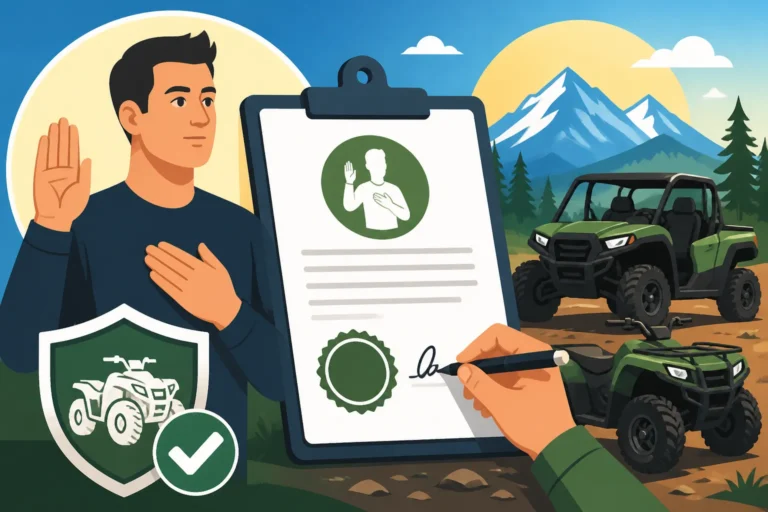
A statutory declaration is a formal written statement of facts, which you swear or affirm to be true before a commissioner for taking affidavits or a notary public. Essentially, you're putting your ownership claim on the record, under oath, acknowledging the legal consequences of making a false statement. This document becomes absolutely necessary when you're trying to register an ORV for which you have no, or insufficient, bills of sale or other proof of purchase.
Imagine a scenario: you bought your quad from a buddy of a buddy back in the early 2000s for cash. You never got a formal receipt, and now your friend has moved to another province, and the original seller is completely untraceable. Or perhaps the machine was a gift from a family member who has since passed away, and no transfer papers were ever drawn up. In these situations, your personal testimony, backed by a statutory declaration, becomes your primary method of proving you are the rightful owner. Without this, an Autoplan broker would have no legal basis to complete your registration. Remember that [BC Statutory Declarations Cost $15], a small price for clarity on a decades-old transaction. Websites like LawDepot offer templates and guided processes that can help you draft this crucial document correctly, ensuring all necessary legal language is included.
Crafting a Comprehensive Statutory Declaration
The effectiveness of your statutory declaration hinges on its detail, clarity, and truthfulness. It's not just about saying "I own this quad." It needs to tell a story that establishes your claim to ownership in a legally sound manner. Here’s what you absolutely must include:
- Your full legal name and current address.
- A complete description of the ORV: Make, model, year, and the all-important Vehicle Identification Number (VIN) or serial number. If the VIN is missing or unreadable (a challenge we'll discuss later), explain that.
- How and when you acquired the machine: Be as specific as possible. "I purchased this 1998 Polaris Sportsman 500 from John Doe (if known) on or about July 15, 2003, for $2,500 cash." If you don't know the seller's name, state that: "I purchased this ORV from an unknown private seller at a yard sale in Nanaimo on approximately August 1, 2005, for $1,800 cash."
- The reason you do not possess a formal bill of sale: This is critical. Explain why the documentation is missing. Common reasons include "it was a private cash transaction, and no formal receipt was issued," "the seller was a transient individual, and I was unable to obtain formal paperwork," or "it was a gift, and no formal transfer document was created."
- A declaration of continuous ownership: State that you have been the sole owner of the ORV since the date of acquisition and that you have not sold, transferred, or otherwise relinquished ownership.
- An assertion of rightful ownership: Clearly state that you are the lawful owner of the ORV, free of any liens or encumbrances, and that you have the full legal right to register it.
You might want to include any supporting details, even if they aren't formal documents, like old insurance policy numbers (even if for liability only, not ORV specific), photos of you with the quad over the years, or even names of people who can attest to your long-term ownership. For example, you might find templates on platforms like LawDepot that walk you through the specifics, ensuring you don't miss any critical details. Once drafted, you'll need to sign this document in front of a commissioner for taking affidavits or a notary public, who will then sign and stamp it, making it a legal declaration. Whether you draft it yourself or use a service like LawDepot, ensure every detail is accurate and truthful. Remember, making a false declaration is a serious offense.
The Step-by-Step Process for Registering Your Vintage Quad
So you've gathered what little paperwork you have, or you've prepared your statutory declaration. Now it's time to actually get that old machine registered. The process might seem intimidating, but breaking it down into manageable steps makes it much clearer.
Gathering Your Evidence and Information
Before you even step foot in an Autoplan broker's office, take some time to compile everything you can. Even seemingly small details can help paint a clearer picture of your ownership.
- Any Old Receipts or Notes: Even if they're not formal bills of sale, anything that references the quad, a purchase date, or a seller's name could be useful. Dig through old filing cabinets, shed drawers, or even old wallets.
- Photos of the Quad Over the Years: If you have snapshots of your machine from different eras, especially with you in them, it can serve as visual proof of long-term possession.
- Witness Statements (if applicable): If someone was present during the purchase or can vouch for your long-term ownership, their name and contact information might be helpful for your statutory declaration.
- Old Insurance Papers: Did you ever have liability insurance for your quad, even if it wasn't ORV-specific? Any old policy documents that list the machine could be useful.
- The All-Important VIN or Serial Number: This is absolutely crucial. Without it, registration becomes significantly more complicated. Spend time locating and clearly documenting the VIN. [Serial Numbers and Where They Hide] can often be found stamped on the frame (often near the steering column, on the engine casing, or on a crossmember). Take a clear photograph of it if you can.
- Your Statutory Declaration: If you don't have a solid bill of sale, this document, sworn before a commissioner, is your primary piece of evidence. Ensure it's filled out accurately and completely.
The goal here is to present as much corroborating evidence as possible to the broker. The more information you can provide, the smoother the process is likely to be, as it helps them piece together the story of your quad's journey to your garage.
Preparing for Your Autoplan Broker Visit
Once you've meticulously gathered everything, it's time to head to an Autoplan broker. These are the folks who handle ORV registration in BC, just like they handle car insurance. [BC Autoplan Brokers Handle ORV Registration] because the ORV Act falls under the broader umbrella of motor vehicle administration. It's not something you do directly at a Service BC office, so make sure you're going to the right place.
Here’s what you should bring with you to the broker:
- Your Photo Identification: A valid BC driver's licence or other government-issued photo ID is essential to confirm your identity. [BC Riders Must Carry Photo ID]
- All Your Paperwork: This includes your statutory declaration, any old bills of sale, receipts, photos, and any other documents you've collected.
- Information About the ORV: Make sure you have the exact make, model, year, and VIN readily available. A photograph of the VIN can be very useful for the broker.
- Funds for Registration and PST: There's a one-time registration fee, and you'll likely need to pay Provincial Sales Tax (PST) on the declared value of the machine if it hasn't been paid before (more on this below).
Be prepared to explain your situation thoroughly to the broker. They are used to these kinds of scenarios, especially with older machines. They will review all your documents and may ask detailed questions to ensure they have a complete understanding of your ownership claim. If there are still gaps in the [BC Ownership Chains Going Back Decades] that even your statutory declaration can't fully bridge, they might advise further steps or clarifications. The goal is to get a clear enough picture to issue you [What the Broker Hands You After You Register]: your Certificate of Registration and your new ORV plate.
Common Hurdles and How to Overcome Them
Even with all your ducks in a row, registering an old quad can present a few specific challenges that are worth anticipating. Knowing what they are and how to approach them can save you a lot of headache.
The "No VIN" or Damaged VIN Scenario
One of the most frustrating hurdles for owners of truly vintage machines is a missing, unreadable, or severely damaged Vehicle Identification Number (VIN) or serial number. Older quads, especially those that have seen a lot of hard use, might have had their VIN plate fall off, rust away, or become obscured by modifications or paint. Since the VIN is the primary identifier for any vehicle, its absence can be a showstopper for registration.
If you find yourself in this predicament, don't give up immediately, but be prepared for extra steps.
- Thorough Search: Double and triple-check all the common locations for a VIN. Sometimes it's stamped directly into the frame rather than on a separate plate.
- Contact the Manufacturer: In some rare cases, for very old machines, the manufacturer might be able to provide guidance based on other identifying marks or engine numbers, though this is less common for ORVs.
- Broker's Guidance: Your Autoplan broker is your best resource here. They will know the specific procedures BC has in place for machines with missing or unreadable VINs. This might involve:
- A Police Report: They may require you to get a police report to confirm the machine is not stolen and to document the missing VIN.
- An Inspection: In some cases, a qualified mechanic or law enforcement officer might need to inspect the machine to confirm its identity (make, model, year) and verify that no VIN tampering has occurred.
- A New Number Assignment: Extremely rarely, if ownership can be absolutely proven and no original VIN can be found, the province might assign a new identifying number, but this is an exception and not the norm.
The key is transparency. Explain the situation clearly to your broker, provide any available evidence (like old photos showing the original VIN area, even if now gone), and be willing to follow their instructions. It might add a bit more time and effort, but it's often a solvable problem.
Proving Value and Paying PST
When you buy a brand-new quad from a dealer, the purchase price is clear, and the Provincial Sales Tax (PST) is calculated right there. But when you're registering a machine you bought for cash decades ago, often with no stated price on a bill of sale (or no bill of sale at all), how does the province determine its value for sales tax purposes? [BC PST on an ATV Purchase] and [BC PST on a Private ATV Sale] are mandatory, and even if you paid it in cash to a private seller way back when, there's no way for the government to track that.
Here's how this usually works:
- Declared Value on Statutory Declaration: If you're using a statutory declaration, you should include the approximate amount you paid for the machine, if you remember it. This will be the declared value for PST calculation.
- Fair Market Value: If you can't recall the price, or if the declared price seems unusually low, the province may assess the PST based on the "fair market value" of the ORV. This is essentially what a similar machine would sell for in the current market. The broker might refer to industry guides or general market trends for machines of a comparable make, model, and year.
- Appraisal (Rare): In very rare or complex cases, an independent appraisal might be required, but this is highly uncommon for recreational ORVs.
Be prepared to pay the PST on the assessed value. This is a one-time tax that needs to be paid upon registration if it hasn't been paid previously and officially recorded. It's simply part of the cost of bringing an unregistered, long-owned machine into compliance with current BC regulations.
After Registration: What to Expect and What to Carry
Congratulations! You’ve navigated the twists and turns of registering your decades-old quad. Now that the paperwork is done, there are a couple of crucial things to understand about what you'll receive and what you need to do to stay legal on the trails.
Your Certificate of Registration and Plate
Once your Autoplan broker has successfully processed all your documentation, including any statutory declarations and PST payments, they will issue you two key items:
- Your Certificate of Registration: This is the official document proving your ownership and registration with the Province of BC. It’s a vital piece of paper, so treat it with care. It contains all the pertinent details about your machine and you as the owner. [What the Broker Hands You After You Register] is not a traditional "title" like for a car, but it serves the same purpose of officially recording your ownership.
- Your BC ORV Number Plate and Decal: You’ll receive a distinctive number plate, typically with a "BC ORV" designation, along with a decal. This plate must be securely attached to your ORV in a clearly visible location as per provincial regulations. [BC ORV Number Plates and Decals] must be mounted horizontally, and generally on the front, back, or left side of the machine. Make sure it's not obscured by cargo or mud, as officers need to be able to read it easily.
Unlike motor vehicles, ORV registration in BC is largely a one-time affair. You register your machine once, and it remains registered as long as you own it. This means [BC Has No Annual Renewal Sticker] to worry about. You don't need to go back to the broker every year to renew anything related to the registration itself. This is a common point of confusion for riders used to annual renewals for other vehicle types.
On the Trail: Carrying Your Proof
Now that your quad is officially registered, there are ongoing responsibilities to ensure you remain compliant with the Off-Road Vehicle Act every time you head out. This isn't just a suggestion; it's a legal requirement that conservation officers and police can and do enforce.
- Carry Your Certificate of Registration: It is mandatory that [BC Riders Must Carry the Certificate] of Registration on their person or readily accessible on the ORV whenever it is in operation, especially on Crown land or Forest Service Roads. This is your proof that the machine is legally registered. You can't just leave it at home; think of it like your driver's license for your ORV. A digital copy on your phone might be accepted by an officer, but a physical copy is always the safest bet in areas with no cell service.
- Carry Your Photo ID: Similarly, you must [BC Riders Must Carry Photo ID] whenever operating your ORV. This is so that enforcement officers can verify your identity and cross-reference it with the registration certificate.
These requirements ensure accountability and allow authorities to confirm that all ORVs operating in the province are properly registered and that the operators are identifiable. Getting your old quad registered might have been a bit of a bureaucratic journey, but complying with these simple rules afterward ensures your adventures continue smoothly and legally for years to come.
| Document Type | Purpose | If Missing (for older, cash-bought quads) |
|---|---|---|
| Bill of Sale | Primary proof of ownership transfer from seller to buyer. | Statutory Declaration required to establish ownership. |
| Previous Registration | Shows prior ownership history, if machine was registered before. | Statutory Declaration is key, proving acquisition history. |
| Vehicle ID Number (VIN) | Unique identifier for the ORV, crucial for tracking and registration. | Thorough search; potentially police report or inspection needed. |
| Your Photo ID | Confirms your identity as the registering owner. | Absolutely mandatory; cannot register without it. |
| Statutory Declaration | Sworn statement affirming facts of ownership when other documents are absent. | Essential when bills of sale are missing or insufficient. |
Disclaimer
This article is for general informational purposes only and does not constitute professional advice. Laws, prices and regulations vary by location and change over time. Consult a qualified professional for guidance on your specific situation.