BC Bills of Sale for Every Prior Owner
You've just bought that dream ATV or side-by-side, maybe from a friend, maybe through an online ad, and you're picturing yourself hitting the trails. But then you hear whispers about "every prior owner" needing a bill of sale to register your off-road vehicle (ORV) in British Columbia, and a cold wave of dread washes over you. What if the person you bought it from didn't have papers from their seller? What if the machine has been in the family for ages with no formal sales receipts? This guide is here to shed light on BC's unique and often bewildering requirement for a continuous chain of ownership documentation, helping you navigate the process of registering your ORV even when the paper trail seems to have gone cold.
The Head-Scratching Truth About BC ORV Ownership Documentation
One of the most common stumbling blocks for off-road enthusiasts in British Columbia trying to register their ATV or UTV is the surprisingly strict requirement regarding proof of ownership. It's not enough to just have a bill of sale from the person you bought the machine from. Oh no, BC wants to see a complete, unbroken chain of ownership documents going all the way back to the original retail purchase, or at least until a point where a statutory declaration can fill the gap. This can feel like a monumental task, especially for older machines or those that have changed hands many times.
Why BC Wants More Than Just Your Last Bill of Sale
It really boils down to proving legitimate ownership and preventing theft. Unlike road vehicles that often have a certificate of title that clearly indicates the current legal owner, ORVs in BC receive a [BC's Certificate of Registration Explained] which isn't a title in the traditional sense. Since there's no central titling system that tracks every owner from cradle to grave, the province relies on the paper trail of sales documents to establish a clear lineage. This system is designed to ensure that the person registering the vehicle is the rightful owner and that the machine hasn't been reported stolen or sold fraudulently at some point along the way. While it might feel like an unnecessary bureaucratic hurdle, it's the province's way of maintaining integrity in ORV ownership records.
Imagine buying a quad that was stolen five years ago. If BC only required the last bill of sale, that stolen machine could be easily "cleaned" through a quick, fraudulent sale. By asking for the entire history, or at least a significant portion backed by a declaration, the system aims to deter such activities. It creates a higher bar for transferring ownership, making it harder for stolen machines to enter the legitimate registration system. This is also why [Why Every Past Sale Has to Be Documented] is such a critical component of the process.
The Frustration of the Missing Link: What Happens When Papers Vanish
We live in the real world, and in the real world, people lose papers, move houses, and forget about dusty old receipts. It's incredibly frustrating to be told your registration is stalled because a bill of sale from three owners ago has gone missing. This "missing link" is precisely where many riders hit a wall. You might have a perfectly valid bill of sale from your immediate seller, but if they can't produce one from their seller, then you're stuck. The broker at the Autoplan office can't simply take your word for it. They need that tangible proof of the ownership chain.
This situation often leaves riders feeling helpless, wondering if their perfectly good machine will ever see legal trail time. It can feel like you're being punished for someone else's disorganization years ago, or for a legitimate sale that simply didn't involve formal paperwork because, let's be honest, many private ORV sales historically happened with a handshake and cash, not a meticulously drafted document. The good news is that BC has a process for addressing these missing links, but it requires a bit more effort on your part.
Unpacking the "Every Prior Owner" Requirement
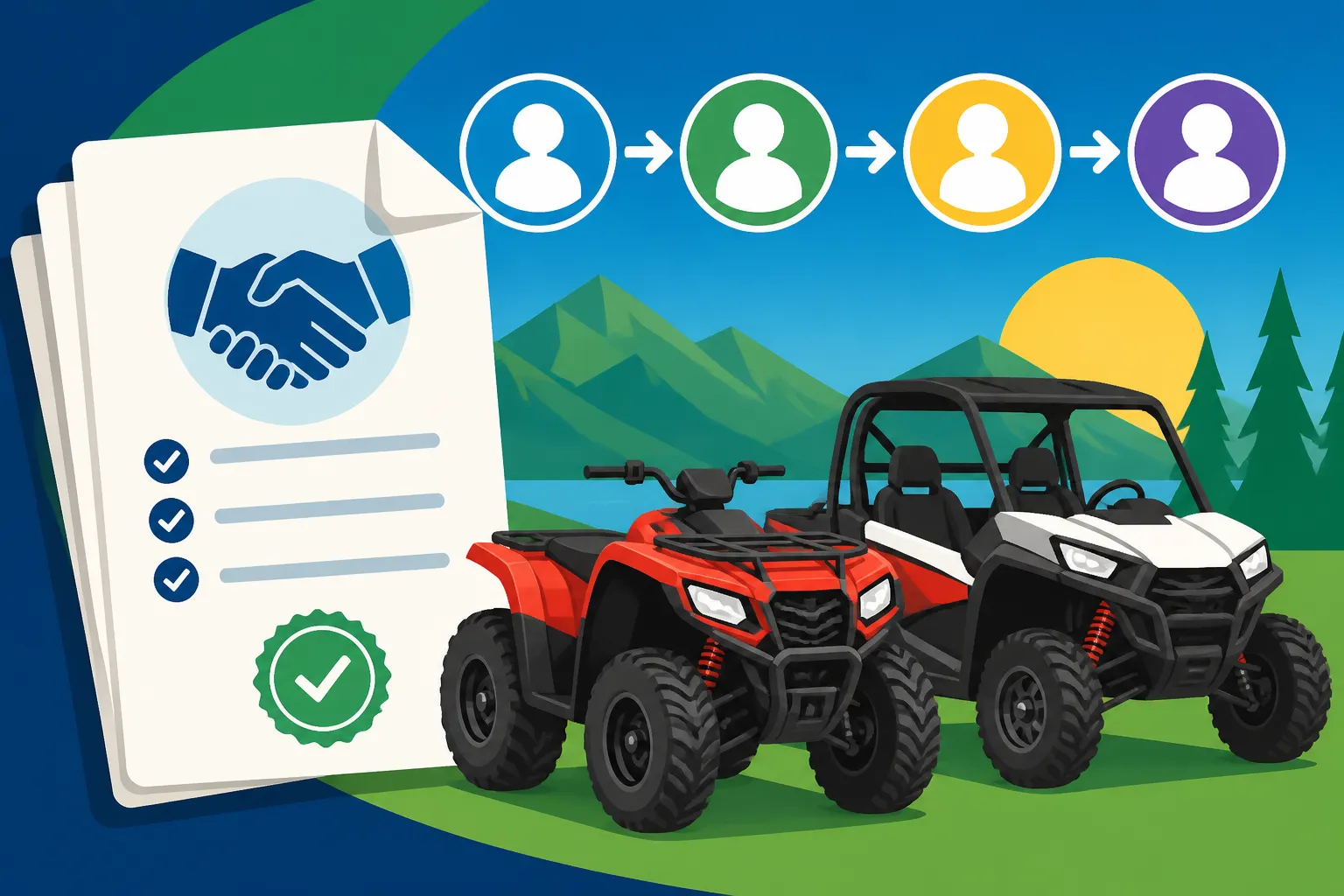
So, what exactly does "every prior owner" mean in practice? It means that when you go to register your ORV at an Autoplan broker, you'll need to present documentation that clearly shows who sold the machine to whom, in a continuous line, from the point it was originally registered (which became mandatory in 2015) or as far back as reasonably possible. If your machine was bought new from a dealer in 2018, you'd need the original bill of sale from the dealer. If you then sold it to Bob in 2020, and Bob sold it to you in 2023, you'd need the 2018 dealer bill of sale, Bob's 2020 bill of sale, and your 2023 bill of sale.
The Legal Foundation: What the Act Says
While I can't cite specific sections of the Off-Road Vehicle Act directly, the spirit of the law and its accompanying regulations are clear: the province requires proof of ownership to register an ORV. This isn't just a suggestion; it's a mandatory step rooted in the legal framework for ORV registration. The intention is to create a robust system for tracking these vehicles, much like road vehicles. It's about establishing accountability and ensuring that the ORV has a legal, traceable history.
This requirement also serves to protect buyers. By needing a full paper trail, it helps reduce the risk of unknowingly purchasing a vehicle with a clouded ownership history or one that has been stolen. While it can be a pain for legitimate owners with missing papers, the system aims for greater security and transparency in ORV transactions across the province. This emphasis on clear ownership documentation also ties into why [Why BC Does Not Title an ATV] in the traditional sense, relying instead on this registration and documentation process.
The Role of the Autoplan Broker in Verifying Ownership
Your local Autoplan broker is the frontline for ORV registration. They are the ones who review all your documentation, ensuring it meets the provincial requirements. They are trained to look for a complete and continuous chain of ownership. If there's a missing bill of sale, they can't simply process your registration. They're tasked with upholding the integrity of the system, and that means being diligent about verifying every step of the ownership transfer.
Brokers will scrutinize details like the VIN (Vehicle Identification Number) on each document to ensure it matches the machine you're trying to register. They'll also check the dates of sale and the names of the buyers and sellers to ensure there are no suspicious gaps or discrepancies. This meticulous review is part of their due diligence, and it's why having all your ducks in a row before you visit the broker can save you a lot of time and frustration. When you walk in with all the paperwork, the process for [How to Register an ATV in BC] becomes much smoother.
The Paper Trail: What Constitutes a Valid Bill of Sale
A "bill of sale" isn't just any scrap of paper. For it to be accepted by an Autoplan broker for ORV registration in BC, it needs to contain specific, vital information. Think of it as a legal mini-contract for the sale of your ORV. A handwritten note on a napkin, while it might have sealed the deal between friends, likely won't cut it for official registration purposes.
Essential Elements of a Bill of Sale for ORV Registration
A valid bill of sale should ideally include the following details:
- Seller's Full Legal Name and Address: Clearly identify who sold the machine.
- Buyer's Full Legal Name and Address: Clearly identify who bought the machine.
- Date of Sale: The exact date the transaction took place.
- Purchase Price: The amount paid for the ORV. This is also important for calculating [BC PST on an ATV Purchase].
- ORV Description: Make, model, year, and crucially, the VIN (Vehicle Identification Number). The VIN is paramount as it uniquely identifies the machine.
- Signatures: Both the seller's and buyer's signatures, confirming the agreement.
Without these key pieces of information, the document might be considered incomplete, and the broker could refuse to accept it. It’s always better to have too much information than not enough.
When a Simple Receipt Just Won't Cut It
Many private sales, especially older ones, might have involved a simple cash receipt that only noted the price and a date. While this proves money changed hands, it often lacks the detailed ORV description or the full contact information of both parties that BC requires for registration. The key difference between a valid bill of sale and a simple receipt lies in the level of detail provided about the vehicle and the transacting parties.
A simple receipt might state "Quad – $1500 – 10/10/2005," but without the VIN, make, model, and the full names and addresses of buyer and seller, it doesn't create that legally robust link in the ownership chain. The province needs to know which quad, who sold it, and who bought it to establish clear ownership. This is why if you're buying an ORV, even from a friend or family member, it's vital to create a proper bill of sale right from the start.
Leveraging Templates for Peace of Mind
Given the strict requirements, don't try to wing it with a hastily scribbled note. Professional templates can be a lifesaver. Websites like LawDepot offer customizable bill of sale templates that guide you through entering all the necessary information, ensuring you don't miss any critical details. Using a template provides a structured format, making it easier for the Autoplan broker to review and accept your documentation.
These templates often include fields for all the required information, such as the VIN, make, model, year, purchase price, and spaces for both buyer and seller details and signatures. While you can certainly draft your own, using a reputable template from a service like LawDepot minimizes the risk of errors or omissions that could delay your registration. Having clear, legible, and comprehensive documents prepared in advance can make all the difference when you present your [BC Registration Paperwork Checklist] to the broker.
Navigating Gaps in the Ownership Chain
Okay, so what if you've done your due diligence, reached out to previous owners, and still can't get that elusive bill of sale from five owners ago? This is a common predicament, and thankfully, BC has a mechanism to address it: the Statutory Declaration.
The Statutory Declaration: Your Lifeline When Documents Are Missing
A Statutory Declaration is a formal, legal document where you declare under oath or affirmation that certain facts are true to the best of your knowledge. In the context of ORV registration, it's used to establish ownership when a bill of sale or other proof of ownership is missing. It's essentially you, the current owner, swearing before a legal official that you are the rightful owner and explaining the circumstances of the missing documents. [BC Statutory Declaration for an ORV] is a crucial tool here.
This declaration doesn't replace the need for your immediate bill of sale (unless that's the missing link you're declaring). Instead, it fills the gap behind your purchase. For example, if you bought a quad from Sarah, and you have a valid bill of sale from Sarah, but Sarah can't produce a bill of sale from Jim (who sold it to her), then Sarah might need to sign a Statutory Declaration explaining how she acquired the machine from Jim. This creates the missing link, allowing the chain to be completed.
Who Can Sign a Statutory Declaration and What It Entails
A Statutory Declaration must be signed in the presence of a Commissioner for Oaths or a Notary Public. This ensures the seriousness and legality of the declaration. It's a formal process, and making a false declaration can have serious legal consequences. The person making the declaration (the declarant) must have direct knowledge of the facts they are swearing to. So, if your seller Sarah bought the quad from Jim but lost the paperwork, Sarah would be the one to sign the declaration explaining that purchase. You, as the current owner, would then present Sarah's declaration along with your bill of sale from Sarah.
The declaration itself needs to be clear and concise, detailing the specific machine (VIN, make, model), how and when it was acquired, the reason for the missing document, and a statement affirming rightful ownership. Again, using a template from a service like LawDepot can be incredibly helpful here, as they often provide structures specifically designed for these types of ownership declarations, ensuring all legal requirements are met. The cost for having a Statutory Declaration signed is usually quite nominal, often around [BC Statutory Declarations Cost $15].
Proving Your Case: When the Declaration Isn't Enough
While a Statutory Declaration is a powerful tool, it's not a magic bullet for every situation. There are instances where a broker might require additional information or proof, especially if the ownership history is particularly convoluted or if there are red flags. For example, if the VIN on the machine is defaced or missing, or if the history suggests potential theft, a declaration alone might not be sufficient. In such cases, the broker might ask for photographs of the VIN, police reports if theft was suspected, or other supporting evidence.
The goal is to convince the province, through the broker, that you are indeed the rightful owner and that there is no foul play involved. If the broker remains unconvinced, they may advise you on further steps, which could include contacting Service BC for guidance or even seeking legal advice if the situation is particularly complex. Remember, the broker's job is to protect the integrity of the registration system, and they will err on the side of caution if anything seems amiss. This is particularly relevant for scenarios like [Registering a Quad With a Gap in Its Ownership Chain].
Special Scenarios and What They Mean for Your Paperwork
Beyond the straightforward private sale, there are several unique situations that can complicate the "every prior owner" rule. Understanding these can help you prepare the correct documentation.
Gift Transfers Between Family Members
Sometimes, an ORV isn't bought; it's gifted. Perhaps a parent gives a quad to a child, or siblings transfer ownership. In these cases, there's no purchase price, so a traditional bill of sale isn't quite right. However, the province still needs documentation to establish the transfer of ownership. For these situations, a Gift Letter can be used.
A Gift Letter should clearly state:
- The full names and addresses of both the giver and the recipient.
- A clear statement that the ORV is being gifted, with no money exchanged.
- The date of the gift transfer.
- A detailed description of the ORV, including its make, model, year, and VIN.
- Signatures of both the giver and the recipient.
This letter then acts as a link in the ownership chain, similar to a bill of sale but reflecting the nature of the transfer. Just like with a bill of sale, these letters need to be meticulously detailed to be accepted by the Autoplan broker. [BC Gift Letters Between Family] can simplify this process.
Inheriting an ORV: Estate Sales and Documentation
When an ORV owner passes away, their machine becomes part of their estate. Registering an ORV inherited through an estate requires specific documentation to prove the legal transfer of ownership from the deceased to the heir. This typically involves:
- Death Certificate: Proof of the previous owner's passing.
- Grant of Probate or Letters of Administration: These are legal documents issued by the courts that appoint an executor or administrator to manage the deceased's estate. This document authorizes that person to transfer assets, including the ORV.
- Executor's Bill of Sale or Transfer Document: The executor of the estate would then sign a bill of sale or a formal transfer document, transferring ownership from the estate to the heir. This document would follow the same principles as a regular bill of sale, clearly identifying the ORV and the transfer of ownership.
This process ensures that the transfer of the ORV out of the estate is done legally and that the new owner is recognized as the rightful successor. Navigating estate paperwork can be complex, so it's wise to gather all legal documents related to the estate before attempting registration. [Registering a Quad You Inherited From a Relative] is a common scenario that requires careful handling.
Buying from an Auction or an Out-of-Province Seller
Auctions: When you buy an ORV from an auction, the auction house typically provides a bill of sale or an invoice of sale. This document usually serves as a valid link in your ownership chain. Ensure it contains all the necessary details: the auction house's information, your information, the date of sale, the purchase price, and a full description of the ORV, including its VIN. It's always a good idea to clarify the documentation provided by the auction house before you bid, especially for ORVs.
Out-of-Province Sellers: Buying an ORV from outside BC (e.g., Alberta, Washington, or Ontario) adds another layer to the documentation requirements. You'll need a valid bill of sale from your seller in the other province or state. Additionally, if the ORV was previously registered or titled in that jurisdiction, you should try to obtain a copy of that documentation. This helps to establish the ORV's history outside of BC. The Autoplan broker will review these out-of-province documents to ensure they meet BC's standards for proving ownership. Remember that [BC Registration for an Imported Machine] or [BC Registration for a Machine From Alberta] often involves customs paperwork if coming from the US, or simply consistent ownership documentation if from another Canadian province.
It's clear that BC takes ORV ownership seriously, and while the "every prior owner" rule can be a source of headaches, understanding its purpose and the workarounds available can make your registration journey much smoother.
| Document Type | Purpose | Key Information Required | Acceptance by Broker |
|---|---|---|---|
| Bill of Sale | Direct purchase between individuals | Buyer/Seller names & addresses, Date, Price, ORV description (VIN, make, model), Signatures | Generally High |
| Gift Letter | Transfer of ownership without monetary exchange | Giver/Recipient names & addresses, Date, ORV description (VIN, make, model), Signatures | Generally High |
| Statutory Declaration | Sworn statement to fill a missing ownership link | Declarant's name, ORV description, Circumstances of acquisition, Reason for missing document | Fills Gaps |
| Auction Invoice | Purchase from an auction house | Auctioneer/Buyer names, Date, Price, ORV description (VIN, make, model) | Generally High |
| Estate Documents | Transfer from a deceased owner's estate | Death Certificate, Grant of Probate/Letters of Admin, Executor's transfer document | Specific Cases Only |
| Simple Receipt | Basic proof of payment | Often lacks full details of parties & ORV | Generally Low |
Disclaimer
This article is for general informational purposes only and does not constitute professional advice. Laws, prices and regulations vary by location and change over time. Consult a qualified professional for guidance on your specific situation.