BC Registration Covers Work and Recreation
It can be incredibly confusing to figure out if your off-road vehicle (ORV) needs to be registered in British Columbia, especially when you use it for more than just weekend fun. Many riders wonder if a quad used strictly for farm work or navigating industrial sites is somehow exempt from the same rules that apply to someone hitting the trails for recreation. This guide is here to clear up that common misunderstanding and walk you through why, and how, BC's ORV registration applies broadly to both work and recreational use.
The Blanket Rule: Why All ORVs Need Registration in BC
When the BC government introduced mandatory registration for off-road vehicles, they weren't just thinking about the thrill-seekers tearing up trails on a Saturday afternoon. They cast a much wider net, encompassing just about any ORV operating on Crown land, regardless of its purpose. This can be a tough pill to swallow for someone who's always used their quad for practical tasks and feels like they're being lumped in with purely recreational users, but the law really doesn't make that distinction.
Before November 2015, the rules were a bit of a Wild West, with no central registry for quads, side-by-sides, or dirt bikes. That changed dramatically with the Off-Road Vehicle Act, which aimed to bring a level of accountability and safety to ORV operation across the province. The frustration many people feel about having to register a machine they use for work is completely valid – it feels like another layer of bureaucracy. However, understanding the reasoning behind this all-encompassing approach can help. The Act isn't just about fun; it's about identifying machines, tracking ownership, and ensuring a minimum standard of responsibility for anyone operating these vehicles on public property. [BC Registration Became Mandatory in 2015]
The Off-Road Vehicle Act: A Broad Definition
The heart of the matter lies in how the Off-Road Vehicle Act defines an ORV and where its operation triggers the registration requirement. The Act is incredibly broad, covering everything from ATVs and side-by-sides to dirt bikes and snowmobiles. It doesn't ask why you're riding it; it only cares that you are riding it, particularly on Crown land. This is the critical point that often trips up riders who are used to thinking of their machines in terms of their primary function, whether that's hauling firewood or rounding up cattle.
For instance, if you're out on your property inspecting fences, and that property happens to be leased Crown land, your machine falls under the Act's purview, meaning it needs to be registered. The Act isn't concerned with your intention – whether you're trying to win a race or simply get a job done. It's focused on the vehicle itself and its interaction with public spaces. This broad stroke makes enforcement simpler and ensures that every ORV, no matter how it's used, can be identified if there's an incident or if ownership needs to be verified. [What the Off-Road Vehicle Act Covers in BC]
The sheer volume of Crown land in BC – a staggering 94% of the province – means that most off-road riding, for any purpose, is likely to occur in areas where the Act applies. This geographical reality is a huge driver behind the "one rule for all" approach. You might think your small gravel pit operation or logging road commute is exempt, but if that land is publicly owned, the rules apply. This is why the comprehensive nature of the registration system exists, and it's why the purpose of your ride simply doesn't factor into the legal requirement to register your machine.
From Trail Riding to Property Maintenance: No Distinction in Law
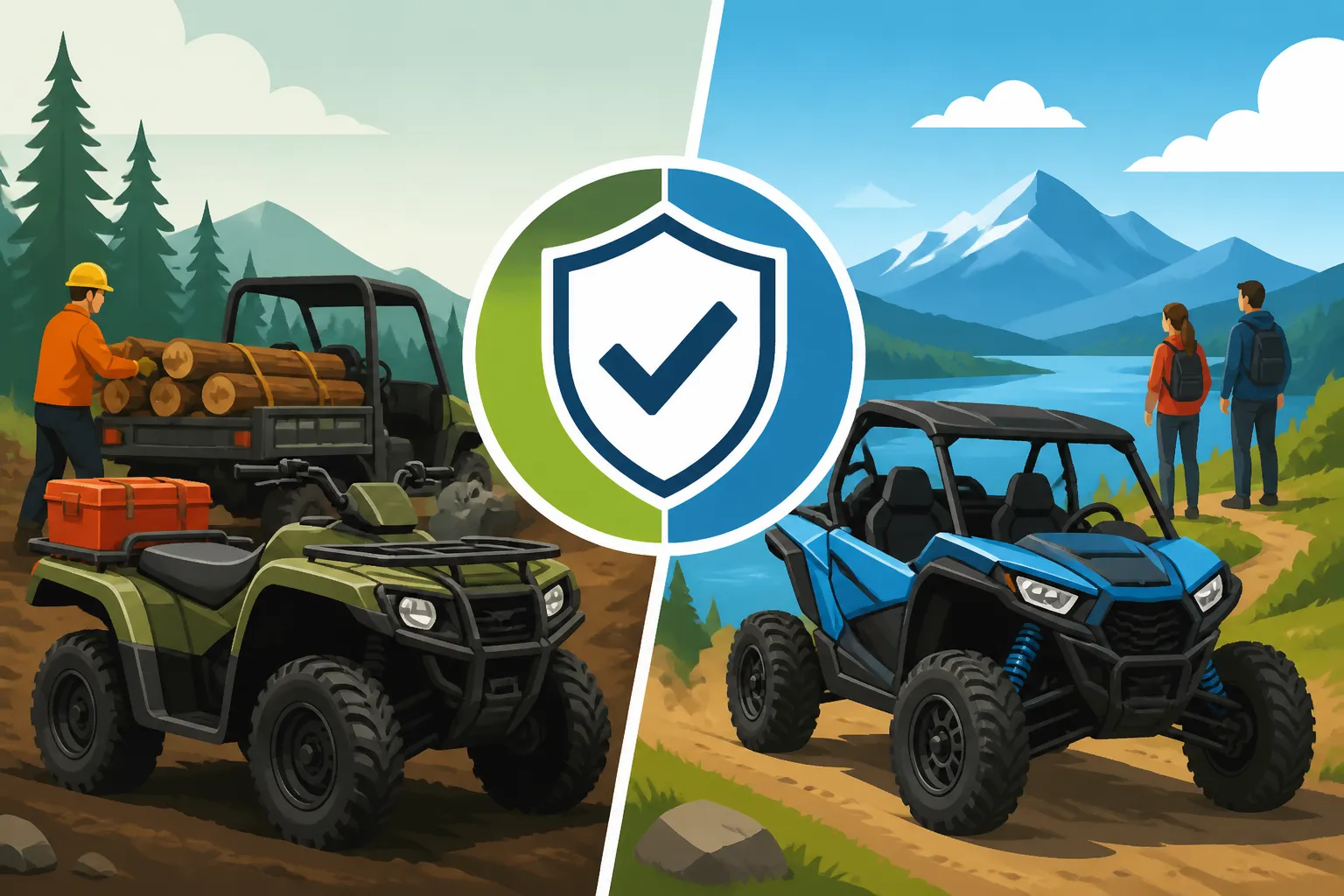
Let's talk about those varied uses. On one hand, you have the weekend warrior, loading up their shiny new side-by-side for a group ride on the scenic trails around Bear Creek OHV area near Kelowna. Their purpose is pure recreation, seeking adventure and camaraderie. On the other hand, you have the rancher in the Cariboo, using an older, beat-up quad to check on livestock and mend fences on vast leased pasture lands. Then there's the forestry worker, needing a tough ATV to access remote work sites along resource roads.
From the perspective of the Off-Road Vehicle Act, all three of these scenarios – recreation, ranching, and industrial access – trigger the exact same registration requirement. The law simply sees an ORV operating on Crown land. The type of activity you're engaged in does not create an exemption or a separate category of registration. It's a common misconception that if your machine is "work-related," it somehow gets a pass, but that simply isn't the case in BC.
This inclusive approach means that the same process you'd follow to register a dirt bike for motocross is the same process you'd follow for a quad used to manage a blueberry farm. The same plate that goes on a snowmobile for deep powder riding in the Kootenays also goes on the side-by-side used by a guide outfitter near Prince George. It can feel a bit unfair if your work machine is barely leaving your property, but the moment it touches public land, the registration requirement kicks in. It's all about public access and public accountability.
Understanding "Work" in the Context of ORV Registration
It’s easy to assume that if a vehicle is primarily used for work, it falls under a different set of rules. We see this with farm trucks or heavy machinery that might have specialized plates or exemptions. However, the world of ORVs in British Columbia operates differently. The Act doesn't create a special category for "work machines." If it's an ORV and it's on Crown land, it needs to be registered. This applies even to machines that might spend 99% of their lives toiling away on private property, only occasionally venturing onto public access points.
Imagine a situation where a utility company needs to access power lines deep in the backcountry. Their maintenance crews use rugged side-by-sides equipped with specialized tools. These aren't recreational joyrides; they are essential for keeping our infrastructure running. Yet, these vehicles must still be registered. The same goes for an ORV used by a conservation officer patrolling protected areas, or a geologist conducting field research. Their activities are undeniably work-related, often critical for public safety or economic development, but the registration requirement remains unwavering. The province's goal is a comprehensive record of all ORVs that could potentially interact with its vast network of public lands and resources.
Farm Quads and Industrial Use: Still Subject to Registration
This is one of the biggest points of confusion, and frankly, frustration, for many ORV owners. You’ve probably heard or even assumed that farm quads are somehow exempt from registration. Maybe because they don't seem like "recreational" vehicles, or because historically, their use on farms was informal. Well, I'm here to tell you that this is a myth in British Columbia. If your farm quad, ATV, or side-by-side ever leaves your privately owned land and sets a tire on any Crown land – even to cross a resource road to get to another field – it absolutely needs to be registered.
Think about a rancher in the Okanagan using their ATV to check irrigation lines that run across a small parcel of Crown land between their main fields. Or a logger transporting tools along a forest service road that's open to the public. These are prime examples of "work" uses that are still fully subject to the ORV registration rules. The law specifically states that there are no general exemptions for agricultural or industrial use cases. It's a pragmatic approach designed to ensure every machine operating on public land has an identifiable owner. It can feel like an extra burden when you're just trying to get your day's work done, but that's the reality of the regulations here. [BC Farm Quads Are Not Exempt]
For businesses managing fleets of machines for agricultural or industrial purposes, ensuring every ORV is properly registered is a critical compliance step. It's not just about avoiding a ticket; it's about being able to track company assets and having proof of ownership. This is where tools that help streamline paperwork can come in handy. For instance, creating standardized bills of sale or ownership transfer documents for fleet management can be made simpler with platforms like LawDepot, which offer templates that can be customized for business use, helping to keep records straight for multiple machines.
Business Machines and Rental Fleets
Beyond individual farm quads, there's a significant segment of ORV use that's purely commercial: rental fleets, guided tour operations, and machines used by various businesses for access, maintenance, or logistics. Imagine a company offering guided ATV tours through the Cariboo backcountry, or a construction crew using side-by-sides to move personnel and equipment around a large, remote site. Each and every one of those machines, from the smallest youth quad in a rental fleet to the largest utility UTV, must be registered in British Columbia.
For these businesses, registration isn't just a compliance issue; it's a fundamental part of their asset management and liability strategy. If a rental machine is involved in an incident or goes missing, having it properly registered with a unique plate and certificate of ownership is paramount for insurance claims and police investigations. Tour operators, in particular, need to ensure their entire fleet is up to snuff before they even think about taking paying customers out onto Crown land trails or resource roads. They're held to a high standard, and proper registration is the first step.
The process for a business to register multiple machines is largely the same as for an individual, but the volume can be daunting. Keeping track of all the serial numbers, bills of sale, and certificates of registration can become an administrative task in itself. Businesses might leverage legal document services for bulk or specialized paperwork, much like how LawDepot provides templates for various business agreements or contracts. Whether it's drafting a purchase agreement for new fleet vehicles or preparing statutory declarations for machines with unclear ownership histories, having reliable document resources can significantly ease the administrative burden for commercial ORV operators. This ensures that their machines are legally compliant and ready for work, even if that work is guiding tourists.
Understanding "Recreation" and the Open Road
Now, let's talk about the more obvious side of ORV use in BC: recreation. This is what most people picture when they think of quads, dirt bikes, and side-by-sides. While the registration rules don't differentiate between work and play, the sheer number of people using these machines for fun means recreational use is a huge driver behind the comprehensive registration system. British Columbia offers some of the most stunning backcountry in the world, and exploring it on an ORV is an increasingly popular way for families and friends to connect with nature and experience adventure.
The thought of heading out for a day of trail riding, exploring a new forest service road, or finding that perfect viewpoint after a challenging climb is what draws many to these machines. But along with the excitement comes the responsibility of adhering to the rules designed to keep everyone safe and the environment protected. Knowing that your machine is properly registered means one less thing to worry about when you're out there, allowing you to focus on the ride itself and the incredible scenery around you.
Exploring Crown Land: The Primary Trigger for Registration
For the recreational rider, Crown land is the primary playground, and it's also the primary trigger for mandatory ORV registration. From the sprawling network of forest service roads (FSRs) that crisscross the province to dedicated OHV areas like Bear Creek or Chipmunk Creek, much of our riding happens on public land. The moment your tires touch this ground, your machine needs to be registered. It's as simple, and as non-negotiable, as that.
Imagine you're planning a trip to the Cariboo region, famous for its vast wilderness and endless trails. You've mapped out a multi-day adventure, staying at remote cabins and exploring historical Gold Rush routes. Every kilometre you cover on those trails, every FSR you traverse, is Crown land. Without proper registration, you're risking a ticket and potential seizure of your machine. [BC Crown Land Triggers the Registration Rule] This is why the province introduced the ORV Act – to bring order to what was once an unregulated free-for-all on these public spaces.
Even if you're just using a short section of a public resource road to access private property, that brief interaction with Crown land still mandates registration. Many riders live on acreages that might require them to travel a short distance on a public road to reach their favourite riding spot. That stretch of road, even if it feels remote and untrafficed, is almost certainly Crown land, and therefore your machine needs its papers. [BC Resource Roads Count as Crown Land] It's an inconvenience for some, but it ensures that all machines operating in these shared spaces are accounted for.
Weekend Warriors and Trail Blazers: Your Machine Needs Papers
Whether you're a seasoned dirt biker hitting technical singletrack or a family enjoying leisurely rides on a side-by-side, if your recreational pursuits take you off private property and onto Crown land, your machine needs to be registered. The image of the "weekend warrior" is perhaps the most obvious target of the ORV Act's registration requirement, as these are the riders most frequently seen on public trails and resource roads. This includes everything from a youth quad being ridden under supervision to a high-performance snowmobile shredding powder in the mountains.
The good news is that registering your machine for recreational use is generally a straightforward process. You simply visit an Autoplan broker, the same place you'd go to insure your car. These brokers are equipped to handle ORV registrations, streamlining the process for thousands of recreational riders across the province. They’ll help you gather the necessary paperwork and ensure you walk out with your new Certificate of Registration and that all-important plate. [BC Autoplan Brokers Handle ORV Registration]
For many, the initial hurdle of registration is quickly forgotten once they're out on the trails, enjoying the freedom that ORV riding offers. The registration process is a one-time affair, meaning you don't have to worry about annual renewals or stickers, which is a welcome relief compared to typical vehicle licensing. It's an investment in being able to legally and responsibly enjoy the incredible recreational opportunities BC has to offer, without the constant worry of an encounter with enforcement officers.
The Practicalities: Registering for Any Purpose
So, we've established that registration applies to pretty much all ORV uses on Crown land in BC, whether it's for work or play. Now, let's talk about the practical side of actually getting your machine registered. Many people dread dealing with bureaucracy, especially if their machine is an older model or has a less-than-perfect paper trail. But the process is designed to be accessible, and understanding what's required can make it much smoother.
The key takeaway here is that the purpose of your machine doesn't change how you register it. There isn't a "work ORV" registration form and a "recreational ORV" form. It's all part of the same system, which simplifies things for both the applicant and the government. The requirements focus on proving ownership, identifying the machine, and ensuring you meet basic eligibility criteria, not on your intended use.
The Registration Process: One Size Fits All
The beauty, or perhaps the practicality, of BC's ORV registration system is its uniformity. Whether you're registering a brand new side-by-side fresh off the dealer lot for backcountry adventures, or an inherited farm quad from 1985 that you use to haul feed, the steps you take are identical. You'll visit an Autoplan broker, provide proof of ownership, present your identification, and pay the registration fee. [How to Register an ATV in BC] The broker doesn't ask if you're going to be using it for hunting, exploring, or fence mending; they just need the facts about the machine and its ownership.
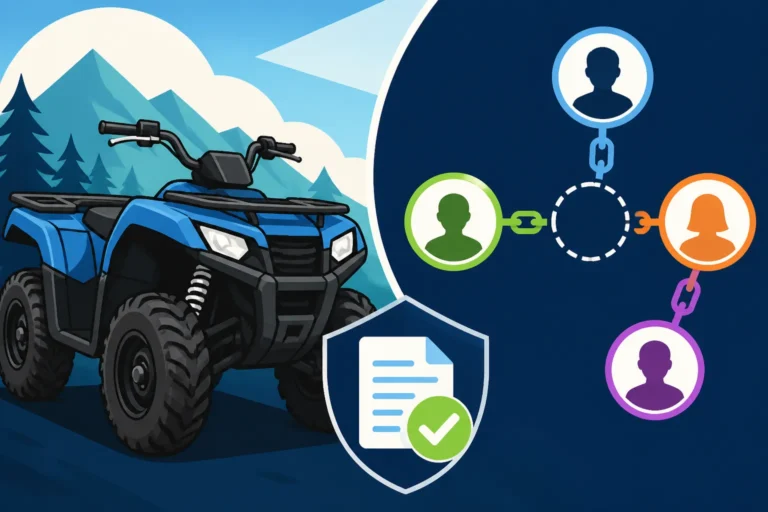
This typically involves bringing in your bill of sale, or if you've bought a used machine, a complete chain of ownership documents. This can sometimes be the trickiest part, especially for older machines where previous owners might not have kept meticulous records. If you're missing a bill of sale or have a gap in the ownership history, a statutory declaration might be needed to attest to your ownership under oath. This is where services that provide legal document templates, like LawDepot, can be incredibly helpful for preparing such declarations, ensuring they meet the necessary legal format.
The broker will also verify the machine's Vehicle Identification Number (VIN) or serial number, so make sure you know where it's located on your ORV and that it's legible. This process ensures that every machine in the system has a unique identifier, crucial for tracking, especially in cases of theft or recovery. Once all the paperwork is in order and the fees are paid, you'll be issued your Certificate of Registration and a physical plate for your machine.
What You Get: Certificate, Plate, and Peace of Mind
After navigating the registration process, you'll walk away with two critical items: a Certificate of Registration and a BC ORV number plate. These aren't just pieces of paper and metal; they are your legal proof that your machine is compliant with the Off-Road Vehicle Act. And they are essential, regardless of whether you're using your ORV to haul equipment to a remote job site or to enjoy a weekend ride through the forest.
The Certificate of Registration is a vital document, akin to your car's registration papers. It contains important details about your ORV, such as its VIN, make, model, and year, along with your ownership information. It’s absolutely mandatory that you carry this certificate, or a legible copy, with you whenever you're operating your ORV on Crown land. An officer might ask to see it, and not having it could lead to fines. [BC's Certificate of Registration Explained] Keep it in a waterproof bag, perhaps tucked into your riding gear or a secure compartment on your machine.
The number plate is equally important. It's a physical identifier that must be visibly affixed to your ORV. There are specific rules about where it needs to be mounted – either on the front, back, or left side of the machine, clearly visible and kept clean. This allows enforcement officers to easily identify registered machines from a distance. These plates are designed to be durable, but it's up to you to ensure it stays in place and readable. [BC ORV Number Plates and Decals] Together, the certificate and the plate provide you with the peace of mind that you're legally operating your ORV, no matter the purpose of your journey.
| Feature | Work Use Example | Recreational Use Example | Registration Impact |
|---|---|---|---|
| Purpose | Checking fences, hauling tools, site access | Trail riding, hunting access, exploring scenery | No difference; both require registration. |
| Location | Forest service roads, leased Crown land | OHV parks, public trails, Crown land wilderness | No difference; any Crown land triggers rule. |
| Documents | Bill of sale, VIN, ID, statutory declaration | Bill of sale, VIN, ID, statutory declaration | No difference; same paperwork required. |
| Outcome | Certificate of Registration, ORV Plate | Certificate of Registration, ORV Plate | No difference; same legal proofs of compliance. |
| Maintenance | Keep plate clean, carry certificate | Keep plate clean, carry certificate | No difference; same ongoing responsibilities. |
| Exemptions | No specific exemption for work machines | No specific exemption for recreational machines | No difference; very few exemptions exist. |
Why BC's Approach Makes Sense (Even if it feels like a hassle)
It's completely understandable to feel like ORV registration is just another layer of bureaucracy, especially when your machine is primarily a tool for work. The paperwork, the trip to the broker, the fee – it all adds up. However, the province's decision to make registration mandatory for virtually all ORVs operating on Crown land, regardless of purpose, wasn't arbitrary. It was a well-considered move to address several ongoing issues and bring a greater sense of order and accountability to ORV use across British Columbia.
While it might feel like an annoyance in the moment, the system is designed to benefit everyone in the long run. From helping to recover stolen machines to providing a clearer picture of how our public lands are being used, the inclusive registration policy serves multiple important functions. It's about more than just collecting a fee; it's about creating a safer, more manageable environment for all ORV users and protecting the vast natural resources we all share.
Tracking Ownership and Managing Public Lands
One of the most significant reasons for a universal ORV registration system is the ability to track ownership. Before 2015, if your quad was stolen, there was no central registry to help police identify or recover it. It was incredibly difficult to prove ownership without a formal record. Now, with every machine operating on Crown land needing to be registered, there's a clear paper trail. This drastically improves the chances of recovering stolen machines and prosecuting those responsible, providing a layer of protection for all ORV owners, whether they're using their machine for logging or leisure.
Beyond theft, the registry aids in incident response and liability. If an ORV is involved in an accident on Crown land, or if a machine is found abandoned, the authorities can quickly identify the registered owner. This is crucial for investigations, especially if environmental damage or personal injury has occurred. For example, if a machine causes damage to a sensitive ecological area, identifying the owner is vital for holding them accountable and remediating the damage.
Furthermore, this comprehensive registry helps the government manage public lands more effectively. By understanding how many ORVs are operating and where, they can better plan for trail maintenance, identify areas of high impact, and develop policies that balance recreational and industrial use with conservation efforts. It helps authorities understand the scope of ORV activity across the province, contributing to more informed decisions about access and closures. This is particularly important for regions like the Chilcotin or Northern BC, where ORVs are integral to both local economies and outdoor recreation. [BC Transfer of Ownership Explained]
No Annual Renewal Hassle (But Don't Forget the Plate!)
Okay, so we've talked about the hassle, but let's highlight a definite upside: once you've registered your ORV in British Columbia, that's it! Unlike your car or truck, which requires annual renewal of its registration and insurance, your ORV registration is a one-time event that lasts for as long as you own the machine. There are no annual renewal stickers to worry about, no yearly trips to the broker just to keep your papers current. [BC Registration Lasts as Long as You Own It]
This single payment and registration process is a huge convenience. It means that once you've gone through the steps and received your Certificate of Registration and plate, you can focus on using your machine without the recurring administrative burden. This applies equally to the forestry worker who uses their side-by-side five days a week and the recreational rider who only pulls their dirt bike out on long weekends. Both benefit from the enduring nature of the registration. [BC Has No Annual Renewal Sticker]
However, while you don't need to renew the registration itself, it's absolutely crucial not to forget about the physical plate and the Certificate of Registration. The plate must remain affixed to your machine and be legible at all times. If it falls off, gets damaged, or becomes obscured by mud, you could still face a fine. Similarly, you must carry your Certificate of Registration (or a copy) with you on every single ride on Crown land. Think of it as your ORV's permanent ID card. Keep it safe, keep it clean, and enjoy the enduring freedom that one-time registration provides.
Disclaimer
This article is for general informational purposes only and does not constitute professional advice. Laws, prices and regulations vary by location and change over time. Consult a qualified professional for guidance on your specific situation.