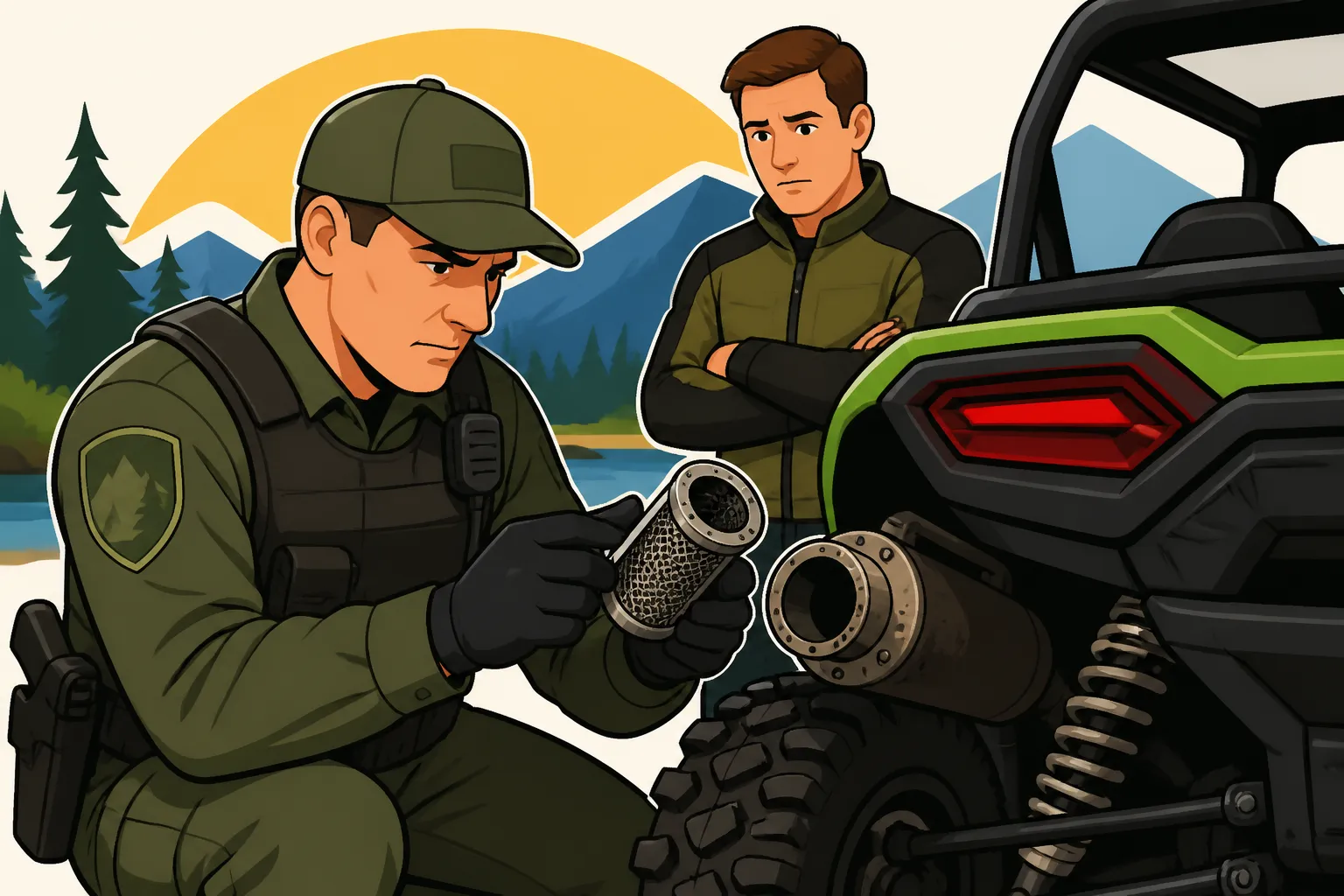
When an Officer Checks Your Spark Arrestor Screen
An officer checking your spark arrestor screen can turn a routine BC ride into an equipment check, especially if the screen is hidden inside the muffler or was changed with an aftermarket exhaust. Knowing what may be inspected, how to prepare the machine and what to do if something is wrong helps you respond calmly without risking a burn or making the problem worse.
Why an officer may check the spark arrestor
A spark arrestor is part of the exhaust system. Its screen is designed to help stop hot particles from leaving the exhaust and starting a fire. It is not the same as a heat shield, muffler packing or a removable decorative grille. The screen needs to be in the right place and in serviceable condition for the system to work as intended.
In BC, wildfire-related equipment requirements can apply when operating an ATV or UTV in relevant areas. Managed recreation sites may also set their own equipment conditions. The details can depend on where you are riding and which rules apply there, so do not assume that a machine is acceptable everywhere simply because it passed a check somewhere else. Review BC Spark Arrestor Requirements and check current restrictions before heading out.
An officer may look at the exhaust during a roadside or trail-side contact, or as part of a broader equipment check. The purpose is to assess whether the machine appears to have a properly installed spark arrestor, not to give the rider a repair lesson. A visual inspection may be enough to reveal an obvious missing screen, loose component or altered exhaust. If the screen is inside the muffler, the officer may ask how it can be checked or ask to see the relevant part of the system.
Do not assume every check involves dismantling the muffler or measuring the screen. The inspection depends on the machine’s design, what is visible and the circumstances. Nor should you assume that an exhaust described as “quiet” or “stock” is automatically compliant. A quiet muffler and a spark arrestor perform different jobs.
| What the officer may notice | Why it matters | What you can do before riding |
|---|---|---|
| No screen or arrestor visible where one should be | The required component may be missing or removed | Confirm the machine’s exhaust configuration and fitment |
| A loose, bent or damaged screen | A damaged part may not function as intended | Inspect it when the exhaust is cool and repair or replace it |
| Heavy carbon or debris blocking the screen | A clogged screen can affect exhaust flow and may signal overdue maintenance | Clean it according to the manufacturer’s instructions |
| An aftermarket muffler or exhaust | The original equipment may have been replaced, and the new setup needs checking | Keep product details and fitment information available |
| A machine recently serviced or modified | Parts may have been removed, changed or installed incorrectly | Recheck the full exhaust after the work is done |
The check is about the equipment on the machine at that moment. A receipt for a screen, a product listing or a claim that the exhaust came with the machine does not prove that the correct part is installed and intact. For background on the component itself, see How a Spark Arrestor Screen Actually Works.
How to prepare for an inspection
The easiest time to inspect a spark arrestor is before the ride, while the machine is cool and parked safely. Do not wait until you are on a trail with a hot exhaust and limited tools. Check the owner’s manual for the correct inspection and cleaning procedure; access varies between exhaust designs, and some screens are not intended to be removed by the rider.
A basic pre-ride check should cover these points:
- Identify the exhaust system. Confirm whether it is the original exhaust or an aftermarket replacement. Look for the manufacturer’s markings or documentation, but remember that a label alone does not establish that every internal part is present and serviceable.
- Find the inspection method. Use the manual or manufacturer’s instructions to see where the screen is and how it can be examined. Some screens are easy to see at the exhaust outlet; others are fitted inside the muffler.
- Look for visible damage or tampering. When the machine is completely cool, check for a missing fastener, loose end cap, damaged screen or signs that a component has been removed. Do not reach into a hot exhaust.
- Check for blockage. Carbon buildup or other debris can restrict the screen. Clean it only using the method specified for that exhaust. If it is damaged or cannot be cleaned properly, arrange a suitable repair or replacement.
- Recheck after service. If the muffler or exhaust has been removed, repaired or modified, make sure all parts are back in place and secured before riding.
If you have an aftermarket exhaust, confirm that the screen is made for that exact system. A screen that looks similar may not fit, attach securely or match the manufacturer’s configuration. Retailers such as Amazon may list replacement screens, but a listing is not proof that the part is suitable for BC riding or compliant for your situation. Verify the part number and fitment with the exhaust manufacturer or a qualified repair shop before buying or installing it.
A good habit is to keep the owner’s manual or reliable product documentation with your other machine records. You do not need to treat paperwork as a substitute for a working part, but it can help identify the exhaust and show how it is meant to be inspected. If you are unsure where the screen is located, ask a dealer or mechanic to point it out while the machine is in the shop. Checking an Arrestor Before a Ride and Finding the Spec Stamped on Your Muffler can help with those checks.
What to do when an officer asks to see it
Stay calm, turn off the machine if asked and follow reasonable safety directions. An ATV or UTV exhaust can remain hot after the engine stops, so tell the officer if the muffler has recently been running and do not touch or open it while it is hot. If the screen is behind a cover or needs a tool to access, explain how the manufacturer says it is checked rather than forcing the part open.
A practical response is simple:
- Let the officer know whether the exhaust is original or aftermarket, if you know.
- Explain where the arrestor screen is located and how it can be inspected safely.
- Do not start the machine or rev the engine to demonstrate anything unless the officer directs you to do so.
- Do not remove a hot screen, loosen a fastener under pressure or reach into the exhaust.
- If you are unsure about a technical detail, say so rather than guessing.
An officer may have questions about the screen’s condition or how the system is configured. Answer accurately. If you have manufacturer documentation available, offer it, but avoid arguing from an online listing or a seller’s description. Whether the equipment meets the applicable rule is not determined solely by what a product page calls it.
If the officer identifies a problem, ask what part or condition needs attention and what the next step is. Do not attempt a trail-side repair that could leave the exhaust loose or create a new hazard. If the machine cannot be operated lawfully or safely, stop riding it until the issue has been resolved. Take note of the officer’s instructions and any written notice you receive. For related consequences, see BC Spark Arrestor Fines.
If you disagree with an enforcement decision, remain respectful at the roadside. Gather the details you can safely record afterward, including the location, the machine’s exhaust setup and any notice or ticket. Follow the process stated on the document rather than trying to settle a dispute during the inspection.
Common problems and how to avoid them
The screen is missing after a muffler modification. A previous owner or repair shop may have changed the exhaust, and the absence may not be obvious until it is inspected. Check the machine’s current setup rather than relying on what the seller said. If a part is missing, ask the exhaust manufacturer or a qualified mechanic what replacement is designed for that model.
The screen is clogged. A screen can collect carbon over time. A machine that starts and runs normally does not necessarily have a clean arrestor. Follow the maintenance schedule and cleaning instructions for the exhaust. Avoid improvised scraping or drilling: damaging the mesh can defeat its purpose even if the exhaust still appears to work.
The replacement looks close but does not fit properly. Screens are not universal. A loose screen can shift, and a part that is too small or uses the wrong attachment may not stay in place. Match the manufacturer, exhaust model and part number whenever possible. If the machine has a non-standard exhaust, have a repair shop confirm the correct setup.
You cannot tell whether the screen is present. Do not assume that no visible screen means there is none; some systems place the arrestor inside the muffler. Check the manual or ask a mechanic to identify the design. The same applies in reverse: seeing a mesh-like piece at the outlet does not automatically prove that the system meets the applicable requirements.
You are riding in an area with a temporary restriction. A working spark arrestor does not override an area closure, fire prohibition or other restriction. Check the rules for the route and destination, including managed-site conditions, before you leave. A machine can have compliant equipment and still be prohibited from operating in a closed area.
Keep the arrestor inspection in the same pre-ride routine as checking tires, controls and lights. That is particularly useful after exhaust work, before entering a managed recreation site, or when you are travelling somewhere with changing wildfire restrictions. If a part is questionable, resolve it before the ride rather than trying to explain it at a checkpoint.
What to remember
An officer’s check may be a visual look at the exhaust or a closer question about an internal screen. The most useful preparation is knowing your machine’s exhaust configuration, keeping the arrestor installed and undamaged, and following the manufacturer’s inspection instructions. A product description or a screen that merely appears to fit is not a substitute for confirming the correct part.
Rules and site conditions can vary, so verify requirements for the specific place you plan to ride. If the screen is missing, damaged or blocked, do not ride until the exhaust has been properly checked and repaired. More on the broader rules is available in BC Spark Arrestor Requirements and Checking an Arrestor Before a Ride.
Disclaimer
This article is for general informational purposes only and does not constitute professional advice. Laws, prices and regulations vary by location and change over time. Consult a qualified professional for guidance on your specific situation.