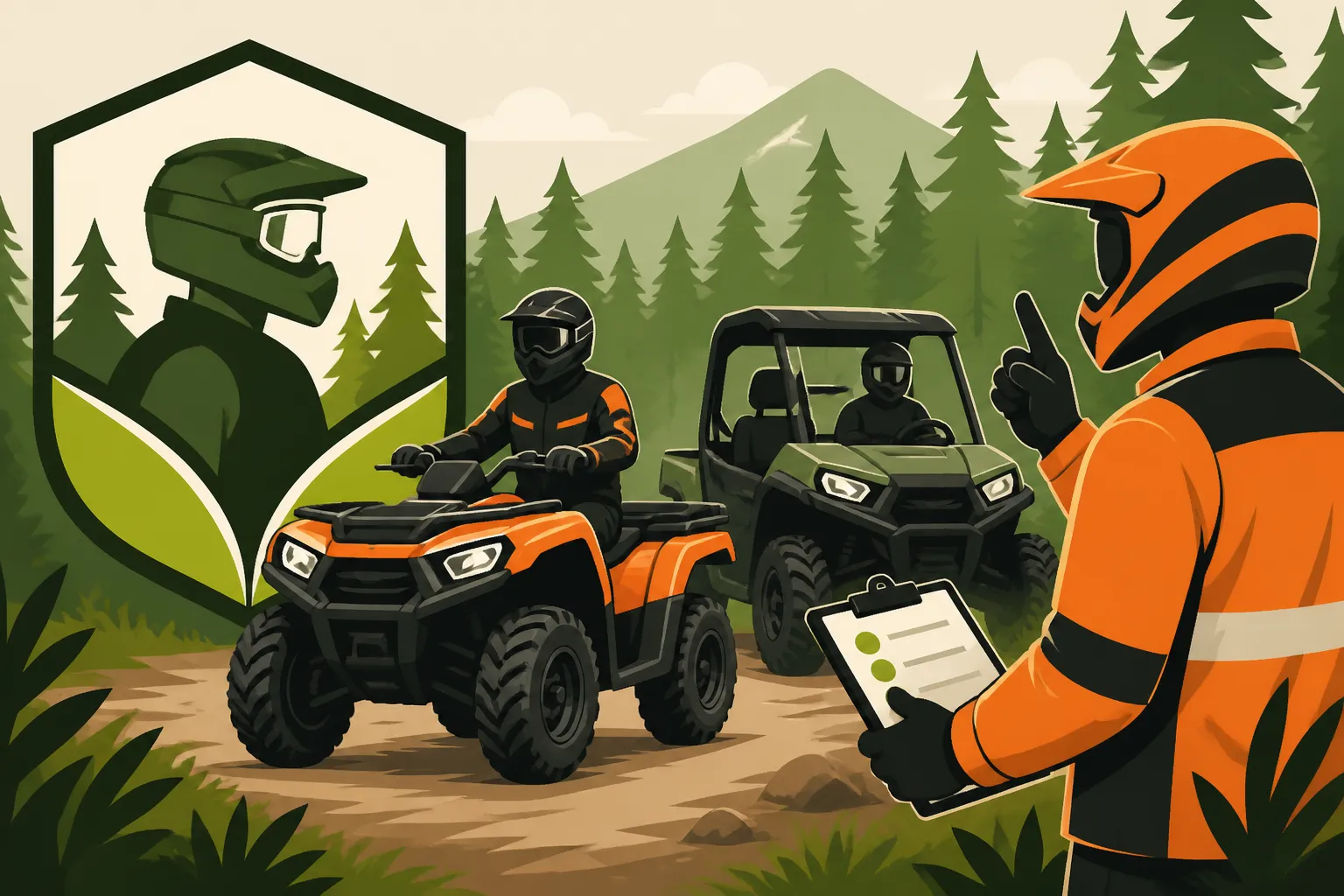
Rider Training From a Forest Safety Organization
If you ride an ATV or UTV for forestry work, recreation, or both, a course from a forest safety organization can help you build practical skills before you meet rough terrain, changing weather, or industrial traffic. The important thing is knowing what the course actually covers—and what it does not replace, such as registration, insurance, permits, or supervision rules.
What forest safety training is designed to do
The BC Forest Safety Council (BCFSC) is associated with safety training for people working in the forest sector. ATV and UTV training in that setting is generally about operating a machine safely as part of a job: assessing hazards, using the controls correctly, choosing a suitable route, and recognizing when conditions make travel unsafe.
That is a different purpose from simply getting permission to ride somewhere. A course can improve your judgment and technique, but it does not automatically give you access to a trail, satisfy every legal requirement, or make a machine street legal. Treat training as one part of a safe and lawful ride plan, alongside BC ATV Safety Training Options and the rules for the specific place you intend to ride.
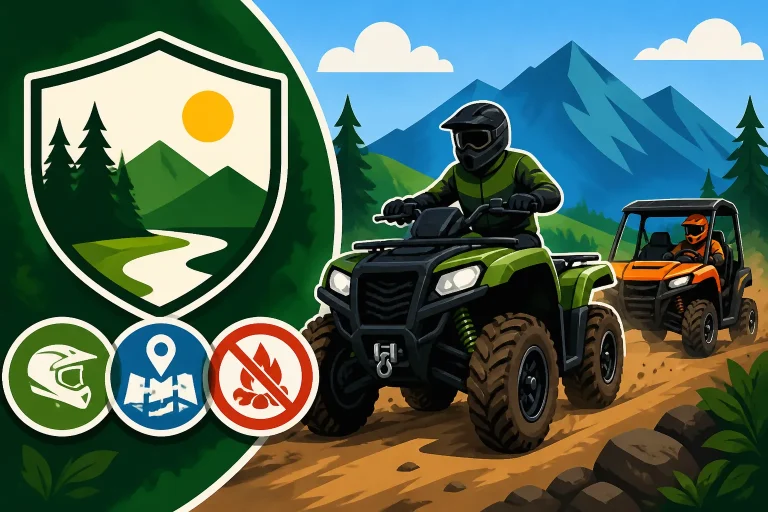
Training content depends on the course, instructor, machine, and whether the class is for workplace operators or recreational riders. A practical course may include a classroom or briefing component followed by supervised riding. Topics can include:
- Pre-ride inspection and basic machine controls
- Personal protective equipment and protective clothing
- Starting, stopping, turning, and speed control
- Braking and handling on uneven or loose surfaces
- Stability, slopes, and the risk of rollover
- Loading, unloading, and transporting a machine
- Assessing trail and weather conditions
- Communication and emergency planning
- Worksite hazards, including other vehicles and equipment
Do not assume every course covers every item. Ask for the current course outline and practical requirements before you book. A course focused on operating an ATV may not prepare you to operate a side-by-side, and a general orientation may not include enough time on the terrain or machine you will encounter.
A work-focused course can be especially useful when you are new to off-road machines, returning after a long break, moving from a quad to a UTV, or expected to ride as part of your job. It can also give an employer a clearer way to assess whether a worker understands basic operating risks. However, completing a course does not remove the need for site-specific orientation. A logging road, remote worksite, or managed recreation trail can have hazards and procedures that were not part of the training day.
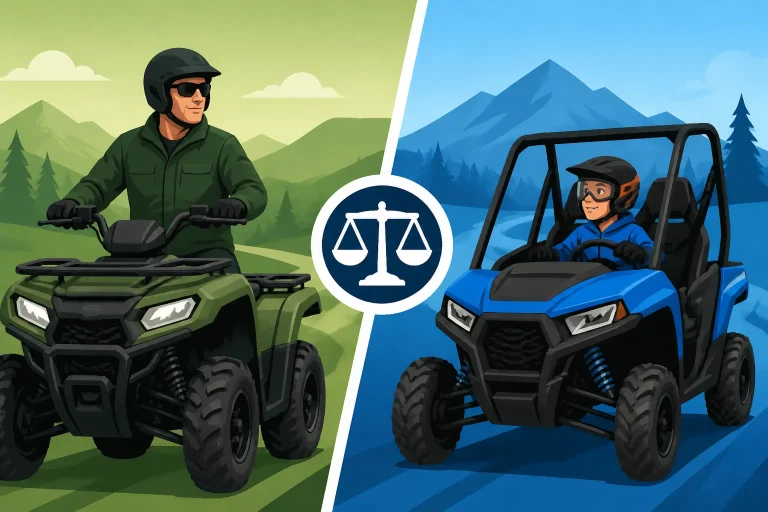
The course is also not a substitute for reading the machine’s operating manual. Models differ in controls, passenger limits, load capacity, recommended age and size, and safe operating conditions. A rider who has learned general skills still needs to understand the machine being used. For a side-by-side, pay particular attention to the manufacturer’s instructions for seat belts, passenger seating, cargo, and rollover protection.
A course certificate is not a general riding permit
A training certificate can document course completion, but it does not automatically act as an ATV registration document, trail pass, highway permit, or insurance policy. Those requirements depend on what you are doing and where you are riding.
For example, registration and operating rules are separate from training. Review Do You Need to Register an ATV in BC? if you are preparing to ride in the province, and check the requirements for the route you plan to use. A managed recreation site may have its own pass rules, while a Forest Service Road has different operating and insurance considerations. A course certificate does not grant access where a road, trail, or area is closed.
The same distinction matters for youth. If a young person is taking a course, do not assume that course completion by itself changes the legal supervision or permission requirements that apply to that rider. Check the current rules for the child’s age and the specific training provider before relying on a certificate. The relevant background includes BC Supervision Required Under 16 and BC’s Written Permission Rule at 14 and 15.
Adults should also avoid reading too much into the certificate. In general, a safety course is a way to improve skill and demonstrate training—not a universal provincial licence to operate an ORV. For more detail, see BC Safety Courses Are Voluntary for Adults. If an employer, land manager, insurer, or course provider has a specific requirement, ask what evidence they accept and whether they require a particular course.
How to choose and prepare for a course
Start by deciding what you need the training to achieve. A worker who must use a machine on a forestry worksite may need training that meets an employer’s policy or job requirement. A recreational rider may be looking for practical instruction and safer habits, without needing a workplace credential. The same course may not suit both needs.
Before enrolling, contact the organization or instructor and ask direct questions. Training availability, delivery arrangements, and course content can change, so confirm the details with the provider rather than relying on an old listing or a recommendation from someone who took a different course.
| Question to ask | Why it matters |
|---|---|
| Is the course intended for workplace operators, recreational riders, or both? | The exercises and assessment may be designed around a particular setting. |
| Does the course cover the type of machine I will operate? | ATV and UTV controls, handling, passenger arrangements, and risks are not identical. |
| Is there supervised hands-on practice? | A classroom discussion alone does not let you demonstrate how you handle a machine. |
| What terrain and conditions are used for practice? | Skills learned on one surface may not transfer directly to mud, steep ground, or loose rock. |
| What equipment must I bring? | The provider may have requirements for clothing, footwear, helmets, or machine condition. |
| Is an assessment included, and what does the certificate say? | You need to know what completion documents and demonstrates. |
| Will my employer or land manager accept this course? | A course can be useful without meeting a particular organization’s requirement. |
| Does it satisfy any rule that applies to a young rider? | Never assume a general safety certificate replaces a legal requirement. |
If you are booking through a forest safety organization or its training network, ask whether the instructor is delivering the course directly or through an affiliated provider. Confirm who issues the certificate, what the training covers, and whom to contact if your employer needs records or proof of completion.
Bring the machine and information the provider requests
Some training is delivered with machines supplied by the provider; other courses may require you to bring your own. Confirm this before the training day. If you are bringing a machine, ask about its condition, fuel, tires, required documents, and any restrictions on modifications. Do not arrive assuming an altered or poorly maintained machine will be accepted for practice.
If the course uses a machine supplied by someone else, tell the instructor what you normally ride. Differences in size, controls, power, and seating position can affect what you need to practise. If your job involves both an ATV and a side-by-side, make sure the training plan addresses both rather than assuming experience on one is sufficient for the other.
Bring the paperwork the provider requests, and arrive ready to learn rather than to prove that you already know how to ride. Beginners should say so. Experienced riders should also be open to correction: familiar habits can become risky when the terrain, load, machine, or worksite changes. A useful course should make it possible to ask questions and practise skills under supervision, not encourage riders to push limits.
Wear clothing suitable for outdoor activity and follow the provider’s directions about helmets and other protective equipment. If you need to buy gear, verify the required standard and fit with the instructor before shopping. A product being listed on Amazon, or being described as “off-road,” does not by itself confirm that it meets a course or legal requirement. A helmet must fit correctly and be appropriate for the intended use; BC Helmets on Ride-Astride Machines explains why helmet rules matter when riding a quad.
What to take from the training onto BC trails and roads
The best value from training comes when you apply it before, during, and after each ride. Use the course to develop a repeatable routine, then adapt that routine to the machine and the conditions. A certificate is evidence that you completed training; safe decisions are made ride by ride.
Before setting out, inspect the machine, check its controls and safety equipment, and make sure the load and passengers are within the manufacturer’s limits. Plan a route appropriate to the least-experienced rider in the group. Check closures and local conditions, and tell someone where you are going if the route is remote. Training cannot predict every hazard, so riders still need to slow down or turn around when conditions exceed their skill or equipment.
On a worksite or resource road, understand the communication practices in use and expect to encounter industrial traffic. A recreational riding course may not cover the procedures used on a particular road. Review BC Forest Service Road Requirements and any instructions from the road operator or employer before travelling. A course does not give you permission to ignore posted restrictions or to ride through an active closure.
For recreation, check whether the route is open to your machine and whether the site requires a pass. Do not treat an online map, a previous visit, or a training certificate as proof that access is currently allowed. Rules can differ between Crown land, private property, managed recreation sites, and roads used by industry. BC Crown Land Access Rules is a useful starting point when you are sorting out where access and permission questions arise.
If you ride with children, match the machine to the rider and follow the applicable age, supervision, passenger, and permission rules. Training is helpful, but it does not make an undersized machine appropriate or remove a supervision requirement. In a UTV, make sure the driver and passengers use the equipment provided for them and follow the manufacturer’s instructions.
After the course, write down the skills or safety checks you want to keep using. Share relevant learning with your riding group or work crew, and ask for further instruction if the course identifies a gap. If your responsibilities change—for example, you start riding a different machine, carrying equipment, or travelling on unfamiliar roads—seek training that matches the new task.
A forest safety organization’s training can be a practical step toward more confident, controlled riding, especially when your work involves off-road machines. Choose a course that fits your purpose, confirm what its certificate represents, and keep legal requirements, site access, and machine-specific instructions separate from the training itself.
Disclaimer
This article is for general informational purposes only and does not constitute professional advice. Laws, prices and regulations vary by location and change over time. Consult a qualified professional for guidance on your specific situation.