Forty Campsites at Aspen
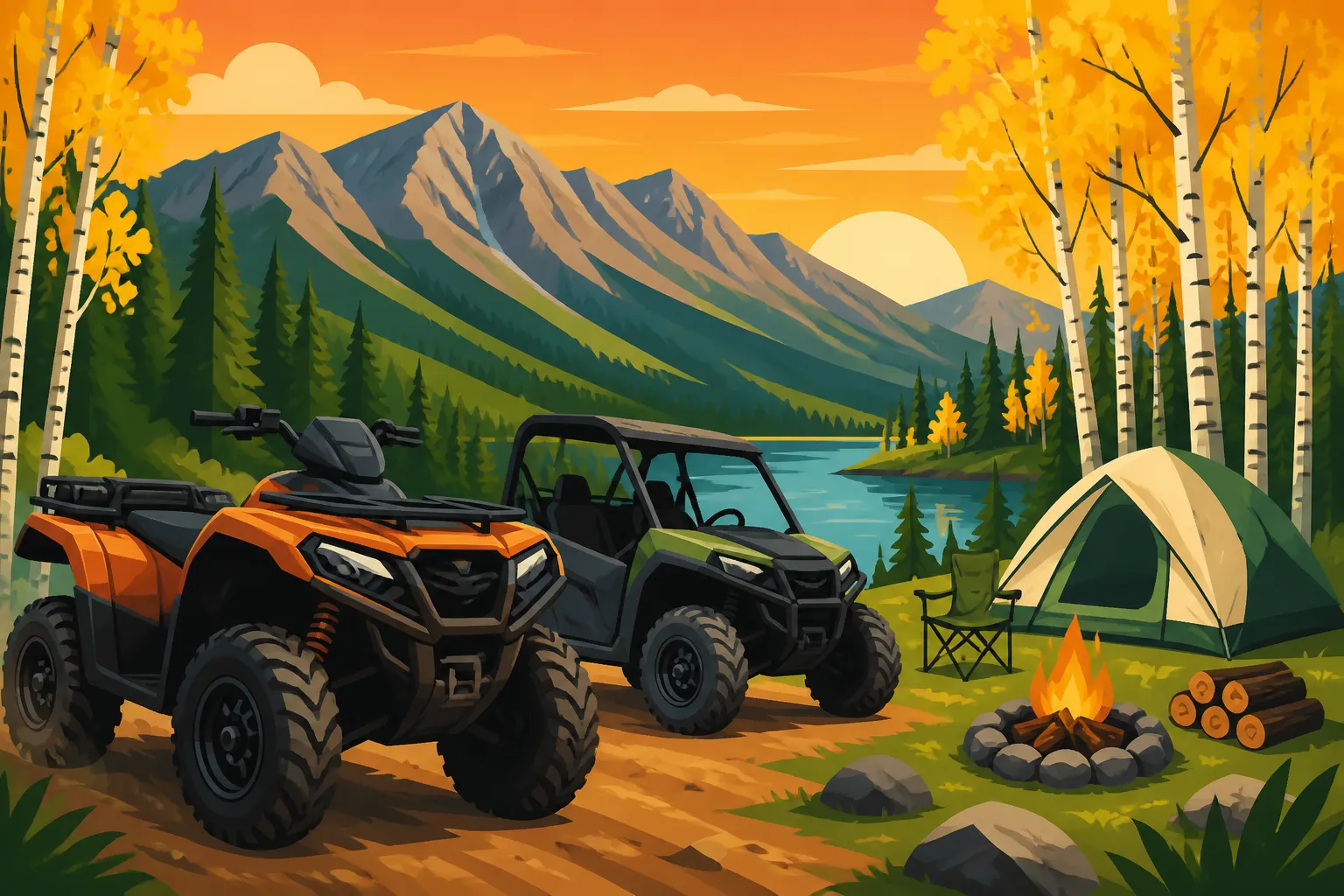
Aspen’s campground near Bear Creek OHV can make a multi-day ride around Kelowna easier, but a campsite is only useful if you know how it fits with the trailhead, your trailer, and your riding plans. This guide explains how to plan around the roughly forty campsites, what to check before you go, and how to make your stay work for your group.
Planning a camping trip at Aspen
Understand how the campsites fit into your ride
Aspen is associated with the Bear Creek riding area west of Kelowna, where riders use trailheads and forest roads to reach a network of off-road routes. The campsite count is appealing because it suggests room for groups and a base for more than a quick day ride. But a number alone does not tell you whether a particular site will suit your trailer, tent, or riding group.
Treat the campground and trailhead as related but distinct parts of your plan. Before leaving home, confirm where camping is allowed, where machines may be parked, and how riders are expected to access the riding area. Check local signs and any current information from the site or managing organization. Do not assume that a campsite automatically gives you permission to ride from your campsite, or that every nearby track is open to motorized use.
The Aspen trailhead is a useful starting point for planning your arrival and ride. If you have not been there before, review [Staging at Aspen Trail Head in BC] and [Bear Creek OHV: BC's Largest Recreation Site] before you set out. A map app such as onX Offroad can help you visualize routes and keep your group oriented, but use it as a planning aid rather than a substitute for posted restrictions, official information, or instructions at the site.
Decide whether Aspen works for your group
A campground with many sites can be a good fit for a family weekend, a club outing, or a trip with several trailers. It may also mean a busier arrival area, more people moving around the campground, and less certainty that your whole group will find a cluster of adjacent sites. If you are travelling with friends, agree on a meeting point and a backup plan before anyone loses cell service or arrives late.
Think through your group’s practical needs, not just the number of available sites. A tent camper has different requirements from someone towing a large trailer. Riders bringing children may want a quieter, simpler riding plan than a group of experienced adults hoping to cover long distances. If anyone in the group has mobility, medical, or equipment needs, confirm the site’s conditions before relying on assumptions about access or facilities.
It helps to build a basic trip plan around three questions: where you will sleep, where you will stage your machines, and which riding routes are suitable for everyone. Use [BC Trails With Camping] to think through the camping side of the outing, and check [BC ATV Trails: Where to Ride] for broader trail-planning context. For route discovery, onX Offroad may be useful for comparing possible corridors and keeping a planned route visible. Still, verify access locally: mapped lines do not necessarily mean a trail is open, appropriate for your machine, or legal to ride.
Choosing a campsite and arriving prepared
Check the details instead of assuming amenities
The phrase “forty campsites” answers one useful question: the area is known for a substantial number of camping spots. It does not confirm what each site looks like or what facilities are available. Do not count on a specific campsite having room for a large trailer, a level tent pad, a picnic table, drinking water, a toilet, or a fire facility unless current site information or signage confirms it.
For a smoother arrival, pack as though the campground may be more basic than you expect. Bring water, food, lighting, a first-aid kit, and the supplies you need to manage waste responsibly. If you are relying on toilets or other facilities, confirm their availability rather than leaving that question until you arrive. Guides such as [BC Riding Areas With Toilets] can help you consider what to verify, but conditions can vary between locations and may change.
| Planning question | What to confirm before departure | Why it matters |
|---|---|---|
| Is camping permitted in the area you plan to use? | Current site information and posted signs | A nearby trailhead or open area is not automatically a campsite |
| Will your trailer fit? | Site dimensions, access, turning room, and parking rules | Tight approaches can make arrival difficult, especially with a group |
| What facilities are available? | Toilets, water, garbage arrangements, and fire rules | You can pack correctly instead of relying on assumptions |
| Can you ride the routes you have planned? | Restrictions, closures, machine suitability, and local notices | A mapped route may not be open or appropriate |
| Is there enough communication coverage? | Coverage expectations and a backup contact plan | Groups may need a way to regroup if phones do not work |
A map app such as onX Offroad can help you save a route, inspect the surrounding area, and discuss a meeting point with your group before arrival. Download or save what you need ahead of time if you expect weak service. Keep a second navigation option, such as an offline map or a paper map, and make sure everyone knows the planned route. A phone with a route on it is helpful; a phone that has lost power or signal is not a complete backcountry plan.
Plan for trailers, machines, and shared space
Arriving with a trailer adds a few extra decisions. Consider whether you can turn around safely, where you can unload without blocking other campers, and how you will secure your vehicle and equipment while riding. If a friend is towing separately, decide whether you are meeting at the campground, at a staging area, or somewhere else. Agreeing in advance is less stressful than trying to coordinate from the road when people are arriving at different times.
Keep machines and riding gear organized within the space you are using. A crowded campsite can become hazardous when fuel containers, tools, helmets, children, and moving vehicles are all competing for room. Establish a clear area for parking and unloading, and avoid riding around the campground unless local rules specifically allow it. Slow movement, considerate parking, and a quick check before backing up make the area safer for everyone.
If your group is unfamiliar with the trail system, choose a conservative first ride. Start with a route that lets riders get accustomed to the terrain and one another’s pace, then decide whether to go farther. Check [BC Trail Difficulty Ratings] when comparing routes, and discuss whether any steep, narrow, rocky, or exposed sections are suitable for the least experienced rider. A route that looks short on a screen can still take longer than expected once you account for stops, obstacles, and group spacing.
Riding responsibly around Bear Creek
Check access, closures, and route conditions
The Bear Creek area includes routes and access corridors that may be affected by local conditions, resource-road activity, maintenance, or restrictions. Check current notices before riding and obey signs on the ground. A route shown on a navigation app, including onX Offroad, is not proof that the route is open to motorized use today. Treat the map as a way to orient yourself, then confirm the route using official information and posted signs.
If your trip involves the broader Bear Lake and Westside Road area, plan the approach as carefully as the ride itself. [Bear Lake Main Off Westside Road] can help you understand the location reference, while [BC Motor Vehicle Closures and How to Find Them] is useful context for thinking about route access. Do not bypass a gate, ride around a closure, or assume that a road is open because another vehicle has used it. When in doubt, stop and confirm rather than carrying on and risking a violation or an unsafe situation.
Conditions also change with weather and season. A dry, familiar-looking track can become slick or rutted after rain, while dust can reduce visibility in busier periods. Before setting out, ask whether the route suits your machine, your group’s skill level, and the day’s conditions. Carry enough water and basic repair supplies, and leave time to return before dark if your route is unfamiliar.
Share the trail and campground thoughtfully
The experience at a popular camping and riding area depends heavily on how visitors use it. Keep noise and vehicle movement considerate around other campers, follow posted speed limits or restrictions, and give people space when passing. Pack out what you bring in, secure food and garbage appropriately, and avoid damaging vegetation or creating new tracks around established routes.
On trails, ride at a pace that allows you to react to other users and changing conditions. Stay on the route rather than widening it to avoid mud or obstacles. If you meet another rider, slow down and communicate clearly; if you encounter a larger group, wait for a safe opportunity to pass. [BC Trail Etiquette Locals Expect] offers more background on the habits that help keep shared riding areas enjoyable.
Resource roads may also carry industrial traffic. Be alert for signs, road activity, and vehicles that need more room to stop or maneuver. Follow local radio or communication practices where they apply, and do not assume that a recreational ride has priority. Build a plan that allows you to turn back if traffic, closures, or trail conditions make continuing a poor choice.
Making a practical Aspen trip plan
Use a simple checklist before you leave
A little preparation can prevent the most common campground frustrations: arriving without enough water, discovering the trailer will not fit, or finding out that the route your group expected to ride is closed. Make one person responsible for checking site and access information, another for navigation and the route plan, and each rider responsible for their own machine and safety gear.
Use this checklist as a starting point:
- Confirm that camping is permitted where you plan to stay and review any site rules.
- Check current access information and posted restrictions for the trails and roads you intend to use.
- Confirm whether your trailer and vehicle can be accommodated and where unloading is allowed.
- Pack water, food, lighting, first aid, navigation, and any supplies you need if facilities are limited.
- Save your route and meeting points offline, and share the plan with everyone in the group.
- Choose a ride that suits the least experienced rider and the conditions expected that day.
- Agree on a turnaround time, regrouping points, and what to do if someone becomes separated.
- Recheck the plan when you arrive and follow signs or instructions that differ from what you expected.
For route planning, onX Offroad can help you mark possible tracks and make it easier to talk through a route with riders before the trip. Keep your plan flexible, though. If a trail is closed, conditions are poor, or the group is more tired than expected, choose another option or end the ride early. A good weekend is not measured by how many kilometres everyone covers.
Match your expectations to the trip
Aspen’s roughly forty campsites make it an appealing base to consider for a Bear Creek riding trip, particularly if you want to camp near your riding plans rather than commute from a distant place each day. The best experience comes from treating the campsite count as one part of the decision, not a guarantee of a particular site, facility, or trail connection.
If you are visiting for the first time, keep the first day light. Arrive with enough time to orient yourself, set up camp, and check the local information before heading out. A short exploratory ride can help your group understand the terrain and access points without committing to a long route. Once everyone knows how the area works, you can make better decisions about the next day’s ride.
Also think about the return trip. Secure your equipment, keep the campsite tidy, and leave the area as you found it. If plans change during the visit, use current signs and local information to adjust rather than relying on an old route plan. With a realistic campsite setup, a flexible itinerary, and respect for other users, Aspen can serve as a practical starting point for exploring the Bear Creek riding area.
Disclaimer
This article is for general informational purposes only and does not constitute professional advice. Laws, prices and regulations vary by location and change over time. Consult a qualified professional for guidance on your specific situation.