Nine Campsites at Burke
Burke is a useful base for riders exploring the Bear Creek area, but arriving with a trailer, camping gear, and an ATV can raise practical questions: where to set up, what to pack, and how to avoid assuming a site has facilities it may not have. This guide explains how to plan around the nine campsites at Burke and prepare for a responsible ride.
What to expect at the Burke campsites
A small base for a riding weekend
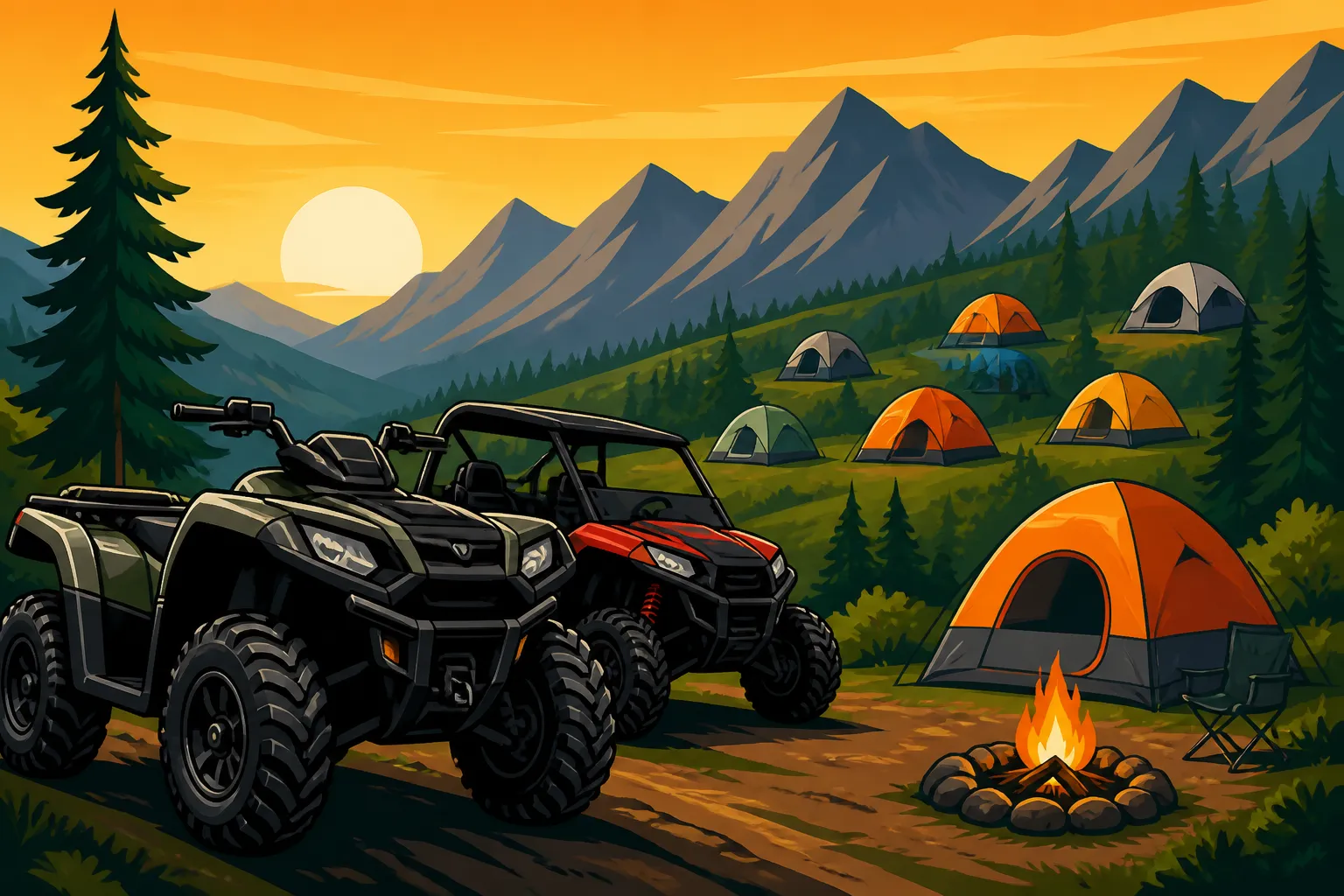
The nine campsites at Burke are associated with the Burke staging area in the Bear Creek riding area near Kelowna. Think of them as a limited-capacity base for a trip, not as a full-service campground where you can count on every convenience. A small number of sites can be especially handy when your group wants to camp near its riding plans, but it also means space and availability matter.
That limited capacity affects how you should plan. If you arrive with several vehicles, a long trailer, and a large group, you may find that fitting everyone comfortably takes more room than the campsite count suggests. Keep your group compact, avoid treating extra space as an additional campsite, and have another plan if the area is full.
Before you leave, check the site’s current signs and local information for rules, access conditions, and any restrictions. Facilities and rules can change, and a campsite count alone does not tell you whether there is drinking water, a toilet, garbage service, or room for a particular trailer. If your weekend depends on a specific amenity, confirm it rather than packing on the assumption that it will be there.
Camping and staging are not the same thing
A riding area may include places to camp, park, unload, and begin a ride, but those uses are not interchangeable. A staging area is where riders prepare to head out; a campsite is where people stay overnight. Look for signs that identify the areas and follow any posted directions about where vehicles and tents may go.
This distinction matters when the site is busy. A trailer parked across a turning area can make it difficult for another group to unload or leave. Likewise, spreading camping gear into a staging space can block access even if there appears to be room when you arrive. Set up within the designated campsite area and keep access routes clear.
Use the location’s posted instructions as your authority on site. If signs do not make a boundary clear, avoid assuming that an open patch of ground is available for camping. The same goes for nearby Crown land: permission to ride in an area does not automatically mean every spot is suitable or permitted for an overnight stay. For more context on the riding location, see [Staging at Burke Trail Head in BC] and [Bear Creek OHV: BC's Largest Recreation Site].
Planning your arrival and campsite setup
Check access, space, and group needs first
Before driving out, decide how many machines, passengers, tow vehicles, and trailers are in your party. A campsite that works for one truck and a compact trailer may not work for several large rigs. If your group is arriving separately, agree on a meeting point and a plan for what to do if some vehicles arrive later or the sites are occupied.
Build flexibility into your arrival time. Reaching a small camping area late, after a long tow, is stressful—especially if you have children, tired passengers, or a trailer that is awkward to turn around. If space is unavailable, do not improvise by blocking a road or setting up in an undesignated area. Have a lawful alternative identified before the trip, and make sure everyone in the group knows it.
A map can help you understand the approach and nearby riding routes, but it should not replace posted signs or local access information. Some riders use tools such as onX Offroad to plan routes and review mapped riding areas before leaving home. Treat any digital map as a planning aid, then confirm conditions and restrictions on the ground.
Pack as if services may be limited
For a low-service or rustic camping setup, plan to be self-sufficient. Bring drinking water for both camp and the ride, food that does not depend on an uncertain source of power, and a way to pack out your rubbish. If you use a portable toilet or other camping equipment, follow the site’s rules and dispose of waste properly rather than leaving it behind.
It helps to organize camp and riding gear separately. Keep helmets, gloves, tools, spare layers, and machine supplies together so a late arrival does not turn into a search through every bag. Store food securely, and keep fuel and maintenance products handled and stored in a way that prevents spills. A tarp or groundsheet can make a basic setup more comfortable without spreading equipment into neighbouring sites.
| Planning question | What to do before you go |
|---|---|
| Is there room for our group? | Count people, machines, tow vehicles, and trailers; make a backup plan. |
| Are facilities available? | Confirm directly through current local information or posted site details. |
| Can we camp anywhere nearby? | Use designated areas and obey signs; do not assume open land is available. |
| Are routes and access open? | Check local restrictions and verify conditions when you arrive. |
| What should we carry? | Bring water, food, first-aid supplies, tools, and a way to pack out waste. |
When you are checking the broader area, [BC ATV Trail Map Downloads] can help with trip planning, while [Staging at Aspen Trail Head in BC] offers another Bear Creek staging reference. Compare your intended approach with current signs rather than relying on a saved route alone. A mapping app such as onX Offroad may help you keep your route planning organized, but access rules and closures still need to be checked separately.
Riding from Burke responsibly
Make a route plan before unloading
A campsite near a riding area can make it tempting to unload quickly and decide where to go later. A little planning first can make the day safer and less frustrating. Choose a route that suits the least experienced rider, account for fuel and daylight, and tell someone who is not riding where you expect to go and when you plan to return.
Do not judge a trail only by how it looks on a screen or by what another rider says. Conditions can vary with weather, maintenance, traffic, and closures. A route that was manageable for a skilled rider on a smaller machine may feel very different for a new rider, a side-by-side, or a group with children. Keep your plan flexible and turn around if conditions are beyond your group’s comfort or ability.
Carry essentials on the machine rather than leaving everything at camp: water, basic first aid, a charged phone, appropriate layers, and tools suited to your ride. Cell service can be limited in backcountry areas, so do not make a phone your only safety plan. An offline map or saved route can be useful; onX Offroad is one option riders may use for that purpose, but downloaded mapping does not replace carrying what you need to manage a delay or route change.
Respect closures, other users, and the campsite
Before heading out, check for posted restrictions, seasonal closures, and local site rules. A route that appears on a map is not necessarily open to motorized use at the time you visit. Stay on permitted roads and trails, avoid creating new tracks, and turn around rather than riding around a barrier or closure sign.
Bear Creek and the surrounding area can attract other recreational users. Keep speeds appropriate for visibility and trail conditions, give other people room, and be alert at corners and intersections. On roads used by industrial traffic, ride cautiously and follow the applicable road practices. If your route includes a resource road, review [BC Forest Service Road Rules for ORVs] and [BC Resource Road Radio Practice] before setting out.
At camp, keep noise and activity considerate, especially early and late in the day. Do not leave food scraps, packaging, broken parts, or other waste behind. If the site has posted restrictions on fires, follow them exactly; never assume a fire is allowed simply because there is an existing fire ring. Pack out what your group brings in and leave the campsite ready for the next riders.
A simple checklist for a Burke camping trip
Before you leave home
Confirm that the area is accessible and that your planned camping and riding activities are allowed. Check current local notices, plan a backup for an occupied campsite, and make sure your group understands where it will meet. If your route depends on a particular trail or road, identify an alternative in case of a closure or poor conditions.
Prepare your machines and tow vehicles before the drive. Check tires, brakes, lights, tie-downs, fuel, and the condition of your riding gear. Bring proof of registration and any required documents for your machine. If you are unsure what to carry while riding in British Columbia, review [Carrying Your Certificate of Registration on Every Ride] and [BC ATV Registration Requirements].
Tell someone outside the group where you are going and when you expect to be back. Share the general route and the name of your backup contact, then update them if plans change. This is a simple step, but it matters when a ride runs late or a vehicle problem separates part of the group.
When you arrive
Pause before unloading. Read the signs, identify the camping and staging areas, and check that your vehicle will not block a road, turning space, or access point. If the designated sites are full, move on to your backup rather than setting up wherever there appears to be room.
Once camp is settled, review the ride plan with everyone. Confirm who is leading, who is bringing essential supplies, what the turnaround point is, and what to do if riders become separated. Keep the plan realistic: a shorter ride that brings everyone back safely is better than an ambitious route that leaves the group racing daylight.
When you leave
Do a final walk around the campsite before loading. Pick up small items such as cable ties, food wrappers, and packaging, and make sure no equipment or personal belongings have been left behind. Check that the area is tidy and that your group has followed the posted rules.
Burke’s nine campsites can be a convenient starting point for a Bear Creek riding weekend, but the best trip is one planned around the site’s limits. Confirm conditions, keep your setup compact, arrive with a backup plan, and ride within your group’s abilities. Those small preparations make it easier to enjoy the riding without putting pressure on the campsite or other visitors.
Disclaimer
This article is for general informational purposes only and does not constitute professional advice. Laws, prices and regulations vary by location and change over time. Consult a qualified professional for guidance on your specific situation.