BC Riding at Postill Lake
Postill Lake is a popular riding destination northeast of Kelowna, but a day in the area can be less straightforward than it looks on a map. Riders need to plan for changing trail conditions, mixed road and trail access, seasonal restrictions, and limited services. This guide explains how to prepare, choose a suitable ride, and make sensible decisions once you reach the Postill Lake area.
Getting to Know the Postill Lake Riding Area
Where Postill Lake fits into an Okanagan ride
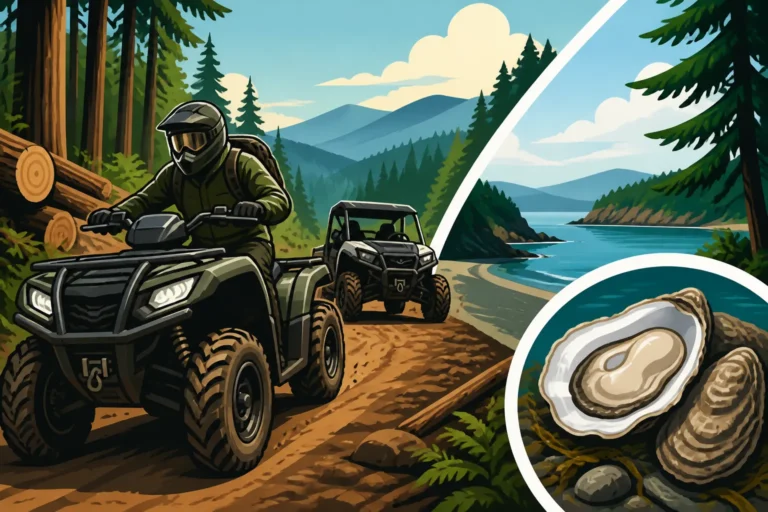
Postill Lake is in the hills northeast of Kelowna, in the broader Okanagan riding region. It can appeal to riders looking for a backcountry outing without making a multi-day expedition of it. Depending on your starting point, the trip may involve a drive out of the city followed by riding on a mix of roads and off-highway routes. That combination makes it especially important to know which sections you plan to ride before unloading your machine.
The area is not a single, clearly bounded track where every route has the same surface, difficulty, or access status. A route shown on a recreational map may connect with a forest road, a rougher trail, or a route that is currently restricted. Conditions can change after rain, snowmelt, logging activity, or maintenance work. Treat online maps and old ride reports as planning aids, not a guarantee that every line is open or suitable on the day.
Postill Lake is one option among several in the region. If you are comparing destinations, [BC Okanagan Riding Areas] can help you think about how the area fits into a wider trip, while [BC ATV Trails: Where to Ride] offers a broader starting point for choosing a destination. Before you commit to a route, confirm the access and riding information relevant to the exact trailhead or road you intend to use.
What the terrain may feel like on the ground
Riders should expect a backcountry setting rather than a groomed, predictable course. Surfaces can vary with elevation and exposure: a route that starts on a firm road may lead to uneven ground, loose material, ruts, mud, or rocky sections. The same stretch can feel very different after a dry spell than it does after rain. Keep enough flexibility in your plan to turn around when the surface or route becomes unsuitable for your machine or experience.
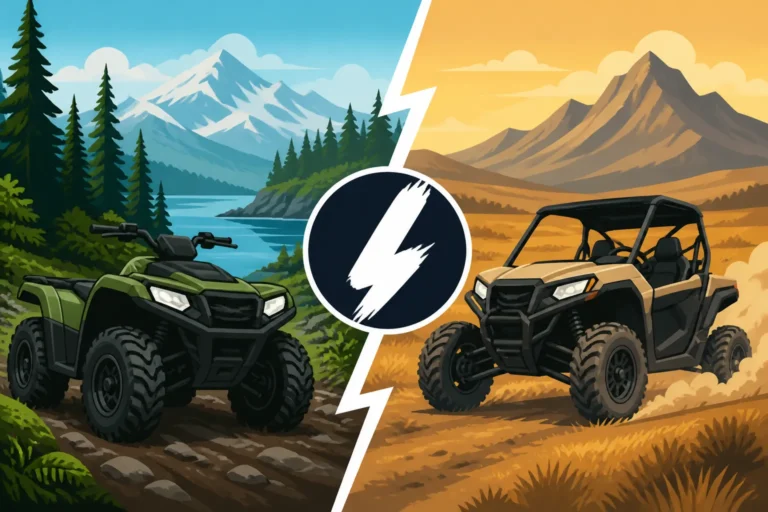
A map’s distance line does not tell you how tiring a ride will be. Steep grades, frequent turns, rough surfaces, and careful navigation can make a short route take longer than expected. A beginner may be comfortable on a wide, well-maintained road but less comfortable when it narrows or becomes irregular. Riders on a side-by-side should also consider width, turning space, and whether a route is appropriate for that vehicle rather than assuming every ATV route suits a UTV.
For a first visit, choose a conservative route and make the ride itself the main goal—not reaching a particular point at all costs. If you are riding with a mixed-skill group, agree in advance that anyone can call for a stop or a turnaround. A relaxed first outing gives you a better sense of the terrain and helps you make more informed choices on a future visit.
Planning a Route Around Postill Lake
Use maps to build a route, then confirm access
Start by identifying your staging point, intended route, and a reasonable turnaround point. Save the information you need offline before leaving town, since reception can be unreliable in backcountry areas. Digital tools such as onX Offroad can help riders review mapped routes and orient themselves, but no map app should be treated as confirmation that a trail is open, legally accessible, or passable in current conditions.
Compare more than one source where practical. A trail line on a digital map might reflect a road or route that has changed, while a paper map may not show a recent closure. Look for current notices from the relevant land manager, road operator, or local riding organization, and pay attention to signs on the ground. [BC ATV Trail Map Downloads] is a useful companion topic when you are deciding what map information to carry.
Before setting off, check that your downloaded map covers the full route, not just the area around the lake. Zoom out far enough to see your return route and possible alternatives. OnX Offroad can be useful for keeping route information available offline, but make sure you understand how to use the app before you are navigating in an unfamiliar area. A charged phone in a vehicle mount is helpful; it is not a substitute for a backup navigation plan.
Choose a ride that matches your group and machine
A good route is one everyone can complete safely—not merely the one that looks most ambitious. Consider the least experienced rider, the machine with the lowest clearance, and the group’s available daylight. If one person is new to riding, build in extra time for breaks and for dealing with unexpected route choices. If your group includes both ATVs and side-by-sides, check the width and turning characteristics of each machine against the route you have in mind.
Agree on simple group rules before you leave the staging area. Decide who leads, who rides at the back, and where the group will regroup if it gets separated. Keep enough distance to avoid dust and give each rider room to respond to obstacles. At a junction, wait until the last rider arrives before moving on. This small habit can prevent a wrong turn from becoming a long, stressful search.
Use a route plan with a clear “stop and reassess” point rather than relying on everyone to push through. If a climb becomes too steep, a crossing looks uncertain, or the group loses the mapped route, pause and discuss options together. Turning back is a sound riding decision, not a failed outing. [BC Trail Etiquette Locals Expect] is useful reading for keeping a group considerate of other riders and the places they share.
| Planning question | What to check before riding | Why it matters |
|---|---|---|
| Where will we stage? | Confirm the location, access, parking suitability, and any posted restrictions | A route plan is only useful if you can legally and practically reach its start |
| Is the route open? | Look for current closures, signs, and land-access restrictions | Maps and old ride reports may not reflect present conditions |
| Can our machines fit? | Consider route width, turning space, clearance, and surface | A trail suitable for an ATV may not suit every side-by-side |
| How will we navigate? | Download maps, carry a backup, and agree on regroup points | Coverage may be limited in backcountry areas |
| When will we turn back? | Set a time or location limit and allow time to return | Daylight and changing conditions can make a late return risky |
Access, Land Use, and Riding Rules
Check what kind of road or land you are using
Routes in the wider Postill Lake area may pass through different land types or connect with roads that have their own access rules. Do not assume that a route is open to motorized recreation simply because it appears on a map or because tire tracks are visible. Follow posted signs, respect gates and closures, and avoid entering private land or leased areas without the required permission.
Crown land access also does not mean every activity is allowed everywhere. Restrictions can apply to particular roads, sites, or times of year, and conditions may change because of industrial use, environmental concerns, or fire risk. Read [BC Crown Land Riding Explained] before your trip if you are unsure how Crown land access works. For routes involving resource roads, [BC Forest Service Road Rules for ORVs] can help you understand why a road’s operating conditions matter to recreational riders.
If a sign conflicts with what your app or paper map shows, follow the posted restriction and look for updated information rather than trying to find a way around it. Do not ride around a closed gate, cut through a different access point, or use an adjacent track as a workaround. These choices can create safety problems, damage land, and jeopardize access for other riders.
Prepare for shared roads and changing activity
A backcountry route may be used by other recreational visitors as well as people working in the area. Logging trucks, service vehicles, and other industrial traffic can be large, fast-moving, and difficult to stop. A quiet road on the way in may become active later in the day. Ride cautiously around blind corners, stay alert for dust and engine noise, and follow any posted radio or traffic instructions.
Give larger vehicles room to move and make it easy for drivers to see you. Avoid stopping in a blind corner or where a truck would have little space to pass. If you encounter active hauling or a road restriction that makes continued travel unsafe, turn around or wait in a safe location if permitted. Riding as though the road belongs only to recreational users is a preventable source of conflict.
Access conditions are not the only rules to consider. Registration, insurance, equipment, and operating requirements may apply depending on where and how you ride. Review [BC Motor Vehicle Closures and How to Find Them] before heading out, and check the requirements that apply to your machine and route. Keep required documents with you and make sure they are accessible without needing a signal or a trip back to your vehicle.
Seasons, Conditions, and Safety Preparation
Spring and early-season riding
Spring can be appealing because the days are getting longer, but thawing ground is easily damaged. A route that seems firm near a main road may turn soft, rutted, or waterlogged farther along. Riding on saturated ground can leave deep tracks and damage vegetation, so turn back if the surface is too soft or water is pooling. Avoid treating mud as a challenge to conquer; the impact can last long after the ride is over.
Snow and ice may remain in shaded or higher areas after lower routes have cleared. That contrast can make a route more complicated than it appears from Kelowna. A machine that handles a dry road confidently may be difficult to control on slick ground or a thawing slope. If you encounter snow, ice, or a water crossing that you cannot assess safely, do not let the rest of the group’s enthusiasm push you into proceeding.
Build a spring ride around flexible expectations. Check for local advisories and closures, leave extra time, and have a shorter route ready. [BC Riding in Spring Melt] covers the seasonal issues worth considering before you head into wet or thawing terrain. OnX Offroad may help you keep your intended route available offline, but it cannot tell you whether the ground is firm enough to ride without damage.
Summer, fall, and changing hazards
Summer can bring dry, dusty conditions and increased wildfire concerns. Check for fire-related restrictions before loading your machine, and follow any posted limits or prohibitions. Dust can reduce visibility between riders, so leave enough space and slow down when you cannot see the surface clearly. Carry water, take breaks, and watch for signs of heat strain, especially if the group includes children or riders who are not used to long backcountry outings.
Fall brings shorter daylight and may overlap with hunting activity. Wear visible clothing, stay alert, and check whether seasonal restrictions affect your planned route. Do not assume that a familiar route remains open just because it was accessible earlier in the year. If you are uncertain about a closure, postpone the ride or choose another area rather than relying on a guess.
In every season, plan for the possibility of a breakdown or an unplanned delay. Bring basic repair supplies suited to your machine, a first-aid kit, food, water, and clothing for changing weather. Tell someone where you are going and when you expect to return. In areas with limited service, a phone may not be enough to call for help, so consider what backup communication is appropriate for the length and remoteness of your ride.
Making the Most of a Day at Postill Lake
Staging, parking, and the ride home
Choose your staging location with care. Confirm that parking and unloading are allowed, that your trailer will not block access, and that you can safely turn around. A narrow pullout may look convenient until several trucks arrive or a work vehicle needs to get through. If you are meeting a group, agree on the exact meeting place in advance and arrive with enough time to unload without rushing.
Keep the staging area tidy and respect other visitors. Secure loose gear, avoid blocking gates or roadways, and pack out all garbage. If the site has posted rules, follow them even if you see other people doing something different. [BC Trailheads With Trailer Parking] is a helpful topic when comparing staging options, but confirm the details for the location you plan to use rather than assuming every trailhead has room for a large trailer.
Before loading up for the return trip, check the machine for obvious damage and make sure your group is accounted for. Mud, dust, and vibration can loosen straps or shift equipment, so secure the machine properly before driving away. Keep the staging area usable for the next visitors; a thoughtful departure matters just as much as responsible riding on the trail.
A practical checklist for your first visit
For a first outing, keep the plan deliberately simple. Choose a route you can shorten, start early enough to leave a comfortable daylight margin, and make sure every rider understands the navigation and regroup plan. Check the weather, access notices, and any seasonal restrictions before you leave home. If you are relying on an app, download the relevant map area and test that it remains available offline.
Pack for a delay, not just for the expected ride. Useful basics include drinking water, food, a first-aid kit, warm and rain-resistant layers, a charged phone, a backup navigation option, and machine-specific tools. Bring any required documents and make sure the person leading the group knows where they are. For a longer or more remote route, consider whether your communication plan is adequate if nobody has mobile reception.
Finally, set a pace that lets the group look after one another and the area. Stay on appropriate routes, avoid soft or damaged ground, and leave space for other road users. A successful Postill Lake ride does not depend on covering the most distance. It is one where everyone returns safely, the group respects access rules, and the route remains in good condition for the next visit.
Disclaimer
This article is for general informational purposes only and does not constitute professional advice. Laws, prices and regulations vary by location and change over time. Consult a qualified professional for guidance on your specific situation.