What Giving Immediate Direction Means in BC
Riding off-road vehicles like ATVs and UTVs is an incredible way to explore British Columbia's stunning backcountry, and sharing that experience with younger family members can create lasting memories. However, for parents and guardians, navigating the specific rules around supervising youth riders can feel like trying to find your way through a dense forest without a map. One of the most common points of confusion revolves around what "giving immediate direction" actually means in the eyes of BC law. This guide aims to clear up that mystery, detailing the legal and practical implications of supervising young riders in our beautiful province.
The Heart of Youth Riding Rules: What "Immediate Direction" Really Means
When you're out riding with a younger family member, you're not just a passenger; you're a mentor, a guide, and a legally responsible party. The phrase "giving immediate direction" is the cornerstone of youth supervision rules in BC, and it's far more involved than simply being on the same trail. It speaks to a profound responsibility to ensure safety, educate, and intervene whenever necessary.
More Than Just Being Nearby: The Spirit of the Law
The intention behind the "immediate direction" rule is deeply rooted in safety. Off-road vehicles are powerful machines, and while incredibly fun, they demand respect and a developing sense of judgment. Children and youth, by their very nature, are still honing these skills. Their reaction times, hazard perception, and decision-making capabilities are not yet fully matured. The law acknowledges this by requiring an experienced adult to not just be present, but actively engaged in the riding experience.
It's about safeguarding young riders from potential hazards, helping them build confidence, and instilling responsible riding habits from an early age. Imagine a scenario where a young rider suddenly encounters an unexpected obstacle – a hidden rock, a deep puddle, or a fast-approaching curve they didn't anticipate. Without immediate direction from a supervisor, they might react incorrectly, leading to a fall or collision. The spirit of the law isn't just about avoiding a ticket; it's about avoiding tragedy and fostering a lifelong love for safe, respectful off-road exploration. It ensures that the learning process is supervised, corrected, and supported, allowing the young rider to grow into a skilled and responsible operator. [BC Youth Riding Rules Explained]
The "Visible and Immediate Direction" Test in Practice
Let's break down those crucial words: "visible" and "immediate direction."
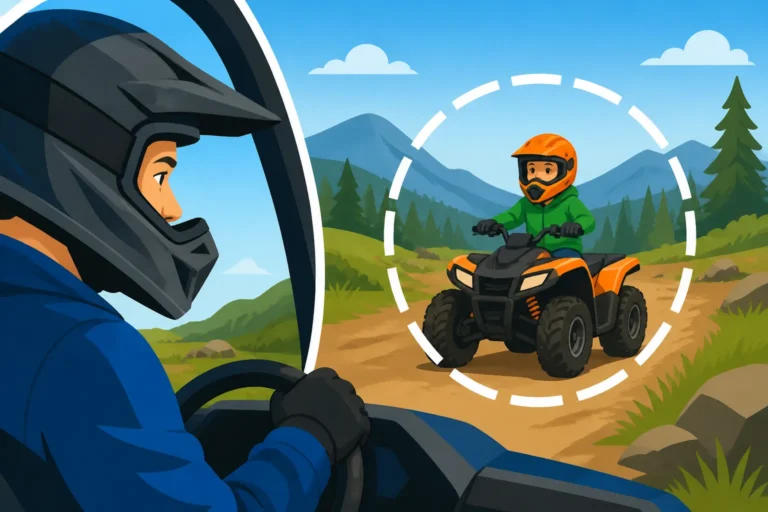
Visible: This isn't just about being able to eventually see your child. It means being within clear line of sight, with no major obstructions like dense brush, sharp blind corners, or significant changes in elevation. If you can't see them clearly, they're not visible in the context of this rule. Factors like heavy fog, dust from other riders, or riding at dusk can all compromise visibility. You need to be able to assess their riding, identify potential dangers ahead of them, and watch for any signs of trouble as it happens. If you're on a multi-kilometre stretch of straight road, but your child is too far ahead for you to distinguish their actions or react to a sudden stop, you are likely not within "visible" distance.
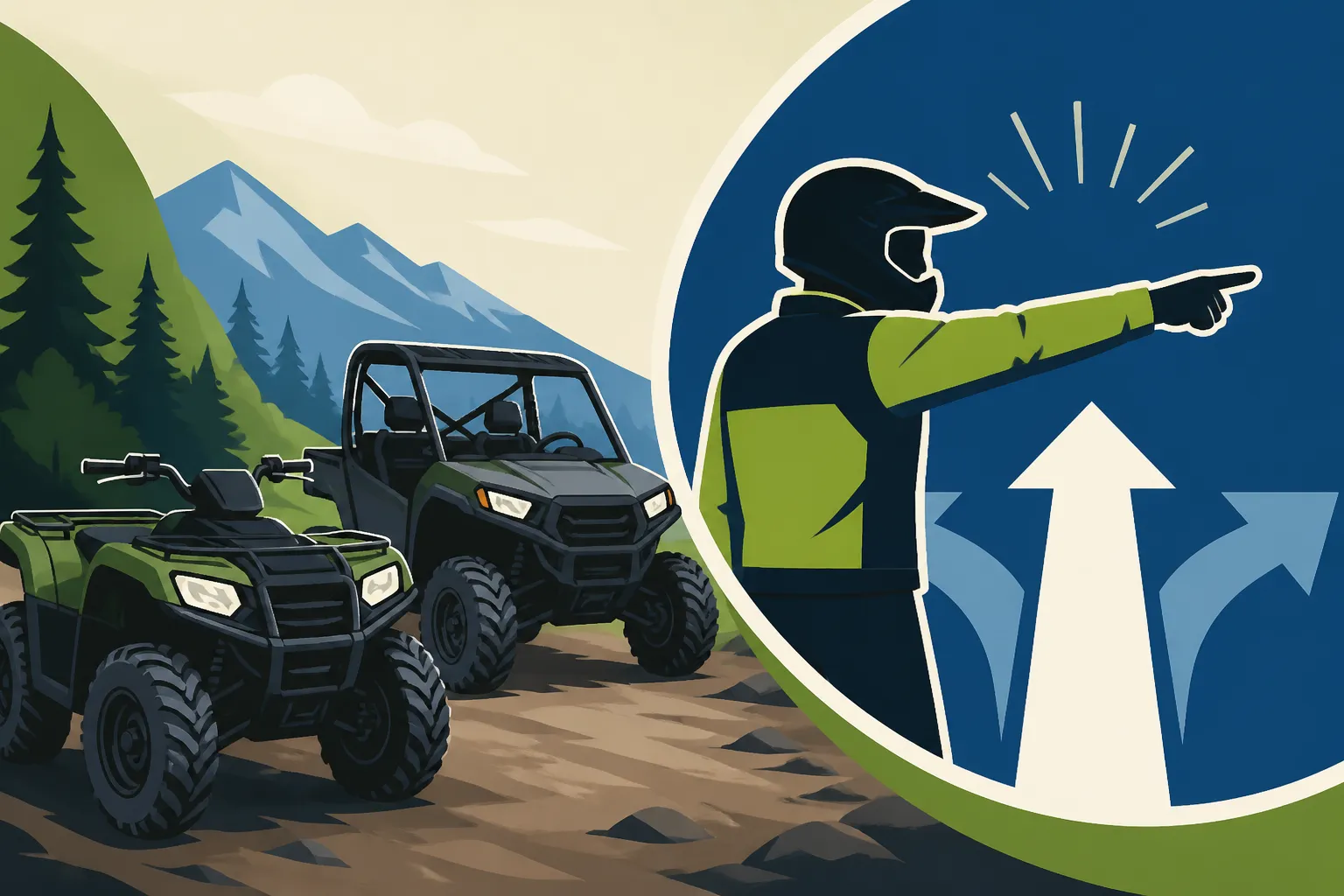
Immediate Direction: This is where the rubber meets the road. "Immediate direction" means you have the ability to communicate with and intervene for the young rider instantly. Think about it: can you shout a warning that they will hear clearly and respond to immediately? Can you use a recognizable hand signal that conveys an urgent message? More importantly, can you physically reach them and assist within moments if they get into trouble or lose control? If you have to dismount your own machine, walk a significant distance, or wait for a radio signal, you are not giving immediate direction. For example, if your child is approaching a steep, rocky section and you see them struggling with their line choice, you need to be able to yell "Throttle back!" or "Go left!" and have them hear and respond right then. If you're riding a challenging trail, a good supervisor ensures their own machine is well-maintained and reliable, perhaps with durable aftermarket parts (like control arms or skid plates from a company like SuperATV) so they can focus entirely on the young rider's safety and quickly navigate to assist if needed.
Consider a simple table to illustrate the difference:
| Scenario | Meets "Immediate Direction" Standard? | Explanation |
|---|---|---|
| YES | ||
| Riding directly behind or beside the child | Yes | You have clear line of sight and can communicate verbally or with hand signals instantly. You can react and physically assist within seconds if a problem arises. |
| Child riding a closed loop in a clearing | Yes | If the entire loop is visible from your stationary position, and you can intervene quickly, this can satisfy the rule. |
| NO | ||
| Child riding ahead around a blind corner | No | You cannot see what they are encountering or how they are reacting, nor can you communicate or intervene immediately. |
| You are on your own machine, 50m behind | No | While you might technically see them, 50m might be too far to give effective, immediate verbal direction or to reach them quickly enough in an emergency. Dust, wind, or engine noise would further impede communication. |
| You are parked and watching from a distance | No | Unless the area is very small and completely clear, you cannot physically intervene with the necessary speed. Verbal commands from a distance can be easily misinterpreted or unheard. This is especially true if the terrain is technical or the child is still a novice operator. |
| Child riding with another unsupervised youth | No | The rule requires supervision by an adult who is 19 or older, not by another minor. |
| Riding in a dense forest with limited sight | No | Even if you are close in distance, if trees and bushes obscure your view of the child's path or actions, you cannot provide "visible and immediate direction." A quality set of mirrors, perhaps from a brand like SuperATV, might extend your field of view slightly, but they are not a substitute for direct line-of-sight and proximity to the rider. |
Who Can Supervise and What They Need to Know
The role of a supervisor is multifaceted, requiring not just physical presence but also a certain level of maturity, experience, and awareness. British Columbia's regulations are clear about who can take on this important task.
The Supervisor's Age and Responsibilities
In British Columbia, any adult supervising a youth rider (under 16) on an ORV must be at least 19 years old. This age requirement underscores the gravity of the responsibility. It's presumed that someone aged 19 or older possesses the judgment, experience, and composure necessary to handle potential emergencies and guide a younger rider effectively. It's not enough to simply be 19; the supervisor must be competent and attentive. [BC Supervisors Must Be 19 or Older]
The supervisor doesn't necessarily need an ORV license or have undergone specific ORV safety training themselves (though both are highly recommended!). What they absolutely need is a strong understanding of ORV operation, the terrain, and the specific capabilities and limitations of both the machine and the young rider. Their responsibilities include:
- Teaching and Coaching: Actively guiding the child on proper techniques, safety protocols, and trail etiquette.
- Hazard Identification: Constantly scanning the environment for potential dangers and alerting the child.
- Setting a Good Example: Demonstrating safe speeds, respectful riding, and adherence to all rules.
- Machine Suitability: Ensuring the ORV is appropriate for the child's size and skill level.
- Emergency Preparedness: Knowing how to respond to an accident or breakdown.
It's an active, ongoing role, not a passive one. The supervisor is essentially an on-the-spot instructor and safety manager, ensuring that every turn, every hill, and every obstacle is approached with caution and competence. [BC Rules for a Supervising Adult]
Understanding the Young Rider's Capabilities
One of the biggest mistakes a supervisor can make is putting a child on a machine that's too powerful, too large, or too complex for their age and skill level. Manufacturer age and weight guidelines are not suggestions; they are critical safety recommendations based on extensive testing. These guidelines take into account a child's physical stature, strength, and cognitive development. [BC Manufacturer Age and Weight Rules]
Beyond the manufacturer's recommendations, a good supervisor must honestly assess the child's individual capabilities. Has the child had prior riding experience? Are they easily distracted? Do they understand and consistently follow instructions? Is their fine motor control developed enough for precise throttle and brake modulation? The goal is to match the machine to the rider, not force the rider to adapt to an unsuitable machine. Starting with a smaller, lower-powered youth model, and gradually progressing as skills develop, is always the safest approach. Even if your child is nearing 16, they are still developing judgment, so continued supervision is critical. [What Changes When a BC Rider Turns 16]
While not always mandatory for youth, formal ATV safety training can significantly accelerate a young rider's learning curve and enhance their ability to respond to direction. These courses teach fundamental riding skills, hazard awareness, and responsible operation in a structured environment. [BC ATV Safety Training Options] A supervisor who ensures the child's machine is in excellent working order, perhaps using robust parts (like those from SuperATV that are designed for durability and performance), helps create a predictable and safe learning platform, allowing the child to focus on mastering their riding skills.
Practical Scenarios: When Supervision Counts (and When It Doesn't)
The specific environment where you're riding plays a significant role in how "immediate direction" is interpreted and enforced. Understanding the nuances between different types of land is crucial for responsible riding.
Riding on Crown Land vs. Private Property
In British Columbia, the Off-Road Vehicle Act primarily governs the operation of ATVs and UTVs on Crown Land. This includes vast areas of forests, mountains, and even designated recreation sites. When riding on Crown Land, the "visible and immediate direction" rule for youth riders is legally binding, and ignoring it can lead to penalties. [BC Crown Land Triggers the Registration Rule] This is because Crown Land is public property, and the government has a vested interest in ensuring public safety and environmental protection. [BC Crown Land Riding Explained]
Private property, on the other hand, operates under different rules. If you're riding on your own land, or land for which you have explicit permission from the owner, the specific requirements of the ORV Act regarding supervision may not apply in the same way. For instance, if you're on a large farm property or a secluded private acreage, the legal mandates are often less stringent than on Crown Land. However, this absolutely does not mean that safety and responsible supervision go out the window! Landowners still have a moral and ethical obligation to ensure safety, especially for minors. Liability remains a significant concern, so even on private land, adhering to the spirit of "immediate direction" and ensuring competent supervision is paramount to prevent accidents and protect everyone involved. Think of it as best practice, even if not strictly a legal mandate in every private land scenario. [BC Riding on Family Property]
Group Rides, Challenging Terrain, and Communication
Maintaining "immediate direction" becomes a more complex dance in certain situations.
Group Rides: If you're riding with a group that includes multiple young riders, you need to ensure that each child has a designated supervisor who can provide immediate direction. One adult cannot effectively supervise three children spread out across a wide trail, especially if they are of varying skill levels. Staggering the adult supervisors so they are interspersed among the youth riders can help, ensuring each child is within sight and earshot of a responsible adult.
Challenging Terrain: Dense bush, steep climbs, technical descents, and trails with limited sight lines (like switchbacks or deep gullies) all pose significant challenges to maintaining "visible and immediate direction." In these situations, the supervisor might need to ride even closer to the young rider, or even stop and walk sections together, talking them through the obstacles. Blind corners are particularly dangerous; always slow down and approach with caution, ensuring the child does the same, potentially with a quick verbal reminder from you.
Communication Tools: While not a substitute for physical proximity and line-of-sight, communication devices can be incredibly helpful supplementary tools. Two-way radios or helmet-mounted communicators can bridge short gaps in visibility or allow for critical warnings in noisy environments. They're especially useful for giving advice on navigating upcoming terrain or for checking in quickly if a child falls slightly behind due to a minor delay. However, remember the law specifically states "visible and immediate direction," meaning you still need to be close enough to see and physically respond. A high-quality helmet with integrated communication (or a rugged external comms unit) can be easily mounted and secured with accessories, potentially from SuperATV, allowing hands-free communication while maintaining focus on the trail and the young rider. [BC Rules for a Child Under 16]
Consequences of Unsupervised Riding
Failing to provide "visible and immediate direction" isn't just a minor infraction; it carries significant legal and, more importantly, safety repercussions. The rules are in place for a reason, and enforcement officers take them seriously.
Penalties for Non-Compliance
If a youth rider is caught operating an ORV on Crown Land without the required "visible and immediate direction" from a supervisor aged 19 or older, the consequences can be swift. It's important to understand that the penalties usually fall on the supervisor, not the child. Violation tickets can be issued for careless operation or for allowing a minor to operate unsupervised, and the fines can be substantial. [BC Fines for Careless Riding]
Conservation Officers and RCMP have the authority to enforce these regulations. In more serious instances, especially if reckless behaviour or repeated infractions are involved, they also have the power to seize the off-road vehicle. This means your machine could be impounded, leading to additional fees for towing and storage, on top of any fines. The financial burden alone can be a major headache, but it pales in comparison to the potential for injury or worse. [BC Machine Seizures by Police]
Beyond Fines: The Real Risks
While fines and vehicle seizures are certainly deterrents, the most profound consequences of unsupervised riding are the risks to safety.
- Injury and Trauma: An unsupervised child is at a much higher risk of an accident, leading to serious injuries, lifelong disabilities, or even fatalities. These machines, even youth models, can cause significant harm. The emotional toll on the child, the family, and the community from such an incident is immeasurable.
- Property Damage and Environmental Impact: Unsupervised riding can also lead to damage to trails, private property, or sensitive environmental areas. Children might not understand the delicate balance of ecosystems or the importance of staying on marked trails. Such incidents can lead to further restrictions on ORV access for everyone.
- Reputation of the ORV Community: Every incident involving an unsupervised or irresponsible youth rider reflects negatively on the entire off-road vehicle community. It fuels arguments for stricter regulations, trail closures, and public backlash, making it harder for all of us to enjoy this incredible pastime responsibly.
- Legal Liability: In the event of an accident, the supervisor could face civil lawsuits for negligence, potentially leading to significant financial judgments.
Ultimately, providing "visible and immediate direction" is about far more than just following a rule; it's about being a responsible mentor, protecting our young riders, preserving our riding opportunities, and ensuring that our adventures in BC's backcountry are as safe and enjoyable as possible. Investing in reliable safety gear and maintaining your machine with quality, durable parts (like those offered by SuperATV) are small prices to pay for the immense peace of mind that comes with preventing an accident.
Disclaimer
This article is for general informational purposes only and does not constitute professional advice. Laws, prices and regulations vary by location and change over time. Consult a qualified professional for guidance on your specific situation.