BC E-Bikes Treated as Motor Vehicles
It's incredibly frustrating when you think you're just enjoying a casual ride on your electric bicycle, only to discover that British Columbia's regulations can be a tangled web, sometimes classifying your beloved e-bike as a full-fledged motor vehicle. This can lead to unexpected fines, insurance headaches, and even having your machine impounded if you're caught unaware. This guide aims to cut through the confusion, explaining precisely when and why e-bikes might be treated like motor vehicles in BC, so you can ride with confidence, knowing you're always on the right side of the law.
Understanding the BC Definition of an E-Bike and Where it Differs
The world of e-bikes has exploded in popularity, offering a fantastic way to extend your rides, tackle hills with less effort, and even replace short car trips. But with innovation comes a need for clear rules, and sometimes those rules can feel a bit murky, especially when comparing federal guidelines to provincial specifics in British Columbia. What might be considered a standard e-bike in one jurisdiction could easily cross into motor vehicle territory here, primarily due to how power output, speed capabilities, and throttle mechanisms are defined.
Federal vs. Provincial Definitions
At the federal level in Canada, an "electric power-assisted bicycle" (EPAB) is defined by its motor having a maximum continuous rated power output of 500 watts, providing assist only up to 32 km/h, and requiring pedals to function (though a throttle is often permitted). This federal definition dictates what manufacturers can sell as an "e-bike" across the country. However, provinces and territories have the authority to regulate how these vehicles are operated on their roads and trails. British Columbia, in particular, has adopted its own set of rules under the Motor Vehicle Act and related regulations that further refine what constitutes a legal e-bike versus something more akin to a moped or even a small off-road vehicle. It's this provincial overlay that often catches riders off guard, as they might assume federal compliance is the only hurdle.
For instance, while a federal e-bike might have a throttle, BC's specific regulations might place additional restrictions on where and how that throttle can be used, or how much power it can deliver without requiring a different class of license or registration. This is where the crucial distinctions emerge. If your e-bike pushes past these BC-specific boundaries, even if it technically meets the federal EPAB standard, you could find yourself riding what the province considers an unregistered, uninsured motor vehicle. The onus is truly on the rider to understand both sets of rules.
Power Output and Speed Limits
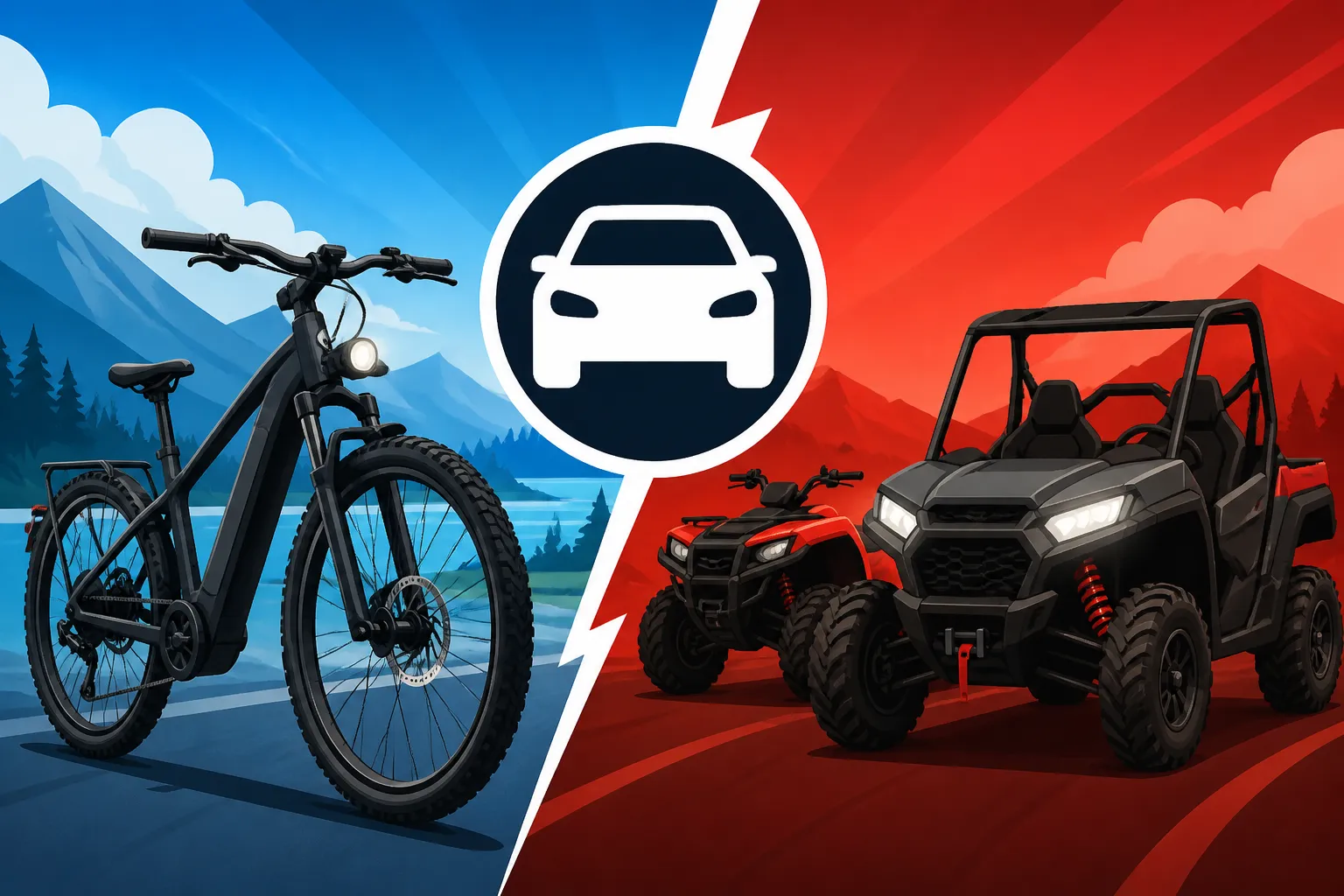
The horsepower, or rather, wattage, of your e-bike's motor is a huge determining factor in BC. A standard, legal e-bike in British Columbia must have a motor that does not exceed 500 watts of continuous rated power. This is the federal benchmark, and BC largely adheres to it for classification as a bicycle. Beyond that, the motor must stop assisting you once you hit a speed of 32 km/h. If your e-bike continues to provide electric assistance beyond that speed, or if its motor is rated higher than 500 watts, then it immediately starts to look less like a bicycle and more like a motor vehicle in the eyes of the law.
Consider the common scenario of someone wanting a bit more "oomph" to conquer those steeper Kootenay mountain trails or to keep up with faster traffic on a city commute. They might purchase an e-bike marketed as "off-road" or "high-performance," sometimes with motors rated at 750 watts, 1000 watts, or even higher, often capable of speeds well over 32 km/h without pedaling. While these machines might be thrilling to ride, they unequivocally fall outside the BC definition of an electric bicycle. Instead, they are typically classified as either restricted-use motorcycles (which might require registration and a driver's license for very specific, limited use) or, more often, as off-road vehicles (ORVs) subject to the full suite of rules under the [What the Off-Road Vehicle Act Covers in BC]. This means registration, insurance, and specific operating restrictions, even if they look like a beefed-up bicycle.
Pedal Assist vs. Throttle
The way your e-bike delivers power is another key differentiator. Most e-bikes come with a "pedal-assist" system, meaning the motor only engages when you are actively pedaling, making the ride feel easier. Some also include a throttle, which allows you to engage the motor without pedaling, essentially turning it into a small moped. While the federal definition permits a throttle, BC's specific regulations can get a bit more nuanced here, especially concerning the primary mode of propulsion and the context of riding.
If your e-bike can be propelled solely by the motor without any pedal input, and it exceeds the 500-watt/32 km/h limits, it's virtually guaranteed to be treated as a motor vehicle. Even if it does meet those limits, relying heavily on the throttle on certain types of trails or roads could raise questions about its classification. The intent of a legal e-bike is to assist pedaling, not replace it entirely with motorized power. When the machine's primary mode of operation shifts from human power assisted by electricity to electric power supplemented by pedaling, you are inching closer to motor vehicle territory. This distinction is crucial when an enforcement officer pulls you over or inspects your machine on a trail. They're looking to see if it functions as a bicycle with an assist, or as a small motorcycle.
When an E-Bike Becomes a Motor Vehicle in BC
The line between a legal e-bike and a motor vehicle can feel blurry, but it's defined by specific thresholds related to power, speed, and modifications. Crossing these thresholds, even inadvertently, means you're no longer operating an electric bicycle in the eyes of BC law. This reclassification has significant implications for where you can ride and what documentation you need.
Exceeding Legal Specifications
As we discussed, the moment your e-bike's continuous rated power output exceeds 500 watts, or if its electric motor provides assistance above 32 km/h, it ceases to be classified as an electric bicycle under BC's Motor Vehicle Act. This isn't just a technicality; it's a fundamental change in how your machine is regulated. For example, some imported e-bikes, or those purchased from less reputable online vendors, might easily exceed these limits without the rider even realizing it. They might be marketed as "unrestricted" or "off-road use only," but that label doesn't exempt them from provincial regulations if you're riding them on public lands or roads.
If your e-bike surpasses these specifications, it often defaults to being treated as an Off-Road Vehicle (ORV) under the [What the Off-Road Vehicle Act Covers in BC]. This means it would require a [BC ORV Number Plates and Decals], [BC's Certificate of Registration Explained], and specific insurance coverage. You'd also need to adhere to all ORV operating rules, which include carrying your [BC Riders Must Carry the Certificate] and [BC Riders Must Carry Photo ID], and only riding in designated areas. It's a significant leap from the relaxed rules typically associated with bicycles.
Modifications and Aftermarket Parts
This is a big one, and it's where many riders get into trouble. Tempting as it might be to boost your e-bike's performance, any modification that pushes its capabilities beyond the legal 500 watts or 32 km/h speed limit will instantly reclassify it as a motor vehicle. This includes installing larger motors, reprogramming controllers to increase power or speed, or adding larger battery packs that enable higher outputs for longer durations. Even if you bought a legal e-bike, modifying it post-purchase can put you in a precarious position.
For those who are handy with a wrench and enjoy customizing their ride, it’s critical to understand these rules. While you might be accustomed to finding robust aftermarket parts for your ATV or UTV from retailers like SuperATV to enhance performance or utility, applying a similar philosophy to an e-bike by adding powerful, unrestricted components will almost certainly turn it into an illegal motor vehicle. It's not about the part itself, but how it alters the e-bike's fundamental operating characteristics. For instance, putting a high-torque motor meant for an electric dirt bike onto a pedal-assist frame completely changes its classification. These modifications, while potentially increasing thrill, carry serious legal risks if used on public property.
Riding on Restricted Lands
Even if your e-bike perfectly meets the BC specifications for an electric bicycle (under 500 watts, assist up to 32 km/h, pedal-assist primary), where you choose to ride it can still lead to it being treated as a motor vehicle. This particularly applies to areas with specific "motor vehicle prohibitions" or designations. For example, some provincial parks or designated wilderness areas strictly prohibit any motorized vehicles, including legal e-bikes, even if they're otherwise compliant. In such cases, despite meeting the e-bike definition, the act of riding it in a prohibited zone is akin to operating a motor vehicle where it's not allowed.
The crucial distinction here is that while a legal e-bike is usually permitted wherever a traditional bicycle is allowed, this isn't universally true. Land managers, whether they oversee Crown land, municipal parks, or [BC Forest Service Road Rules for ORVs], have the authority to create specific bylaws or closures. If an area has a blanket "no motorized vehicles" rule, your e-bike could be included, even if it's considered a bicycle elsewhere. Always check local signage and land use regulations before heading out. Ignoring these can result in tickets or the seizure of your machine, just like with an unregistered quad. [BC Motor Vehicle Closed Areas] are vital to understand for all riders, including those on e-bikes.
Consequences of Operating an Unregistered Motor Vehicle E-Bike
The moment your e-bike crosses the line and is classified as a motor vehicle in British Columbia, the consequences for operating it illegally can be severe and far-reaching. It's not just about a minor slap on the wrist; you could be facing substantial fines, liability issues, and even the loss of your machine. This is why understanding the rules is so critical.
Fines and Penalties
If your e-bike is deemed a motor vehicle (because it exceeds power/speed limits, or due to modifications) and you're caught operating it without proper registration, insurance, or on restricted land, you're looking at significant penalties. These aren't the small fines typically associated with bicycle infractions. Instead, you'll be treated as if you're operating an unregistered, uninsured dirt bike or ATV. A violation ticket for operating an unregistered ORV can be quite steep, and that's just the start.
You could face fines for lacking proper registration, for not carrying a valid driver's license (if required for the specific classification of motor vehicle your e-bike now falls under), and for not having the mandatory insurance. On top of that, if you're riding on prohibited lands, you could incur additional fines related to trespass or environmental damage. Enforcement officers, whether RCMP or Conservation Officers, are well-versed in the [BC Tickets for an Unregistered Machine] and other provisions of the Off-Road Vehicle Act. They treat these violations seriously because an overpowered, uninsured machine poses a greater risk to other users and the environment.
Insurance Implications
One of the most immediate and impactful consequences of your e-bike being reclassified as a motor vehicle is the absolute lack of insurance coverage. Standard home insurance or liability policies usually exclude motor vehicles from their coverage, especially if they are operated on public land or without proper registration. If you're involved in an accident while operating an e-bike that's legally a motor vehicle but isn't registered or insured, you could be personally liable for tens of thousands, or even hundreds of thousands, of dollars in damages.
Imagine a scenario where you collide with a pedestrian, another rider, or cause damage to public property. Without insurance, the financial burden falls entirely on you. This is a stark contrast to a legal e-bike, which often enjoys the same liability protections as a regular bicycle under typical homeowner's insurance. For true ORVs, BC requires specific liability insurance, often purchased through ICBC or private providers, especially for use on [BC Resource Roads Count as Crown Land] or other designated areas. Your "motor vehicle" e-bike would need this, and it's a costly oversight to skip it. This risk alone should be enough to make any rider think twice about exceeding the legal e-bike specifications.
Seizure of Your Machine
Perhaps the most jarring consequence is the potential seizure of your e-bike. Under the [BC Machine Seizures by Police] powers outlined in the Off-Road Vehicle Act, an officer can seize an ORV that is being operated illegally. This means if your e-bike is determined to be a motor vehicle operating without registration, insurance, or in a prohibited area, the officer has the authority to impound it on the spot. Getting it back will involve not only paying all the accumulated fines but also impound fees, storage costs, and potentially proving you can now operate it legally.
This can be a costly and time-consuming process. Many riders have purchased what they thought was a cool, powerful e-bike, only to have it confiscated, leading to immense frustration and financial loss. It serves as a strong reminder that ignorance of the law is not a defence. The intention behind these seizure powers is to deter illegal operation and ensure public safety. So, if you're riding a modified or overpowered e-bike, be aware that you're risking more than just a ticket; you're risking losing your ride entirely.
Navigating BC Roads and Trails with an E-Bike
Riding an e-bike in British Columbia offers incredible freedom and enjoyment, but it's essential to understand the specific rules that govern where you can and cannot go, particularly given the potential for reclassification as a motor vehicle. A little planning and education go a long way in ensuring your rides are not only exhilarating but also fully compliant with provincial and local regulations.
Where You Can Legally Ride
For e-bikes that do meet the BC legal definition (under 500 watts, assist up to 32 km/h, pedal assist), the good news is that they are generally permitted wherever regular bicycles are allowed. This includes most paved roads, dedicated bike lanes, and multi-use pathways. However, this is where the "generally" part becomes crucial. [BC Municipal Authority Over ORV Roads] can impose their own bylaws, and some parks or trails may have specific restrictions. It's not uncommon to see signs explicitly prohibiting e-bikes, even compliant ones, in certain sensitive ecological areas or on narrow hiking-only trails. Always keep an eye out for signage.
If your e-bike exceeds the legal specifications and is effectively classified as an ORV, then your riding options become far more limited, but also more defined. You would need to follow all the rules for ORVs, which primarily means riding on designated ORV trails, [BC Rules for Riding Crown Land] where permitted, and [BC Forest Service Road Rules for ORVs]. You absolutely cannot ride these machines on public roads or most municipal bike paths. For example, popular ORV areas like Bear Creek OHV in the Okanagan, or designated resource roads, would be potential legal riding spots for such a machine – provided it's registered and insured as an ORV. This is a very different landscape from casual path riding.
| E-Bike Type | Legal Specs (Max) | License/Registration | Insurance | Typical Riding Areas | Key Restrictions |
|---|---|---|---|---|---|
| Legal E-Bike (Class 1-3) | 500W, 32 km/h assist | None (like bicycle) | Not specific | Roads, bike lanes, multi-use paths, most bike trails | Cannot be ridden in areas prohibiting any motorized vehicles. Some trails may have specific e-bike bans. |
| "Motor Vehicle" E-Bike (Over Spec/Modified) | >500W or >32 km/h assist | Required (like ORV) | Required (like ORV) | Designated ORV trails, Crown land where permitted, Forest Service Roads | Cannot be ridden on public roads, bike lanes, or most multi-use paths. Requires ORV registration, insurance, plate, and operator must have a driver's license. Subject to [BC Machine Seizures by Police]. |
The Importance of Education
Given the nuances of e-bike regulation in BC, ongoing education is your best defense against unintended legal trouble. Before purchasing an e-bike, especially if you're looking at models with higher power outputs, thoroughly research the specific laws in British Columbia. Don't rely solely on what a manufacturer or salesperson tells you, as they may be referring to federal guidelines or rules in other jurisdictions. Always verify against BC's Motor Vehicle Act and Off-Road Vehicle Act.
Furthermore, make it a habit to check the local bylaws and land use restrictions for any area you plan to ride. Information is often available on municipal websites, provincial park websites, or through local cycling and ORV clubs. Staying informed about [BC Motor Vehicle Closed Areas] and specific trail rules will prevent you from accidentally riding where you shouldn't. Remember, if your e-bike crosses the line into motor vehicle territory, you'll need to think about things like [BC Helmet Law Covers Every Rider] (for all ORVs), and be mindful of other rules that apply to powered vehicles. Treat your e-bike with respect for the rules, and you'll enjoy countless hours of worry-free riding in beautiful British Columbia.
Disclaimer
This article is for general informational purposes only and does not constitute professional advice. Laws, prices and regulations vary by location and change over time. Consult a qualified professional for guidance on your specific situation.