BC Rules for Towing a Trailer
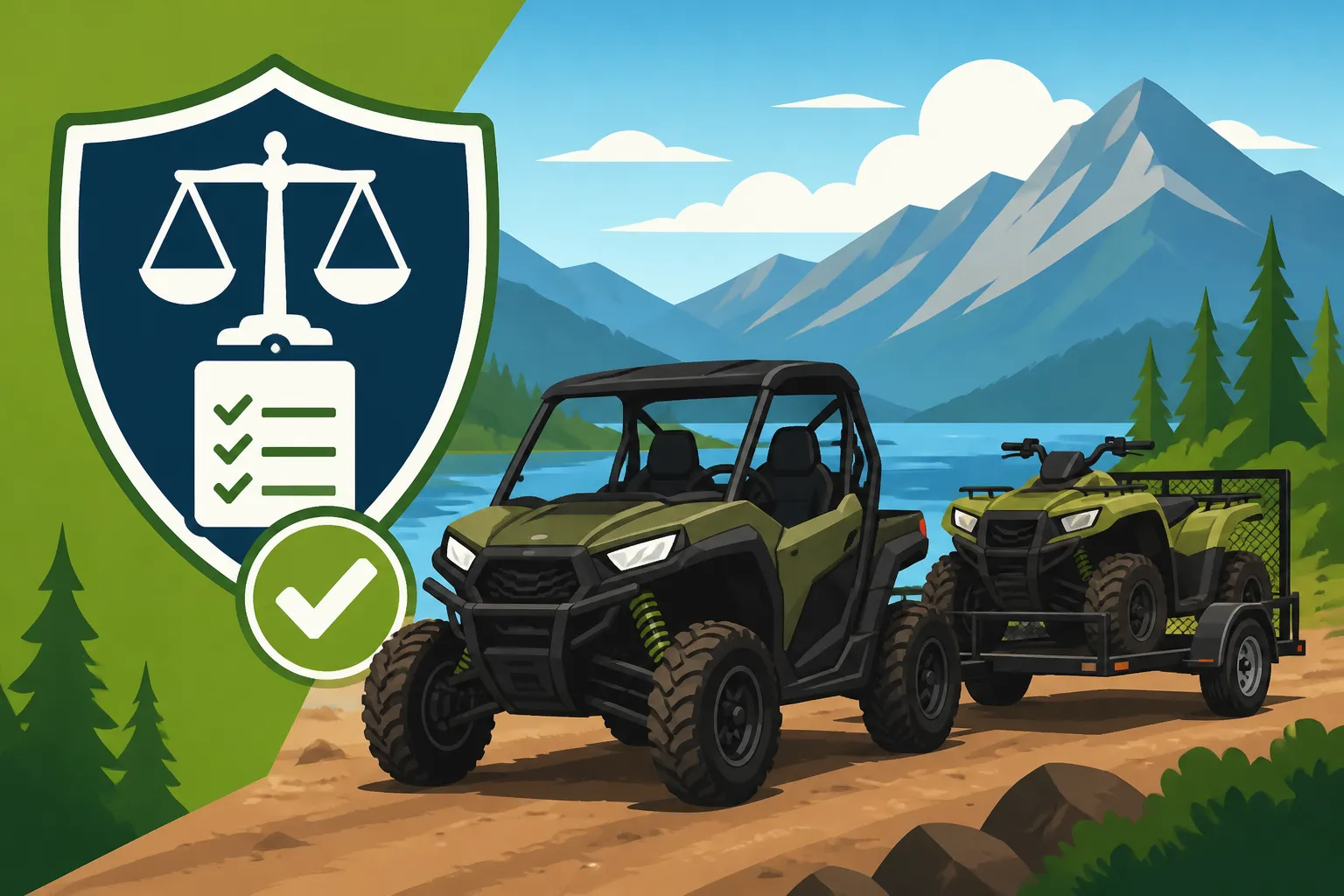
There's nothing quite like the freedom of exploring BC's vast backcountry on your ATV or UTV, especially when you need to bring along extra gear, haul out firewood, or transport supplies to a remote cabin. But if you've ever tried to figure out the exact rules for towing a trailer with your off-road machine in British Columbia, you've likely found yourself scratching your head. This guide is here to untangle the confusion, offering clear, actionable insights into BC's specific regulations and best practices for safely and legally towing a trailer with your ORV.
Understanding BC's Legal Framework for ORV Trailers
Let's be honest, trying to find clear-cut rules for every single off-road activity in BC can feel like searching for a needle in a haystack. When it comes to towing trailers with ATVs and UTVs, the rules aren't always laid out in a single, easy-to-read document, which can be incredibly frustrating for riders who just want to do things by the book.
The Off-Road Vehicle Act's Stance on Towing
The primary piece of legislation governing off-road vehicles in British Columbia is the [What the Off-Road Vehicle Act Covers in BC]. This Act is fantastic for defining what an ORV is, where it can be ridden, and what's required for the machine itself, like registration and insurance when riding on Crown land. However, here's where it gets tricky: the ORV Act itself doesn't explicitly detail specific regulations for the trailers being towed by off-road vehicles. It largely focuses on the ORV as the primary conveyance. This silence can lead to a lot of guesswork and uncertainty for riders. You might assume if the ORV is legal, anything it tows must be too, but that's not always the case, especially if you venture onto areas where other acts might apply.
What this means for you, the rider, is that while your quad or side-by-side might be perfectly compliant, the trailer attached to it could still fall under other regulations depending on where you're riding. This lack of explicit mention in the ORV Act itself is a common source of confusion and highlights why a broader understanding of related laws is so crucial.
When Standard Motor Vehicle Act Trailer Rules Apply
Here's the rub: even if you're primarily riding off-road, your ORV and its trailer might briefly or inadvertently interact with areas governed by the Motor Vehicle Act – the big one that covers cars, trucks, and all highway travel. For example, if you need to cross a short stretch of pavement to get from one trail section to another, or even just haul your trailer into a parking lot at a staging area, you're suddenly in a different legal landscape.
Under the Motor Vehicle Act, trailers generally have specific requirements, even small utility trailers. These can include:
- Registration and Licensing: While ORV trailers generally don't require separate registration under the ORV Act for off-road use, if they touch a public road, even briefly, the rules for highway trailers could kick in. This is a grey area that often catches riders off guard. It's always safest to treat a trailer that might ever see pavement as if it needs to comply with standard highway trailer regulations, including having a proper license plate, although the specific rules can depend on the trailer's size and intended use.
- Lighting and Reflectors: Standard highway trailers require tail lights, brake lights, turn signals, and often side reflectors, especially if they are beyond a certain width. If your ORV trailer is being towed at night or in low visibility, or if it ever crosses a public road, having these is not just a good idea for safety, it could be a legal requirement. Think about it: if a vehicle legally requires certain lights for visibility on a highway, why would a trailer pulled by an ORV be any different when it's exposed to the same conditions, even briefly? [BC Lighting and Seat Belt Requirements] addresses ORVs, but trailers have their own set of rules under the MVA.
- Safety Chains: All trailers on BC highways are required to have safety chains to keep the trailer attached to the towing vehicle should the primary hitch fail. This is a non-negotiable for highway use, and it's a smart safety practice for off-road towing as well, preventing a runaway trailer on a steep descent or bumpy trail.
- Brakes: Larger trailers often require their own braking systems. While your typical small utility trailer pulled by an ATV might not have this, it's something to consider for heavier loads, especially when dealing with the reduced braking capacity an ORV might have compared to a full-sized truck.
The bottom line is, while the ORV Act doesn't explicitly cover trailers, the spirit of safety and general traffic laws applies broadly. It's far better to err on the side of caution and ensure your trailer meets general safety standards, particularly if there's any chance it will encounter highway traffic or conditions.
Specific Rules for Crown Land and Resource Roads
Most of your trailer-towing adventures will likely happen on [BC Crown Land Triggers the Registration Rule] or [BC Resource Roads Count as Crown Land]. These are the playgrounds where ORVs truly shine, but they also come with their own set of rules and considerations. The good news is that within these environments, the rules regarding the trailer itself tend to be less prescriptive than on public highways.
However, this doesn't mean it's a free-for-all. Here’s what you need to keep in mind:
- ORV Registration Still Applies: Your ATV or UTV must be registered and display its [BC ORV Number Plates and Decals] when riding on Crown land or designated resource roads. This is the bedrock of legal off-road operation. Your trailer itself generally doesn't require a separate ORV registration or plate, as it's not considered a self-propelled ORV.
- Insurance is Key: While optional on some Crown land, you absolutely need at least $200,000 in third-party liability insurance for your ORV if you're riding on a Forest Service Road (FSR) or any other resource road that is open to public vehicle traffic. This coverage would extend to any damage caused by your ORV, including incidents involving a trailer it's towing. For more on this, check out [BC Forest Service Road Rules for ORVs].
- "Due Care and Attention": This is a broad but incredibly important concept. Regardless of explicit trailer rules, you are always expected to operate your ORV and any attached trailer with due care and attention, ensuring the safety of yourself, your passengers, and other users of the land. Careless operation, especially with a poorly secured or overloaded trailer, can lead to [BC Fines for Careless Operation]. Conservation Officers have broad powers to ensure safe use of Crown land, and this includes making judgments about your towing setup.
- Environmental Responsibility: When towing a trailer, you need to be extra mindful of your impact on the environment. Heavy trailers can cause more rutting, especially in wet conditions, and improper loading can lead to debris scattering. Always stick to designated trails and minimize your footprint.
Essential Equipment and Safe Towing Practices
Towing safely isn't just about legal compliance; it's about making sure your machine can handle the load and that you're prepared for the challenges of off-road terrain. A poorly equipped or loaded trailer can quickly turn a fun outing into a dangerous situation.
Matching Your Trailer to Your ORV and Load
One of the biggest mistakes riders make is trying to tow too much with too little. Just because your ATV can pull a small utility trailer doesn't mean it should be overloaded with a ton of firewood on a steep, technical trail.
- Check Your ORV's Towing Capacity: Every ATV and UTV has a manufacturer-specified towing capacity, which is the maximum weight your machine is designed to pull safely. This information is usually in your owner's manual. Exceeding this limit puts undue stress on your engine, transmission, brakes, and suspension, leading to premature wear, poor handling, and increased risk of accident.
- Trailer Type and Size:
- Utility Trailers: These are the most common, typically open-top trailers used for hauling gear, game, or yard waste. They come in various sizes and materials (steel, aluminum, poly). For ORV use, look for trailers with good ground clearance and robust tires.
- Logging Arches/Skidders: If you're primarily hauling logs, a specialized logging arch or skidder might be more appropriate. These lift one end of the log off the ground, reducing drag and stress on the ORV.
- Cargo/Hunting Trailers: Enclosed or specialized hunting trailers offer protection for your gear or harvest. Ensure they are designed for off-road use, not just smooth gravel roads.
- Hitch Type: Most ATVs and UTVs come with a receiver hitch or a ball hitch integrated into the frame. Ensure your hitch is rated for the weight you plan to tow and is securely fastened. Aftermarket companies like SuperATV offer heavy-duty receiver hitches and tow hooks that can significantly upgrade your machine's towing capability and durability for more demanding tasks. A solid, reliable hitch is your first line of defense against a detached trailer.
Lighting, Reflectors, and Other Required Safety Gear
As discussed, while the ORV Act is somewhat vague on trailers, general safety principles (and sometimes the Motor Vehicle Act) still apply. Being visible and ensuring your trailer is secure are paramount.
- Visibility is Key: Even if you're only riding on remote resource roads, you never know when you might encounter another vehicle, a hiker, or wildlife.
- Lights: If riding at dusk, dawn, night, or in low visibility conditions (like fog or heavy rain), having functional tail lights and brake lights on your trailer is highly recommended, if not legally required depending on your exact location. Simple LED light kits are easy to install and draw minimal power. [BC Rules for Riding at Night] applies to your ORV, but extending good lighting to your trailer makes sense.
- Reflectors: Red reflectors on the rear and side of your trailer significantly enhance its visibility, especially from the sides, during daylight and night. They are inexpensive and can prevent accidents.
- Safety Chains: Always, always use safety chains. Even if your hitch is bolted on tight, an unexpected bump, a hard jolt, or even a sudden stop could cause the hitch to fail. Safety chains provide a crucial backup, keeping the trailer tethered to your ORV. Cross the chains under the tongue of the trailer to cradle it if it detaches.
- Proper Tires: Ensure your trailer's tires are in good condition, properly inflated, and rated for the load and terrain. Off-road specific trailer tires offer better traction and puncture resistance than standard highway tires, crucial for navigating BC's rugged trails.
- Wheel Chocks: Especially on uneven ground or slopes, a pair of wheel chocks can prevent your trailer from rolling away when unhitched or during loading.
Secure Loading and Weight Distribution
How you load your trailer can dramatically affect your ORV's handling and stability. It's not just about getting everything in; it's about getting it in right.
- Tongue Weight: This is the downward force the trailer tongue exerts on your ORV's hitch.
- Too Little Tongue Weight: If too much weight is at the rear of the trailer, the tongue weight will be too light. This can make the trailer sway excessively, reduce traction on your ORV's rear tires (making it harder to steer and brake), and potentially lift the front of your ORV, making it unstable.
- Too Much Tongue Weight: If too much weight is at the front, the tongue weight will be too heavy. This puts excessive strain on your ORV's rear suspension, potentially overloading it, and can reduce steering control by lifting the front wheels too much.
- The Sweet Spot: Aim for approximately 10-15% of the total trailer weight (including cargo) to be on the tongue. Adjust your cargo distribution until you achieve this balance.
- Secure Your Cargo: Use ratchet straps, tie-downs, or cargo nets to securely fasten everything in your trailer. Even small items can bounce out on bumpy trails, creating hazards or litter. Larger items can shift, causing sudden weight distribution changes that could lead to a loss of control. Imagine a heavy cooler sliding to one side on a tight corner – that's a recipe for disaster. SuperATV, for instance, offers various cargo management solutions that can help secure your gear, preventing shifts that could compromise your stability.
- Keep it Low and Centered: Place heavier items as low as possible and centered over the trailer's axle. This lowers the trailer's center of gravity, making it more stable and less prone to tipping, especially on side-slopes or during turns.
Navigating the Trails: Operational Rules and Challenges
Once your trailer is properly hitched and loaded, the real challenge begins: driving with it. Off-road towing presents a unique set of difficulties that require different techniques than highway towing.
Driving Techniques When Hauling a Trailer Off-Road
Towing a trailer fundamentally changes how your ORV handles. It adds length, weight, and a pivot point, all of which demand adjustments to your driving style.
- Wider Turns: Your turning radius increases significantly. You'll need to swing wider on corners to prevent the trailer from cutting the corner too sharply and hitting trees, rocks, or dropping off the trail. Always look back to check your trailer's path.
- Longer Braking Distances: The added weight means it takes longer to stop. Anticipate stops much earlier, especially on descents or when approaching obstacles. Downshift to use engine braking, which is much more effective than relying solely on your machine's brakes, especially with a heavy load.
- Steeper Climbs and Descents:
- Climbs: You'll need more power to get up hills. Maintain momentum, but don't over-throttle and lose traction. If your ORV struggles, consider offloading some cargo or choosing a less aggressive ascent. The trailer can pull back on you, making it hard to maintain speed.
- Descents: This is where control is paramount. Engage low range if your UTV has it, and use engine braking. Avoid riding the brakes, which can overheat them and lead to fade. Keep your speed slow and controlled, and avoid sudden movements that could cause the trailer to push your ORV from behind or jackknife.
- Rough Terrain: Bumps and ruts that your ORV might handle easily can violently jerk a trailer around. Reduce your speed significantly when crossing rough terrain. Watch for obstacles that could catch your trailer's axle or tongue.
Encountering Enforcement: What to Show a Conservation Officer
It’s always a good idea to be prepared for an encounter with a Conservation Officer, particularly when riding on Crown land or resource roads. They are there to enforce safety and environmental regulations.
- Proof of ORV Registration: You must carry your [BC Riders Must Carry the Certificate] of ORV registration for your ATV or UTV. This proves your machine is legally allowed on Crown land. Keep it in a waterproof bag along with your [BC Riders Must Carry Photo ID].
- Proof of Insurance: If you're on a Forest Service Road, be ready to show proof of your $200,000 liability insurance.
- Trailer Safety: While they may not have a specific "trailer permit" to ask for, an officer can certainly assess whether your trailer is being towed safely and responsibly. This includes checking that your cargo is secured, lights (if applicable) are working, and that you're not exceeding your ORV's apparent towing capacity or operating in a careless manner. An officer could deem an unsafe towing setup as [BC Fines for Careless Operation]. [BC Equipment Checks by Conservation Officers] can extend to any equipment being used unsafely.
- Know the Area Rules: Be aware of any specific restrictions for the area you're in. Some areas, like certain [BC Rules for Riding in a Provincial Park] or wildlife management zones, might have restrictions on motorized access or specific types of equipment, though total bans on trailers are rare outside of highly sensitive areas or narrow trails.
Avoiding Common Legal and Safety Traps
Knowing the rules is half the battle; the other half is actively avoiding the pitfalls that can lead to fines, damage, or injury.
- Overloading: This is perhaps the most common mistake. Don't be tempted to squeeze "just one more log" or "a bit more gear" onto your trailer. It risks breaking your hitch, damaging your ORV, losing control, or failing your brakes. Always respect your machine's stated capacity.
- Improper Lighting/Reflectors: Riding at night without adequate lighting on your trailer is not only dangerous but can lead to tickets if you're on a road where the Motor Vehicle Act applies, even for a short stretch. Check your lights and reflectors before every ride, especially if you plan to be out past dusk.
- Unsecured Loads: Cargo falling off a trailer isn't just a nuisance; it's a hazard to other trail users and a source of litter. It can also cause unexpected shifts in weight that lead to rollovers. Invest in good quality tie-downs and use them.
- Forgetting Pre-Ride Checks: A quick walk-around before you head out can save you a lot of headaches. Check tire pressure, hitch connection, safety chains, lights, and cargo security. Neglecting trailer maintenance, like bearings or tire wear, can leave you stranded in the backcountry.
- Misjudging Terrain: Remember that a trailer adds a whole new dimension to your ORV. What's an easy climb or descent for your quad alone might be a significant challenge with a heavy trailer. Scout difficult sections if possible, and don't be afraid to turn back if conditions seem too risky.
Planning Your Towing Adventure in BC
A successful towing trip in BC's backcountry hinges on preparation. You wouldn't hit the trails without checking your ORV, so extend that same diligence to your trailer.
Pre-Ride Checks and Maintenance for Your Trailer
Just like your ORV, your trailer needs regular attention to ensure it's safe and reliable. Don't let it be the weakest link in your setup.
- Tires: Check tire pressure before every ride. Inspect for cuts, bulges, or excessive wear. Ensure the lug nuts are tight. Don't forget to check your spare tire if you have one!
- Wheel Bearings: These are critical, especially for trailers that see a lot of use or sit idle for long periods. Inspect them for play and grease them according to the manufacturer's recommendations. Bearing failure in the backcountry is a major headache.
- Frame and Structure: Look for cracks, bends, or damage to the trailer's frame, axle, and suspension components. Rust can compromise structural integrity over time.
- Hitch and Coupler: Ensure the coupler mechanism is working properly, free of rust, and locks securely onto the hitch ball. Inspect the hitch ball itself for wear or damage.
- Lights and Wiring: Test all lights (tail, brake, turn if present) before you leave. Inspect the wiring for frayed insulation or loose connections, which can lead to shorts or intermittent light function.
- Safety Chains: Check for worn links or hooks and ensure they are securely attached to the trailer's frame.
A well-maintained trailer not only increases safety but also extends the life of your equipment. For those looking for robust, long-lasting trailer components or even full heavy-duty trailers, companies like SuperATV offer options designed to withstand the rigours of off-road use.
Considerations for Different Riding Environments
British Columbia's diverse landscapes mean that towing considerations can change dramatically depending on where you are.
- Coastal Wet Trails: Mud, deep puddles, and slick roots are common. A trailer adds weight, making it easier to get stuck. Ensure good mud tires on both your ORV and trailer, and perhaps a winch on your ORV for self-recovery.
- Interior Mountainous Terrain: Steep climbs, descents, and rocky trails are the norm. Heavy loads amplify the challenge. Focus on engine braking for descents and ensuring your ORV has enough power for climbs without straining. Good ground clearance on your trailer is essential to avoid hanging up.
- Forest Service Roads: These are often gravel roads, sometimes well-maintained, sometimes rough. Speed can be a factor here. Maintain a safe speed, watch for potholes, and be aware of other traffic, particularly industrial vehicles. [BC Resource Road Radio Practice] is crucial if you're on an active hauling road.
The Benefits of a Well-Prepared Towing Setup
While the rules and safety considerations for towing a trailer with your ORV in BC can seem daunting, putting in the effort to do it right pays dividends. A properly set up and legally compliant towing system provides:
- Enhanced Capability: You can haul more gear, extend your trips, bring out more firewood, or recover larger game, greatly expanding your outdoor adventures.
- Increased Safety: Reducing the risk of breakdowns, accidents, or losing control protects you, your passengers, and others on the trail.
- Peace of Mind: Knowing you've done everything by the book means you can relax and enjoy your ride without worrying about fines or dangerous situations.
- Environmental Responsibility: A well-secured load and careful operation minimize your impact on BC's beautiful wilderness.
Towing a trailer with your ATV or UTV in BC is a fantastic way to maximize your off-road experience. By understanding the regulations, equipping yourself properly, and practicing safe operational techniques, you can confidently and responsibly haul your necessities wherever the trails take you.
Disclaimer
This article is for general informational purposes only and does not constitute professional advice. Laws, prices and regulations vary by location and change over time. Consult a qualified professional for guidance on your specific situation.