BC Rules for Riding in a Town
One of the most common head-scratchers for ATV and UTV riders in British Columbia is figuring out where they can actually ride, especially when it comes to towns and municipalities. It's confusing, often frustrating, and can lead to hefty fines if you get it wrong. This guide aims to clear up the muddy waters, explaining the specific rules and regulations that dictate how (or if) you can operate your off-road vehicle within the confines of a BC town.
The Core Rule: Why Towns Are Different in BC
Riders often assume that if their machine is registered and they have insurance, they can pretty much go anywhere. Unfortunately, when it comes to riding an off-road vehicle (ORV) in a town or on paved municipal roads in British Columbia, that assumption is largely incorrect and can get you into trouble fast. The provincial rules draw a very clear line between Crown land, forest service roads, and the public highways that make up most town streets.
The ORV Act's Jurisdictional Limits
The Off-Road Vehicle Act in BC was primarily designed to regulate the safe and responsible operation of ATVs, UTVs, dirt bikes, and snowmobiles on what's broadly termed "Crown land" and "resource roads," like forest service roads. This includes the vast majority of our province's backcountry and wilderness areas, which is fantastic for riding. However, here's the critical distinction: the Act explicitly excludes highways, as defined by the Motor Vehicle Act.
Think of it this way: the moment you hit a paved road, a sidewalk, or even a gravel road maintained by a municipality within a town's boundaries, you're likely on a "highway" in the legal sense. This isn't just about multi-lane freeways; it includes nearly every public road or street in your local town, even the quiet residential ones. This fundamental exclusion means that the general permissions granted under the ORV Act for riding on Crown land simply do not apply to your average town street. Many riders express frustration, asking, "Why can't I just ride a block to the trail from my house?" The short answer is, because that block is almost certainly a "highway" under BC law, and ORVs are not generally permitted to operate on highways. For a deeper dive into where the Act applies, check out [What the Off-Road Vehicle Act Covers in BC].
Municipal Bylaws and Their Role
While the provincial Off-Road Vehicle Act governs where you can operate an ORV on Crown land, it generally doesn't grant municipalities the power to allow ORVs on their roads. Instead, local towns and cities have their own bylaws, which typically reinforce the provincial stance that ORVs are not permitted on municipal roads, sidewalks, or parks. In fact, many municipal bylaws specifically prohibit ORV use, often citing noise concerns, safety for pedestrians and other vehicles, and environmental impacts.
It's rare to find a BC municipality that has enacted bylaws allowing general ORV access on its streets. If anything, bylaws tend to be restrictive, mirroring the provincial highway exclusion. This creates a significant challenge for riders who live in or near towns and want to access trails without having to trailer their machines every single time. While theoretically a municipality could create a bylaw to permit ORV use on certain local roads, it's not a common practice, and typically requires a specific police operation permit (which we'll discuss next) for very limited purposes. It’s important to remember that even if you have a top-of-the-line machine with aftermarket upgrades from a company like SuperATV, it doesn't grant you special permission to skirt these local rules.
Navigating Towns: Crossing, Shoulders, and Special Permits
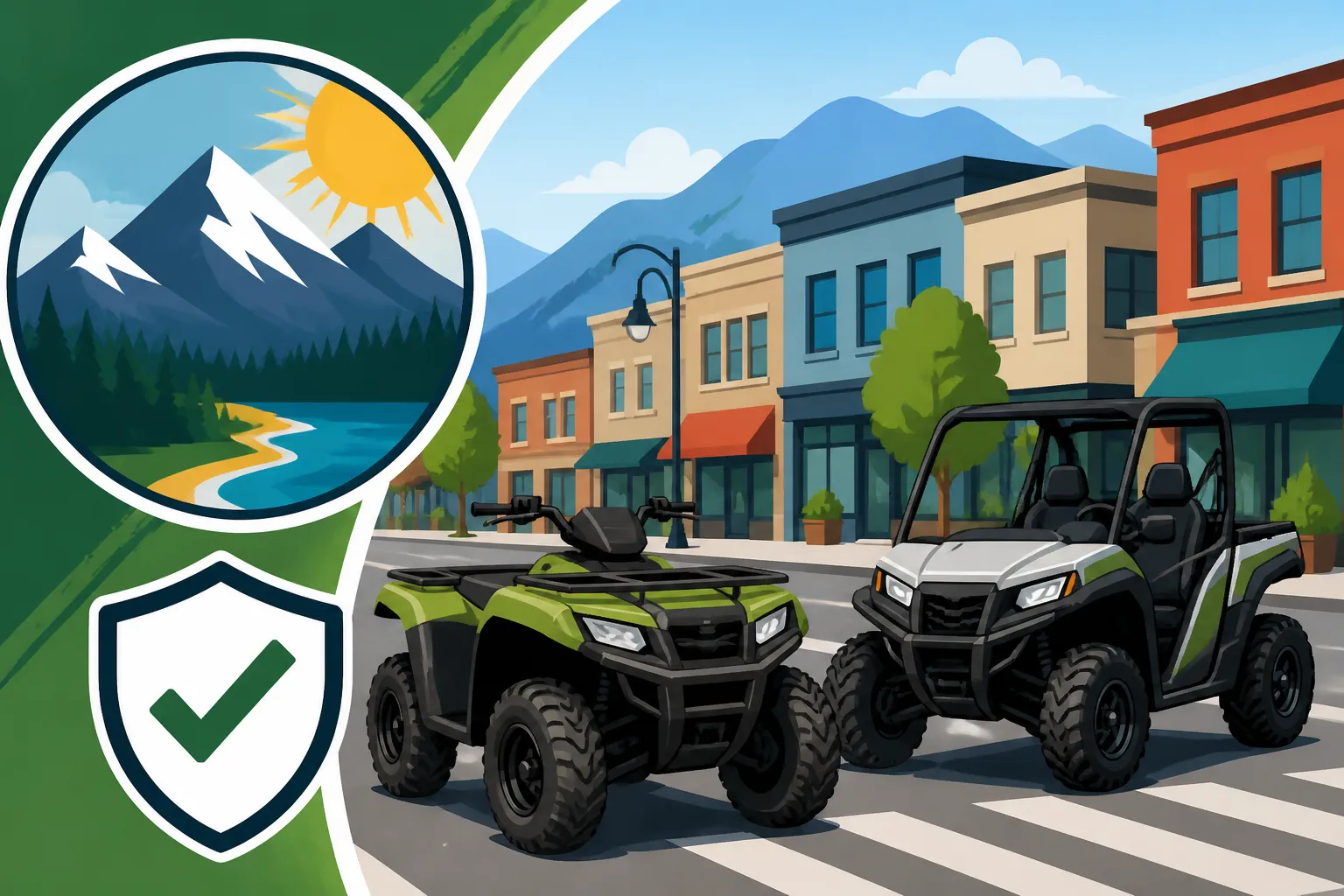
The hard truth is that general recreational riding of ATVs and UTVs on public roads within BC towns is, for the most part, simply not allowed. However, there are very specific, limited circumstances where your machine might briefly touch a town's "highway." Understanding these distinctions is crucial to avoid tickets and maintain good standing with local authorities.
Legal Highway Crossings
If you're riding an ORV and encounter a public road that is legally considered a "highway" (which, as we discussed, includes most municipal streets), you are generally prohibited from riding along it. However, the Off-Road Vehicle Act does provide specific, limited allowances for crossing a highway. This is a critical point that many riders misunderstand. You can't just drive down the street for a few blocks; you can only cross it.
Here are the strict rules for legally crossing a highway in BC:
- At a Right Angle (90 Degrees): You must cross the highway at as close to a 90-degree angle as possible. This is designed to minimize your time on the paved surface and make your intentions clear to other traffic.
- At an Intersection with a Stop Sign or Traffic Light: Crossings must happen at a controlled intersection, meaning one with a stop sign or a traffic light. You cannot simply pull out and cross anywhere you please.
- By the Shortest Route: The crossing must take the shortest, most direct route across the highway. You are not permitted to travel along the highway for any distance, even a short one, before or after the crossing, unless it is absolutely necessary to reach the next safe point to continue your journey off-highway.
- Only When Safe: You must yield to all other traffic and pedestrians and ensure the crossing can be made safely without impeding anyone.
Imagine you're coming off a forest service road and need to reach another trail that's directly across a main street in a small town. You would approach the intersection, stop, ensure it's clear, and then cross directly over to the other side at the light or stop sign. This is vastly different from, say, riding from your house down two residential streets to get to a local gas station. The latter is almost certainly illegal. For more specific details on highway crossings, see [BC Rules for Crossing a Highway].
Riding Shoulders and Parking Lots
Another common misconception among riders is that if they stay on the shoulder of a road, or only ride in a parking lot, they are somehow exempt from the rules. This is generally not true within a town's boundaries.
- Riding Shoulders: In BC, the shoulder of a public road, especially one within a municipality, is still considered part of the "highway" under the Motor Vehicle Act. Therefore, operating an ORV on a highway shoulder for travel purposes is typically prohibited. You cannot legally travel down the shoulder of a town road to avoid being on the main lane. This is a frequent source of tickets.
- Parking Lots: While parking lots are often used for loading and unloading ORVs, they are not typically considered legal riding areas within a town. You can drive your truck and trailer into a parking lot, unload your machine, and then proceed directly to an authorized trail or crossing point. However, using the parking lot itself for recreational riding, circling around, or driving to a nearby store is usually not permitted. The intent of being in the parking lot should be solely for the purpose of transitioning your ORV to or from a legal riding area. Even some municipal parking lots have specific bylaws prohibiting ORV operation within their bounds for anything other than loading/unloading.
The key takeaway here is that any area that falls under the definition of a "highway" in a town, including its shoulders and often parking lots, is generally off-limits for recreational ORV use.
Police Operation Permits: The Rare Exception
There is one specific, limited scenario where an ORV might legally operate on a municipal road, and that's through a "police operation permit." These permits are not issued by ICBC or Service BC; they come directly from your local police detachment (RCMP or municipal police).
Here’s what you need to know about these permits:
- Specific and Limited Purpose: Operation permits are not for general recreational riding. They are typically issued for very specific, temporary uses, such as participating in a parade, moving farming equipment across a short stretch of road, or allowing a utility crew to access specific infrastructure.
- Conditions and Duration: If issued, a permit will come with very strict conditions. These might include specific routes, times of day, speed limits, and requirements for safety equipment or escort vehicles. They are usually valid for a short period, often up to two years, but usually for a single event or a limited scope of work.
- Discretionary Issuance: Issuance of these permits is entirely at the discretion of the local police detachment. There’s no guarantee you'll get one, and they are generally difficult to obtain for purely recreational access to trails. Police will weigh public safety, traffic impact, and the genuine need for the ORV to be on the highway.
- Application Process: You'll need to contact your local police detachment, explain your specific need, and follow their application process. This will involve providing details about your machine, the route, the dates, and the purpose of your intended highway travel.
For example, a local ATV club might get a permit for a short parade through town for a community event, or a rancher might get one to move their quad between fields that are separated by a quiet rural road. But don't expect to get one just to ride your SuperATV UTV to the grocery store or to access a popular riding area from your home without trailering. For more information on how these permits work, you can look into [BC Operation Permit Application Steps] and [BC Detachments That Issue Permits].
Consequences of Illegal Town Riding
Ignoring the rules about riding your ATV or UTV in a BC town can lead to serious repercussions, ranging from significant financial penalties to the loss of your machine. It’s not just a slap on the wrist; the authorities take these infractions seriously due to public safety concerns and nuisance complaints.
Fines and Penalties
If you're caught operating your ORV on a public highway within a town without a valid police operation permit, you can expect to face fines. The specific amounts can vary, but generally, you're looking at violation tickets that can quickly add up. These aren't just minor parking tickets; they reflect the provincial and municipal stance on unauthorized vehicle operation.
Potential fines could be issued for:
- Operating an ORV on a highway: This is the primary violation when you’re caught riding on a town street.
- Operating an unregistered ORV: If your machine isn't properly registered with ICBC, that's another ticket on top. See [BC Tickets for an Unregistered Machine].
- Careless operation: If your riding is deemed reckless or dangerous to others, you could face additional charges under [BC Fines for Careless Operation].
- Driving without a valid driver's licence: While you don't always need a driver's licence to operate an ORV off-highway, you absolutely need one to operate any motor vehicle on a public highway.
- Lack of required insurance: Basic Autoplan is required for any vehicle on a highway. While you can get [BC Insurance Bought With Registration] for resource road use, it typically doesn't cover highway operation.
These fines can quickly reach hundreds or even thousands of dollars, making a short, illegal ride an incredibly expensive mistake.
Machine Seizure and Impoundment
Perhaps one of the most jarring consequences of riding an ORV illegally on a town road is the potential for your machine to be seized and impounded by the police. The Off-Road Vehicle Act grants police officers the power to seize an ORV if it's being operated in contravention of the Act, which includes operating it on a prohibited highway.
Here's how this typically plays out and why it's such a heavy penalty:
- Immediate Seizure: If an officer determines you are operating your ORV illegally on a municipal street, they can immediately order your machine to be impounded. This means you will not be able to simply drive it home or call a friend to pick it up.
- Towing and Storage Costs: Once seized, your ORV will be towed to an impound lot. You will be responsible for all towing fees and daily storage fees. These costs can quickly escalate, especially if you have to wait to resolve other legal issues before you can reclaim your machine.
- Administrative Hassle: Reclaiming an impounded vehicle involves navigating police procedures, paying all outstanding fines, and settling the towing and storage bills. This can be a significant administrative burden and time commitment.
- Loss of Use: While your machine is impounded, you lose access to it, which can disrupt recreational plans or even work if you use your ORV for occupational purposes.
The power to seize a machine is a serious enforcement tool designed to deter illegal ORV use on public roads. Understanding this risk should be a major motivator to always operate your ORV within the legal boundaries. Learn more about these powers in [BC Machine Seizures by Police].
Practical Advice for Riders Near Towns
Given the strict regulations and potential penalties, the best approach for riders who want to enjoy their ATVs or UTVs in British Columbia is to operate responsibly and legally. This often means adjusting your habits and planning to avoid conflicts with town rules.
Planning Your Route and Staging Areas
The single most effective way to avoid issues with riding in towns is to plan your route carefully and utilize designated staging areas.
- Avoid Towns Entirely: Whenever possible, choose riding routes that bypass towns and municipal roads altogether. Stick to areas specifically designated for ORV use, such as Crown land and forest service roads. These are the places the ORV Act was designed for, and where you can truly experience the freedom of off-road riding in BC. Check out [BC Rules for Riding Crown Land] for guidance.
- Utilize Staging Areas: Many popular riding areas in BC have designated staging areas just outside of town limits. These are ideal places to unload your ATV or UTV from your trailer, get geared up, and then head directly onto the trails without needing to use any municipal roads. Look for signs indicating ORV staging or parking areas, and always ensure you're not trespassing on private land when unloading.
- Proper Loading and Unloading: If you must use a parking lot for loading or unloading, ensure it's done quickly and efficiently. Avoid unnecessary riding around in the lot. This minimizes your time on any "highway" property and reduces the chances of attracting unwanted attention.
By planning ahead, you can significantly reduce your risk of encountering enforcement issues and ensure a much more enjoyable and stress-free riding experience.
Respecting Local Regulations and Community Concerns
While the legal aspects are paramount, it’s also important for ORV riders to consider the community impact of their activities. Noise, dust, and perceived safety risks are major concerns for residents in towns, and these concerns often fuel stricter bylaws and more vigilant enforcement.
- Be a Good Neighbour: When you’re anywhere near populated areas, even if you’re legally crossing a highway or just offloading, operate your machine respectfully. Avoid excessive noise, keep speeds low, and be mindful of pedestrians and other vehicles. A little consideration goes a long way in fostering positive community relations.
- Sound Limits and Spark Arrestors: Even on designated trails near towns, many managed riding areas have [BC Sound Limits of 96 Decibels] and require [BC Spark Arrestor Rules and Fines]. Ensuring your machine meets these requirements not only keeps you legal but also reduces noise pollution, which is often a primary source of complaint from town residents. Companies like SuperATV offer a range of products, including exhaust systems and components, that can help ensure your machine runs efficiently and within sound limits, contributing to more responsible riding.
- Impact on Future Access: The collective behaviour of ORV riders can influence decisions made by local governments regarding trail access and potential future bypass routes. Demonstrating responsible behaviour and respect for local rules helps build a positive image for the ORV community, potentially leading to more favorable outcomes in the long run.
Ultimately, we all share these spaces, and responsible riding practices benefit everyone, helping to preserve access to the fantastic riding opportunities BC has to offer.
Disclaimer
This article is for general informational purposes only and does not constitute professional advice. Laws, prices and regulations vary by location and change over time. Consult a qualified professional for guidance on your specific situation.