BC Rules for Riding a Shoulder
It's incredibly frustrating when you're just trying to get your quad or side-by-side to a legal riding area, or maybe you just need to traverse a short distance, and that inviting stretch of road shoulder seems like the easiest path. Many riders in BC feel caught between a rock and a hard place, wondering if a quick jaunt down the shoulder is really that big of a deal. This guide is here to clear up the confusion and lay out the BC rules for riding a shoulder, explaining why it's often not the solution you think it is and what your legal options actually are.
What the Law Says About Road Shoulders in BC
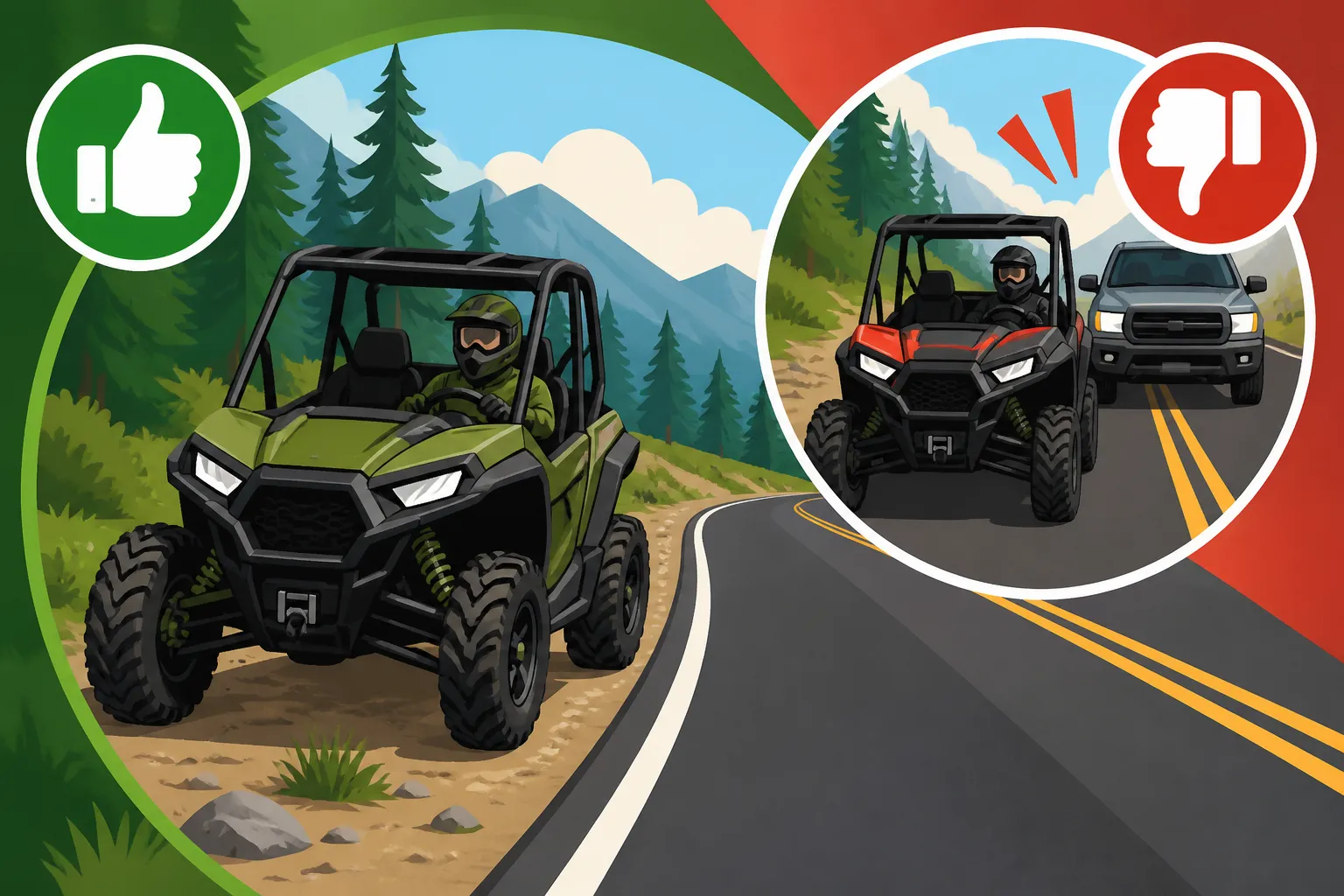
Let's cut right to the chase: in British Columbia, riding your off-road vehicle (ORV) on the shoulder of a public road is generally against the law. I know, it feels counter-intuitive sometimes, especially when that gravel shoulder looks like an extension of the trail, but the legal framework sees things differently. Understanding this distinction is key to avoiding unnecessary fines and ensuring your safety.
The Strict Definition of a Highway in BC
In BC, the term "highway" isn't just about the paved lanes where cars zoom by. The Motor Vehicle Act (and by extension, the Off-Road Vehicle Act) defines a highway much more broadly. It includes the travelled portion of the road, yes, but it also encompasses everything from the curb to the property line on either side. This means sidewalks, boulevards, ditches, and, crucially, the road shoulder, are all considered part of the highway. It’s not just for cars; it's a legal classification that dictates what types of vehicles can operate there and under what conditions.
So, when you're looking at that seemingly benign strip of gravel or pavement next to the main road, thinking it's "not really the road," the law begs to differ. This broad definition means that any section typically maintained by the Ministry of Transportation and Infrastructure or a local municipality, even if it’s just a strip of grass beside the asphalt, falls under the strictures of highway use. This can be a real head-scratcher for riders who are used to more flexible interpretations in other contexts or regions, leading to honest mistakes and frustrating tickets.
Why the Shoulder is Part of the Highway
The shoulder exists for a reason – emergency stops, pedestrian and cyclist use, utility access, and sometimes even for passing if marked. It’s an integral part of the road system, designed for specific purposes, none of which typically include the operation of ORVs like ATVs, side-by-sides, dirt bikes, or snowmobiles. The legal reasoning is rooted in safety and control. Mixing slow-moving, often less visible ORVs with faster highway traffic, even on the shoulder, introduces significant risks.
Think about it from a safety perspective: a motorist might not expect an ORV to suddenly merge from the shoulder, or might not see a dirt bike moving at a different speed. The shoulder might also have debris, poor surfaces, or sudden drop-offs that are hazardous for ORVs not designed for high-speed road travel. The rules are in place to try and prevent collisions and protect all road users, including you and your machine. It’s less about restricting your fun and more about keeping everyone safe in a very specific environment.
Specific Prohibitions for ORVs
The Off-Road Vehicle Act explicitly details where ORVs can and cannot operate. Unless you have a specific permit or are operating in very limited, clearly defined circumstances (like crossing a highway, which we'll get into), the general rule is that ORVs are not permitted on highways. Since the shoulder is considered part of the highway, this prohibition extends directly to it. This means no riding alongside the main traffic lanes, no using it as a shortcut between two points on a road, and no using it as a staging area for any extended period unless specifically allowed by local bylaw or a police permit.
This often comes as a surprise to riders, especially those new to BC or those accustomed to more lenient rules elsewhere. It's a common trap to assume that because it's not the main lane, it's fair game. Unfortunately, conservation officers, RCMP, and municipal police are well aware of this distinction and will enforce it. Understanding these specific prohibitions helps you plan your rides responsibly and avoid the disheartening experience of getting a ticket just because you misjudged where the "highway" ended. For a more comprehensive look at where your machine can and can't go, check out [What the Off-Road Vehicle Act Covers in BC].
The Allure and Danger of Riding the Shoulder
I get it. You're out there, you've got your machine, and you're either trying to connect two trails, get to a gas station, or maybe just cross a small stretch of "road" to get to another section of Crown land. That shoulder looks so inviting, so clear, so easy. It feels like a quick, harmless solution to a logistical challenge. But that allure hides some significant dangers and legal pitfalls that can quickly turn your enjoyable ride into a headache.
The Temptation of a Short Cut
We've all been there. You're riding a fantastic trail, and suddenly it spits you out onto a gravel road that turns into a short paved section before reconnecting with more backcountry. Or perhaps you’re trying to reach a specific trailhead that’s just a kilometer or two down a main road. The thought crosses your mind: "It's just a little bit. No one will notice. It's not like I'm doing 80 km/h in the fast lane." That small stretch of shoulder feels like the natural, quick, and efficient way to bridge the gap.
This temptation is strong because, in our minds, it's often the most direct route. We're thinking about the destination, the continuation of the adventure, and not about the nuanced legal definitions of a highway. Riders often calculate the perceived risk versus the convenience, and for a short distance, convenience often wins out in the moment. However, this calculation often overlooks the hidden risks and the very real chance of being spotted by enforcement, which is usually out there specifically looking for these kinds of infractions.
Lack of Designated ORV Routes
One of the biggest frustrations for BC riders is the perceived lack of continuous, legal ORV routes that allow them to travel from one area to another without touching a highway. This forces many into difficult choices, where the shoulder might seem like the only viable option to connect riding areas, especially in regions with fragmented Crown land or areas surrounded by private property. It can feel like the system isn't set up to facilitate seamless ORV travel, pushing riders towards illegal alternatives.
While progress is being made in some areas to develop multi-use trails, it's far from universal. This gap in the trail network often leaves riders feeling stranded or having to dramatically alter their plans to avoid highway sections. It's a valid frustration, and it's precisely why understanding the legal alternatives, even if they require more planning, is so crucial. Using the shoulder due to a lack of better options doesn't negate the legal consequences.
Misunderstandings About "Private" Property Access
Another common misconception is that if you're just using the shoulder to access private property, like your cabin, a friend's farm, or a small piece of land, it's somehow exempt. Riders might think, "I'm not going far, and I'm just getting to my own land!" However, if that shoulder is part of the public highway, the destination doesn't change its legal status. You're still operating an ORV on a highway.
This can be particularly frustrating in rural areas where properties often front directly onto main roads, and the easiest (or only) way to get a machine onto the property might involve a brief moment on the shoulder. This is where the distinction between private land and public highway becomes extremely important. While you might be able to ride freely on your own land, the journey to and from it, if it involves public roads or shoulders, needs to adhere to the ORV Act. Even a quick hop onto the shoulder to pull into a driveway can be enough for a violation ticket. For clarity on where you can ride without registration, consider [BC Registration on Private Property Only].
Legal Ways to Navigate Road-Adjacent Areas
So, if riding the shoulder is largely a no-go, what are your options? The good news is that BC's ORV Act does provide some pathways for legal, safe, and responsible use of ORVs that involve interacting with public roads, even if they're not always as convenient as we might wish. Planning ahead is your best friend here.
Understanding Crossing Rules
The most common legal interaction an ORV has with a highway (which, remember, includes the shoulder) is crossing it. The ORV Act allows for specific, limited circumstances where you can cross a highway. This isn't a free-for-all; it's a very controlled maneuver designed for safety. Generally, you must:
- Cross at a right angle to the highway.
- Cross only at an intersection, or where it is safe and practical to do so.
- Yield to all traffic on the highway.
- Cross the highway as directly and quickly as possible.
- You must be driving, not just idling or waiting, and certainly not riding along the shoulder to reach your crossing point.
This means you can't use the shoulder to approach the crossing point; you typically need to arrive from an off-highway location, cross directly, and immediately depart to another off-highway location. Think of it as a momentary interruption to highway traffic, not an extension of your ride. Failing to follow these rules can lead to serious fines and safety risks. For detailed instructions on how to perform this maneuver legally, refer to [BC Rules for Crossing a Highway] or [BC ORV Crossing Rules at Stops and Lights].
Police Operation Permits
This is perhaps the most overlooked, yet incredibly useful, tool for BC ORV riders who need to use a short section of highway or shoulder for specific purposes. Local police detachments (RCMP or municipal police) have the authority to issue an "operation permit" for an ORV to operate on a highway. These permits are not a blank cheque for highway travel, but they can be a lifesaver for specific situations.
An operation permit might be issued for things like:
- Accessing a specific piece of private property that is otherwise unreachable.
- Connecting two sections of a trail that are separated by a short stretch of highway.
- Emergency situations, or for specific events like parades or community functions.
The permit will usually specify the exact route, the times of operation, and any conditions (like speed limits, visibility requirements, or safety gear). You'll need to apply for one, explaining your need. It's not always granted, and it requires foresight and planning, but it's a perfectly legal way to bridge those short gaps. The great thing is that these permits are often free and can be valid for up to two years. It's always worth a conversation with your local detachment. Find out more by looking into [BC Police Operation Permits for Highway Travel].
Using Trailers and Truck Beds
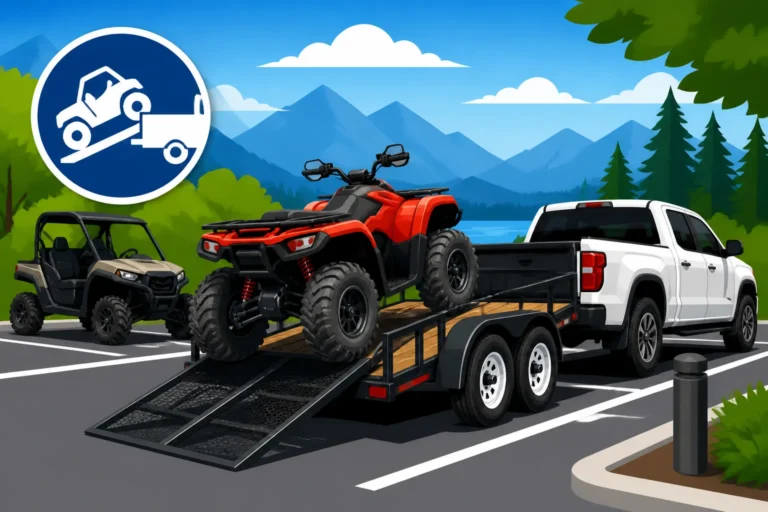
When in doubt, and especially for longer distances or more frequent road travel, the safest and most legally compliant method is to transport your ORV using a truck and trailer, or simply in the bed of your pickup. This eliminates all risk associated with highway use and keeps your machine safely off-limits until you reach your designated riding area. It might seem like an extra step, but it guarantees compliance and removes the stress of potential tickets or accidents.
Investing in a good quality trailer and reliable tie-downs is always a smart move for any serious ORV enthusiast. Brands like SuperATV offer a range of utility accessories that can help secure your machine for transport, ensuring it arrives at the trailhead just as you left it. Many riders even equip their trucks with specific ramps or bed extenders to make loading and unloading their quads or side-by-sides easier. This is the gold standard for responsible ORV ownership in BC, giving you peace of mind and protecting your investment from highway hazards and legal trouble. Think about it as part of your overall riding strategy: transport to the fun, don't ride to it on a shoulder.
Penalties and Risks of Illegal Shoulder Use
Ignoring the rules about shoulder riding isn't just about bending a minor guideline; it comes with significant consequences that can impact your wallet, your insurance, and even your machine. It's crucial to understand these potential repercussions, as they often far outweigh the perceived convenience of a quick illicit ride.
Fines and Consequences
Riding your ORV on a highway shoulder without a permit can result in a violation ticket under the Off-Road Vehicle Act. The fines can be substantial, and they are designed to be a deterrent. An officer won't hesitate to issue a ticket if they observe you operating your ORV illegally on a highway or its shoulder. These aren't just minor slaps on the wrist; they are administrative penalties that go on your record.
Beyond the immediate fine, there could be other consequences. Repeated offenses might lead to more severe penalties, and in some cases, police have the power to seize your machine if you're operating it unlawfully. Imagine having your prized side-by-side or quad impounded, incurring towing and storage fees, all because of a brief, illegal jaunt on the shoulder. This is a very real possibility in BC, as outlined in [BC Seizure Powers Under the ORV Act]. It’s a costly lesson that no rider wants to learn the hard way.
Safety Hazards for Riders and Others
The legal prohibitions aren't just about bureaucracy; they're fundamentally about safety. Operating an ORV on a road shoulder, even briefly, exposes you to a host of dangers that your machine isn't designed for and that motorists aren't expecting.
Consider these hazards:
- Speed Differential: ORVs typically travel much slower than highway traffic, creating a dangerous speed differential.
- Visibility: Many ORVs, especially smaller quads or dirt bikes, are less visible to larger vehicles, particularly at dusk, dawn, or in adverse weather. While some riders might add aftermarket lighting, perhaps from a reputable brand like SuperATV, even enhanced lighting doesn't guarantee you'll be seen by distracted drivers on a busy highway.
- Surface Conditions: Shoulders can be uneven, have potholes, loose gravel, or debris that can easily cause an ORV to lose control.
- Emergency Braking: If a car suddenly swerves onto the shoulder or stops, an ORV has less room and different braking characteristics than a road vehicle, increasing the risk of a collision.
- Driver Expectation: Car drivers are generally not looking for ORVs on the shoulder. Their attention is focused on other road vehicles, making an ORV a sudden and unexpected obstacle.
These factors dramatically increase the risk of an accident, not just for you but also for other road users. A collision involving an ORV and a car on a highway can be devastating due to the size and weight disparity.
Insurance Implications
This is a big one that many riders overlook. If you're involved in an accident while operating your ORV illegally on a highway shoulder, your insurance coverage could be severely impacted or even voided. Most ORV insurance policies are designed to cover you for legal operation on trails, private property, or designated ORV routes, not for illegal use on public roads.
Imagine getting into an incident on the shoulder:
- Denial of Claim: Your insurance provider might deny your claim for damages to your ORV, leaving you to pay for repairs or replacement out of pocket.
- Liability Issues: If you cause damage or injury to another person or their property, your liability coverage might not protect you, leaving you personally responsible for potentially massive costs.
- Increased Premiums: Even if a claim is partially paid, you could face significantly increased premiums or even struggle to find coverage in the future.
It's a huge financial risk to take for the sake of a few hundred meters on a shoulder. Always ensure you understand where your [BC ATV Insurance Requirements] apply and where they do not. The cost of a ticket or an accident far outweighs the minor inconvenience of finding a legal alternative.
| Action | Legality in BC for ORVs | Risks/Consequences |
|---|---|---|
| Riding on a paved shoulder | Illegal (part of highway) | Fines, machine seizure, accident, insurance voided, personal liability |
| Riding on a gravel shoulder | Illegal (part of highway) | Fines, machine seizure, accident, insurance voided, personal liability |
| Crossing a highway at a right angle | Legal (under specific conditions) | Accident if conditions not met, citation if rules are broken |
| Using a Police Operation Permit | Legal (with permit from local detachment) | Permit conditions must be followed exactly to maintain legality |
| Transporting ORV in truck/trailer | Legal | None (assuming safe loading/securement) |
| Riding on an FSR (Forest Service Road) | Legal (with registration, insurance, and other rules) | Fines if rules for FSRs (like speed or insurance) are not followed. See BC Rules for Riding an FSR. |
| Riding on Crown Land | Legal (with registration and other rules) | Fines if rules for Crown Land (like closures or registration) are not followed. See [BC Rules for Riding Crown Land]. |
Planning for Safe and Legal Rides
Given the strict rules around road shoulders, it becomes paramount for BC riders to plan their outings meticulously. A little bit of foresight can save you a lot of grief, expense, and potential danger. Think about your entire journey, not just the fun parts on the trail.
Map Your Route Meticulously
Before you even load your machine, spend time looking at maps. Use online mapping tools, specialized ORV trail maps, and even physical maps to identify legal access points, designated trails, and any sections where you might encounter public highways. Look for alternative routes that avoid roads entirely, or pinpoint the exact, shortest, and safest points where you might legally cross a highway.
Identify any "gaps" in the trail network where you think you might need to use a shoulder. For these gaps, either find a completely different route, plan to transport your machine in a truck or trailer, or research if a police operation permit is a viable option for that specific short stretch. Many local clubs and online communities share known legal routes and areas to avoid, so tap into that collective knowledge.
Always Carry Your Documentation
Whenever you're out with your ORV, especially if there's any chance you'll be near or crossing a public road, ensure you have all your required documentation. This includes your [BC Certificate of Registration Explained], proof of your off-road insurance (especially the mandatory minimum for Forest Service Roads), and your photo ID. An officer will ask for these, and being unprepared can lead to further complications, even if you’re trying to do the right thing.
Even if you believe you are operating legally, an officer might pull you over to verify. Having everything in order helps the interaction go smoothly and quickly. Remember, showing courtesy and preparedness goes a long way.
Consider Club Memberships and Resources
Joining a local ATV or UTV club in BC can be an invaluable resource. Clubs often have up-to-date information on local trail systems, legal access points, and changes in regulations. They advocate for more multi-use trails and often have connections with local authorities regarding permits and access. Many clubs also organize group rides, which can be a great way to learn legal routes from experienced riders.
Furthermore, some clubs offer liability insurance programs that provide additional coverage beyond basic requirements, giving you extra peace of mind when riding legally. The collective knowledge and advocacy of a club can make navigating the BC ORV landscape much easier and more enjoyable. They are often at the forefront of working with land managers to create more legal riding opportunities, reducing the need for riders to even consider illegal options like shoulder riding.
Riding ATVs and UTVs in BC is an incredible experience, but it comes with the responsibility of understanding and following the rules. While the allure of the shoulder might seem convenient, the legal and safety risks are simply not worth it. By planning your routes, knowing your legal options for crossing and transport, and being prepared with your documentation, you can ensure your adventures stay safe, legal, and truly enjoyable.
Disclaimer
This article is for general informational purposes only and does not constitute professional advice. Laws, prices and regulations vary by location and change over time. Consult a qualified professional for guidance on your specific situation.