Is a UTV Street Legal in BC?
It’s a common dream for many UTV owners in British Columbia: being able to hop on your side-by-side and cruise down the road to the local store, or connect one trail system to another without having to trailer your machine. However, the reality in BC is often a frustrating awakening, as the rules for UTVs and public roads are far stricter than many realize. This guide will cut through the confusion and explain exactly why your UTV isn't street legal in BC, what limited interactions you can have with public roads, and what happens if you try to bend the rules.
The Harsh Reality: Why Your UTV Isn't Street Legal in BC
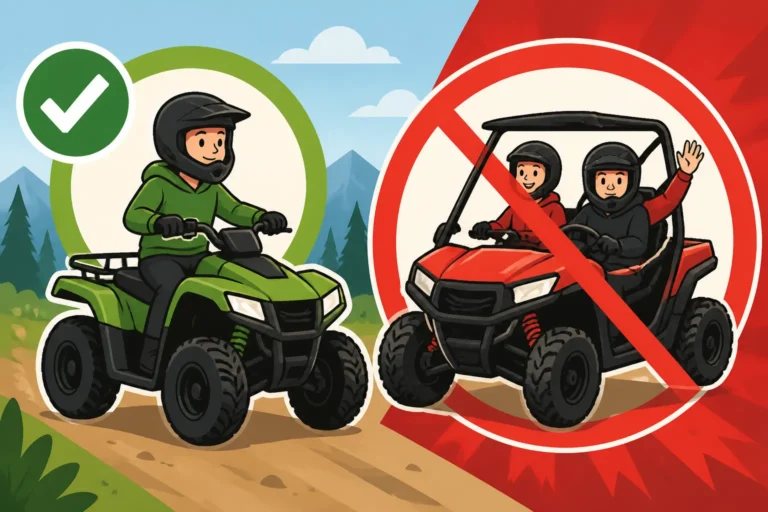
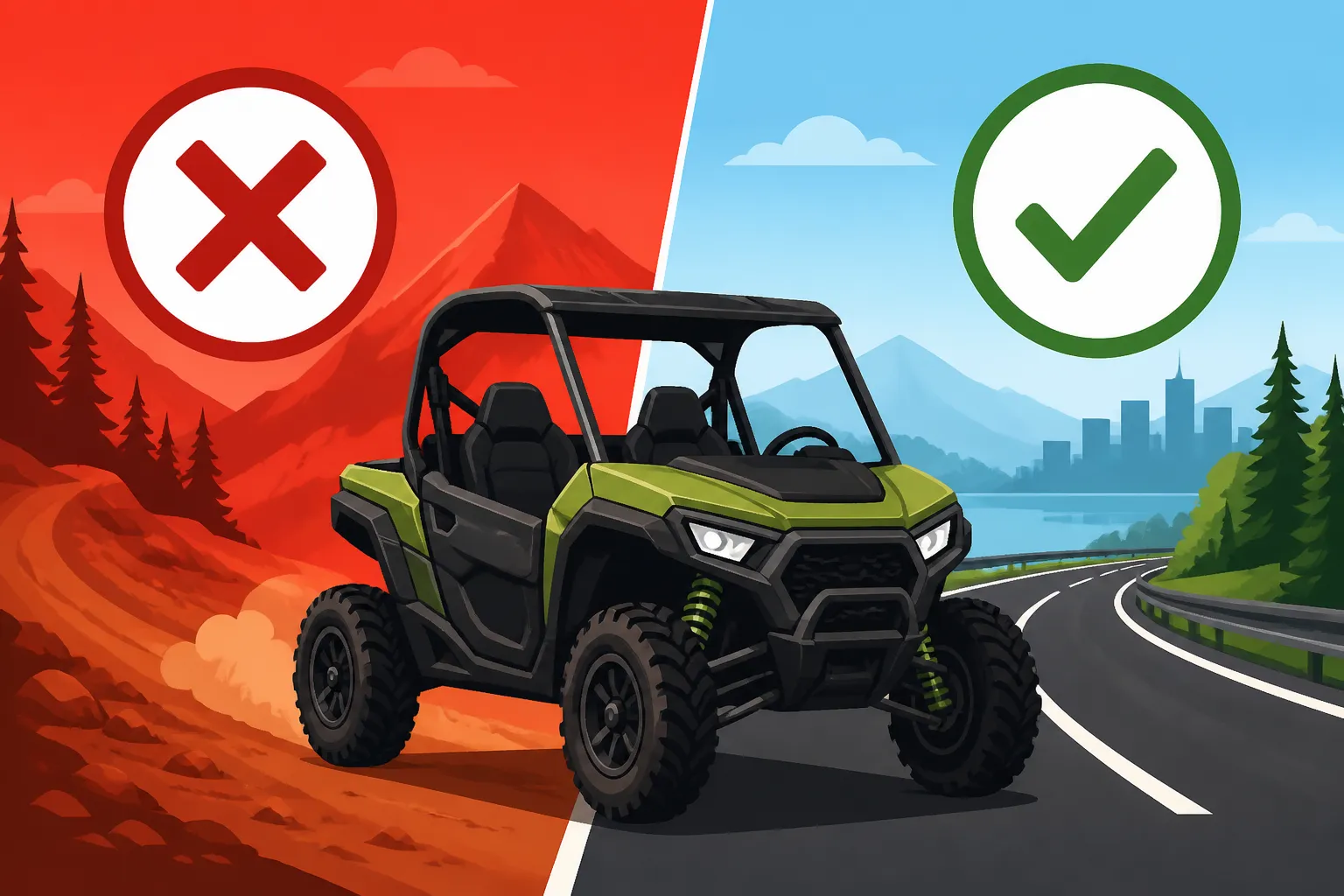
Let's just get this out of the way upfront, because it’s the question everyone asks: No, a UTV is generally not street legal in British Columbia. I know, I know, it's a hard pill to swallow, especially when you see machines in other provinces or states that seem to have no trouble hitting the pavement. But here in BC, our laws are quite clear on the matter, and they draw a very distinct line between off-road vehicles (ORVs) and vehicles intended for highway use.
The core issue lies in how UTVs are classified under provincial law. In BC, UTVs (and ATVs, dirt bikes, snowmobiles, etc.) fall under the Off-Road Vehicle Act. This Act governs their registration, insurance, operation on Crown land and resource roads, and general safety. On the flip side, public roads and highways are governed by the Motor Vehicle Act. The two acts have entirely different standards for vehicle construction, safety equipment, emissions, and operator licensing. For a vehicle to be considered "street legal" in BC, it must meet all the rigorous standards set out in the Motor Vehicle Act, which UTVs, by their very nature and design, simply do not. They are built for rugged terrain, not for interacting safely with highway traffic at speed.
Think of it this way: your UTV might have headlights, taillights, and even a horn, but it lacks many fundamental features that a car or truck possesses for highway safety. We're talking about specific crash-worthiness standards, complex emissions controls, crumple zones, advanced braking systems designed for varied road surfaces, and a host of other engineering requirements that are simply not part of a UTV's design brief. This isn't just about adding a turn signal; it's about the entire vehicle's fundamental compliance. This is why [BC Has No Street-Legal Path for an ATV], and by extension, for a UTV either.
Fundamental Differences in Vehicle Classification
The biggest hurdle for UTVs is that they are purpose-built ORVs. They are designed for traction, ground clearance, and traversing challenging landscapes – exactly the opposite characteristics of a road vehicle, which prioritifies stability, predictable handling, and efficient travel on paved surfaces. The provincial government has created separate legislative frameworks precisely because these types of vehicles serve different purposes and pose different risks.
Under the Motor Vehicle Act, vehicles need to be manufactured to certain standards, typically meaning they meet Canada Motor Vehicle Safety Standards (CMVSS). UTVs are not manufactured to these standards for highway use. Their tires might be too aggressive for pavement, their suspension too soft for road speeds, and their overall structural integrity not designed for impacts with other highway vehicles. It's not a matter of minor modifications; it's a fundamental difference in classification and intended use.
Why Adding "Street Legal" Accessories Won't Cut It
Many UTV owners, understandably, look at the situation and think, "Well, if I just add mirrors, turn signals, a horn, and perhaps some reflective tape, surely that will do the trick?" This is a common and very understandable misconception. Aftermarket parts, even high-quality ones from companies like SuperATV, are designed to enhance your off-road experience or meet minimum requirements for off-road trail systems or specific areas. They are not designed to magically transform an ORV into a Motor Vehicle Act-compliant highway vehicle.
Installing a SuperATV turn signal kit might make your UTV safer when signaling to other riders on a trail, but it won't make your machine legal for Main Street in Hope or Robson Street in Vancouver. The issue isn't just about having the right accessories; it's about the underlying vehicle certification. No amount of bolt-on equipment will change the fact that your UTV was not originally manufactured to the stringent standards required for highway operation. An enforcement officer isn't just checking for individual components; they're looking at the vehicle's entire classification and compliance.
Navigating the Exceptions: Crossing Roads and Police Permits
While widespread street legality is a no-go, there are very specific and highly restricted circumstances where a UTV can interact with public roads in BC. These aren't loopholes for regular road use, but rather narrow allowances to facilitate off-road travel or specific operational needs. Understanding these is crucial to avoid tickets and maintain safety.
Crossing a Highway: A Brief Encounter
The most common interaction a UTV might have with a public highway is crossing it. The Off-Road Vehicle Act makes provisions for this, but it's not a free-for-all. You can't just cross wherever and whenever you please. There are strict rules to follow, designed to minimize risk to both the ORV operator and other highway users.
When you're faced with a highway that separates two pieces of Crown land or two trail systems, you may cross. However, this must be done safely and efficiently. You need to:
- Come to a complete stop before entering the highway.
- Yield to all highway traffic.
- Cross at a right angle (perpendicular to the road).
- Cross at the shortest possible distance to minimize your time on the pavement.
- Ensure your UTV is registered and insured for off-road use, and you possess the required [BC Riders Must Carry the Certificate] and [BC Riders Must Carry Photo ID].
It's important to remember that this is a crossing, not a short drive down the road. You can't use it to access a gas station or bridge a gap of several kilometers. This specific provision is detailed in [BC Rules for Crossing a Highway] and [BC Crossings at a Stop Sign] or [BC Crossings at a Traffic Light]. The intent is clearly to facilitate movement between off-road areas, not to allow quasi-street legal operation.
Police Operation Permits: Very Limited Scope
Another exception, though far less common for recreational riders, involves obtaining an operation permit from a local police detachment. These permits are extremely specific and are generally issued only for very limited, specific purposes, such as accessing a remote work site, agricultural operations, or moving a machine a very short distance for maintenance in an area where no other option exists.
These permits are not a "get out of jail free" card for general road use. They come with strict conditions, including:
- A defined route (often a specific street segment for a short distance).
- Specific dates and times of operation.
- Equipment requirements that might exceed standard ORV regulations (e.g., additional lighting or flagging).
- Proof of registration and appropriate insurance.
The decision to issue such a permit is entirely at the discretion of the local police, and they are typically only granted when there is no reasonable alternative. They are absolutely not a means to make your UTV street legal for daily commuting or casual road cruising. If you’re considering applying for one, be prepared to present a compelling case for why your UTV needs to be on a public road, and understand that recreational desires are very unlikely to qualify. You can learn more about the process in [BC Operation Permit Application Steps].
| Interaction Type | Description | Permissible Use | Requirements |
|---|---|---|---|
| Highway Crossing | Brief, perpendicular crossing of a public highway to connect off-road areas. | Connecting two segments of a trail or Crown land where a highway intervenes. | Stop, yield, cross at right angle, shortest distance, ORV registered & insured, rider ID. |
| Police Permit | Specific authorization from local police for extremely limited, defined road use. | Accessing remote work sites, agricultural purposes, short-distance maintenance, no reasonable alternative. | Defined route, specific times, additional equipment (if specified), ORV registered & insured, police discretion. |
| General Road Use | Daily commuting, recreational cruising, connecting widespread trail systems via public roads. | NOT PERMITTED. Your UTV is not street legal under the Motor Vehicle Act. | Not applicable – this is illegal. |
The Misconception of Aftermarket Upgrades
It's completely understandable why many UTV owners eye aftermarket upgrades from companies like SuperATV and wonder if they can bridge the gap to street legality. When you see a UTV with a windshield, turn signals, side mirrors, and a horn, it certainly looks a lot more like a traditional road vehicle. However, as we've touched on, appearances can be deceiving, and these upgrades, while fantastic for off-road safety and utility, do not make your machine legal for highway use in British Columbia.
The fundamental disconnect is that the BC Motor Vehicle Act (MVA) looks at the original design and certification of a vehicle. A UTV, even one equipped with every road-style accessory imaginable, remains classified as an Off-Road Vehicle (ORV) under the Off-Road Vehicle Act. The MVA requires vehicles to meet specific manufacturing standards, safety tests, and design parameters that are simply not part of a UTV's original build or certification.
What the Motor Vehicle Act Really Requires
The MVA doesn't just list individual components; it details comprehensive standards for vehicle construction, crashworthiness, emissions, lighting patterns, tire types, and overall safety systems. For instance, a vehicle must have a Vehicle Identification Number (VIN) that designates it as a highway vehicle, and it must have been manufactured to meet Canadian Motor Vehicle Safety Standards (CMVSS). A UTV's VIN identifies it as an ORV, and it's not built to CMVSS standards for highway use.
This means that even if you spend thousands on aftermarket upgrades:
- Lights: Your aftermarket headlights and taillights, while bright and effective off-road, likely don't meet the precise photometric standards (e.g., beam pattern, intensity, height from ground) required for highway vehicles.
- Signals and Mirrors: Adding turn signals and mirrors from a brand like SuperATV is excellent for signaling other riders or seeing what's behind you on the trail. However, they don't change the vehicle's fundamental classification or certification.
- Windshields: A robust SuperATV windshield is great for deflecting debris on the trail, but it won't be certified as safety glass required for highway vehicles, nor does it address other structural safety components.
- Tires: The aggressive tread and robust construction of many UTV tires are perfect for mud, rocks, and dirt. But on pavement, they can be noisy, wear quickly, reduce fuel efficiency, and potentially compromise handling and braking characteristics compared to road-specific tires.
Ultimately, you could install every street-legal accessory you find from SuperATV or any other reputable brand, and your UTV would still fail to meet the foundational requirements of the Motor Vehicle Act. These accessories enhance off-road functionality and safety; they don't reclassify your vehicle.
When Aftermarket Upgrades ARE Important
Don't get me wrong, aftermarket upgrades are incredibly valuable and often essential for a safe and enjoyable off-road experience. Installing a proper roll cage extension, a winch, upgraded suspension, or even a robust storage system from a company like SuperATV can dramatically improve your UTV's performance, safety, and utility on trails and resource roads.
These accessories contribute to a better ORV experience, ensuring you're prepared for the challenges of BC's backcountry. They help you meet the spirit of responsible off-roading, but they don't grant you access to public highways. It's crucial to distinguish between enhancing your ORV for its intended purpose and trying to force it into a role for which it was never designed or legally approved.
Consequences of Trying to Skirt the Rules
Given the clear legal framework, attempting to operate your UTV on public roads in BC, beyond the very limited exceptions for crossings or specific police permits, can lead to a host of unpleasant and costly consequences. It’s simply not worth the risk, especially when you consider the potential for serious accidents and legal repercussions.
Violation Tickets and Fines
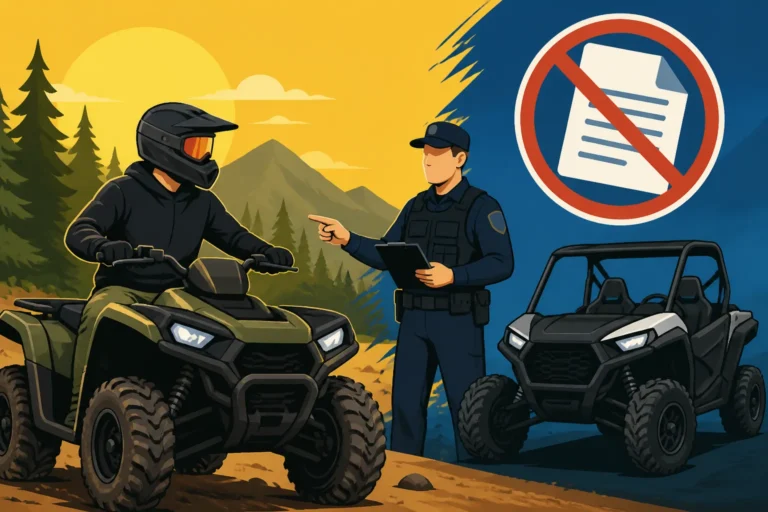
The most immediate consequence you'll face is a violation ticket. Operating an unregistered ORV on a highway, or an ORV not designed or permitted for highway use, can result in significant fines. These aren't just minor parking tickets; they can quickly add up. You could be ticketed for:
- Operating an unregistered vehicle (if not registered under the ORV Act, though most are).
- Operating a vehicle not equipped for highway use.
- No valid driver's license for a highway vehicle.
- No valid insurance for highway use.
Each of these can carry its own separate fine, turning a short, illegal jaunt into a very expensive lesson. This is why understanding [BC Penalties for Riding Unregistered] is so important, though the charges for operating an ORV on a highway without permission can be even more severe.
Vehicle Seizure
Beyond fines, police officers have the authority to seize your UTV if it's being operated illegally on a public highway. This means your machine will be towed away, and you'll be responsible for all towing and impoundment fees, which can quickly become astronomical. Imagine having your prized UTV locked up in an impound lot for weeks, racking up storage fees, all because you tried to drive it a few blocks down the road. [BC Machine Seizures by Police] are a very real threat for those who disregard the rules.
Insurance Headaches and Liability
This is arguably the most financially devastating consequence. Your standard ORV insurance policy, which you obtain when you register your UTV under the Off-Road Vehicle Act, is designed for off-road use. It does not cover you for accidents that occur on public highways.
If you get into an accident on a public road while operating your UTV illegally, you will be personally liable for all damages, injuries, and legal costs. This could mean paying for vehicle repairs for the other party, medical bills for injured individuals, and potentially facing lawsuits that could wipe out your savings and future earnings. We're talking hundreds of thousands, or even millions, of dollars in potential liability. This alone should be enough to deter anyone from trying to make their UTV street legal in BC. While you need [BC Insurance Bought With Registration] for off-road use, that coverage typically won't protect you on the highway.
Criminal Code Implications
In more severe cases, especially if impairment is a factor, operating a UTV on a public highway can lead to charges under the Criminal Code of Canada. An ORV is considered a "conveyance" under the Criminal Code, meaning impaired operation (by alcohol or drugs) on any land, including a highway, can result in criminal charges, license suspension, significant fines, and even jail time. [BC Impaired Riding Penalties] apply whether you are on a trail or mistakenly on a highway.
Safety Risks
Finally, and most importantly, there's the undeniable safety risk. UTVs are not designed for the speeds, traffic density, and road conditions found on public highways. Their handling characteristics, braking distances, and visibility are fundamentally different from cars and trucks. Mixing high-speed highway traffic with a UTV is a recipe for disaster, putting yourself, your passengers, and other motorists at extreme risk. The rules exist for a reason – to keep everyone safe.
In conclusion, while the allure of using your UTV on public roads in BC is strong, the legal and practical realities make it a non-starter. Embrace your UTV for the incredible off-road adventures it offers, equip it with the best accessories for those trails (perhaps from SuperATV!), and stick to the vast networks of Crown land and resource roads where it truly belongs. Trying to force it onto the pavement will only lead to trouble.
Disclaimer
This article is for general informational purposes only and does not constitute professional advice. Laws, prices and regulations vary by location and change over time. Consult a qualified professional for guidance on your specific situation.