Why There Is No Title to Lose
It's incredibly common for folks new to the off-road vehicle world in British Columbia, or even long-time riders who've only ever owned cars, to hit a wall of confusion when it comes to "titling" their ATV or side-by-side. You go through the registration process, expecting to walk away with that official, hard-copy title document like you would for a car or truck, only to find… well, nothing of the sort. This guide is here to unravel that mystery, explain why BC doesn't issue a traditional title for your ORV, and what documents you do get and need to keep safe.
The Fundamental Difference: Registration Versus Titling in BC
Let's start by tackling the elephant in the room: the concept of a "title" itself. When you buy a car, truck, or motorcycle, you receive a Certificate of Title. This document is a powerful piece of paper. It serves as definitive proof of ownership, records any liens against the vehicle, and is a crucial part of the process when buying, selling, or financing. It's tied to the vehicle's unique VIN and lives on a central registry that everyone, from lenders to law enforcement, can access.
But with an ATV, dirt bike, snowmobile, or side-by-side in British Columbia, things are simply different. Our province operates under the Off-Road Vehicle Act, which primarily focuses on regulating the use of these machines on Crown land and designated trails. It's about ensuring machines are identifiable and that operators are accountable, rather than establishing a complex ownership and lien registry akin to the Motor Vehicle Act. So, while you'll absolutely need to register your machine, you won't ever receive that traditional, standalone title document.
What a Vehicle Title Actually Is
Imagine buying a house. You receive a deed that proves you own it, and that deed is recorded at the Land Titles Office. A vehicle title works in a very similar way for cars and trucks. It's a legal document issued by the provincial government (often through an agency like ICBC) that identifies the legal owner of a vehicle. It also typically lists important details like the vehicle's make, model, year, and Vehicle Identification Number (VIN). Crucially, it's where any financial interests, like a loan from a bank or credit union, are officially recorded as a "lien." This means if you borrow money to buy a car, the lender's interest in that vehicle is publicly declared on the title, making it impossible for you to sell it clear of that debt without them getting paid first. When you transfer ownership, the title is signed over, and a new one is often issued to the new owner, creating a clear and unbroken chain of verifiable ownership.
The BC Off-Road Vehicle Act and Its Focus
The [What the Off-Road Vehicle Act Covers in BC] is a completely different beast than the Motor Vehicle Act, which governs highway-use vehicles. The ORV Act came into full effect with mandatory registration in November 2015, and its primary goal is to ensure that off-road vehicles operating on Crown land (which covers a massive portion of our province) are identifiable. This helps with everything from environmental protection and rider safety to law enforcement and tracking stolen machines. When you register your ORV, you're essentially telling the province, "Hey, this machine is mine, and I'll be using it on public land."
The legislation doesn't set up a system for transferring an official "title" in the same way highway vehicles do. Instead, it creates a registry that links a specific ORV to a specific owner, granting them a Certificate of Registration. This certificate is your official document in the ORV world, not a title. It's a key distinction that can throw a lot of people for a loop, especially if they're used to the simple title transfer process for a car.
Understanding Your BC Certificate of Registration
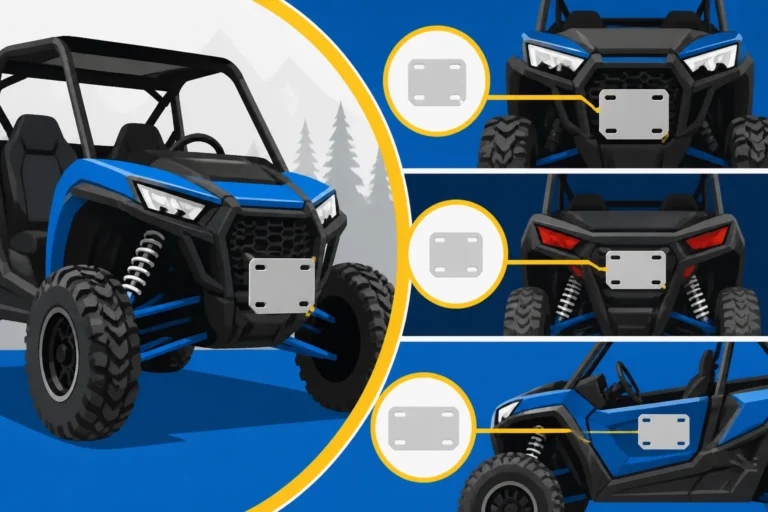
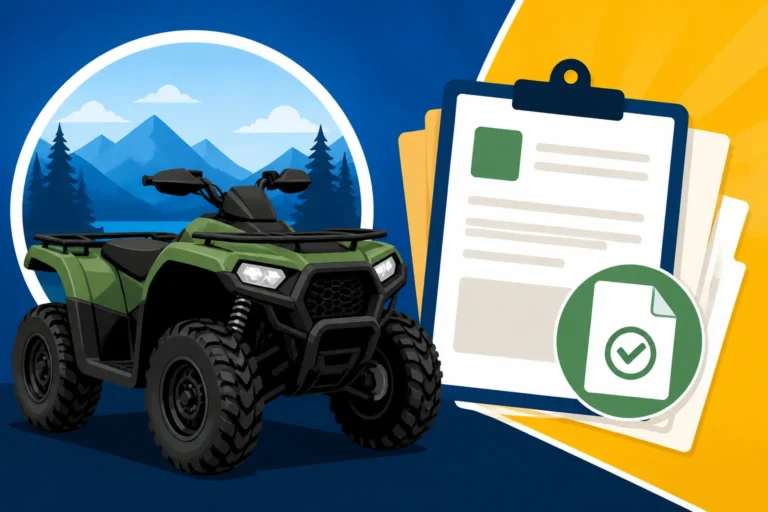
So, if there's no title, what do you get? You get a Certificate of Registration. This piece of paper, issued by an authorized [BC Autoplan Brokers Handle ORV Registration] after you complete the registration process, is your definitive proof that your machine is registered in British Columbia. It's not a title, but it serves a similar purpose in terms of connecting you to your machine in the eyes of the law. You'll also receive a small sticker (decal) and an ORV number plate.
Think of it this way: for highway vehicles, the title proves ownership and allows you to register the vehicle for road use. For ORVs in BC, the Certificate of Registration is the registration itself, and by extension, the primary document connecting you as the owner to the machine. You won't be handing over a "title" to a new owner; you'll be signing off on the Certificate of Registration and providing a bill of sale.
Information on Your Certificate
Your Certificate of Registration is packed with important details, and it's something you'll want to keep safe and carry with you whenever you ride. [BC Riders Must Carry the Certificate] on Crown land. Here's a rundown of what you'll typically find printed on this crucial document:
- Owner's Information: Your full legal name and address will be prominently displayed. If there are multiple owners, all their names will be listed.
- Vehicle Identification Number (VIN): This is the unique identifier for your ORV, just like on a car. It's critical for identification. [Serial Numbers and Where They Hide] are important to know.
- Make, Model, and Year: Basic descriptive information about your machine.
- Fuel Type and Colour: Further details to help identify the ORV.
- Plate Number: The unique ORV plate number assigned to your machine.
- Registration Date: The date your machine was officially registered.
- Broker Information: Details about the ICBC Autoplan broker who processed your registration.
While it lacks the "title" designation, this document is what police, conservation officers, and other authorities will ask to see to verify your machine's registration status and your connection to it. It's the core document that confirms you've met the requirements of the Off-Road Vehicle Act.
The Role of ICBC Autoplan Brokers
When you head to an ICBC Autoplan broker to register your ORV, it's easy to assume they're processing a "title" in the background, especially since they handle car titles. But that's not what's happening. These brokers are acting as agents for the BC government, specifically for the purposes of the Off-Road Vehicle Act. They facilitate the collection of your information, verify your identity, inspect your machine's VIN, and process the application to add your ORV to the provincial ORV registry.
What the broker hands you after you successfully register your machine is the [What the Broker Hands You After You Register]: your Certificate of Registration, the ORV plate, and the small decal. There is no additional "title" document for them to give you. They are simply registering the machine in your name, linking it to your ownership in the provincial database, and providing the physical proof of that registration. They are your first point of contact for anything related to [How to Register an ATV in BC] or [BC Transfer of Ownership Steps].
Ownership Chains and Why They Matter Without a Title
Since there isn't a central "title" that gets physically passed from owner to owner, the burden of proving continuous ownership falls much more heavily on your documentation. This is where your bills of sale become absolutely indispensable. Without a title providing that single, official record of past ownership, you need a robust paper trail to satisfy the registration requirements.
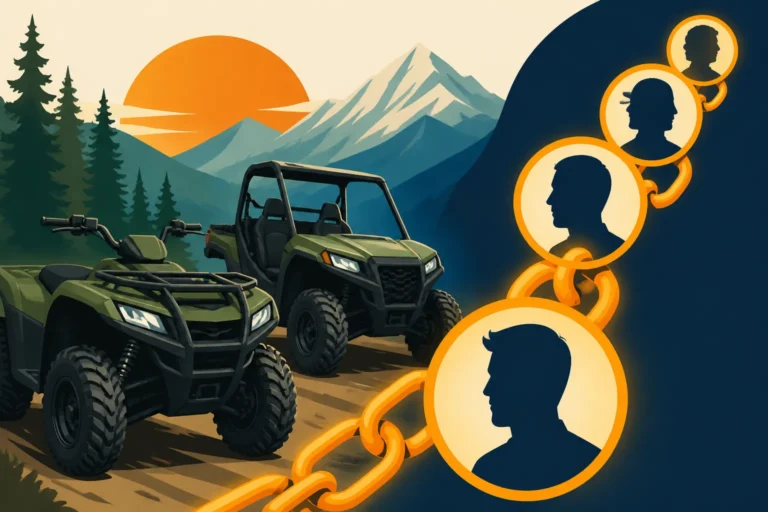
This can be a significant point of stress and confusion for buyers and sellers of used machines. Imagine buying a quad that's changed hands three or four times over the years. Each one of those transfers needs to be documented, or you could find yourself in a tricky situation when it's your turn to register it. [Why Every Past Sale Has to Be Documented] is a frustration many riders have faced.
The Importance of a Complete Paper Trail
For your ORV registration to be successful, you need to establish a clear and unbroken chain of ownership from the original purchase right up to you. This means that when you go to register your machine, the broker will want to see documentation that proves how the machine got from its first owner to the second, then to the third, and so on, until it reached you.
Each transaction needs a corresponding bill of sale. This bill of sale should clearly identify:
- The seller's full name and contact information.
- The buyer's full name and contact information.
- The date of the sale.
- The purchase price (important for calculating [BC PST on an ATV Purchase]).
- A detailed description of the ORV, including its make, model, year, and crucially, its VIN.
- Signatures of both the buyer and the seller.
If you're buying a used machine, do not underestimate the importance of obtaining all prior bills of sale. It can be a real headache if a past owner is missing or simply can't produce the paperwork. Many people find it helpful to use online legal document services like LawDepot to create standardized and legally sound bills of sale, ensuring all necessary information is captured for each transaction. This helps maintain that crucial paper trail. This is especially true when dealing with [BC Ownership Chains Going Back Decades].
Statutory Declarations as a Last Resort
What happens if you buy a quad from a private seller, and they can't track down the bill of sale from their purchase? Or what if you inherited a machine and the original owner's paperwork is nowhere to be found? This is a common scenario and can certainly cause a bit of a panic.
In these situations, a [BC Statutory Declaration for an ORV] might be your only recourse. This is a legal document where you (or ideally, the person who couldn't produce the bill of sale) declare under oath that you are the rightful owner of the machine, detailing how you acquired it. You'd typically make this declaration before a notary public or a commissioner for taking affidavits, who will charge a small fee (for example, [BC Statutory Declarations Cost $15]).
While a statutory declaration can fill a gap in your ownership chain, it's truly a last resort. It's much more straightforward and less open to question if you have all the original bills of sale. Plus, if the declaration is made by you because a previous owner can't be found, it might still raise questions about the legitimacy of the prior transfer. It's always best to demand a complete paper trail when buying a used ORV.
Implications for Buying, Selling, and Financing ORVs in BC
The absence of a traditional title has significant implications for how you handle transactions involving your ORV. It means you need to be extra diligent, whether you're buying a machine, selling one, or even trying to secure financing against it. The process is less centralized and relies more heavily on individual due diligence and robust documentation.
Selling Your Machine in BC
When you decide to sell your registered ORV, the process won't involve signing over a title. Instead, you'll need to provide the buyer with:
- A valid Bill of Sale: This is critical. Make sure it's clear, comprehensive, and includes all the details mentioned earlier: seller and buyer info, machine details (VIN!), date, and price. Using a template from a service like LawDepot can ensure you cover all your bases.
- Your Certificate of Registration: You'll need to sign the appropriate section on your [BC's Certificate of Registration Explained] to formally transfer ownership to the new buyer.
The buyer will then take these documents to an Autoplan broker to register the machine in their name. The broker will charge a fee for the transfer (e.g., [BC Charges $28 to Transfer Ownership]). This entire process is covered in detail in [BC Transfer of Ownership Steps]. It's crucial for you as the seller to make sure the ownership transfer is completed promptly to avoid any liability for future incidents involving the machine.
Buying an ORV in BC
This is where your vigilance is most important. When you're [Buying From a Private Seller in BC], you need to protect yourself. Without a title, you're relying entirely on the seller's documentation and honesty. Here's what to demand:
- The original Certificate of Registration: Make sure it's signed over by the seller. Verify the VIN on the certificate matches the VIN stamped on the machine itself.
- A complete chain of Bills of Sale: As discussed, you need to see every bill of sale from the original purchase right up to the seller's purchase. If any are missing, that's a red flag. Be prepared to ask the seller to provide a statutory declaration if a past bill of sale is genuinely unavailable, but understand the risks involved.
- A new Bill of Sale from the seller to you: Ensure this document is properly filled out and signed by both parties.
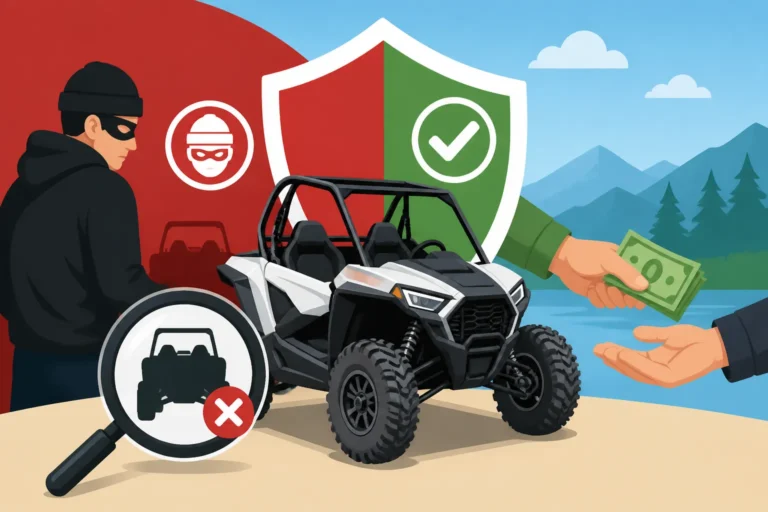
Before you hand over any cash, it's also a very good idea to [Running a Stolen Vehicle Check Before You Hand Over Cash]. You can often do this through services that check national police databases using the VIN. Without a title, there's no easy provincial registry to verify if the machine has any existing liens, so this kind of due diligence is paramount.
Dealing with Liens and Financing
One of the biggest differences between a titled vehicle and a registered ORV in BC is how liens are recorded. For highway vehicles, any lender's interest is publicly noted on the title. This makes it easy for a prospective buyer or another lender to see if there's an outstanding loan against the vehicle.
For ORVs, because there's no official title, there's no central, government-maintained public registry for liens. If you finance an ORV, the lender will still have a security interest in your machine, but it won't be recorded on a "title" document with the provincial government. Instead, lenders will typically register their security interest under the Personal Property Security Act (PPSA), which is a separate system for recording liens on movable property.
This means if you're buying a used ORV, you can't simply check the "title" for liens. You would need to perform a PPSA search (often through a service like BC Online) using the machine's VIN to see if any security interests have been registered against it. If you're a lender, you'll need to register your interest through the PPSA system to protect your investment. This extra step is critical for both buyers and lenders to ensure a clear transaction and avoid inheriting someone else's debt.
Understanding that your ORV gets a Certificate of Registration and not a title is the first step in navigating the world of off-road vehicle ownership in BC. It's a different system, but once you grasp the importance of your Certificate and a complete paper trail of bills of sale, you'll be well-equipped to buy, sell, and enjoy your machine with confidence.
Disclaimer
This article is for general informational purposes only and does not constitute professional advice. Laws, prices and regulations vary by location and change over time. Consult a qualified professional for guidance on your specific situation.