BC Registration for a Machine From Alberta
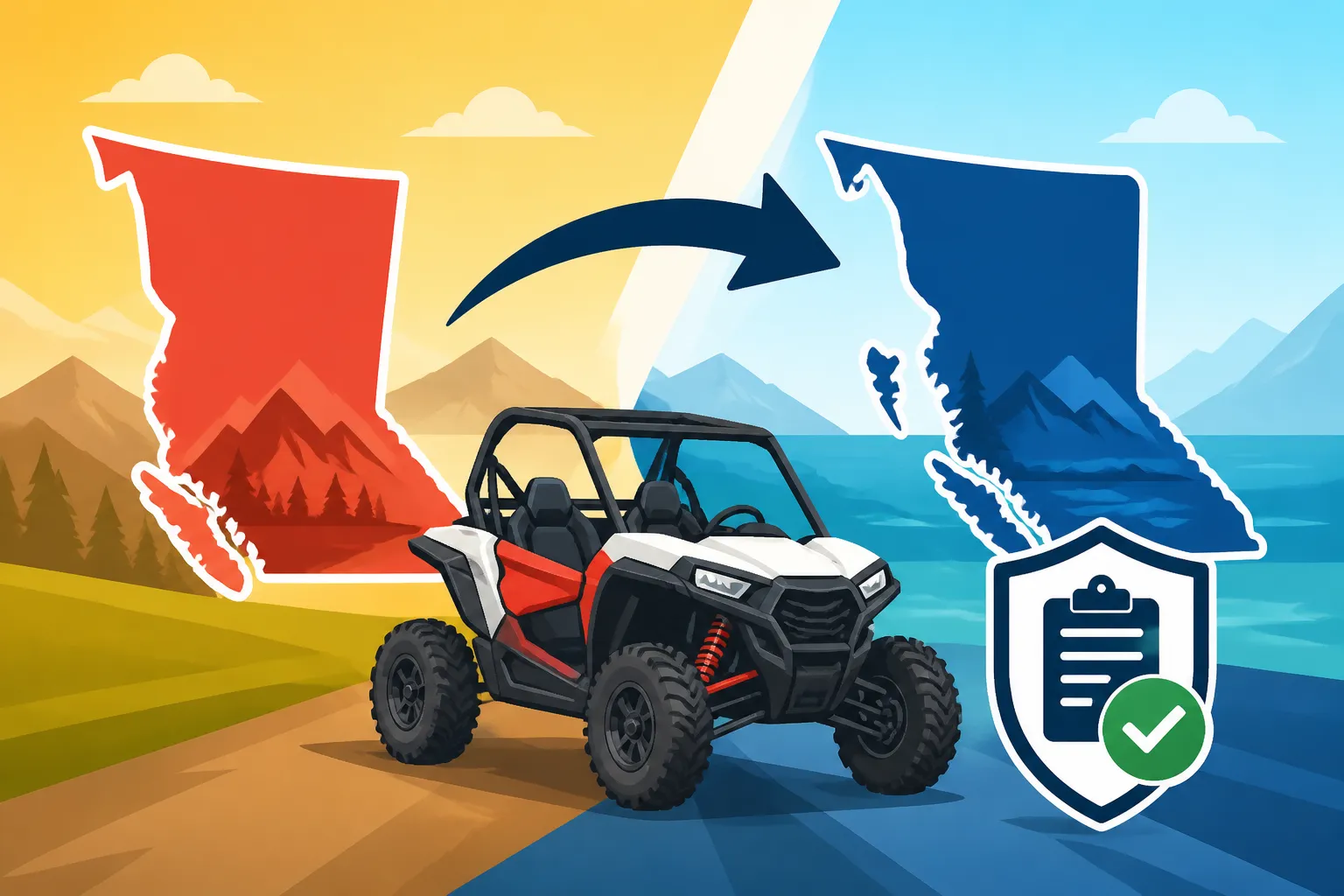
Moving an off-road vehicle (ORV) like an ATV or UTV from Alberta to British Columbia can feel like stepping into a different universe when it comes to paperwork. While you might be used to a more relaxed approach to registration in Alberta, BC has mandatory rules that can trip up even the most seasoned rider. This guide will walk you through the specific requirements and common challenges you'll face when registering an off-highway vehicle (OHV) from Alberta in British Columbia, ensuring you're ready to hit the trails legally.
Understanding the Registration Divide: Alberta vs. BC
It's completely normal to feel a bit bewildered when you realize how different the systems are between provinces. What worked in Alberta for years might not cut it here in BC, and that can be a real headache, especially if you've owned your machine for a long time.
How Alberta Handles OHV Registration
In Alberta, the concept of "registration" for an off-highway vehicle is often much less formal than what you'll encounter in BC. Many riders in Alberta simply register their off-highway vehicles for a VIN declaration, primarily for security or insurance purposes, but it's not always a central, mandatory registry that proves ownership in the same way BC's system does. For private sales, especially older ones, the documentation might be as simple as a handwritten note or even just a verbal agreement, particularly if the machine has stayed within a family or a close-knit group of friends. This can lead to a situation where a perfectly legitimate machine in Alberta has a very sparse paper trail, which then becomes a hurdle when you try to bring it into BC. It's not that Alberta's system is wrong, it's just designed differently, and that difference is where the friction often arises.
Why BC's Off-Road Vehicle Act Changes the Game
British Columbia's Off-Road Vehicle Act, which came into full effect in 2015, established a comprehensive and mandatory registration system for all off-road vehicles that operate on Crown land, including Forest Service Roads. This means that if you plan to ride your ATV or UTV anywhere beyond your own private property in BC, it absolutely must be registered. The cornerstone of this system is the Certificate of Registration, a document issued by ICBC through Autoplan brokers, which serves as your proof of ownership and registration. Unlike some jurisdictions that might offer a "title" document, BC's system relies on this certificate and a robust chain of ownership to track machines. The province wants to know who has owned the machine every step of the way, making sure there are no gaps or ambiguities in its history. This fundamental difference in philosophy – from Alberta's more hands-off approach to BC's mandatory, tracked system – is what makes the transfer process a bit more involved. [BC Registration Became Mandatory in 2015].
Essential Steps for Registering Your Alberta ATV/UTV in BC
When you bring your machine over the provincial border, the process starts with understanding what BC considers valid proof of ownership and how to present it. It can feel like a bureaucratic maze, but breaking it down into steps makes it much more manageable.
Gathering Your Alberta Proof of Ownership
This is often the trickiest part for our Alberta friends. BC requires a clear and continuous chain of ownership, going all the way back to the original purchase, if possible. For a machine coming from Alberta, this means you'll need the original bill of sale from when you bought it, and ideally, bills of sale from every previous owner. If the machine was originally purchased new from a dealership in Alberta, that initial invoice is gold. If it's been through several private hands, you'll need those bills of sale too. Many Albertans don't keep such meticulous records for machines that don't have formal highway registration, so finding these documents can be a challenge.
Think about it: BC is essentially asking for a paper trail that might not have been a priority in Alberta. If you only have your bill of sale, but the person you bought it from didn't have theirs, that's where the "gap" in the ownership chain starts. This is where you might need to get creative, but always legally, with how you demonstrate your claim to the machine. A simple handwritten receipt might be enough for a private sale in Alberta, but BC brokers often look for more detail, including buyer and seller names, addresses, VIN, date, and price. [BC Bills of Sale for Every Prior Owner]. [BC Ownership Chains Going Back Decades].
The Role of an Autoplan Broker in BC
Once you have your documents in hand – or at least, the best collection you can muster – your next stop is an ICBC Autoplan broker in British Columbia. These are the only authorized agents who can process ORV registrations. Don't head to Service BC or a general government office; they can't help you with this specific task. The broker will act as your guide through the provincial system, reviewing your paperwork, verifying your identity, and ultimately submitting your application to ICBC.
It’s important to understand that not all Autoplan brokers are equally familiar with ORV registration, especially for out-of-province machines with potentially spotty paperwork. While they all can do it, some might handle more ORV transactions than others, and therefore have more experience with the nuances. If you find one broker struggling or unsure, don't hesitate to try another one. Many riders find success with brokers in smaller, more rural communities where ORV use is common, as they tend to be more experienced with these types of applications. [BC Autoplan Brokers Handle ORV Registration].
The Physical Inspection and VIN Verification
Before your registration can be finalized, the Autoplan broker will need to physically inspect your off-road vehicle. This isn't a mechanical safety inspection, like you might get for a highway vehicle in some places; it's purely to verify the Vehicle Identification Number (VIN) on the machine matches the documentation you've provided. The broker or a designated staff member will come out to your vehicle, usually in the parking lot of the insurance office, to visually confirm the VIN.
Make sure your VIN is clean, accessible, and clearly legible before you go. Sometimes, on older machines or those that have seen a lot of mud and grime, the VIN can be obscured. Take the time to clean any dirt or rust from the VIN plate or stamping. If the VIN is missing, obscured, or tampered with, this can create a significant problem and might even prevent registration until the issue is resolved, potentially requiring a provincial inspection or even a police report. This step is critical because it links your physical machine directly to the paper trail you're providing.
Navigating Missing Paperwork and Proving Ownership
This is where the rubber meets the trail for many riders bringing machines from Alberta. It's a common scenario: you bought your quad years ago, shook hands, paid cash, and never thought twice about a formal bill of sale. Now, BC wants every piece of paper, and it feels like you're climbing a mountain without a rope.
The Challenge of a Missing Alberta Bill of Sale
Let's be real: for many private sales, especially older ATVs or UTVs in Alberta, a formal, detailed bill of sale simply doesn't exist. You might have a scribbled receipt, an email exchange, or absolutely nothing beyond your memory. This is completely understandable, as the registration requirements were different in Alberta. However, in BC, the lack of a proper bill of sale from your purchase (or from previous owners) creates a break in the ownership chain that the provincial registry needs to see. Without it, the broker has no official document proving that the machine transferred to you from its last known owner. This doesn't mean you're out of luck, but it does mean you'll need to take an alternative route to satisfy BC's requirements.
This is a common frustration point, but thankfully, there's a recognized process to deal with it. It’s about being prepared to prove your ownership in a different, legally sound way. While it might seem daunting, it's a hurdle many riders successfully clear. [BC Registration Without a Bill of Sale].
Using a Statutory Declaration to Bridge the Gap
When a bill of sale is missing, either from your purchase or an earlier transaction in the machine's history, a statutory declaration becomes your best friend. This is a sworn legal document where you (or ideally, the person who sold you the machine, if they're still available) declare under oath that you are the rightful owner of the off-road vehicle and explain how you acquired it. It needs to include specific details about the machine (VIN, make, model), the circumstances of the purchase (date, approximate price, from whom), and a statement that no other parties have a claim to the machine. The declaration must be signed in the presence of a Commissioner for Oaths or a Notary Public.
You can often find templates for a statutory declaration online. Websites like LawDepot offer customizable templates that can guide you through the process of creating such a document, ensuring it contains all the necessary legal language. Filling out a template from LawDepot can ensure you don't miss any critical details that the broker will be looking for. If you can get the person who sold you the machine to sign a statutory declaration, that's ideal. If not, you as the current owner can complete one, explaining why you don't have the original bill of sale and asserting your ownership. Remember, this document carries legal weight, so accuracy and honesty are paramount. [BC Statutory Declaration for an ORV]. [When a Declaration Replaces a Missing Bill of Sale].
The Importance of a Clear Chain of Ownership
BC's system is very particular about the "continuity of ownership." This means that every transfer of the machine from one owner to the next needs to be documented, either by a bill of sale or a statutory declaration. If you bought your quad from "Fred," and Fred bought it from "Joe," the broker wants to see documentation showing Joe sold it to Fred, and Fred sold it to you. This can be particularly challenging for older machines that have changed hands many times in Alberta with minimal paperwork.
If there's a gap in the chain where an owner is unaccounted for or cannot provide documentation, you might need to complete multiple statutory declarations – one for each missing link in the chain, or one comprehensive one that details the entire history as best as you know it. This is where a resource like LawDepot can be invaluable, as you can generate multiple specific documents as needed, helping you reconstruct the ownership narrative. The goal is to provide the broker with enough evidence that they are comfortable asserting you are the undisputed current owner. They are essentially playing detective to prevent stolen machines from being registered, so expect thorough questioning if your paperwork is less than perfect.
What Happens After Registration (and what to expect)
Once you've navigated the paperwork, the VIN verification, and perhaps a statutory declaration or two, you'll be on the home stretch. Getting your machine registered correctly means you can finally enjoy BC's incredible trail networks without looking over your shoulder.
Receiving Your BC Certificate of Registration
Once your application is approved and processed by the Autoplan broker, you will be issued a BC Certificate of Registration. This is a crucial document that serves as your official proof of ownership and registration in British Columbia. Unlike a "title" document that some jurisdictions use, BC's system issues this certificate, which details your machine's VIN, make, model, and your information as the registered owner. It's essentially the equivalent of a vehicle's registration papers for highway use, but specifically for off-road vehicles.
This document is your ticket to legally riding on Crown land and Forest Service Roads. It's not just a formality; it's a legal requirement, and law enforcement can ask to see it. Keep it in a safe place, ideally with your riding gear or in a waterproof pouch on your machine when you're out on the trails. It's proof that you've done your due diligence and that your Alberta-born machine is now a fully legitimate BC off-road vehicle. [What the Broker Hands You After You Register]. [BC's Certificate of Registration Explained].
Understanding BC's Plate and Decal Requirements
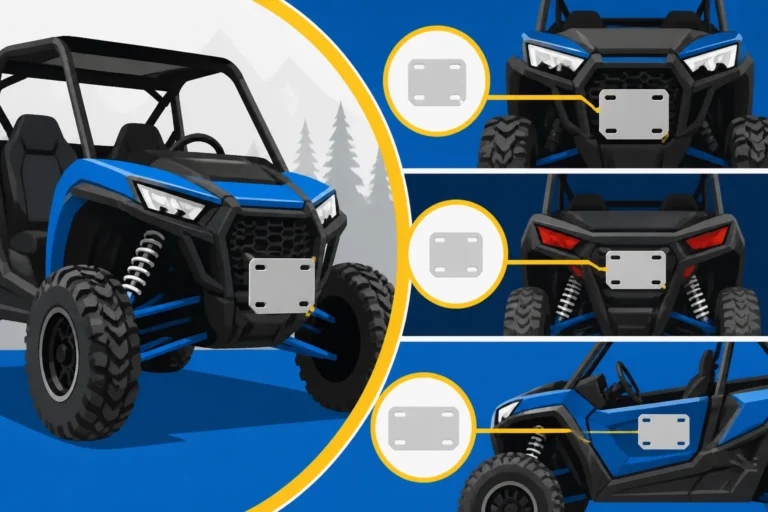
Along with your Certificate of Registration, you'll also receive a small, distinct number plate and a decal. The number plate is unique to your machine and must be displayed clearly. BC regulations state that the plate needs to be mounted horizontally on the front, back, or left side of your ORV. It must be visible and legible at all times, not obscured by mud, cargo, or anything else. The decal, typically a smaller sticker, is usually applied directly onto the ORV plate itself, indicating the year the machine was registered (though remember, BC registration is a one-time thing, not an annual renewal).
Proper placement is key to avoiding issues with enforcement officers. Take a moment to consider where on your ATV or UTV the plate will be most visible and least likely to get damaged or covered during typical riding conditions. For many quads, mounting it on the rear rack or front bumper is common, as long as it's not hidden. For side-by-sides, there are often designated areas, or you might need to get creative with brackets. Ensure that you have the right tools and a secure mounting spot to prevent it from falling off on a bumpy trail. [BC ORV Number Plates and Decals]. [BC Plate Placement on Front, Back or Left].
Ongoing Responsibilities and Avoiding Fines
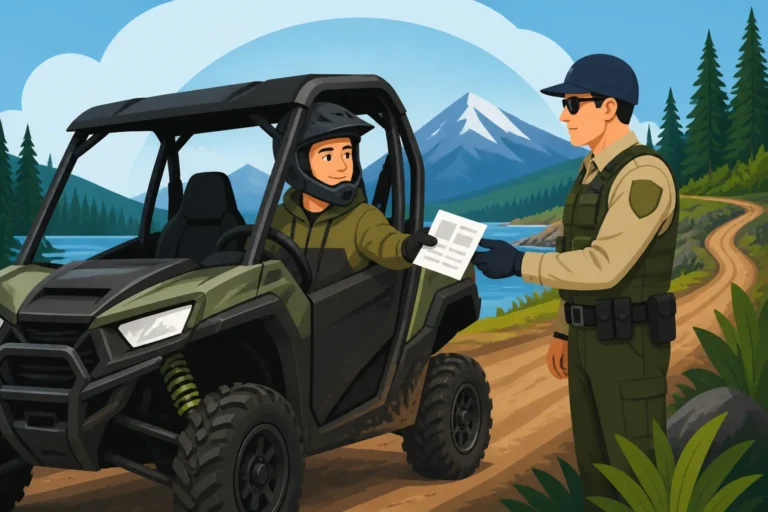
Getting your ORV registered from Alberta to BC is the first big step, but your responsibilities don't end there. First and foremost, you must always carry your Certificate of Registration (or a copy) and valid photo identification with you whenever you're operating your machine on Crown land or Forest Service Roads. Officers can and do stop riders to check for these documents. [BC Riders Must Carry the Certificate].
Beyond registration, remember that BC has rules regarding insurance. While registration is a one-time fee, you'll need to carry specific liability insurance for certain types of riding, such as on Forest Service Roads. This isn't part of the initial registration fee but is an additional requirement you'll need to fulfill to ride legally in those areas. Lastly, familiarize yourself with other ORV regulations in BC, such as helmet laws, rules for youth riders, and environmental protection guidelines. Being registered means you're recognized, but compliance with all rules ensures you enjoy your riding safely and legally, avoiding hefty fines for non-compliance. [BC Penalties for Riding Unregistered].
Here's a quick overview of documents you'll likely need and what to do if they're missing:
| Document Type | Purpose | If Missing (Solution) | Key Details |
|---|---|---|---|
| Bill of Sale (Your Purchase) | Proves you purchased the machine from the seller. | Statutory Declaration (LawDepot can help with templates) | Must include VIN, buyer/seller info, date, price, signatures. |
| Bill of Sale (Previous Owners) | Establishes a clear chain of ownership. | Statutory Declaration (from previous owner if possible, or current owner explaining gap) | Essential for proving the machine's history and avoiding ownership disputes. |
| VIN | Unique identifier for your specific machine. | Physical inspection by broker. | Must be clear, legible, and match documentation. Ensure it's not tampered with. |
| Photo ID | Verifies your identity as the owner. | Must be valid government-issued ID. | Present to the broker and carry when riding. |
| ICBC Application Form | Standard form filled out at the broker's office. | Broker will provide and help complete. | Contains machine details, owner information, and declarations. |
Disclaimer
This article is for general informational purposes only and does not constitute professional advice. Laws, prices and regulations vary by location and change over time. Consult a qualified professional for guidance on your specific situation.