BC Registration When the VIN Is Gone
It’s a scenario that can make any off-road enthusiast’s heart sink: you’ve got a fantastic ATV or UTV, perhaps a cherished hand-me-down or a great deal you picked up years ago, but when it comes time to register it here in British Columbia, you realize the all-important Vehicle Identification Number (VIN) is nowhere to be found. This can feel like a dead end, leaving you wondering if your machine is destined to sit idle. Don't despair! This guide will walk you through the frustrating, but often solvable, process of getting your off-road vehicle registered in BC, even when its VIN seems to have vanished into thin air.
The Frustration of a Missing VIN
Finding out your off-road vehicle lacks a legible VIN can be incredibly frustrating, especially when you’re just trying to do the right thing and get it registered. It’s not just a minor inconvenience; it feels like a huge roadblock. You might feel a mix of confusion, anger, or even a touch of panic, wondering if you've unwittingly bought a problem or if your perfectly good machine is now worthless in the eyes of the law.
The VIN, that unique 17-character code, is essentially your vehicle's fingerprint. It's crucial for tracking ownership, verifying the machine's history, and ensuring it hasn't been stolen. When it's missing or unreadable, it throws a wrench into the entire process, making it difficult for authorities and insurance brokers to confirm who truly owns the machine and that it’s legitimate.
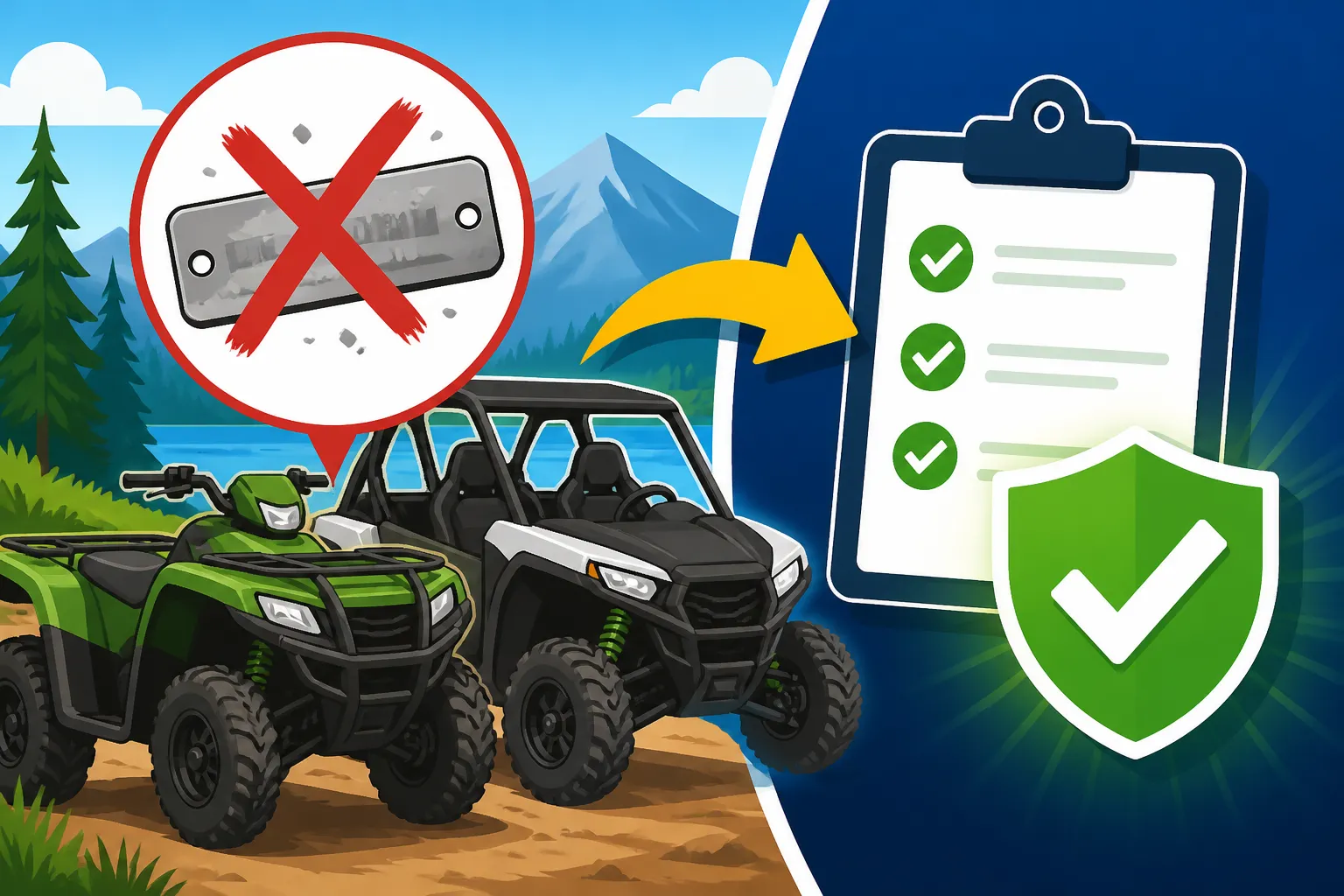
There are several reasons why a VIN might be gone. Sometimes, it's simply age and environmental wear and tear – rust, corrosion, or years of riding through mud and brush can slowly erase the stamped numbers. Other times, the VIN plate or sticker might have been damaged in an accident or even removed during a repair or restoration project. While it's important to be aware that VIN tampering can indicate a stolen vehicle, many cases of missing VINs are perfectly legitimate, especially with older machines. You're left with a machine you love, but without the key piece of identification required for official recognition. This often leads to questions about the true nature of ownership, especially since [BC Does Not Title an ATV] in the traditional sense, relying instead on the Certificate of Registration and a solid paper trail.
Understanding BC's Approach to Missing VINs
British Columbia's system for off-road vehicle registration is unique, as it doesn't involve a traditional title document like you might find for highway vehicles or in other provinces. Instead, our system relies on a [BC's Certificate of Registration Explained] which, while serving a similar purpose, operates under a different framework. This is a crucial distinction when dealing with a missing VIN. Without a formal title that might list alternative identifiers, the VIN becomes even more paramount for establishing the machine's identity and proving its history.
When you approach an Autoplan broker with an ORV that has no VIN, they aren't just looking for one piece of paper. They're trying to piece together a clear and continuous chain of ownership. This is often referred to as the "continuity of ownership" and it's a significant hurdle if you have no VIN and incomplete paperwork. The broker's primary concern is to ensure the machine isn't stolen and that you are indeed the rightful owner. They need to be absolutely certain before they can issue that Certificate of Registration.
The provincial government's guidelines, administered through ICBC and its network of Autoplan brokers, do account for situations where a VIN is legitimately missing. They understand that not every machine has a pristine 17-digit code clearly visible. However, this doesn't mean it's a walk in the park. It means you'll need to provide alternative evidence and potentially go through a more rigorous verification process. This often involves submitting a Statutory Declaration, which becomes the linchpin of your application. The good news is that the system isn't designed to outright reject your machine just because of a missing VIN, but it does require diligence and often a bit of detective work on your part.
Steps to Register an ATV/UTV with a Missing VIN
Navigating the registration process for an off-road vehicle with a missing VIN in BC requires patience and a methodical approach. It's not as straightforward as bringing in a new bill of sale, but it's far from impossible. Here’s a breakdown of the steps you'll likely need to take.
Step 1: Gather Every Piece of Information You Have
Before you even step foot in an Autoplan broker's office, you need to collect every scrap of information and documentation related to your machine. Think of yourself as a detective building a case for your ownership.
- Any Remaining Identifiers: Even if the main VIN is gone, inspect your machine thoroughly for any other numbers. This could be an engine number, a frame number, or even partial VINs in different locations. Sometimes manufacturers stamp numbers in multiple spots, and one might have survived better than the primary one. Take clear photos of any numbers you find.
- Bills of Sale and Receipts: Dig up every single bill of sale you have, no matter how old or informal. Even a handwritten receipt from a private sale years ago can be invaluable. The goal is to establish a clear line of ownership from the previous owner to you. If you're missing these, read up on [BC Bills of Sale for Every Prior Owner] and [Why Every Past Sale Has to Be Documented].
- Photos of the Machine: Take detailed photos of your ATV or UTV from all angles. Include close-ups of any unique features, modifications, or identifying marks that could help distinguish it.
- Previous Registration or Insurance Papers: If the machine was ever registered or insured in another province or even informally in BC, those documents could list the VIN or other identifying details.
- Witness Statements: If you acquired the machine from someone you know, or if others can attest to your ownership or the machine's history (e.g., how the VIN was lost due to rust), a written statement from them can bolster your case.
Every little detail helps paint a picture of legitimate ownership and confirms the machine's identity.
Step 2: Connect with a Knowledgeable Autoplan Broker
This step is absolutely critical. Not all Autoplan brokers handle ORV registration with the same frequency, and some might be more experienced than others with complex cases like a missing VIN. You want a broker who understands the intricacies of the Off-Road Vehicle Act and is willing to work with you.
Don't just walk into the first broker's office you see. It might be worth calling around to explain your situation and ask about their experience with BC Registration When the VIN Is Gone. Some brokers specialize in these types of registrations and can offer invaluable advice. They are your primary point of contact with the system and will guide you through what specific documents or additional steps ICBC might require. They'll also be able to advise you on [BC ORV Registration Questions Brokers Hear] and what specific forms will be necessary.
Step 3: Prepare Your Statutory Declaration
When a VIN is missing and you don't have a perfect paper trail, a Statutory Declaration becomes your most powerful tool. This is a sworn statement of facts, made under oath, declaring that you are the rightful owner of the machine and explaining the circumstances surrounding the missing VIN and your acquisition of the vehicle.
- What to Include: Your declaration needs to be comprehensive. It should detail how and when you acquired the machine, from whom (if known), the purchase price (or how it was otherwise obtained, like a gift), why the VIN is missing (e.g., rust, accident damage, removed during repair), and what efforts you've made to locate it or other identifying numbers. You also need to explicitly state that, to the best of your knowledge, the machine is not stolen and that you are its sole and rightful owner.
- Drafting the Declaration: For many, the thought of drafting legal paperwork from scratch is intimidating. Services like LawDepot offer user-friendly templates and guides specifically for statutory declarations, which can be immensely helpful in ensuring you cover all the necessary legal points. You can tailor one of their templates to your specific situation, making sure every detail about your machine and the circumstances of the missing VIN are clearly laid out.
- Execution: Once drafted, you'll need to sign this declaration in front of a Commissioner for Oaths or a Notary Public. They will witness your signature and administer the oath, making the document legally binding. Carefully review your draft, perhaps even using a reputable platform like LawDepot to ensure it meets all the standard requirements for such a document before you have it commissioned. This document effectively fills the gaps in your paper trail and provides the broker and ICBC with a sworn account of the machine's history and your ownership claim. Remember, honesty is paramount in a statutory declaration; any false statements can lead to severe legal consequences.
Step 4: Machine Inspection and Verification (If Required)
In some cases, especially when the VIN is completely absent and other identifiers are unclear, ICBC or the broker might require a physical inspection of the machine. This isn't a safety inspection like for a highway vehicle; it's purely for identification purposes.
An ICBC representative or sometimes even a police officer might be asked to visually inspect the machine to confirm its make, model, and any other identifying features you've listed in your declaration. They might look for hidden numbers or unique characteristics to cross-reference with their databases. This step is about verifying that the machine you are presenting matches the description in your paperwork and that no signs indicate it is stolen. The broker will advise you if this step is necessary and how to arrange it.
Step 5: The Registration Decision and Next Steps
Once all your documentation, including the [BC Statutory Declaration for an ORV], has been submitted and any required inspections completed, the broker will submit your application to ICBC for review. This review process can take some time, as complex cases often require a closer look.
- Successful Registration: If your application is approved, ICBC may assign a new VIN to your machine if no other satisfactory unique identifier exists, or they might register it using a different, established serial number. You will then receive your Certificate of Registration and the required [BC ORV Number Plates and Decals], officially making your machine legal for riding on Crown land and designated trails. Remember, once registered, [BC Registration Lasts as Long as You Own It], so you won't face annual renewals.
- If Denied: In rare instances, an application might be denied if there are significant doubts about ownership or if the machine is found to be stolen. If this happens, the broker should be able to provide reasons for the denial. At that point, you might need to seek legal advice or further investigate the machine's history. It's a challenging situation, but understanding the specific reasons for denial is the first step toward resolution.
Preventing Future Headaches and Other Considerations
Once you've successfully navigated the complex waters of registering an ORV with a missing VIN, you'll likely want to do everything you can to prevent similar headaches in the future. The experience highlights just how critical proper documentation and clear identification are in the world of off-road vehicles.
One of the best preventative measures is to always, always obtain a comprehensive bill of sale whenever you purchase an ATV or UTV, even from a private seller or a family member. Ensure it clearly states the VIN (if present), make, model, year, sale price, and the full names and contact information of both buyer and seller. This simple piece of paper is the cornerstone of your [BC Transfer of Ownership Explained] and helps maintain the "ownership chain" that BC's registration system relies on. Missing links in this chain are what often lead to difficulties, especially for [BC Machines With No Paperwork] purchased decades ago.
Furthermore, once your machine is registered and assigned an identifier, keep your Certificate of Registration safe and readily accessible. [BC Riders Must Carry the Certificate] whenever operating on Crown land. Making a digital copy and keeping a physical one in a waterproof bag on your machine is a smart practice. Remember that [BC Registration Became Mandatory in 2015], so any machine operating off private land needs to be accounted for.
Even if you have other documents, creating a detailed statutory declaration, possibly with the help of a tool like LawDepot, can strengthen your case and demonstrate your legitimate claim. For instance, if you purchase an older machine with a very faded VIN, proactively obtaining a clear bill of sale and perhaps even taking photos of the VIN before it completely disappears can save you immense trouble down the line. It's all about being proactive and creating a robust paper trail that leaves no room for doubt about your ownership and the machine's identity. And remember, unlike highway vehicles, [BC Has No Annual Renewal Sticker] for ORVs, but maintaining your documentation remains crucial for any future sale or transfer.
Disclaimer
This article is for general informational purposes only and does not constitute professional advice. Laws, prices and regulations vary by location and change over time. Consult a qualified professional for guidance on your specific situation.