BC Registration Processing Time
If you've recently purchased an ATV or UTV in BC, or perhaps you're finally getting around to registering that old quad that's been in the family for ages, you might be wondering how long it actually takes to get everything official. The frustration of wanting to hit the trails but being stuck in paperwork limbo is real, and nobody wants to be pulled over for an unregistered machine. This guide will walk you through the typical processing times for off-road vehicle (ORV) registration in British Columbia, what factors can speed things up or slow them down, and how you can prepare to make the process as smooth as possible.
Understanding the BC ATV Registration Process
Getting your ATV or UTV registered in British Columbia isn't always as simple as a quick trip to a government office. Unlike highway vehicles, ORV registration has its own unique set of rules and a slightly different process. Many riders mistakenly believe it's similar to renewing their car's insurance, but there's a lot more to it, especially when dealing with machines that might have changed hands multiple times without formal documentation. The core idea is to establish a clear chain of ownership, which can be the biggest variable in your "processing time."
The Initial Steps and Required Documents
Before you even step foot into an Autoplan broker's office, there's a crucial preparation phase that significantly impacts how long your registration will take. Think of this as your personal processing time, which is entirely within your control. The biggest hurdle for many is gathering all the necessary paperwork, especially for older machines or those bought privately. You'll need proof of ownership, which usually means a bill of sale or [BC Bills of Sale for Every Prior Owner] tracing back to the original purchase or a point where formal documentation was last established. If you're missing documents, or if your machine was a gift, you might need a [BC Statutory Declaration for an ORV].
The Autoplan broker needs to confirm who owns the machine before they can register it in your name. This isn't just a formality; it's a legal requirement to prevent theft and ensure proper ownership. If you show up with incomplete or questionable paperwork, the broker simply cannot proceed, and your "processing time" effectively grinds to a halt until you can provide what's needed. This might involve tracking down previous owners, gathering old receipts, or getting a statutory declaration signed, all of which add to your overall timeline.
The Role of the Autoplan Broker
Once you have all your ducks in a row – or at least you think you do – your next stop is an Autoplan broker. These are the folks authorized by ICBC to handle [How to Register an ATV in BC]. They're trained to navigate the intricacies of the [What the Off-Road Vehicle Act Covers in BC] and its associated regulations. When you arrive, they'll review all your documents, verify the machine's Vehicle Identification Number (VIN), and enter all the information into the system.
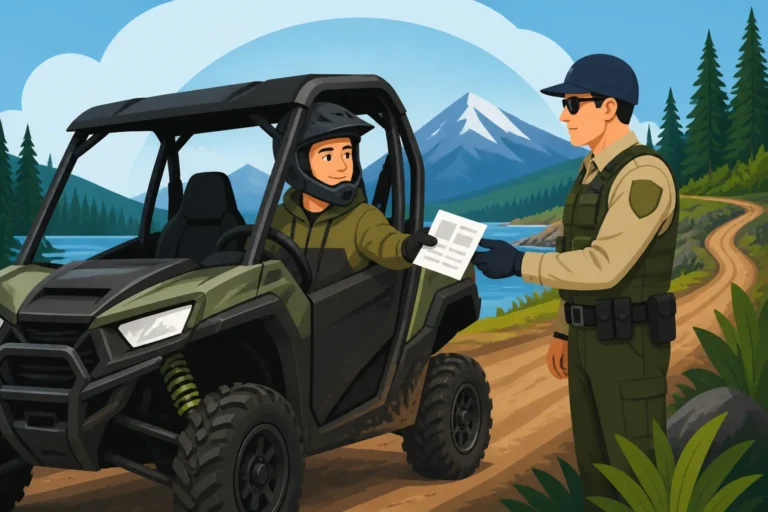
For a straightforward case – say, you've just bought a brand-new machine from a dealer, or you have a clear, documented chain of ownership for a used one – the actual "processing" at the broker's counter can be quite quick, often within the same visit. The broker can usually issue your [BC's Certificate of Registration Explained] and sometimes even your [BC ORV Number Plates and Decals] on the spot. The immediate registration takes effect the moment the broker completes the transaction in the system. However, the complexity of your situation, particularly concerning ownership documentation, is the real determinant of how long your visit will be and whether there are any delays after you leave.
Factors Influencing Your Registration Timeline
While a perfectly documented machine might sail through registration in an hour or less, most people experience some bumps in the road. These bumps are what extend the perceived "processing time," often due to challenges in proving ownership or addressing administrative details.
Completeness of Your Paperwork
This is arguably the single biggest factor influencing how long your registration takes. If you walk into the broker's office with every single document neatly organized – the bill of sale from the person you bought it from, a copy of their bill of sale, and so on, all the way back to 2015 when [BC Registration Became Mandatory in 2015] – your experience will be swift. The broker can verify everything quickly, and your registration can be completed almost immediately.
However, if you're missing even one link in that chain of ownership, or if a bill of sale is poorly written, unsigned, or lacks critical information, the process stalls. The broker cannot make assumptions or proceed without proper legal documentation. They might advise you to obtain a [BC Statutory Declarations Cost $15] to declare ownership under oath, which means another trip to a notary public or commissioner of oaths, and then another trip back to the broker. Each of these steps adds days or even weeks to your overall timeline, depending on how quickly you can get the required forms filled out and signed.
Complexity of Your Ownership History
Not all ORVs have a simple past. Some machines have been passed down through families, purchased for cash decades ago, or traded informally without any paper trail. This is where the "continuity of ownership" becomes a real headache. [BC's Continuity of Ownership Problem] is a common challenge for many long-time ORV owners. The broker needs to establish a clear line from the last registered owner (if there ever was one) to you. If there's a gap, they can't just wave it away.
Imagine you bought a quad twenty years ago from a friend, and that friend bought it from someone else, and neither transaction involved a formal bill of sale. Now, you need to register it. The broker will require a statutory declaration that essentially says, "I, [Your Name], declare under oath that I bought this machine from [Previous Owner's Name] on [Date], and I have been the rightful owner since." This declaration might need to be supported by other forms, such as a sworn statement from a prior owner if they're still around. Creating these documents can take time, especially if you use a service like LawDepot to generate a legally sound statutory declaration form, which ensures all the necessary legal language is included. The more complex the history, the more declarations or supporting evidence you might need, each one adding to your total processing time.
What Happens After Your Broker Visit?
Once you've presented all your documents and the broker has entered everything into the system, what actually happens behind the scenes, and when can you expect to physically receive your proof of registration?
Receiving Your Certificate of Registration
For the vast majority of straightforward registrations, your [What the Broker Hands You After You Register] – the Certificate of Registration – is issued on the spot. This is the official document confirming your machine is registered with the province. It's a small, durable card, similar to a driver's licence or vehicle registration for a car. You absolutely must [BC Riders Must Carry the Certificate] whenever you're riding on Crown land or other areas where registration is required.
In rare and very complex cases, if the broker needs to refer your situation to ICBC for further review (perhaps due to a highly unusual ownership history or a discrepancy they can't resolve), there could be a delay of several days or even weeks before your Certificate is mailed to you. However, this is not typical for most registrations. Usually, if the broker accepts your paperwork and completes the transaction, you'll walk out with your Certificate in hand, ready to ride legally.
Getting Your ORV Number Plate and Decals
Along with your Certificate of Registration, you'll also receive your physical ORV number plate and the corresponding decal. The number plate is a small, rectangular plate that must be prominently displayed on your machine – either on the front, back, or left side, clearly visible. The decal often adheres to the plate itself, indicating the current registration period (though remember, [BC Has No Annual Renewal Sticker]; once registered, it's good for as long as you own it!).
Just like the Certificate, the number plate and decal are usually given to you immediately at the broker's office. This means that if everything goes smoothly during your visit, you can leave with everything you need to legally operate your ORV. If for some reason the broker doesn't have plates or decals in stock (which is rare but can happen in smaller offices or during peak times), they might arrange for them to be mailed to you, which would add a few business days to your waiting period. Always confirm with your broker if they have the physical items in stock to avoid a second trip or a wait for mail delivery.
Expediting Your Registration: Tips for a Smoother Process
Nobody enjoys waiting, especially when adventure calls. Fortunately, there are many proactive steps you can take to ensure your BC ATV registration process is as quick and painless as possible. The key takeaway here is preparation, preparation, preparation!
Pre-Planning and Document Organization
The absolute best way to minimize your registration processing time is to be meticulously prepared before you even set foot in an Autoplan broker's office. Start by gathering every single piece of paper related to your ORV's ownership history. This includes original bills of sale, transfer of ownership documents, previous registration papers (if any from other provinces), or even old handwritten receipts. Don't assume anything is unimportant; bring it all.
If you know you have gaps in your paperwork, address them proactively. For example, if you bought your quad from a private seller years ago and only have a handshake agreement, you'll need to create a formal bill of sale. Even a basic [BC Bills of Sale for Every Prior Owner] form, clearly detailing the buyer, seller, date, machine details (VIN, make, model), and sale price, is infinitely better than nothing. Having these documents ready and organized in a folder will allow the broker to process your application efficiently, reducing the likelihood of being sent away to gather more information. Consider using the [BC Registration Paperwork Checklist] to ensure you haven't missed anything.
Leveraging Tools for Missing Documents
Sometimes, despite your best efforts, key documents are truly lost or never existed in the first place. This is a common scenario, especially with older machines. If you're struggling to create a valid bill of sale or need to declare ownership for a machine with a fragmented history, legal document services can be incredibly helpful. Tools like LawDepot allow you to generate professional, legally compliant documents such as a Bill of Sale or a Statutory Declaration without needing to consult a lawyer or draft it from scratch.
By using such a service, you can fill in the necessary details online and print out a document that meets the legal requirements for BC registration. For a [BC Statutory Declaration for an ORV], for example, you'd fill out the form, print it, and then take it to a Commissioner for Oaths or a Notary Public to have it officially witnessed and signed. This ensures that when you return to the Autoplan broker, you have a solid, verifiable document in hand, making their job easier and significantly cutting down on your registration processing time. Don't let missing papers be the reason your adventure is delayed!
Here's a quick reference for common documents and their impact:
| Document Type | Description | Impact on Processing Time (at Broker) |
|---|---|---|
| New Machine (Dealer) | Dealer provides all necessary sales documents, proof of purchase, and possibly even assists with the initial setup. | Very Fast (often < 30 mins) |
| Used Machine (Complete) | You have a clear, signed Bill of Sale from the immediate prior owner, along with their previous registration or proof of purchase. The VIN is clear. | Fast (30-60 mins) |
| Used Machine (Missing Bill of Sale) | You have the machine, but no official Bill of Sale from the person you bought it from. This is a common situation that requires immediate attention. | Slow (requires extra steps) |
| Used Machine (Complex Ownership History) | Multiple prior owners, informal sales, or a long gap where no documentation exists. This can involve tracking down previous owners or requiring statutory declarations for multiple links in the chain. | Very Slow (requires significant prep) |
| Statutory Declaration | Required when you cannot provide a standard Bill of Sale or need to legally declare ownership. Must be signed in front of a Commissioner for Oaths or Notary Public. Services like LawDepot can help generate this form. | Adds time (extra trip, preparation) |
| Proof of Identity | Valid government-issued photo ID (e.g., driver's licence). This is standard for any ICBC transaction. | No delay (standard requirement) |
| Proof of Address | A document showing your current residential address if it's not on your ID, or if you've recently moved. | No delay (standard requirement) |
Ultimately, while the actual time an Autoplan broker spends entering your information into their system is typically minimal, the bulk of the "processing time" for BC ATV registration lies in your hands. It's all about how prepared you are with accurate, complete, and legally sound documentation.
Disclaimer
This article is for general informational purposes only and does not constitute professional advice. Laws, prices and regulations vary by location and change over time. Consult a qualified professional for guidance on your specific situation.