BC Has No Safety Inspection for ORVs
One of the biggest head-scratchers for new and experienced off-road vehicle (ORV) riders in British Columbia is navigating the registration process, especially when you come from a background where vehicles often need a mechanical safety inspection. It's a common point of frustration and confusion, so let's cut to the chase: if you're wondering what kind of safety check your quad or side-by-side needs to pass for registration here in BC, you're in for a surprise. This guide will walk you through the reality of ORV registration in our province, focusing on why a formal safety inspection isn't part of the deal and what is required instead.
The Common Misconception About ORV Inspections in BC
It's completely natural to assume that if you're registering a motorized vehicle with the province, there's going to be some form of safety inspection involved. After all, we're so used to it with our cars and trucks, right? That expectation can lead to a lot of wasted time and worry as riders try to figure out where to take their machine for a government-mandated check-up.
Why Riders Often Expect an Inspection Process
Think about it: when you buy a used car in BC, you often need a vehicle inspection certificate before you can register it and get insurance. This process ensures the brakes are good, the lights work, and the tires aren have enough tread. It's ingrained in our driving culture that safety is paramount, and a mechanical inspection is a key part of that. Riders coming from other jurisdictions might also have similar experiences, where off-road vehicles are subject to some form of technical verification before they can be legally used or registered. It creates a natural, logical assumption that the same rules or a similar process would apply to an ATV, dirt bike, or side-by-side.
This expectation often leads to questions like, "Where's the nearest inspection station for my quad?" or "Do I need to get a mechanic to sign off on anything?" People want to do things by the book, and the idea of a vehicle operating without some form of official safety stamp feels, well, a little unsettling to some. They're trying to be responsible riders, and an inspection seems like a core part of that responsibility, both for their own safety and for the safety of others on the trails.
The Reality: No Provincial Inspection for Registration
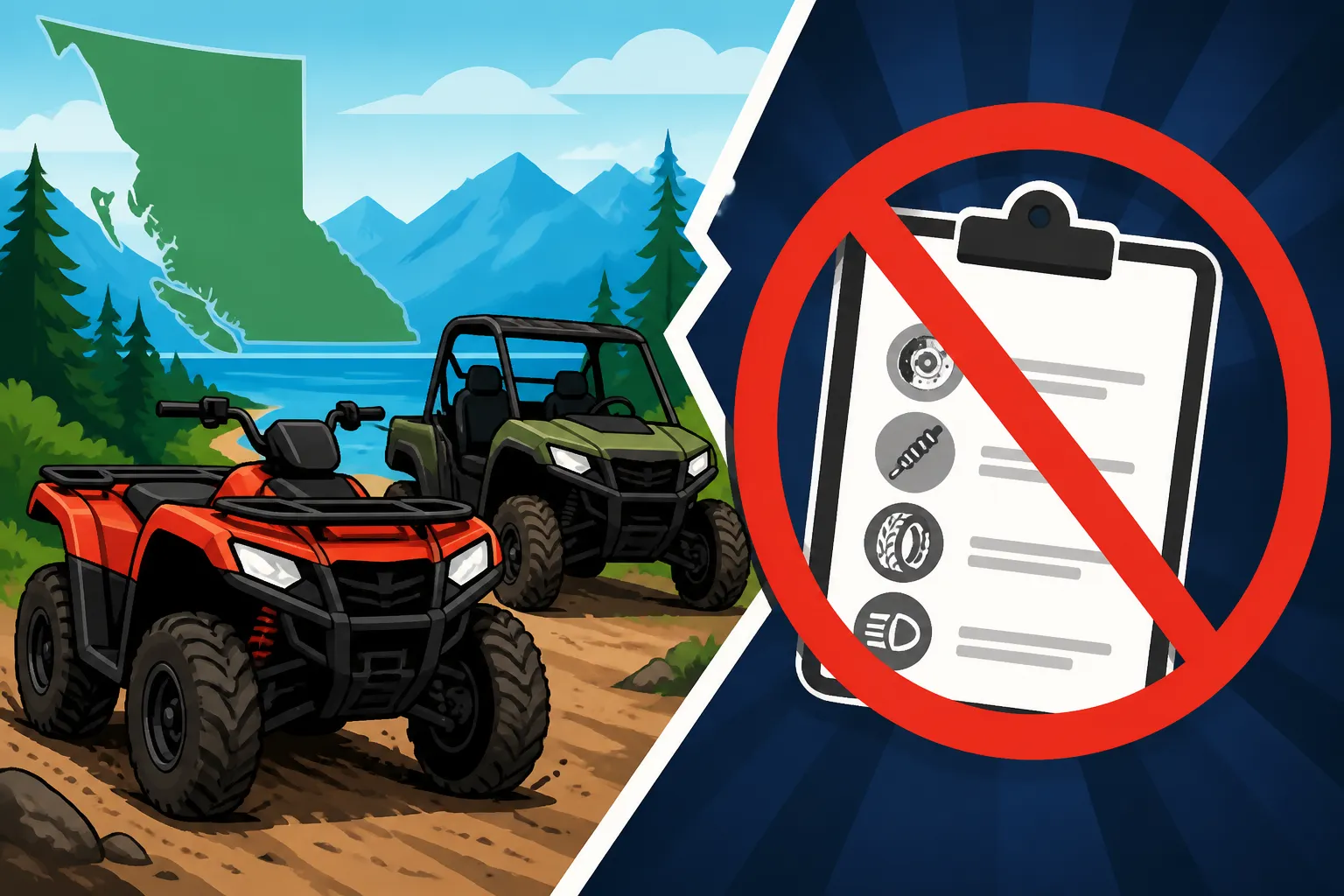
Here's the truth: when you head down to an Autoplan broker to register your ORV in British Columbia, they are not going to ask you for a safety inspection certificate. They won't send you to a mechanic, and they certainly won't perform any kind of mechanical check themselves. The provincial registration process for off-road vehicles, as outlined under the Off-Road Vehicle Act, simply does not include a requirement for a mechanical safety inspection. This can be a huge relief for some, and a bit of a head-scratcher for others.
What this means is that your registration isn't contingent on the working condition of your brakes, the brightness of your headlights, or the depth of your tire tread. The focus of the provincial government's registration program is on identifying the owner and the machine, ensuring accountability, and creating a traceable record of ownership. It's about who owns it and what it is, not its current state of repair. So, you can cross "find an ORV inspection station" off your to-do list for registration purposes.
What BC's ORV Registration Process Does Focus On
While there's no safety inspection, don't mistake that for a lack of requirements. Registering an ORV in BC is primarily about establishing a clear chain of ownership and accurately identifying the vehicle itself. This is where your paperwork and the machine's identifying numbers become incredibly important.
Proving Ownership and Identity
When you walk into an Autoplan broker's office, their main concern will be confirming that you are the rightful owner of the ORV you're trying to register. This typically involves providing a bill of sale or other proof of purchase. If you're buying a brand new machine from a dealer, this is usually straightforward, as they handle much of the initial paperwork. However, if you're purchasing a used ORV from a private seller, the ownership trail can get a bit more complex. The broker needs to see a continuous line of ownership from the original purchase right up to you. This means that if there are gaps in the paperwork, or if previous owners never registered the machine, you might have to gather documents stretching back decades. We often talk about [BC Ownership Chains Going Back Decades] for a reason!
In situations where a bill of sale is missing from a previous transaction, or if the original owner is no longer traceable, you might need to use a statutory declaration. This is a sworn statement, made before a legal professional or commissioner of oaths, affirming your ownership of the machine. It's a formal way of saying, "Yes, I honestly own this ORV, and here's why the usual paperwork isn't available." Keep in mind that [BC Statutory Declarations Cost $15] to have sworn, and while it's a small fee, getting the document filled out correctly is critical. Services like LawDepot can provide templates for statutory declarations, helping you ensure you include all the necessary information to satisfy the requirements for your broker. This whole process underscores that the province cares deeply about who owns it and how you came to own it, much more than its mechanical readiness for the trail. Getting your [BC Registration Paperwork Checklist] sorted out before you go in can save you a lot of grief.
Verifying Machine Information
Beyond proving who you are and that you own the machine, the broker will also meticulously verify the ORV's specific details. This includes the make, model, year, and crucially, the Vehicle Identification Number (VIN) or serial number. The VIN is like your ORV's fingerprint, unique to that specific machine, and it's essential for creating an accurate registration record. The broker will cross-reference this information to ensure it matches any documentation you provide and to check against databases.
This verification process also serves an important anti-theft function. By checking the VIN, the broker can help ensure that the machine you're registering hasn't been reported stolen. Imagine buying a quad, getting all your paperwork in order, only to find out it was stolen years ago! This is why it's always a good idea to perform your own checks, like [Running a Stolen Vehicle Check Before You Hand Over Cash], before you even complete a purchase. The broker's role is to ensure the integrity of the provincial registry, confirming that the machine's identity is legitimate and properly recorded. Without a clear and verifiable VIN, registration can become a real headache, regardless of the machine's physical condition.
Safety Responsibilities Still Rest with the Rider (and Other Rules)
The absence of a provincial safety inspection doesn't mean safety goes out the window. Far from it! Instead, the onus for ensuring your ORV is in good, safe working order shifts entirely to you, the rider. Moreover, there are still plenty of rules and regulations in place that govern how you operate your machine safely on public lands.
The Rider's Ongoing Duty for Machine Maintenance
Since no one is going to formally inspect your ORV for registration, it becomes your direct and personal responsibility to keep your machine in top shape. This isn't just about preventing breakdowns that leave you stranded in the backcountry; it's fundamentally about your safety and the safety of those around you. Regular maintenance includes routine checks on critical components like your brakes (pads, fluid levels), tires (pressure, tread wear), steering (loose components, alignment), and suspension. You also need to ensure all your lights are working, especially if you plan to ride at dusk or after dark.
Beyond the basics, you must also pay attention to environmental safety components, particularly your spark arrestor. [BC Spark Arrestor Rules and Fines] are a real thing, and a properly functioning spark arrestor is crucial for preventing wildfires, especially during dry seasons. Neglecting maintenance can lead to dangerous situations, from brake failure on a steep descent to a tire blowout far from civilization. It’s a commitment to your machine and yourself that goes far beyond any one-time inspection. Treat your ORV like the powerful piece of equipment it is, and give it the care it deserves.
Operational Safety Rules on Trails and Roads
Even if your ORV is mechanically sound, how you operate it matters immensely. British Columbia has a comprehensive set of rules under the Off-Road Vehicle Act and its regulations that dictate safe riding practices. These rules are designed to protect riders, other trail users, wildlife, and the environment. For instance, [BC Helmet Law Covers Every Rider] on an ORV, regardless of age or experience. No helmet? You're breaking the law and putting yourself at severe risk.
There are also strict rules about speed, especially in sensitive areas or on shared trails. Respecting posted closures, whether for wildlife protection, resource management, or fire bans, is paramount. If you're riding with passengers, be aware of specific rules, particularly concerning youth. [BC Rules for a Child Under 16] require supervision and adherence to manufacturer age and weight limits. The Act also specifies requirements for things like proper registration, carrying your certificate of registration, and having appropriate insurance. While these aren't "inspections," they are essential components of safe and legal ORV operation in the province.
Specific Equipment Requirements (Beyond Inspection)
While there isn't a pre-registration safety inspection, the ORV Act does specify certain equipment that your machine must have when it's being operated on Crown land or resource roads. These are operational requirements, meaning police or conservation officers can check for them during a trail patrol. The most notable of these is a spark arrestor. As mentioned, this is critical for fire prevention and is a non-negotiable item. If your machine doesn't have one, or if it's damaged and ineffective, you could face significant fines.
Lighting is another key requirement. If you plan to ride at night or in low-visibility conditions, your ORV must be equipped with working headlights and taillights. This isn't just about seeing where you're going; it's about being seen by others. For side-by-sides, seatbelts are typically a manufacturer-installed safety feature that riders are expected to use. These aren't items that are checked off a list during registration, but they are absolutely part of your legal and safety responsibilities every time you head out. These rules put the onus on you, the rider, to ensure your machine is equipped and maintained for the conditions and the law.
What About Specific Equipment Checks by Enforcement?
So, while you don't face a pre-registration safety inspection, that doesn't mean your machine will never be looked over by an official. Law enforcement and other authorized personnel do conduct checks on the trails, but these are different from a comprehensive vehicle safety inspection.
Conservation Officer and RCMP Spot Checks
Picture this: you're out enjoying a beautiful sunny day on a forest service road in the Kootenays, and suddenly you see a BC Conservation Officer or an RCMP vehicle. Don't be surprised if they pull over to have a chat. [BC Equipment Checks by Conservation Officers] and RCMP members are a common part of backcountry enforcement. Their focus isn't on the general mechanical fitness of your engine, but rather on compliance with the Off-Road Vehicle Act and other relevant provincial statutes, such as those related to fire safety or environmental protection.
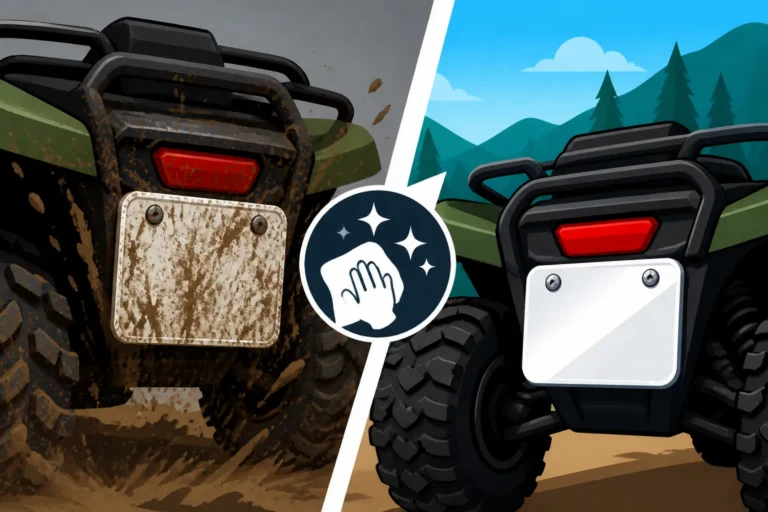
These officers might check to ensure you have your [BC ORV Number Plates and Decals] properly displayed, that you're carrying your [BC Riders Must Carry the Certificate] of registration, and that you have appropriate insurance. They'll also definitely be looking for a properly functioning spark arrestor. If they find issues, like a missing plate or an un-muffled exhaust without a spark arrestor, they can issue a ticket. For example, a violation related to a spark arrestor could result in [BC Spark Arrestor Tickets at $460], which is certainly not pocket change. These spot checks serve as a deterrent and a way to enforce responsible riding without requiring every machine to pass an annual safety certification.
Site-Specific Rules and Managed Recreation Areas
Beyond general provincial regulations, some managed recreation sites and designated riding areas in BC have their own specific rules. These sites are often maintained by local clubs or managed by Recreation Sites and Trails BC to ensure a safe and enjoyable experience for everyone, while also protecting the environment. For example, you might encounter managed sites like Bear Creek OHV in the Okanagan, which has specific requirements for sound limits, often stipulating that machines must meet [BC Sound Limits of 96 Decibels].
These site-specific rules are typically posted at trailheads or entry points and are focused on responsible use within that particular area. While they aren't part of the provincial registration process, they are crucial for riders to be aware of and comply with. An officer or site manager might conduct informal checks to ensure adherence to these rules, especially concerning noise or spark arrestors. Failing to comply could lead to being asked to leave the area or even facing fines, depending on the severity of the infraction and the local bylaws or management plan. So, always check the specific rules of any managed riding area before you head out.
Comparing BC to Other Jurisdictions (Briefly)
It’s easy to look at BC’s lack of a formal ORV safety inspection and wonder how it stacks up against other places. The truth is, every province and state has its own approach, and BC’s system is quite distinct in some key ways.
How Some Other Regions Approach ORV Inspections
While I can't give you a detailed breakdown of every other jurisdiction's rules, it's worth noting that British Columbia's approach to ORV safety inspections for registration is not universal. Some US states, for instance, might have more stringent requirements for off-highway vehicles, including annual safety checks, emissions testing, or specific equipment lists that must be certified by a mechanic before a sticker or plate is issued. Similarly, other Canadian provinces might have different philosophies, though many across Canada focus more on ownership and insurance than on pre-registration mechanical fitness for ORVs, similar to BC.
The variations often stem from different legislative priorities: is the focus primarily on environmental impact, rider safety, public land management, or revenue generation? Each jurisdiction weighs these factors differently, leading to a patchwork of regulations across the continent. So, if you've moved to BC from elsewhere, or if you're planning an ORV trip outside the province, it's always wise to research the specific rules of that area. What's perfectly legal and accepted in BC might lead to a ticket or a denied registration elsewhere.
Why BC's System Prioritizes Ownership & Liability
The Off-Road Vehicle Act in BC, which made ORV registration mandatory, was introduced in [BC Registration Became Mandatory in 2015]. Its primary objectives were centered around accountability and traceability. Before this, it was incredibly difficult to track down owners of machines involved in accidents, environmental damage, or illegal activities on Crown land. The lack of a central registry meant a lot of anonymity, which often led to a lack of responsibility.
By implementing a registration system that focuses heavily on proving ownership and correctly identifying the machine, the province aimed to solve this accountability problem. It's about ensuring that if something goes wrong, there's a clear record of who owns the vehicle. Alongside registration, there's also the crucial aspect of insurance. While basic liability insurance isn't mandatory for all Crown land use, it is required for operation on Forest Service Roads and highly recommended for all other areas. [BC Insurance Bought With Registration] helps cover potential damages in an accident, reinforcing the theme of financial accountability rather than pre-emptive mechanical inspection. The system prioritizes knowing who is responsible for the machine, and what the machine is, over a government stamp of mechanical approval.
Practical Advice for Riders in a No-Inspection System
The absence of a provincial safety inspection for ORV registration places a greater responsibility on you, the rider and owner. This means being extra diligent, especially when buying a used machine, and committing to ongoing maintenance.
Due Diligence When Buying a Used ORV
Since the province isn't checking the mechanical condition of an ORV before you register it, you must become your own inspector when buying a used machine. This is perhaps the most critical piece of advice for any prospective ORV owner in BC. Don't rely solely on the seller's word; take the time to thoroughly inspect the machine yourself, or better yet, bring a knowledgeable friend or a trusted mechanic along. Look for obvious signs of damage, leaks, or worn components. Check the brakes, suspension, tires, and steering for any play or issues. Test all the lights and ensure the engine starts easily and runs smoothly without unusual noises or excessive smoke.
A test ride is invaluable. Pay attention to how the machine handles, whether the gears shift smoothly, and if the brakes respond effectively. Ask for maintenance records, if available. This is also where good documentation comes into play. When creating a bill of sale, especially for an older machine, consider using a comprehensive template. A service like LawDepot can provide a robust bill of sale document that allows you to detail the machine's condition at the time of sale, include any "as-is" clauses, and ensure all identifying information (like the VIN) is accurately captured. This level of diligence protects you from buying someone else's problems and ensures you're starting your ownership journey with a safe and reliable machine.
Ongoing Maintenance for Your Peace of Mind and Safety
Even after you've made a careful purchase and successfully registered your ORV, your commitment to its safety and reliability doesn't end. Regular, proactive maintenance is absolutely essential. Think of it as investing in your safety and the longevity of your machine. This includes routine tasks like checking oil levels, cleaning or replacing air filters, ensuring proper chain tension, and regularly inspecting brake pads for wear. Keep your tires properly inflated, and regularly check for any cracks or damage.
Familiarize yourself with your ORV's service manual and stick to the recommended maintenance schedule. Don't put off small repairs, as they can quickly escalate into larger, more expensive, and potentially dangerous problems. For instance, a loose bolt today could become a lost component tomorrow, leading to a serious malfunction on the trail. By diligently maintaining your ORV, you're not just adhering to an unspoken safety standard; you're ensuring that every ride is as safe and enjoyable as possible, reducing the risk of breakdowns or accidents. Keeping a log of your maintenance activities can also be incredibly helpful, both for tracking your work and for future resale value.
| Feature | Required for BC ORV Registration | Rider's Ongoing Responsibility | Checked by Enforcement (Spot Check) |
|---|---|---|---|
| Mechanical Inspection | No | Yes | Partially (e.g., Spark Arrestor) |
| Proof of Ownership | Yes | N/A | Yes (Certificate) |
| VIN Verification | Yes | N/A | Yes |
| Spark Arrestor | No | Yes | Yes |
| Working Brakes | No | Yes | Rarely (post-accident maybe) |
| Working Lights | No | Yes (for night/low visibility) | Yes (for night/low visibility) |
| Helmet | No | Yes (for operation) | Yes (for operation) |
| Insurance | No (but req. on FSRs) | Yes (for operation on FSRs) | Yes (for operation on FSRs) |
Disclaimer
This article is for general informational purposes only and does not constitute professional advice. Laws, prices and regulations vary by location and change over time. Consult a qualified professional for guidance on your specific situation.