BC Machines Registered Under the Motor Vehicle Act
Navigating the world of Off-Road Vehicle (ORV) registration in British Columbia can feel like a maze, especially when you hear terms like "Motor Vehicle Act" tossed around. Many riders assume that because their ATV or UTV isn't street legal, it somehow exists in a completely separate legal universe from cars and trucks. This confusion often leads to frustration and sometimes, unexpected fines. This guide will peel back the layers of BC's ORV legislation, clarifying exactly how your quad or side-by-side is registered under the familiar umbrella of the Motor Vehicle Act (MVA) and what that means for you.
The Initial Confusion: Is My ORV a "Motor Vehicle"?
It’s completely understandable why many riders feel a disconnect between their off-road machine and the regulations typically associated with cars and highway use. You bought your ATV to escape the pavement, to explore trails and resource roads, not to commute to work on Main Street. The language used often reinforces this, with terms like "off-road" implying a complete separation from the rules governing on-road vehicles.
Why Riders Assume the MVA Doesn't Apply
For years, the perception was that if it didn't have a license plate for the highway, it wasn't really a "vehicle" in the same vein as a car or motorcycle. Riders often focused solely on the physical act of riding off-highway and assumed the regulatory framework would be equally distinct. This mindset often overlooks the administrative and ownership aspects that do align with the MVA. When you're out carving through a muddy trail or climbing a steep hill, the last thing on your mind is often the same government department that registers your sedan. The very name "Off-Road Vehicle" subtly suggests it's outside the scope of the traditional "Motor Vehicle" definition, leading to a common, but incorrect, assumption that MVA rules are irrelevant.
The Overlapping Legal Landscape in BC
Here's the crucial clarification: While your ORV generally isn't operated on public roads under the Motor Vehicle Act, the registration and ownership of that ORV in British Columbia are indeed handled under principles that leverage the MVA. In 2015, the province introduced the Off-Road Vehicle Act (ORVA), which made registration mandatory for ORVs operating on Crown Land. Instead of creating a whole new bureaucratic system from scratch, the ORVA was designed to work in conjunction with existing frameworks. This means that while the ORVA defines what an ORV is, where it can operate, and who can ride it, the actual nuts and bolts of getting it officially recognized and tracked for ownership purposes fall to the same agencies and procedures used for other "motor vehicles." Think of it as the ORVA setting the specific rules for a unique class of vehicle, but the MVA providing the administrative machinery to manage those rules.
How the Motor Vehicle Act Touches ORV Registration
So, how exactly does this "overlapping" work in practice? It's not about making your ORV street legal; it's about using an established, robust system for vehicle identification and ownership tracking. When you register your ORV in BC, you're not just getting a sticker; you're entering your machine into a provincial database, much like any other vehicle.
The Role of ICBC and Autoplan Brokers
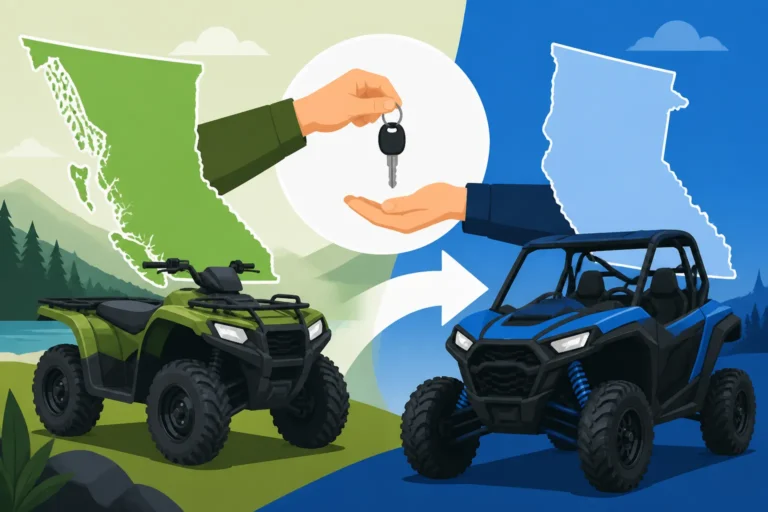
One of the clearest indicators that the MVA influences ORV registration is where you go to get it done. You don't visit a specialized "ORV department" or a provincial park office. Instead, you head to an ICBC Autoplan broker's office – the very same places where you renew your car insurance, transfer vehicle ownership, or get your driver's license. [BC Autoplan Brokers Handle ORV Registration] These brokers are experts in the Motor Vehicle Act and its regulations, and they've been trained to handle ORV registration under this existing framework. This streamlines the process, leveraging an established network of agencies across the province. It means that the infrastructure, the forms, and often the computer systems used for your truck's registration are also utilized for your quad. It really drives home the point that your ORV is considered a "motor vehicle" for administrative tracking purposes, even if its operational rules are distinct.
The "Certificate of Registration" vs. a "Title"
When you successfully register your ORV, you receive a document called a "Certificate of Registration." This is a crucial piece of paper that proves your ownership and that your machine is properly registered in BC. For many people, especially those from other jurisdictions, there's often confusion about why they don't receive a "title" like they would for a car or truck, or in some other provinces or states. The reality is that BC doesn't issue traditional vehicle titles for any type of motor vehicle in the same way many other places do. [Why BC Does Not Title an ATV] Instead, the Certificate of Registration serves this vital purpose of demonstrating who the registered owner is in BC's system. [BC's Certificate of Registration Explained] It's the official record linking you to your ORV, operating under the administrative principles of the MVA, which prioritizes a clear chain of ownership and accountability.
Understanding Ownership and Transfer Under MVA Principles
The transfer of ownership is where the MVA's influence on ORVs becomes particularly evident and, for some, particularly challenging. Because the system aims to maintain a clear, unbroken record of ownership for all motor vehicles, ORVs are no exception. This protects both buyers and sellers and helps deter theft.
The Importance of a Clean Ownership Chain
Just like buying a used car, when you purchase a used ORV in BC, the Autoplan broker will need to see a complete and continuous chain of ownership documents. This means a bill of sale for every prior owner, going all the way back to the original purchase from a dealer. If you're buying a quad from a private seller, you need their bill of sale from when they bought it, and if they bought it used, you'll need the bill of sale from their seller, and so on. [BC Bills of Sale for Every Prior Owner] This can be a huge headache for older machines or those that have changed hands many times without formal documentation. The system operates on the premise that a clear paper trail is essential for validating legal ownership, a principle directly derived from the MVA's approach to all vehicles. Without this, the broker can't confidently transfer the machine into your name, leaving you in a tricky spot.
Statutory Declarations as a MVA-Accepted Solution
What happens if you've bought an ORV, or perhaps inherited one, and there's a missing bill of sale somewhere in that ownership history? This is a common frustration, especially for machines bought decades ago when formal paperwork wasn't always top of mind. Fortunately, the MVA framework provides a solution: the statutory declaration. This is a formal, legal document where you swear under oath (or affirm) that certain facts are true to the best of your knowledge and belief. It's often used when a critical piece of documentation, like a bill of sale, is genuinely unobtainable. You'd typically describe how you acquired the machine, why the previous paperwork is missing, and affirm that you are the rightful owner. [BC Statutory Declaration for an ORV] You can often find templates for such declarations online, including through services like LawDepot, to help you draft the document correctly before taking it to a Commissioner for Oaths. The Autoplan broker will review this declaration, and if it's found to be acceptable and satisfies the requirements, it can bridge that gap in the ownership chain, allowing the transfer to proceed. It's a testament to how the MVA provides robust, albeit sometimes cumbersome, solutions for complex ownership scenarios.
Registration Process and Documentation Requirements
Getting your ORV registered isn't just a casual stroll into an office; it requires preparation. Understanding what documents you need and what to expect can save you a lot of time and frustration. It’s very similar to preparing to register a car you've just bought.
Essential Documents for Your ORV
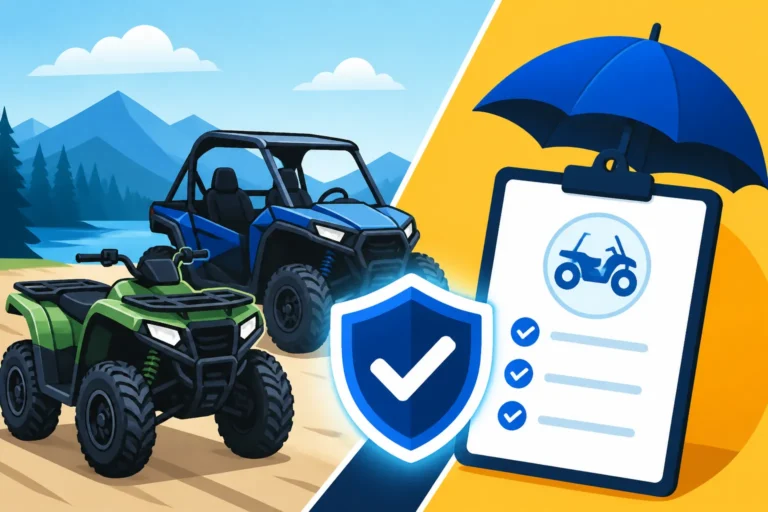
When you visit an Autoplan broker, they’re essentially looking for proof of who you are, what the machine is, and that you legally own it. You’ll need valid government-issued photo identification, such as your driver's license. Then, the most crucial document for the machine itself is the bill of sale from the previous owner (or the dealership, if new). As discussed, if you have a break in the chain, you might need a statutory declaration. The broker will also need to verify the ORV’s Vehicle Identification Number (VIN) or serial number. [BC Registration Paperwork Checklist] Make sure you know where these numbers are located on your machine and that they are legible. It’s a good idea to take a clear photograph of the VIN before you go, just in case. They’re looking for definitive proof that the machine exists, that its identity is clear, and that you have a legitimate claim to ownership. Without these foundational documents, the broker simply cannot proceed with the registration.
What Happens at the Autoplan Broker's Office
Once you arrive at the Autoplan broker's office with all your paperwork in hand, the process typically involves several steps. First, the broker will verify your identity and review all the documents you’ve brought, carefully checking the bills of sale, statutory declarations (if applicable, perhaps using a template from LawDepot), and the VIN. They will then input all the relevant information about you and your ORV into the ICBC system. This is where the machine officially enters the provincial registry. You’ll be required to pay the one-time registration fee, and if you bought the machine from a private seller, you’ll also pay the Provincial Sales Tax (PST) based on the purchase price or the wholesale value, whichever is higher. Once everything is processed and paid, the broker will issue you your shiny new Certificate of Registration and, of course, your ORV number plate and decal. [What the Broker Hands You After You Register] This plate and decal are essential, as they demonstrate your compliance with the ORV Act when you’re out riding.
Ongoing Responsibilities and MVA Overlap
Registration isn't a "set it and forget it" situation. While you don't have annual renewals like car insurance, there are still responsibilities that echo those for MVA-registered vehicles. These requirements ensure accountability and allow enforcement officers to quickly verify compliance.
Carrying Your Certificate and ID
One of the most important responsibilities, directly mirroring MVA requirements for driving a car, is that you must carry your Certificate of Registration and valid photo identification with you whenever you are operating your ORV on Crown Land or on a Forest Service Road. [BC Riders Must Carry the Certificate] [BC Riders Must Carry Photo ID] This isn't just a suggestion; it's a legal requirement. If a police officer or a conservation officer stops you, they have the right to ask for these documents to verify your identity and that your ORV is properly registered. Failing to produce them can result in a fine. This measure helps ensure that only registered machines are operating in these areas, and that operators can be properly identified. It’s about being responsible and prepared, just like you wouldn't drive your car without your driver's license and vehicle registration.
Address Changes and Other Administrative Updates
Life happens, and sometimes you move. Just like you would update your driver's license and vehicle registration with your new address, you are also responsible for updating your ORV Certificate of Registration if you change your residential address. [BC Registration Address Change] This ensures that official communications can reach you and that the provincial database remains accurate. These types of administrative updates are handled through the same Autoplan broker network and follow similar procedures to those for MVA-registered vehicles. While it might seem like a small detail, maintaining accurate records is a cornerstone of the MVA's approach to vehicle ownership, and it applies equally to your ORV. It prevents a lot of headaches down the line if there's ever a need to contact you regarding your machine.
Enforcement and the Unified Approach
The fact that ORV registration falls under MVA principles means that when it comes to enforcement, there's a cohesive approach. Law enforcement and other officials don't operate in a vacuum; they draw upon their knowledge of both the ORVA and the MVA to ensure compliance.
Police and Conservation Officer Powers
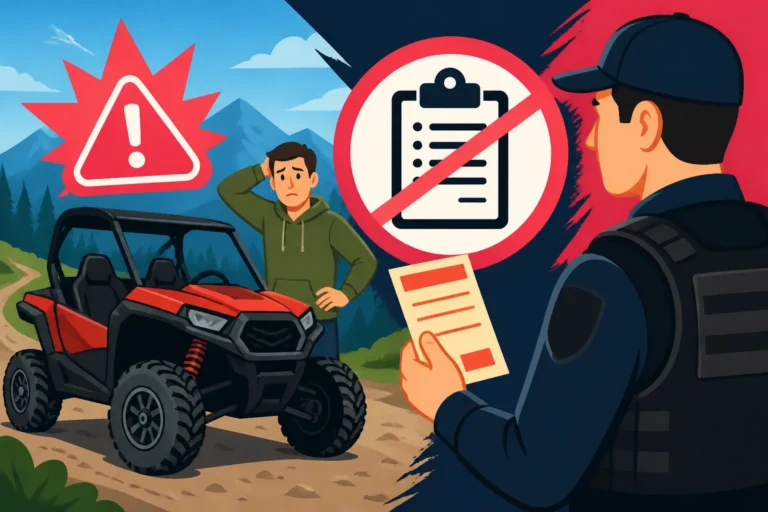
Police officers, conservation officers, and other authorized personnel have the authority to enforce the Off-Road Vehicle Act. This means they can stop ORV operators and request to see their Certificate of Registration and identification. If your ORV is found to be unregistered, or if you cannot produce the required documents, you can face significant penalties, including fines. [BC Tickets for an Unregistered Machine] These fines are issued under the ORVA, but the underlying power to stop and verify compliance stems from a broader authority that often intersects with general motor vehicle enforcement. Officers are trained to identify ORVs that are not compliant and to act accordingly, treating these infractions with the same seriousness as other vehicle-related violations. It’s a unified front against unregistered vehicles, whether they're on the highway or in the backcountry.
Why This Integrated Approach Matters for Riders
This integrated approach, where ORVs are registered under MVA principles, serves several important purposes. Firstly, it provides a centralized, robust system for tracking ownership, which is incredibly useful in cases of theft. If your ORV is stolen and later recovered, its registration in the provincial database makes it much easier to identify you as the rightful owner and return your machine. Secondly, it contributes to overall accountability. Knowing that your machine is officially registered means there’s a clearer link between the operator and the vehicle, which can deter irresponsible riding or damage to the environment. Finally, it ensures a consistent standard of administration across all motorized vehicles in BC. While your ORV offers unique freedoms, the system ensures that those freedoms come with a shared responsibility, validating legitimate ownership and deterring the illicit trade of machines. Ignoring registration isn't just a minor oversight; it's a fundamental legal requirement that ensures your machine is properly recognized within BC's comprehensive vehicle framework.
Summary of ORV & MVA Overlap
To help clarify the specific areas where ORV registration intersects with the Motor Vehicle Act, here's a quick overview:
| Aspect | Motor Vehicle Act (MVA) Principles Applied | Off-Road Vehicle Act (ORVA) Specifics |
|---|---|---|
| Registration Location | Done via ICBC Autoplan brokers, same as MVA-registered vehicles. | No dedicated ORV registration offices; leverages existing MVA infrastructure. |
| Ownership Document | Certificate of Registration (similar function to an MVA vehicle's ownership record). | Distinct from a traditional "title" in other jurisdictions, but serves the same legal proof of ownership in BC. |
| Ownership Chain | Requires a clear and continuous chain of bills of sale, consistent with MVA vehicle transfer rules. | No specific ORVA provision for this; adopts MVA's principle for all vehicle transfers. |
| Missing Documents | Statutory Declarations are accepted as legal proof in lieu of missing bills of sale, an MVA-based solution. | ORVA does not detail this, relying on MVA-accepted methods for establishing ownership. |
| Identification | Requires government-issued photo ID for registration and while operating, standard for all motor vehicles. | ORVA mandates carrying ID and Certificate of Registration while riding on Crown Land/FSRs. |
| Administrative Updates | Address changes, etc., processed through Autoplan brokers, following MVA procedures for record keeping. | ORVA does not specify; administrative updates integrate into the general MVA vehicle registry system. |
| Enforcement Powers | Police and Conservation Officers have broad authority to stop and verify vehicle compliance. | ORVA defines specific offences (e.g., unregistered machine, improper operation) but enforcement uses general police powers. |
Disclaimer
This article is for general informational purposes only and does not constitute professional advice. Laws, prices and regulations vary by location and change over time. Consult a qualified professional for guidance on your specific situation.