Why Machine Size Matters More Than Age
A young rider may meet an age threshold and still be too small, light or inexperienced for a particular machine. In BC, age matters for legal supervision, but it does not prove that an ATV or UTV fits. Understanding both the rules and the practical fit checks helps families choose a machine a child can control safely.
Age Is a Legal Threshold, Not a Fit Test
BC’s youth riding rules set limits on who may operate an off-road vehicle and when adult supervision is required. They do not mean that every machine is suitable once a rider reaches a particular age. A young person’s strength, reach, judgment and experience can differ widely from those of another rider the same age.
For many riders under 16, adult supervision is part of the legal requirement. The supervisor must meet the applicable conditions, including being at least 19 and able to keep the young rider in view and give direction promptly. BC has a separate pathway for some 14- and 15-year-olds that involves written parental or guardian permission and required safety training. Those conditions should be checked before a young person rides without direct supervision. See BC Youth Riding Rules Explained, BC Rules for a 14-Year-Old Rider and BC Rules for a 15-Year-Old Rider for the age-specific details.
That legal framework answers whether a young person may operate under certain conditions. It does not assess whether a particular ATV or UTV is an appropriate match. A youth can be old enough under the rules but still lack the reach to use the controls properly, or the strength to steer and stop the machine in difficult terrain.
| What to check | Why it matters | What a good fit looks like |
|---|---|---|
| Manufacturer guidance | The maker’s age and weight recommendations are specific to the model | The rider falls within the stated limits, and the machine is used as intended |
| Reach to controls | Poor reach can delay steering, braking or throttle control | The rider can operate every control without stretching or shifting awkwardly |
| Body position and feet | A rider who cannot brace securely may struggle over bumps or during a stop | The rider can sit and move naturally, with secure footing where the design allows |
| Strength and machine response | A heavy or powerful machine can be difficult to manage when it moves unexpectedly | The rider can control the machine at a suitable pace and stop it reliably |
| Passenger setup | An extra person changes weight, balance and legal requirements | The machine is designed for passengers, and the rider is permitted to carry one |
Manufacturer guidance deserves particular attention because “youth ATV” is not a universal size category. Models differ in weight, power, control layout and intended use. The manufacturer’s minimum age or weight is a starting point, not a guarantee that a child can safely operate that model. For further detail, see BC Manufacturer Age and Weight Rules and Manufacturer Minimums by Model.
A machine that seems manageable in a driveway can feel very different on a slope, loose gravel or a trail with ruts. The rider may need to turn while standing or shifting position, brake on an incline, or respond to a sudden change in traction. A fit check in a calm, level area is useful, but it cannot replace suitable training, close supervision and choosing terrain that matches the rider’s abilities.
How to Judge Whether an ATV Fits
Start with the machine’s owner’s manual and manufacturer recommendations. Check the model’s intended rider age and weight, passenger capacity, operating instructions and any restrictions. If the documentation is missing, look for reliable model information from the manufacturer or ask a qualified dealer. Avoid treating another machine of similar appearance as a substitute: two ATVs that look alike may have different controls, power or weight.
Next, have the rider sit on the machine while it is stationary, with the engine off. The rider should be able to reach the handlebars and operate the throttle and brakes without leaning, twisting or taking a hand away from a control to compensate. If the rider must stretch to turn the bars or cannot comfortably reach a brake lever, the machine is not a good fit.
Check whether the rider can hold a stable position. They should be able to sit upright, shift their weight in a controlled way and remain balanced without relying on an adult to hold them in place. Their hands should maintain a secure grip while using the controls. If the machine is too wide for the rider to position their body comfortably, or the controls are too far away, the size may be wrong even if the rider can climb aboard.
Strength matters as much as reach. A child needs to steer, brake and respond to the machine’s movement without being overwhelmed. You cannot fully test that safely by asking a child to wrestle with a stopped ATV. Instead, use the maker’s limits, instruction from a qualified training provider and conservative judgment. If the rider struggles with controls at low speed in a controlled setting, do not assume practice on a steeper or faster trail will solve the problem.
Weight is another practical issue. A heavier machine can be more difficult to recover, reposition or control if it tips or starts sliding. That does not mean a lighter machine is automatically safe: power, suspension, tires and how the machine responds all matter. A young rider who is light for the model may also have difficulty keeping the vehicle stable over uneven ground.
Do not size up based on a child’s expected growth. Buying a machine to “grow into” can leave the rider with controls they cannot reach and a vehicle they cannot manage now. A smaller, properly matched machine may be the safer choice, even if the rider will eventually outgrow it. When shopping online, including on Amazon, use the manufacturer’s specifications rather than a broad age label in a product listing; for protective equipment, make sure the item fits the rider and meets the applicable requirements.
A supervised test should be gradual and limited to an appropriate area. Begin with basic controls and stopping, then progress only if the rider can respond calmly and consistently. This is not a way to override manufacturer limits or legal rules. If the rider cannot confidently demonstrate control, stop and reassess the machine, instruction or conditions.
Why UTV Size Needs a Different Check
A UTV, also called a side-by-side, is not simply a larger ATV with easier controls. It has a seat, steering wheel and passenger area, and it may have a roll cage and seat belts. Those features change how the rider is positioned, but they do not remove the need to check suitability.
Start with the manufacturer’s age, height, weight and passenger guidance for the specific model. Check that the young operator can sit fully back in the seat, reach the steering wheel and pedals, and use them without sliding forward or stretching. The belt should fit as designed and stay properly positioned. A rider who is too small for the seat or restraint system may not be protected as intended in a sudden stop or rollover.
The operator needs to see the route clearly and reach the controls without losing a stable posture. If the steering wheel or pedals are adjusted, use only the adjustments described by the manufacturer. Do not add cushions or other improvised fixes that could change belt fit, interfere with controls or shift during operation.
The vehicle’s size can also create a false sense of security. A wide stance, passenger seats or protective structure do not make a UTV immune to rollover or collision. Speed, slopes, sharp turns and uneven ground can still create serious risks. A young driver may also have less experience judging the width of the machine, its turning space and how much room is needed to stop.
Passenger arrangements need special care. A passenger changes the vehicle’s load and balance, and a machine should carry passengers only if it is designed and equipped to do so. BC rules also restrict child operators from carrying passengers. A young operator should not take a friend along as a shortcut to supervision. Review No Passenger for a Child Operator and the specific passenger instructions for the model before anyone rides.
For both ATVs and UTVs, use protective gear and follow the rules that apply to the vehicle and riding area. BC’s requirements can differ based on machine design, so do not assume that a UTV’s belt and cage make ATV rules irrelevant, or that ATV equipment guidance transfers exactly to a side-by-side. The model manual and applicable BC rules should be considered together.
Supervision, Training and a Sensible First Ride
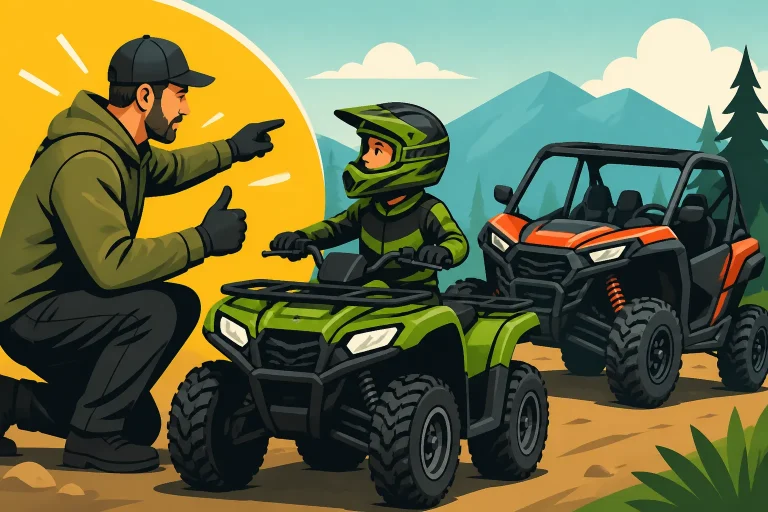
When supervision is required, an adult’s presence is not a substitute for choosing a properly sized machine. A supervisor should be able to watch the young rider, anticipate hazards and intervene with clear direction. If the adult is far ahead, out of view or occupied with another task, supervision may not be effective. For more on the legal standard, see BC Supervisors Must Be 19 or Older and Does the Supervising Adult Have to Ride Along?.
A useful pre-ride routine can catch problems before the vehicle moves:
- Confirm the machine’s manufacturer limits and intended use.
- Check the rider’s fit at the seat, controls, steering and restraint system.
- Make sure the rider understands how to start, stop and shut off the machine.
- Review the terrain, other users, signals and what to do if the rider becomes uncomfortable.
- Begin slowly in a suitable open area, with supervision appropriate to the rider and the law.
- Stop if the rider loses control, cannot follow instructions or appears overwhelmed.
Training can help a young person learn control techniques and understand hazards, but it does not make an unsuitable machine appropriate. Nor does taking a course automatically replace legal conditions unless the relevant BC rule specifically recognizes that training for the rider’s age category. Check the current requirements for the rider’s age rather than relying on an informal interpretation of what a course certificate permits.
The location matters, too. A private property ride, a managed recreation site and public Crown land may involve different access conditions, and a local pass or permission is separate from a machine being the right size. Before taking a young rider onto public trails, check the applicable riding rules, site restrictions and any conditions for the machine. Do not treat a family’s permission to ride as permission to use every road or trail.
Be ready to change the plan. Weather, mud, steep ground, fatigue and other trail users can make a route harder than it looked at the staging area. A young rider who manages a flat practice area may not be ready for a long ride, a steep descent or a route with limited places to turn around. Choose conditions that leave room to stop and reassess, and end the ride if the child becomes tired or anxious.
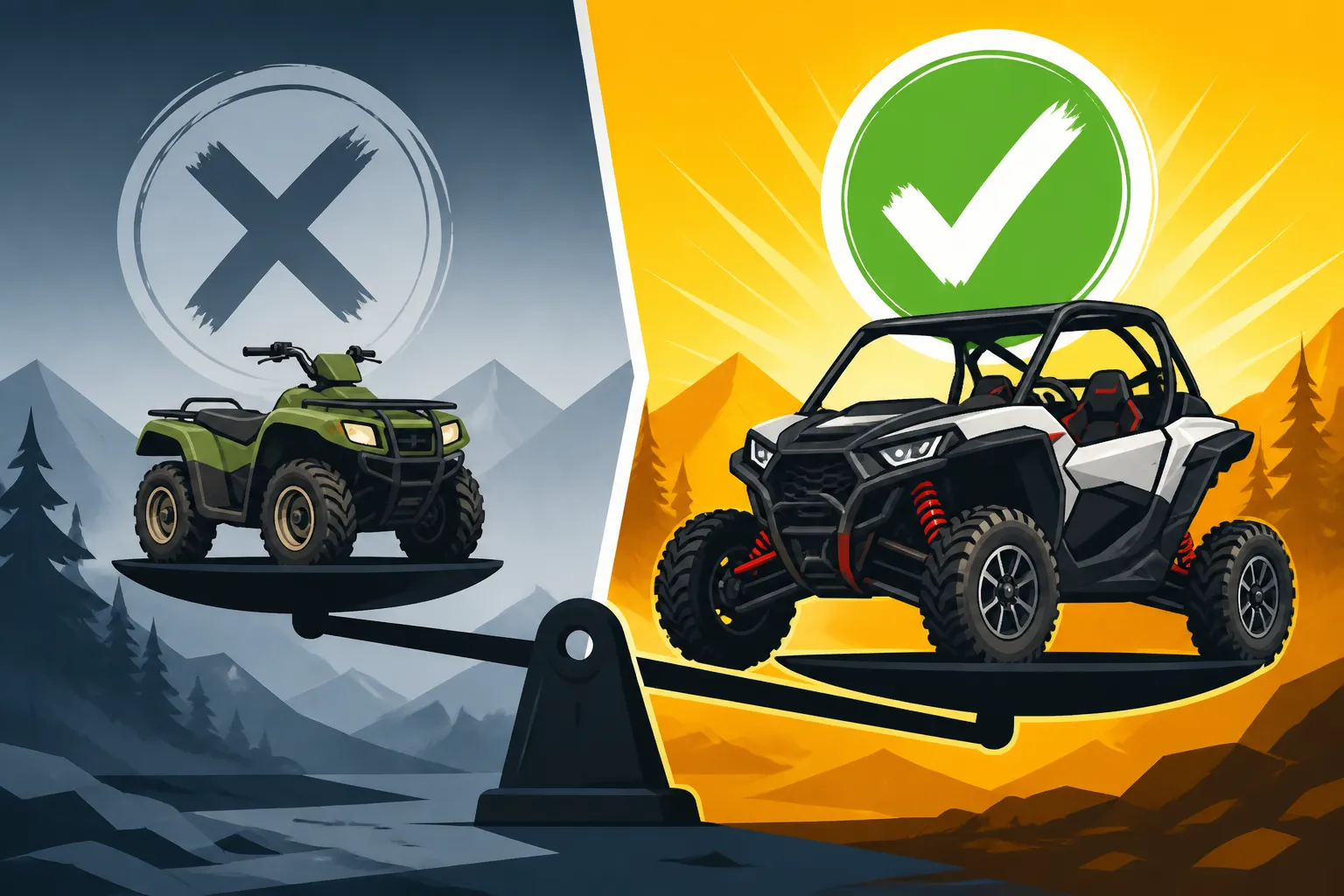
The best decision combines the legal age rules with a model-specific fit assessment. Age tells you which legal conditions to investigate; the manual, the rider’s physical ability and careful observation help answer whether this machine is manageable. When those checks point in different directions, choose the more cautious option and wait for a better fit.
Disclaimer
This article is for general informational purposes only and does not constitute professional advice. Laws, prices and regulations vary by location and change over time. Consult a qualified professional for guidance on your specific situation.