BC Spark Arrestor Requirements
BC spark arrestor requirements for ATVs and UTVs: check your exhaust, maintain the arrestor, and verify fire restrictions before riding in forest or grass land.
Your sticker stops at the state line.
Non-resident permits, what they cost and how long they last, and which states honor each other’s — or, increasingly, none at all.
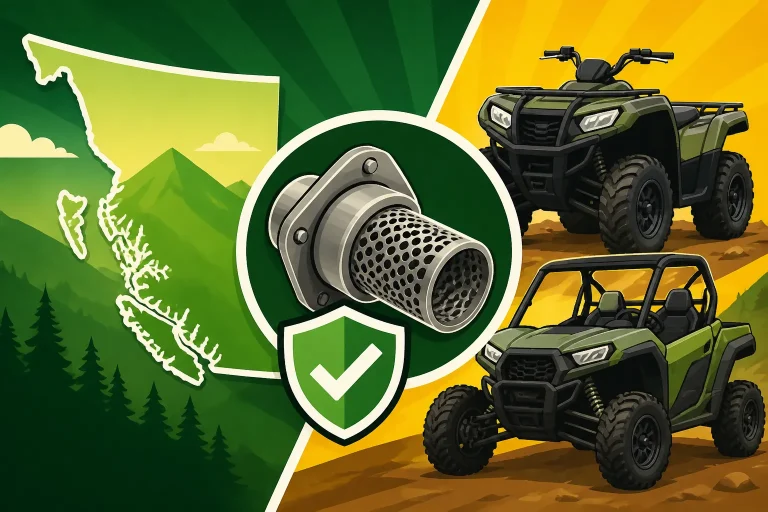
BC spark arrestor requirements for ATVs and UTVs: check your exhaust, maintain the arrestor, and verify fire restrictions before riding in forest or grass land.
BC ATV and UTV visitors should carry home registration or clear ownership records, match the VIN, and check insurance and access rules separately.
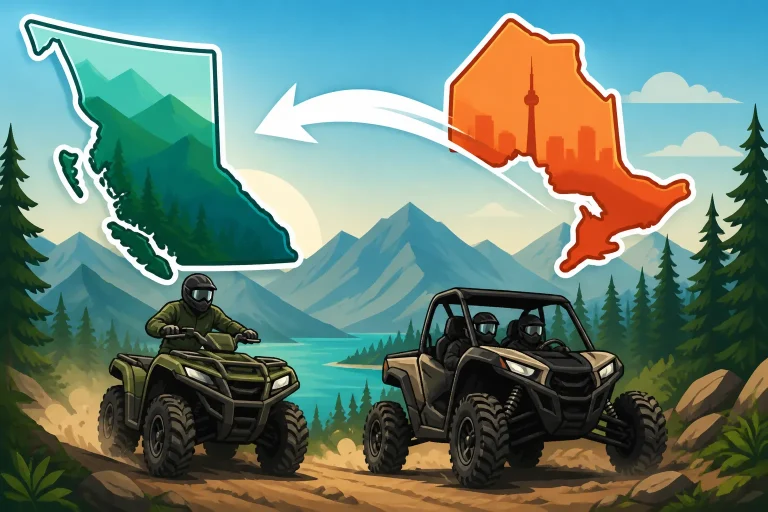
Ontario ATV and UTV visitors can generally rely on home registration in BC, but must carry proof and follow local access, insurance, and safety rules.
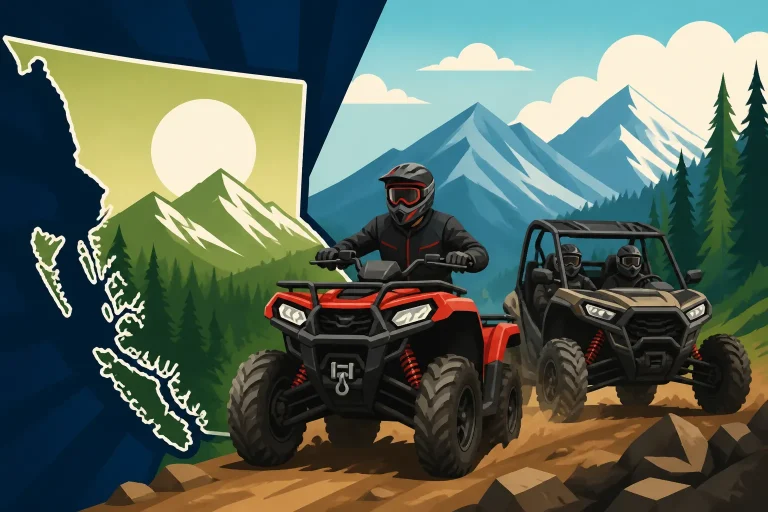
Idaho visitors can ride ATVs in British Columbia using home registration while following local trail and insurance rules.
BC visitors from Washington can use home registration, but still need BC-compliant paperwork, insurance, equipment and trail access checks.
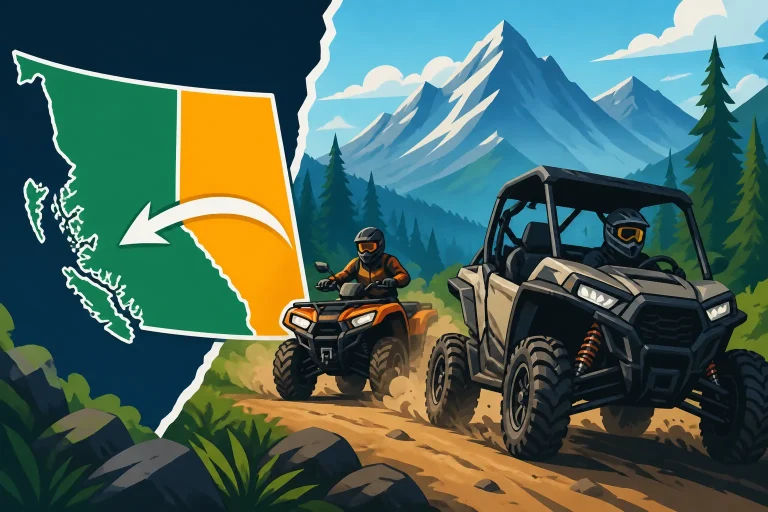
BC visitors from Alberta can generally ride on Alberta registration, but must carry proof and follow BC access, insurance, permit and safety rules.
BC non-resident ATV and UTV riders can generally use home registration, but must carry ownership proof and follow local insurance, safety and access rules.
BC riding on family property depends on land status, permission and route. Confirm boundaries and check registration, safety and insurance before riding.
BC written permission letters can help 14- and 15-year-old ATV and UTV riders meet the supervision exception, but do not replace other rules.
BC Crown land supervision rules require close oversight for most riders under 16; some 14- and 15-year-olds qualify for a limited exception.