BC Bear Encounters While Riding
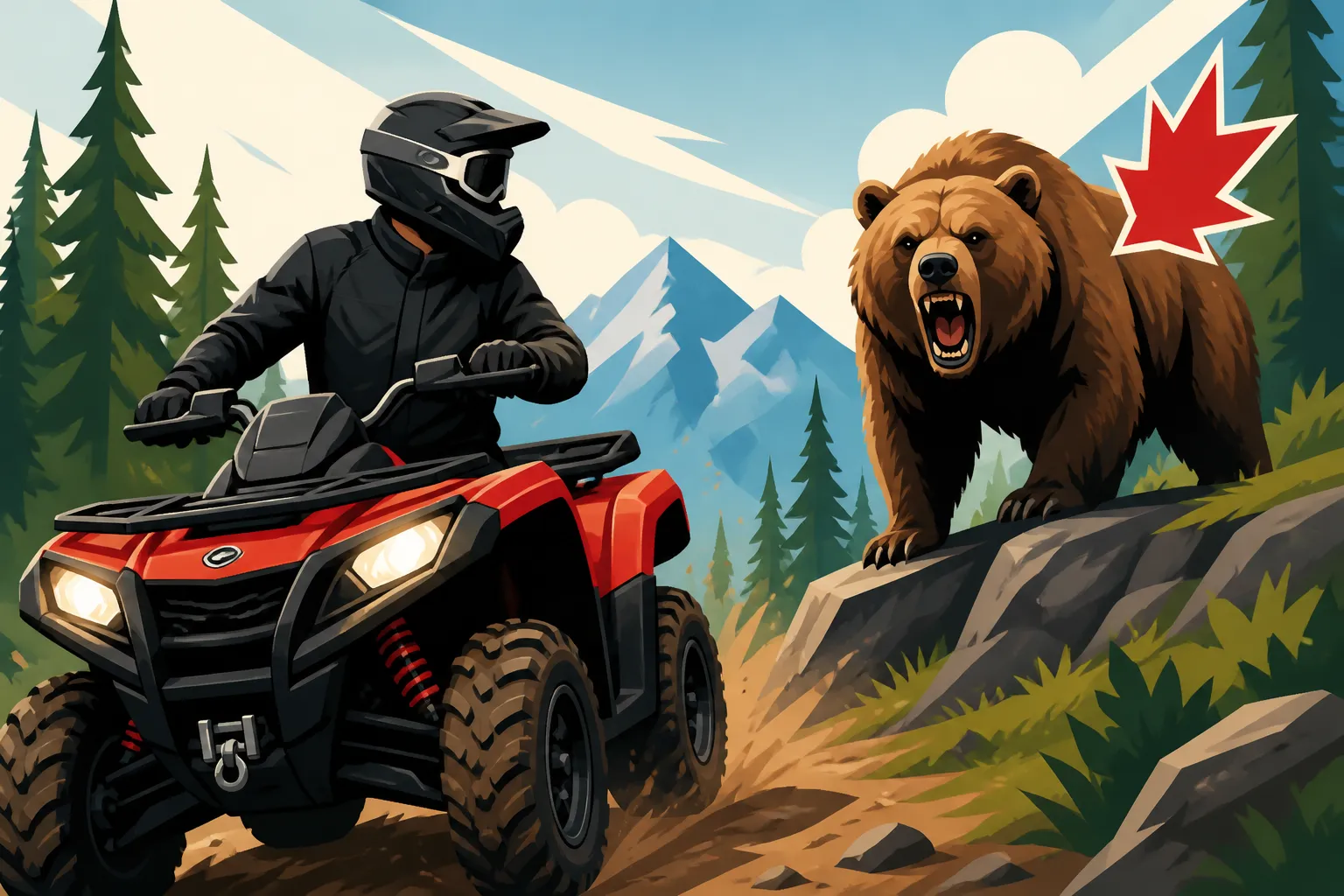
A bear on a BC trail can turn an ordinary ride into a tense one fast, especially when engine noise, dust, trees, and a narrow road leave little room to react. The safest response is usually to stop, give the animal an escape route, and avoid startling or pursuing it. This guide covers how to prepare, what to do during an encounter, and how to ride responsibly afterward.
Prepare for bears before your BC ride
Check the area and conditions before you leave
Bears may be encountered across BC riding areas, from coastal forests to the Interior, and their activity can change with food availability, season, and local conditions. Before setting out, check for posted warnings, closures, and recent wildlife information for the specific area. A trail that was quiet last weekend may have a new attractant or a bear sighting today.
Plan a route that gives your group options to turn around or leave an area without pressing farther into a tight, brushy corridor. Mapping apps such as onX Offroad can help you plan and keep track of a route, but don’t treat an app as a live wildlife alert system or a substitute for official road and area notices. Save maps for offline use where service is unreliable, and tell someone where you expect to ride and when you plan to return.
Route planning matters particularly on resource roads, where visibility may be limited and other traffic can include logging trucks. Review [BC Resource Road Radio Practice] and [Cell Dead Zones in the Interior] before riding remote areas. A radio or phone can help with communication, but neither guarantees you can call for help in a dead zone.
Carry bear spray where you can reach it
Bear spray is useful only if it is accessible quickly. Carry it on your body in a secure holster, rather than buried in a pack, strapped to a rear rack, or left in a storage compartment. If you are riding a side-by-side, make sure each person knows where their spray is and can reach it from their seat. Read and follow the product label before your ride, including instructions for use and storage.
Spray is an emergency deterrent, not a way to clear a trail, test the wind, or discourage a bear from approaching a campsite. Keep it secured against accidental discharge, and avoid leaving a canister in direct heat or somewhere it can be damaged. For more preparation advice, see [Carrying Bear Spray on a Ride].
It also helps to make a simple group plan before starting: who carries a first-aid kit, who has navigation, how riders will communicate, and what to do if the group separates. For broader wildlife awareness, [BC Wildlife on the Trail] is a useful related read.
Reduce attractants at staging areas and camps
Food smells can draw wildlife to places where people park, camp, and take breaks. Keep food, garbage, and scented items secured, and don’t leave coolers or food scraps exposed at a staging area. If your ride includes an overnight stop, follow the site’s instructions for storing food and waste. A tidy camp is not just considerate; it reduces the chance that a bear learns to associate people and vehicles with an easy meal.
Take a moment to look around before stopping for lunch. Avoid leaving food wrappers, grease, or scraps behind, and don’t feed wildlife. If you see a carcass, a bear feeding, or signs of a recent kill, don’t stop nearby to investigate or take a closer look. Give the area a wide berth and choose another route.
What to do when you see a bear on the trail
Stop without crowding the animal
If you spot a bear ahead, slow down and stop at a distance that gives it room. Don’t ride toward it for a better view, follow it down the trail, or try to make it move by revving the engine. A bear that appears calm may still react if it feels cornered, surprised, or separated from an escape route.
Keep the group together and give the bear space to leave. If there’s a clear way to turn around without moving closer, do so slowly. On a narrow trail, wait quietly if the bear has an obvious way out and you can safely stay back. If waiting would put your group in a poor position, retreat along the route you came from rather than trying to squeeze past.
Avoid blocking the bear between your machines and brush, water, or another part of the trail. Don’t surround it or split up to watch from different angles. The goal is not to control the animal’s movement; it is to reduce pressure and leave room for it to move away.
Keep your group calm and together
Let other riders know what you see in a calm, clear voice. Don’t shout, honk repeatedly, or make sudden movements to get the bear’s attention. Keep children close to an adult and make sure nobody rides off alone. If the bear is moving away, give it time and space rather than following behind.
A bear may not react the way you expect to engine noise. It may leave, stay put, or move in an unexpected direction. Don’t assume that a running ATV will scare it off, and don’t use the vehicle to chase or herd it. If the animal comes closer, keep the group together, prepare your bear spray, and follow its instructions for safe use.
| Situation | Safer response | Avoid |
|---|---|---|
| Bear is visible at a distance | Stop, stay together, and allow it room to move away | Riding closer for a photo |
| Bear is on a narrow trail | Wait back or retreat if you can do so safely | Trying to squeeze past or block its exit |
| Bear approaches | Stay calm, prepare accessible bear spray, and follow the product instructions | Running, chasing, or attempting to strike it with a machine |
| Bear is near food or a carcass | Leave the area without stopping to investigate | Approaching for a closer look |
| You see a cub or more than one bear | Give them a wide berth and retreat without getting between them | Moving closer or placing yourself between a cub and an adult |
Respond carefully if a bear approaches
An approaching bear is frightening, and it can be difficult to judge what it will do next. Stay with your group, avoid sudden movements, and have bear spray ready. If you need to move, back away slowly when you can do so without getting closer or losing a safe route out. Do not run. Follow the spray label and use it only in an emergency when the animal is close enough for the product to be effective.
If the bear changes direction or stops, don’t treat that as an invitation to move closer. Keep watching from a safe distance while you retreat or wait for a clear route away. Do not attempt to record video at the expense of keeping your attention on the animal and your surroundings.
An encounter can be especially risky when a bear is surprised at close range, has cubs nearby, or is guarding food. If you see cubs, don’t move toward them or between them and an adult bear. Back out calmly and choose a different route.
Ride with a lower chance of a close encounter
Adjust how you ride in low-visibility areas
Blind corners, thick brush, steep cut banks, and noisy creeks can reduce the time you have to notice wildlife. Slow down in these spots, keep a safe following distance, and scan the trail ahead and the shoulders rather than focusing only on the track directly in front of your tires. Where it’s safe, make your presence known with ordinary conversation or other moderate noise, especially when approaching a blind corner. Don’t rely on loud exhaust or aggressive revving as a wildlife-safety strategy.
Dust can also make it harder to see what’s ahead. Leave enough space between machines for dust to settle, and avoid riding so close that the lead rider’s visibility becomes the group’s visibility. If the trail is too dusty to see clearly, slow down or stop somewhere safe and let conditions improve.
Ride in a way that gives everyone time to react. A group stretched out over a long distance can leave the last riders unaware of a bear sighting or a sudden stop. Agree on a simple way to signal a hazard, and make sure the signal reaches the riders at the back before anyone continues.
Be extra cautious around seasonal food sources
Bear activity can vary through the year and from one location to another. At different times, animals may be focused on food sources such as berries, vegetation, or carcasses. Rather than assuming a particular month is safe, watch for signs of wildlife and pay attention to local notices when you plan your route.
If you encounter fresh tracks, scat, a carcass, or a bear feeding, don’t stop to inspect the sign or continue toward the source. Turn around or choose a route that gives the animal plenty of space. A phone map such as onX Offroad may help you find an alternate route if you have downloaded the relevant map beforehand, but confirm that the alternative is open and suitable for your machine before riding it.
Riders who are unfamiliar with a region can also check local club and recreation-area information before heading out. Conditions vary across BC, and a route that is appropriate for one machine or season may not be appropriate for another. [BC Trail Difficulty Ratings] can help with route planning, while [BC Riding Areas With Cell Service] can help you think through communication limits before choosing a destination.
Keep children, passengers, and dogs under control
Young riders and passengers need a clear plan for what to do if the group sees wildlife. Explain in advance that they should stay with the group, remain quiet, and follow the supervising adult’s directions. Don’t let a child approach an animal, wander off to take a picture, or ride ahead around a blind bend.
If you bring a dog, keep it under control and don’t let it run toward a bear or disappear into brush. A loose dog can provoke an animal and then return to its handler with the bear following. If you can’t keep the dog close and under control, reconsider bringing it on that ride.
On side-by-sides, make sure passengers know how to stay seated and follow instructions if the driver stops. Keep seat belts fastened as required for the machine, and avoid sudden turns or movements while everyone is watching wildlife. The point is to keep the group composed and together, not to get a closer look.
After an encounter or a bear-related incident
Leave the area and make a factual note
Once the bear has moved away, don’t follow it to see where it went. Leave the area by the safest available route, and avoid stopping nearby. If you saw a carcass, cubs, a bear that repeatedly approached people, or other concerning behaviour, note the location and what happened once you are safely away.
When recording details, focus on practical information: the trail or road, approximate location, time, number of animals, direction of travel, and the behaviour you observed. Don’t put yourself at risk to take photos or gather details. Share the information with the appropriate local wildlife authority or conservation officer service, particularly if the animal’s behaviour created a safety concern. Follow any posted instructions or closures afterward.
If a group member is injured, move to a safe location before giving first aid if possible. Use your planned communication method to request help, and be ready to describe your location. [First Aid on a Remote Interior Loop] offers related preparation guidance for remote rides.
Review what happened before riding again
After the ride, talk through the encounter with your group. Consider whether visibility, speed, spacing, food storage, or a route choice contributed to the close approach. The point is not to blame the rider who first spotted the bear; it’s to make the next trip safer.
Update your route plan if an area has a wildlife warning or closure, and check local notices again before returning. If you use onX Offroad or another mapping tool, save your planned route and alternate options ahead of time, but verify access restrictions through the relevant official or local sources. A map can help with navigation; it cannot tell you whether a specific trail is safe from wildlife that day.
Finally, replace or inspect any gear that was damaged or used, including bear spray. Check the canister and its instructions before the next ride, and make sure it remains easy to reach. A little preparation is much easier than trying to solve a gear problem after a close encounter.
Disclaimer
This article is for general informational purposes only and does not constitute professional advice. Laws, prices and regulations vary by location and change over time. Consult a qualified professional for guidance on your specific situation.