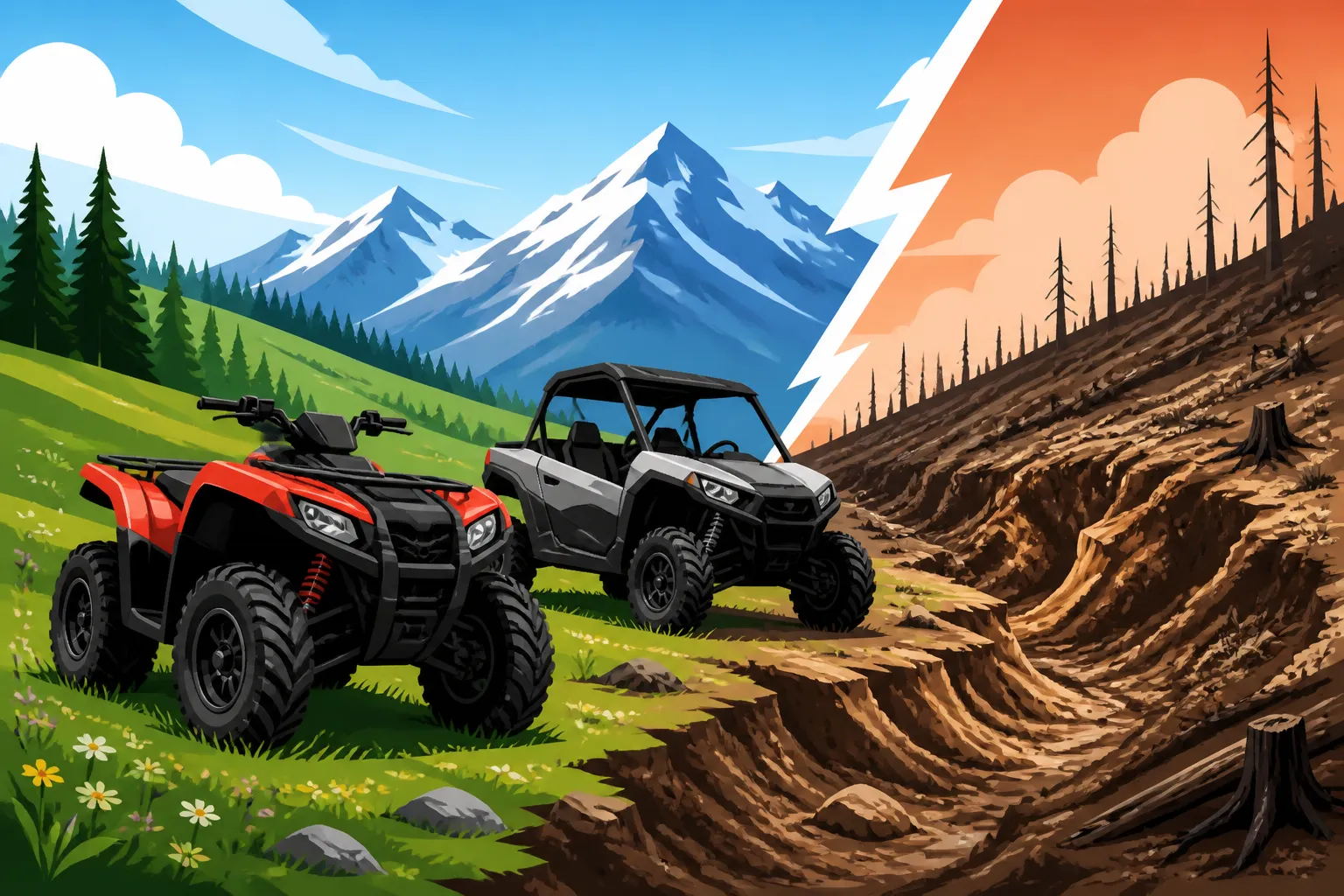
BC Alpine Meadows and Damage
Alpine meadows can look like open, durable ground, but a single ATV or UTV track may crush plants and leave a rut that lingers long after the ride. The challenge is knowing where riding is appropriate, how to read changing terrain, and what to do when a route crosses fragile high-country habitat. This guide explains how to plan and ride with less impact in British Columbia.
Why BC alpine meadows are vulnerable to ATV and UTV damage
Slow-growing plants and thin soils take a long time to recover
Alpine meadows sit above or near the tree line, where short growing seasons, cold temperatures, wind, and shallow soils make plant recovery slow. The grass, sedges, wildflowers, mosses, and low shrubs may look tough because they survive harsh weather, but that does not mean they can handle repeated tire pressure. A machine can flatten plants, break stems, and expose soil in a pass or two.
The ground beneath the vegetation is often just as vulnerable. When tires break through the plant cover, water can wash exposed soil downhill. A small rut may deepen as rain and snowmelt follow the same line, carrying sediment into nearby wetlands or streams. Even if the first rider sees only a narrow mark, later riders may follow it and widen the damage.
This is one reason a meadow should not be treated like a natural parking area or a convenient place to turn around. Stopping, spinning tires, or taking a new line around a puddle can create several damaged patches instead of one. If a route feels uncertain, pause on a durable, established surface rather than driving onto nearby vegetation.
Wet conditions make tire damage worse
A meadow that seems firm at first can soften after rain, during snowmelt, or near a spring-fed patch. Tires press into damp soil more easily, and the resulting ruts can channel water and grow with every pass. A route that was manageable in dry weather may become a muddy trench after a wet spell.
The same problem can occur when a trail crosses a low, grassy basin or a seep. Riders may be tempted to steer around a soft spot, but that often pushes traffic onto plants that were previously untouched. If the established route is too wet or deeply rutted to cross without widening it, turning back is usually the lower-impact choice.
For related guidance on soft ground and water-adjacent terrain, see [BC Riding After Heavy Rain] and [BC Riparian Areas to Avoid]. Those conditions are especially worth considering when a ride approaches a creek, wetland, or drainage channel.
How to choose routes that avoid fragile ground
Stay on established, permitted routes
A route visible on a map is not automatically open, legal, or appropriate for every machine. Access may be affected by land status, seasonal restrictions, closures, local rules, or the type and width of your vehicle. Check the route and the relevant land or trail information before setting out, and confirm that the route is suitable for your ATV or UTV.
In British Columbia, riding areas can include a mix of managed trails, resource roads, Crown land, private land, and restricted areas. The rules are not identical everywhere. Start with [BC Crown Land Riding Explained] and [BC Motor Vehicle Closures and How to Find Them], then check for local notices or posted signs close to the ride.
Digital mapping tools can help you plan, but they should be treated as one part of your preparation. For example, onX Offroad can help riders review routes and terrain before leaving, but a mapped line does not replace checking current closures, signs, or land-manager information. If you use onX Offroad, download or save the information you need before entering an area with limited cell service, and be ready to change plans if a route is closed or unsuitable.
Avoid creating new lines across meadows
When a trail becomes rough, the easiest-looking line is often a new path across the surrounding vegetation. Resist that temptation. Repeated detours around puddles, rocks, or ruts gradually turn a narrow route into a broad disturbed area, particularly when riders make different choices at the same obstacle.
If you encounter an obstacle, stop before driving off the established route. Look for a safe way to proceed on the existing surface without spinning the tires or pushing through soft ground. If there is no low-impact option, turn around or wait for conditions to improve. A short delay is frustrating, especially when the group has planned a full day, but it is better than leaving a new track that others may follow.
Be equally careful when stopping for a break. Pull over only where there is a firm, already disturbed surface with enough room for the whole machine. Avoid parking on flowers, moss, wet grass, or the edge of a narrow trail. Keep the group together rather than scattering machines across the meadow to find individual stopping spots.
A practical low-impact plan for a high-country ride
Check the route, conditions, and equipment before leaving
Good meadow protection starts before the trailer leaves home. Review the route, expected weather, recent rain or snowmelt, access restrictions, and the location of suitable turnaround points. A route that looks straightforward on a screen may include exposed, muddy, or narrow sections that are difficult to manage as a group.
Use [BC ATV Trail Map Downloads] alongside local trail information, and check for closures through the relevant authority or site manager. onX Offroad can be useful for organizing a route and keeping track of where you intend to ride, but compare its information with official notices and signs. If two sources disagree, do not assume the more convenient option is correct.
A simple pre-ride check can prevent avoidable damage:
- Confirm the route is open and permitted for your machine.
- Check weather and recent conditions, especially rain and snowmelt.
- Identify established staging areas and turnaround locations.
- Make sure the group understands that riders should not create bypass tracks.
- Carry a suitable map offline and agree on a plan if the group becomes separated.
| Situation | Lower-impact choice | Avoid |
|---|---|---|
| Trail is wet or deeply rutted | Turn back or wait for firmer conditions | Widening the route through vegetation |
| A puddle blocks the usual line | Assess whether the established trail can be crossed safely | Making a new bypass around the puddle |
| A rider needs to stop | Use a firm, established pullout | Parking on meadow plants or wet ground |
| A route appears on a digital map | Verify access, closures, signs, and machine suitability | Treating the mapped line as proof of permission |
| The group is unsure where the route goes | Stop and check the map together | Splitting up to scout across open meadow |
Set group expectations and ride with space
A group can unintentionally multiply its impact. One rider may cross a soft patch without trouble, while several machines following the same line can deepen the rut. Before the ride, agree that everyone will follow the lead rider’s track where appropriate, leave space to avoid sudden braking, and stop rather than make an improvised detour.
The group should also be comfortable changing the plan. A common source of pressure is the feeling that everyone has driven a long way, so the ride must continue no matter what. Set a clear turnaround rule before reaching the meadow: if the route is closed, too wet, or likely to require driving over vegetation, the group will choose another option or head back.
For broader riding etiquette, [BC Trail Etiquette Locals Expect] offers useful context, while [BC Trail Closures After a Storm] is relevant when recent weather may have changed trail conditions. If fire restrictions are in effect, check [BC Fire Centre Riding Bans] before riding. Conditions and restrictions can vary by location, so do not rely on a familiar route being open simply because it was open on a previous trip.
What to do when you see damage or an uncertain route
Do not make existing damage worse
If you find ruts, broken vegetation, or a widened track, stay on the established route only if it is open and can be ridden without adding to the damage. Avoid driving alongside a rut to keep your own machine clean; that creates another line. Do not try to repair a trail by digging, moving rocks, or redirecting water unless the responsible trail manager has asked riders to do so.
If the route is badly damaged or unsafe, take a clear note of the location and report it to the appropriate land manager, trail organization, or recreation site contact. A location pin, nearby road or trail name, and a brief description can make the report more useful. A photo taken from a durable surface may help show the problem without requiring anyone to walk across fragile vegetation.
When a route is uncertain, give posted signs and closure notices priority. Do not assume that an unmarked track is open just because other tire marks are visible. Existing tracks may be old, unauthorized, or associated with a different type of access. A map app, including onX Offroad, can help you orient yourself, but it cannot establish that every visible route is currently authorized.
Leave the meadow as you found it
Before leaving a high-country area, check that nobody has left litter, loose gear, or a damaged marker behind. Keep machines on the route while regrouping, and avoid moving barriers or signs. If you notice that your group has accidentally left a track, do not drive back and forth over the area in an attempt to conceal it. Stop further traffic and report the location if it needs attention.
The best measure of a low-impact ride is not whether the group avoided every bump or muddy patch. It is whether riders made thoughtful choices when the route became uncertain, wet, or difficult. Staying on permitted routes, resisting shortcuts, and turning back when necessary help protect the places that make high-country riding memorable.
Alpine meadows are easy to underestimate because their damage may look small at first. But exposed soil and flattened plants can persist, and a new tire line can invite more traffic. Plan carefully, verify access, ride within the conditions, and leave fragile ground undisturbed whenever possible.
Disclaimer
This article is for general informational purposes only and does not constitute professional advice. Laws, prices and regulations vary by location and change over time. Consult a qualified professional for guidance on your specific situation.