BC Trailheads With Trailer Parking
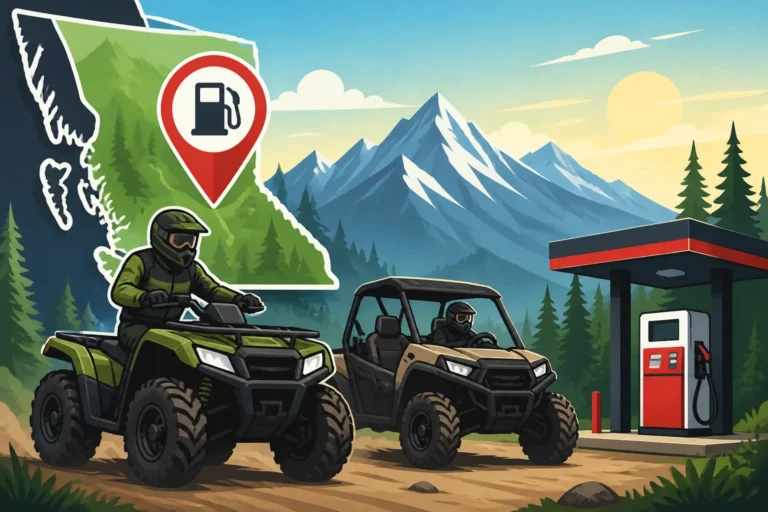
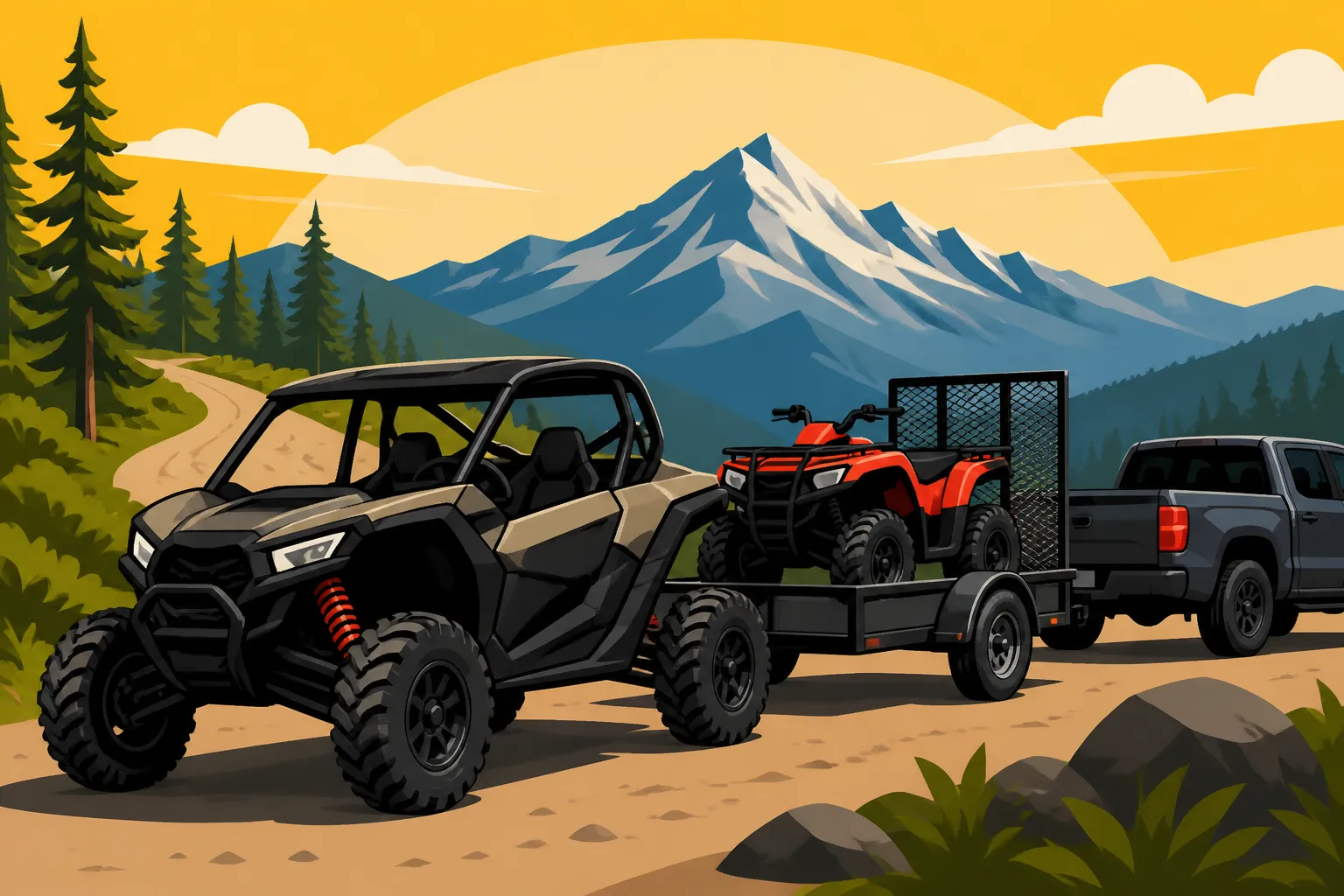
Finding a BC ATV trailhead that can handle a truck and trailer is not just about locating a trail on a map. A narrow access road, a full staging area, or nowhere safe to turn around can derail the day before the ride begins. This guide explains how to assess trailer parking, compare common riding areas, and arrive with a practical backup plan.
How to Find a BC Trailhead That Works With a Trailer
A place described as a trailhead or staging area may have room for some vehicles without having enough space for a long truck-and-trailer combination. Parking can also change with the season, construction, logging activity, or the number of riders already there. Treat “there is parking” and “there is suitable trailer parking” as two different claims.
Before leaving home, check the specific staging area rather than relying on a broad riding-area description. Look for current information from the land manager or local riding club, and contact them if the details are unclear. [BC Trailheads With Trailer Parking] is a useful starting point for thinking about the issue, but confirm the conditions for the particular trailhead and date you plan to ride.
Check the site, not just the trail network
Start with the actual place where you intend to unload. Is it a designated staging area, a roadside pullout, or simply a point on a trail map? A map may show a route beginning near a road without confirming that there is legal, spacious, or safe parking at that spot.
Then look for clues about the parking layout. A compact gravel lot may work well for cars and short trailers, while a longer rig may need a wider turnaround or a separate place to park the tow vehicle. If a site description does not mention trailer parking, do not assume the lot can accommodate your setup. Contacting a club or site manager can save you a long drive followed by an awkward search for somewhere to unload.
Map apps can help with route planning, but they should not be treated as permission to use a parking area. For example, onX Offroad may help you review roads and riding routes before a trip; use it alongside land-manager information and local directions rather than as proof that a particular pullout is open or suitable for parking.
Measure your complete rig before you go
Think about the space occupied by the truck and trailer together, not just the trailer’s listed length. The combination may need additional room to turn, reverse, or line up for unloading. If you are travelling with a group, several rigs arriving at once can make a staging area feel much smaller than it looked during a quiet weekday visit.
Write down the approximate overall length and width of your vehicle-and-trailer combination. Also consider whether you can reverse confidently if the site is busy. A narrow access road with no safe place to turn around can be more troublesome than a small parking stall.
| What to check | Why it matters | Practical question |
|---|---|---|
| Designated parking area | Roadside space may not be intended for staging | Is this an approved staging area or only an access point? |
| Length and turning room | A truck and trailer need room to manoeuvre | Can the full rig turn around without blocking traffic? |
| Surface and slope | Loose gravel, mud, or a steep grade can complicate unloading | Can the trailer remain stable while machines are unloaded? |
| Access road width | A narrow road can make meeting other vehicles difficult | Is there room for another vehicle to pass safely? |
| Busy-period capacity | Weekends and holidays can fill limited spaces | Is there a backup site if the lot is full? |
| Current restrictions | Closures and active work can change access | Has the road or staging area been restricted? |
BC Riding Areas to Investigate Before Towing
Several BC areas are known for off-road riding and have staging locations worth researching. The important distinction is that knowing a riding area does not automatically tell you whether a particular staging point has room for your trailer. Confirm the exact location, access, and parking conditions before committing to it.
Bear Creek and the Aspen and Burke staging areas
Bear Creek near West Kelowna is a major riding area, and Aspen and Burke are named staging locations riders may encounter while planning a visit. Start by checking directions to the specific staging area you intend to use, rather than navigating only to “Bear Creek.” [Staging at Aspen Trail Head in BC] and [Staging at Burke Trail Head in BC] can help you distinguish between the two locations when comparing your options.
For a trailer trip, ask about the parking footprint and the approach road. A staging area can be suitable for unloading while still being awkward for a long combination vehicle, especially if the lot is busy or has limited turning room. Find out whether there is a separate area for trailers, whether vehicles must keep a travel lane clear, and whether overflow parking is permitted.
Also plan for site-specific requirements. Managed riding locations may have rules about passes, sound, or equipment, and these are separate from the question of where to park. Check details for your chosen site before the trip, and do not treat a nearby open space as overflow parking unless the site manager or land manager confirms that it is allowed. [Bear Creek OHV: BC's Largest Recreation Site] offers a broader point of reference for understanding the riding area, while the staging location still needs its own parking check.
Chipmunk Creek and the Chilliwack area
Chipmunk Creek is another riding area to investigate if you are looking in the Chilliwack region. Check the precise staging location and the road you will use to reach it. A route that appears straightforward on a map may include narrow sections, rough surfaces, or junctions where turning a long rig is inconvenient.
Ask whether the parking space is intended for trailers and whether there are restrictions that apply during your planned visit. If you are travelling in a group, coordinate arrival times so several trucks do not reach a limited staging area together. [Chipmunk Creek's 60 BC Kilometres] provides context about the riding area, but the number of trails does not tell you how much trailer parking is available at the access point.
The wider Chilliwack area also has multiple roads and recreation destinations, so avoid choosing a parking spot simply because it appears close to a trail line. Check access conditions and make sure the staging point is appropriate for offloading. [Chilliwack Area Riding in BC] can help with broader area planning; confirm the current details of the particular trailhead separately.
Choose the right location for your group
The best trailhead is not always the one closest to the route you want to ride. A slightly longer drive to a staging area with a clearer approach and more workable parking may be a better choice than squeezing a trailer into a cramped roadside space. This matters especially if you are bringing children, riding with newcomers, or travelling with several machines that need to be unloaded in an orderly way.
Use a map to compare potential access points and estimate the drive between them, but verify road access and parking independently. onX Offroad can be one planning aid for reviewing possible routes and nearby roads. Check any map information against local directions and current access notices, particularly if your plan depends on a small road or an unfamiliar turnoff.
A Practical Trailer-Parking Plan for Ride Day
A little preparation makes arrival calmer. The most common problems are not dramatic: the lot is full, the trailer is too long to turn around comfortably, or the group has planned to meet at a place that is not actually a staging area. A simple sequence helps catch these issues while there is still time to adjust.
Confirm parking and access before setting out
Use this checklist a day or two before the ride, then check again before you leave:
- Identify the exact staging area. Save its name and location, not just the name of the broader riding area.
- Confirm that trailer parking is permitted. If the information is unclear, ask a local club, land manager, or site operator.
- Describe your rig accurately. Give the approximate combined length of the truck and trailer, and mention how many vehicles are travelling together.
- Ask about turning and overflow space. A parking stall that fits the trailer may still leave no room to manoeuvre.
- Check for access restrictions. Look for road closures, active work, seasonal limits, or site-specific conditions.
- Choose a backup. Identify another confirmed staging option or decide in advance when you will turn around rather than improvise in an unsafe place.
A route-planning app such as onX Offroad can help you keep potential roads and riding routes organized, especially when you are comparing access points. Still, verify the actual parking arrangement with the responsible local source. A route shown on a screen is not confirmation that a road is open, that a turn is suitable for a trailer, or that parking is authorized.
Arrive in a way that leaves room for others
When you reach the staging area, pause before pulling into the first open-looking space. Look for signs, marked parking, other vehicles, and room to keep access lanes clear. If the lot is full or your rig cannot turn safely, do not block a road, gate, or neighbouring access point while trying to unload.
For groups, set a meeting plan that does not depend on everyone arriving at the same moment. One driver can check the staging area while others wait at a safe, legal place nearby, provided that waiting location has been confirmed as suitable. Avoid stopping on a narrow road or shoulder just because it is close to the trailhead.
Unload with care and keep the area organized. Park the tow vehicle and trailer where directed, secure ramps and equipment, and avoid spreading gear into the path used by other visitors. If the site has a posted pass or access requirement, handle it before starting the ride rather than assuming a parking spot grants permission to use the trail network. [Carrying Proof of a Day Pass] may be relevant at managed sites where a day pass is required.
Common Trailer-Parking Mistakes to Avoid
A good parking plan is mostly about avoiding assumptions. A trailhead pin, a wide-looking satellite image, or a report from someone who visited in a different season can be useful clues, but none of them guarantees that your combination vehicle will fit on the day you arrive.
Treating a pullout as a staging area
A roadside pullout may look spacious when viewed from a map, but it might not be intended for unloading, overnight parking, or leaving a trailer while riding. It may also be close to a gate, a junction, or a route used by work vehicles. Confirm that the space is designated or authorized for your purpose before relying on it.
This is particularly important on roads that serve industrial traffic. Keep gates and road access clear, and follow posted restrictions. [BC Forest Service Road Rules for ORVs] is relevant when your route involves a Forest Service Road, while the parking plan itself should still be based on the rules and conditions at the specific site.
Assuming yesterday’s conditions will still apply
A staging area can be quiet one day and crowded the next. Seasonal road conditions, maintenance, events, or active work can also affect access. If your trip depends on one small parking lot, check conditions close to departure and keep a second option in mind.
Use onX Offroad or another mapping tool to organize the route, but pair it with local information when access or parking is uncertain. That extra check can help prevent a long tow to a site that is closed, unsuitable, or already full. For a broader look at destinations and planning considerations, [BC ATV Trails: Where to Ride] can help you compare riding areas before choosing your staging point.
Arriving without room to turn around
A common mistake is driving all the way to a small trailhead before realizing there is no safe way to turn. If you are towing a long trailer, identify possible turnaround points before the final approach. Do not rely on reversing a long distance along a narrow road, especially where visibility is limited or other vehicles may be approaching.
If you are unsure whether the approach is manageable, ask someone familiar with the location before leaving. Share your trailer dimensions and ask specifically about road width, grades, and turning opportunities. Those details are more useful than a general answer that the area is “easy to get to.”
Planning for parking but not for the ride home
After a full day, loading can take longer than expected, and the staging area may be busier as other groups return. Keep loading gear accessible, avoid leaving ramps or machines in the travel lane, and make sure the trailer is positioned safely before loading. If the lot has designated unloading or loading practices, follow them.
It also helps to agree on a departure plan with your group. Decide where everyone will meet, how you will handle a delayed rider, and who will check that the staging area is left clear. A tidy departure matters: the next group should be able to park, unload, and use the site without having to work around your equipment.
Disclaimer
This article is for general informational purposes only and does not constitute professional advice. Laws, prices and regulations vary by location and change over time. Consult a qualified professional for guidance on your specific situation.