BC Permits Issued by Local Police
It’s a scenario many of us have faced in British Columbia: you’re out on your ATV or UTV, enjoying the incredible backcountry, but then you hit a roadblock – literally. There’s a short stretch of paved road, maybe a municipal street, or even a highway crossing that stands between you and your next trail section, or perhaps the closest gas station. You know full well that our beloved off-road vehicles aren't generally "street legal" here, and the thought of breaking the rules or risking a ticket is frustrating. This guide is here to shed some light on a lesser-known but incredibly useful solution: the BC operation permit issued by local police detachments, offering a very specific, limited path for your ORV to briefly touch the pavement.
The Frustration of Street Legality in BC for ATVs and UTVs
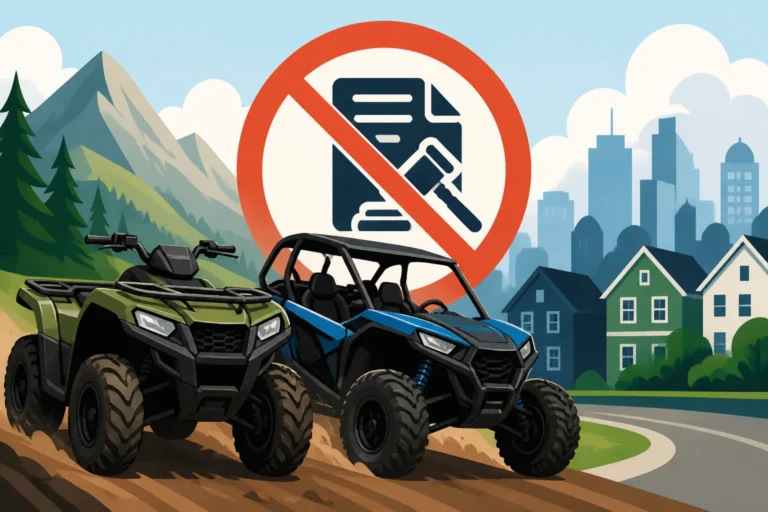
Let's be honest, the idea of just hopping on your quad or side-by-side and cruising down the main road like a car is a dream many of us share. But the reality in BC is stark, and it often leads to a lot of head-scratching and disappointment for riders who just want to connect the dots between trails or grab a coffee in a small town. The regulatory framework here is pretty clear: ORVs and public roads, especially highways, generally don't mix. It's a source of constant frustration, forcing us to constantly trailer our machines even for short distances.
Why Our Machines Aren't Built for Pavement
The fundamental reason our machines aren't considered "street legal" isn't just bureaucratic red tape; it's rooted in design and safety. Think about it: an ATV or UTV is engineered for rugged, uneven terrain. They have knobby tires designed for grip on dirt, mud, and rocks, not smooth asphalt. Their suspension systems are built to absorb massive impacts from bumps and jumps, not to provide stable, comfortable handling at highway speeds. The weight distribution, the braking systems, and even the steering mechanisms are all optimized for off-road performance.
Comparing a quad to a car is like comparing a grizzly bear to a house cat – both are powerful, but they operate in vastly different environments and have different strengths. A house cat might be able to survive in the wild, but it's not built for it, and the same goes for our ORVs on pavement. This inherent design difference is why [BC Has No Street-Legal Path for an ATV] in the traditional sense, and it’s a crucial point to understand before we even talk about permits.
The Hard Reality of Highway Restrictions
The biggest hurdle for most riders is the blanket prohibition on operating ORVs on public roads and highways. This isn't just a minor inconvenience; it's a fundamental barrier that isolates many fantastic riding areas. Imagine having a trail system on one side of a provincial highway, and another equally great system on the other, with no safe, legal way to cross other than loading your machine onto a trailer. It's time-consuming, expensive, and frankly, a huge buzzkill.
The dangers are very real. Mixing the relatively slow speeds, specialized handling, and often limited visibility of an ORV with high-speed highway traffic is a recipe for disaster. Cars are simply not expecting an ATV to be on the road, and our machines lack many of the safety features – crumple zones, advanced lighting, sealed cabins, side mirrors – that road vehicles possess. This is why [BC Highways Are Excluded From ORV Use], and while it's frustrating, the intent is always rider and public safety. This reality often leads to riders feeling marooned, unable to reach the next adventure without a major logistical headache.
Understanding Local Police Operation Permits
Given the strict rules against ORVs on highways, you might feel like there's no hope for those short pavement stints. But thankfully, there's a specific provision, albeit a limited one, that can sometimes bridge these gaps: the local police operation permit. This isn't a widely known option, and it definitely doesn't make your machine "street legal" in the broad sense, but it can be a lifesaver for specific, necessary movements.
What Exactly is an Operation Permit?
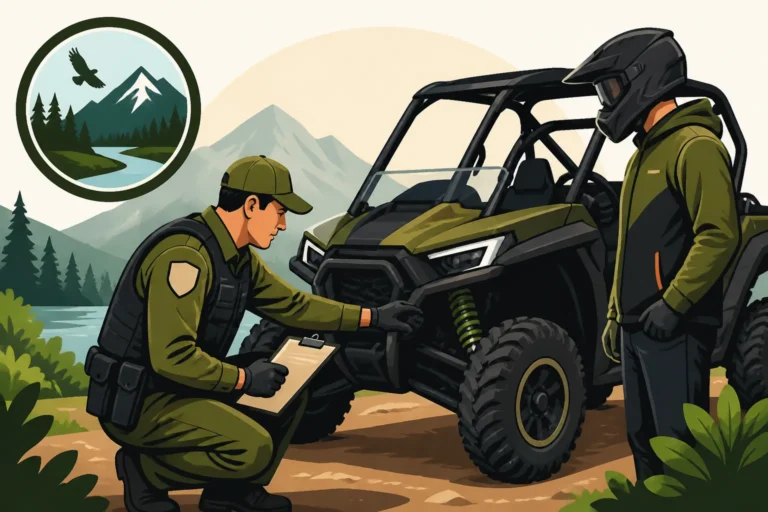
At its core, an operation permit is a specific, written authorization issued by a local police detachment (this could be the RCMP or a municipal police force, depending on the area) that allows you to operate your ORV on a particular section of highway or public road within their jurisdiction. It's not a blanket pass to ride anywhere you want. Think of it as a temporary, highly conditional exception to the general rule. The permit will specify the exact route, the purpose of your travel, and often, specific conditions you must adhere to while on the road.
It’s crucial to understand that this is distinct from your general ORV registration. Your registration, which you obtain from an ICBC Autoplan broker, makes your machine legal for use on Crown land and designated off-road trails. [BC ORV Registration You Pay Once] and that takes care of your off-road legalities. The police permit, however, is solely about those brief, controlled forays onto public roads, which are otherwise off-limits. They serve different but complementary purposes, allowing you to move your machine efficiently.
The "Why" Behind These Permits
So, why do these permits even exist if the province has such strict rules? The answer lies in practicality and local needs. In many rural or semi-rural communities across BC, ORV trails might be fragmented, with small stretches of paved road or even a highway crossing acting as natural barriers. Without these permits, riders would be forced to trailer their machines for distances as short as a few hundred meters, or to take incredibly long detours through rough terrain that might not even be suitable.
These permits are often issued to allow riders to:
- Connect Disconnected Trail Systems: Imagine two fantastic trail networks, separated only by a secondary highway. A permit could allow you to legally cross or ride a short distance along that highway to link them up.
- Access Essential Services: Sometimes, the only gas station, convenience store, or mechanic is a short ride down a municipal road from your staging area or private property. A permit allows you to reach these services without the hassle of loading and unloading.
- Move Between Private Property and Crown Land: If your property borders a highway and the nearest [BC Crown Land Triggers the Registration Rule] is just across or down the road, a permit provides a legal pathway.
Essentially, these permits acknowledge the legitimate needs of the ORV community to utilize public infrastructure in a very limited, controlled manner, enhancing accessibility and convenience where common sense dictates it's safe to do so.
Applying for a Police Operation Permit: What You Need to Know
Securing an operation permit isn't as straightforward as picking up a new decal from a registry. It involves direct interaction with your local police and requires a clear understanding of what they need from you. This process can vary slightly from one detachment to another, which can be a bit frustrating, but approaching it with preparation and respect goes a long way.
The Application Process: Navigating Your Local Detachment
The first step is to contact your local RCMP detachment or municipal police force that has jurisdiction over the specific section of road you intend to use. This isn't a provincial application; it's a hyper-local decision. You can't just call a general provincial number and expect a permit. You'll likely need to go in person or at least arrange a meeting to discuss your request. Be prepared to explain your situation clearly and concisely. They'll want to know:
- Your exact route: Outline the specific road names, intersections, and distances you intend to cover.
- The purpose of your travel: Why do you need to use this road? Is it to connect trails, get gas, or access private property?
- The duration of your need: Is this a one-time thing, for a specific event, or an ongoing need for a season?
Since it’s a local decision, you might encounter different levels of familiarity with these types of permits depending on whether you’re in a bustling urban centre or a remote rural community where ORV use is more common. Patience and clarity on your part will be key to a smooth process.
Key Information and Conditions Police Look For
When you approach the police, they're assessing the safety and legitimacy of your request. They'll need specific information and will likely impose conditions to mitigate risks. Here’s what you should expect to provide and what they'll consider:
- Your Machine's Details: Have your ORV's Vehicle Identification Number (VIN), make, model, and year readily available.
- Your Driver's Licence: You absolutely need a valid driver's licence to operate any motorized vehicle on a public highway, even with a special permit. [BC Requires a Driver's Licence on a Highway], and an ORV is no exception when it touches pavement.
- Proof of Registration and Insurance: Your ORV must be properly registered for off-road use, and you need to have the appropriate insurance coverage. For any use on a highway, even a brief crossing, you will need basic Autoplan coverage. [BC Requires Basic Autoplan on a Highway], so make sure your policy is current and includes this.
- Specific Route and Purpose: As mentioned, a detailed explanation of where and why you need to use the road.
- Conditions for Operation: The police will likely set strict conditions, which may include:
- Speed Limits: Often significantly lower than the posted highway limit.
- Time of Day: Restricting travel to daylight hours or specific periods of low traffic.
- Visibility: Ensuring your machine is highly visible, perhaps requiring specific lighting or flagging.
- Helmet Use: Reinforcing that [BC Helmet Law Covers Every Rider] when on an ORV.
- Plate Visibility: Your [BC ORV Number Plates and Decals] must be clearly visible. [BC Plate Placement on Front, Back or Left] is generally required, but ensure it's not obscured by cargo or mud.
These conditions are designed to protect you and other road users. It's about demonstrating that you can safely and responsibly share a small piece of the road.
Here's a quick comparison to help clarify the distinction between general ORV legalities and the specific road permit:
| Feature | General BC ORV Registration | Local Police Operation Permit |
|---|---|---|
| Purpose | Legal use on Crown land/ORV trails | Limited, temporary highway access |
| Issuer | ICBC Autoplan broker | Local RCMP/Municipal Police |
| Cost | One-time fee (plus PST if applicable) | Generally free |
| Duration | As long as you own the machine | Limited (e.g., up to two years) |
| Scope | Province-wide on authorized ORV routes | Specific highway sections/routes |
| Coverage | Doesn't make ORV street legal | Does not make ORV generally street legal |
| Key Requirement | ORV Act compliance (plate, registration) | Road safety, specific route, driver's licence, insurance |
| Mandatory for | Riding on Crown land (since 2015) | Limited highway crossings/access |
Duration and Cost of These Permits
One piece of good news is that these local police operation permits are generally free. [BC Permits Cost Nothing], which is a welcome relief compared to many other fees we encounter in the world of motorized recreation. This highlights that the intent isn't to generate revenue but to manage safety and access.
The duration of the permit is entirely at the discretion of the issuing police detachment. While some permits might be granted for a specific, single use, others can be valid for an extended period, often up to two years. [BC Permits Valid Up to Two Years] is a common maximum, but don't assume you'll get that much time. The police officer assessing your request will consider the route, the purpose, and local conditions when determining the expiry date. If you need it for a longer period, be prepared to justify it and accept that you might need to re-apply periodically.
What an Operation Permit Doesn't Do
It’s exciting to think about getting a permit that allows your ORV on a highway, even for a short bit. However, it’s vital to temper that excitement with a realistic understanding of the permit's limitations. An operation permit is not a magic wand that transforms your off-road machine into a street-legal vehicle. Misunderstanding this can lead to disappointment, fines, or worse, dangerous situations.
Not a License to Roam Freely
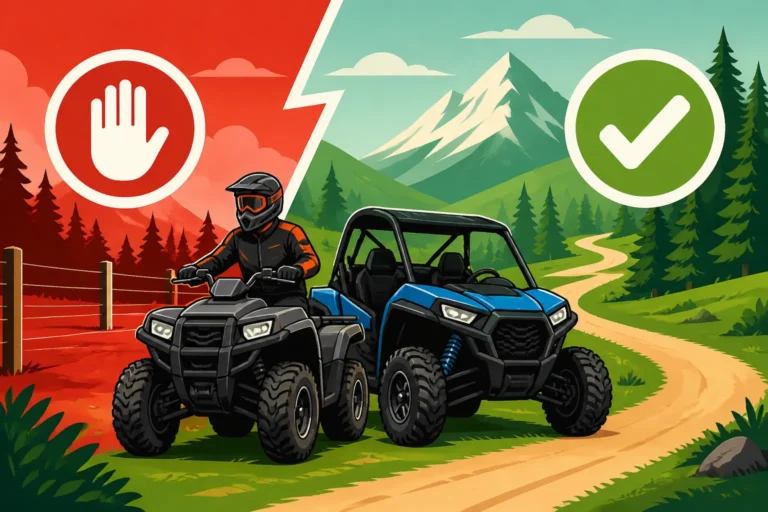
The most critical takeaway is that a local police operation permit is not a license to roam freely on public roads. It's a highly conditional, specific authorization. If your permit states you can cross Highway 97 at the XYZ intersection between 9 AM and 5 PM to access the FSR on the other side, that’s exactly what it means. It does not mean you can:
- Take a detour down a side street to grab groceries.
- Ride an extra 5 kilometers down the highway "just because."
- Use the permit in another jurisdiction or on a different route.
- Operate your ORV on that highway outside the specified hours.
Deviating from the permit's exact terms is akin to riding an unregistered machine – you are breaking the rules, and you could face significant penalties. The police are granting a privilege based on a specific need and route, and they expect strict adherence. Always carry your permit with you, just like you carry your [BC Riders Must Carry the Certificate] for your ORV, and be prepared to show it to an officer.
Equipment and Safety Standards Remain Critical
Even with a permit, your ORV isn't suddenly required to meet all the equipment standards of a passenger vehicle, nor should you assume it's as safe as one on the road. For instance, your UTV likely doesn't have turn signals or a horn as standard equipment. While the permit might allow for a crossing, you'll still need to rely heavily on hand signals, careful observation, and defensive driving. However, this is also where personal responsibility and smart choices come into play.
Many riders, myself included, choose to enhance their machines with aftermarket safety features when they anticipate even limited road use. For example, a quality set of side mirrors can drastically improve your situational awareness when briefly merging or crossing traffic. Adding brighter, more visible LED lights, like those offered by SuperATV, can make a huge difference in how well you're seen by other drivers, especially at dawn or dusk, even if the permit itself only requires basic working lights. Similarly, some SuperATV kits include turn signals that can be invaluable for clear communication with other drivers on pavement. While these might not be explicit conditions of your permit for certain roads, they significantly enhance your safety and demonstrate your commitment to responsible riding, which can only reflect well if you ever need to interact with law enforcement.
Real-World Scenarios and Practical Advice
Let’s talk about how these permits play out in real life and what you can do to make the most of them while avoiding common pitfalls. Many of us ride in areas where these small stretches of road are unavoidable, and having a legal solution can make a world of difference.
Connecting Trails and Accessing Services
Consider a common situation: you've been riding all morning on a fantastic network of trails, but you're running low on fuel, and the nearest gas station is about 2 kilometers down a provincial highway, just outside a small town. Without a permit, your only legal option is to load your machine onto a trailer, drive to the gas station, unload, refuel, load back up, drive back, and unload again. It's a monumental waste of time and energy.
With a police operation permit specifically for that 2-kilometer stretch and the purpose of accessing fuel, you could potentially ride directly to the station, fill up, and return to the trails. Another great example is when a new trail section opens up, but it requires crossing a municipal road that's barely 500 meters long to get from the old section to the new. A permit makes this transition seamless and legal. When planning these trips, ensure your permit clearly outlines these points of access and your intended route. Having practical storage on your machine, perhaps a rugged SuperATV cargo box, can also be a game-changer for these excursions, allowing you to carry tools, emergency supplies, or even just your lunch and extra water when you're making those quick runs into town.
Potential Pitfalls and How to Avoid Them
Despite the clear benefits, there are several ways riders can inadvertently run afoul of the permit's conditions or the law. Avoiding these requires diligence and a clear understanding of your responsibilities.
- Riding Outside the Permitted Route or Time: This is the most common mistake. If your permit says "Highway X, between KM 10 and KM 12, from 8 AM to 6 PM," stick to it religiously. Don't be tempted to go a little further or ride outside those hours. An officer won't hesitate to ticket you for going beyond your authorized window.
- Not Having the Permit On Your Person: Just like your driver's licence and ORV registration, you must have your physical police operation permit with you at all times when operating on the specified road. An officer can't verify it without seeing it. [BC Riders Must Carry the Certificate] of registration, and the same goes for this permit.
- Misunderstanding the Permit's Limitations: Remember, it's for specific highway use only. It doesn't allow you to ride on sidewalks, through parks, or on other roads not explicitly mentioned. It's not a green light for general urban commuting.
- Varying Interpretations by Detachments: Because these are locally issued, you might find that one detachment is more open to certain routes or conditions than another. If you plan to use roads that fall under different police jurisdictions, you might need to apply for separate permits or communicate between detachments.
- Ignoring Other ORV Regulations: Even with a road permit, all other ORV rules still apply. This includes wearing a helmet, carrying appropriate identification, and operating your machine safely. [BC Fines for Careless Operation] can still be issued if you're riding recklessly, regardless of whether you have a permit for the road section.
By being meticulous and respectful of the rules, you can make these permits work for you without encountering unnecessary headaches or penalties.
Best Practices for ORV Riders Seeking Permits
Navigating the world of local police operation permits requires a proactive and responsible approach. It's not a right, but a privilege granted by local authorities, and how you present yourself and your machine can significantly influence the outcome.
Be Prepared and Professional
When you approach your local police detachment, treat it like any formal interaction. Being prepared demonstrates responsibility and respect for their time and authority.
- Have All Your Documentation Ready: Before you even walk through the door, gather your current driver's licence, your ORV's Certificate of Registration, proof of insurance (ensuring it covers basic Autoplan for highway use), and any relevant ownership documents. Make photocopies, but be prepared to show originals.
- Know Your Route Precisely: Don't just vaguely describe "that road near the lake." Pull out a map (digital or paper), highlight the exact start and end points, list the road names, and measure the distance. The more precise you are, the easier it is for them to assess and approve.
- Be Clear About Your Reason: Have a concise, justifiable reason for needing the permit. "I want to connect Trail A to Trail B" is better than "I just want to ride my quad on the road." Emphasize practical necessity rather than casual convenience.
- Maintain a Respectful and Cooperative Attitude: Police officers are there to ensure public safety. Approach them with courtesy, answer their questions truthfully, and be open to any conditions they might impose. Remember, they are offering a solution to a problem, not creating one. A positive interaction can pave the way for future requests.
Prioritizing Safety Gear and Machine Readiness
Even if you're only on the pavement for a short distance, safety is paramount. Your machine must be in good working order, and your personal protective gear is non-negotiable.
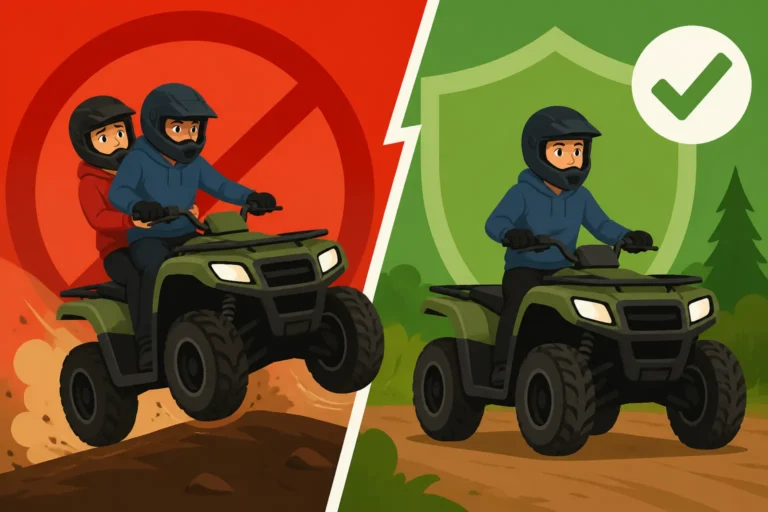
- Reinforce Helmet Rules: Always wear an approved helmet that meets BC standards. [BC Helmet Law Covers Every Rider], and this doesn't change when you're on a public road, even with a permit. Ensure your passenger (if applicable and permitted by your machine's design and local rules) is also properly geared up.
- Ensure Machine Maintenance: Before taking your ORV onto any public road, even for a short trip, ensure it's mechanically sound. Check your brakes, lights, tires, and steering. A breakdown on a busy highway is dangerous and embarrassing.
- Visibility is Key: Your machine needs to be seen. Ensure all your lights (headlights, tail lights, brake lights) are functioning correctly and are clear of mud or debris. Your [BC ORV Number Plates and Decals] must be clean and visible. Consider adding reflective tape to your machine or gear for extra visibility, especially if you anticipate riding near dawn or dusk.
- Consider Aftermarket Safety Enhancements: While not always mandatory, investing in additional safety features for limited road use is a smart move. Aftermarket turn signal kits, robust mirrors, and upgraded lighting from reputable brands like SuperATV can significantly increase your safety and communication capabilities when briefly sharing the road with other traffic. These aren't about making your machine street legal, but about enhancing your visibility and safety for those specific permitted movements, demonstrating your commitment to responsible and safe operation.
Disclaimer
This article is for general informational purposes only and does not constitute professional advice. Laws, prices and regulations vary by location and change over time. Consult a qualified professional for guidance on your specific situation.