BC Insurance Bought With Registration
Let's talk about something that trips up so many of us when we're trying to get our ATVs or UTVs ready for the trails here in beautiful British Columbia: insurance. It's not always as straightforward as registering your car, and the way it ties into the registration process can feel like navigating a particularly dense section of forest without a map. But don't you worry, because this guide is here to clear up all that confusion, explaining exactly what insurance you need, where you need it, and how it all connects to getting your machine properly registered in BC. We'll demystify the different types of coverage, where to get them, and why carrying the right paperwork isn't just a good idea, it's often the law.
Understanding BC's Off-Road Vehicle Act and Insurance Basics
When you invest in an ATV, UTV, dirt bike, or even a snowmobile for exploring BC's incredible backcountry, you're not just buying a machine; you're also taking on a set of responsibilities. One of the biggest, and often most confusing, is understanding the insurance requirements. Unlike a passenger vehicle that needs continuous insurance just to be driven on public roads, off-road vehicles (ORVs) have a more nuanced set of rules, largely dictated by where you plan to ride. It’s not a one-size-fits-all situation, and getting it wrong can lead to some hefty fines and headaches.
The Mandatory Link Between Registration and Basic Insurance
Here in BC, when you head to an Autoplan broker to register your ORV under the Off-Road Vehicle Act, you're not just walking out with a shiny new number plate and a [BC's Certificate of Registration Explained]. Many riders are surprised to learn that this registration process often includes a crucial conversation about insurance. While the registration itself primarily establishes ownership and gives you a unique identifier for your machine, it's intrinsically linked to where you'll eventually need some form of insurance.
The key takeaway here is that basic third-party liability insurance isn't universally mandatory just because your machine is registered. Instead, it becomes mandatory for specific riding scenarios. The primary one that catches most riders is venturing onto Forest Service Roads (FSRs), which are often our access points to incredible trails and remote camping spots. Your Autoplan broker, who handles [BC Autoplan Brokers Handle ORV Registration], will typically guide you through the options, making sure you understand what's required for the types of riding you plan to do. It’s not always about having full coverage, but about having the right liability coverage for the right situation.
Different Insurance Needs for Different Riding Areas
British Columbia boasts an immense amount of Crown land, resource roads, and private property, each with its own set of rules for ORV use. This mosaic of land types directly impacts your insurance requirements, and it's where a lot of riders can get tangled up. It's not enough to simply have insurance; you need the correct insurance for your specific adventure.
For instance, if you're sticking solely to your own private property, technically, no provincial insurance is mandated. However, most savvy riders would still carry some form of liability protection through a private insurer, just in case. But the moment you venture onto Crown land, especially those crucial Forest Service Roads, the game changes. These roads are vital arteries for forestry, mining, and other industrial activities, and they are also the primary gateways for recreational riders like us. The province mandates specific liability coverage when you're on these FSRs to protect other users and infrastructure. Understanding these distinctions—between Crown land, FSRs, private land, and even the rare occasion you might need to cross a highway—is paramount to staying legal and protected.
Navigating the Insurance Options at Registration
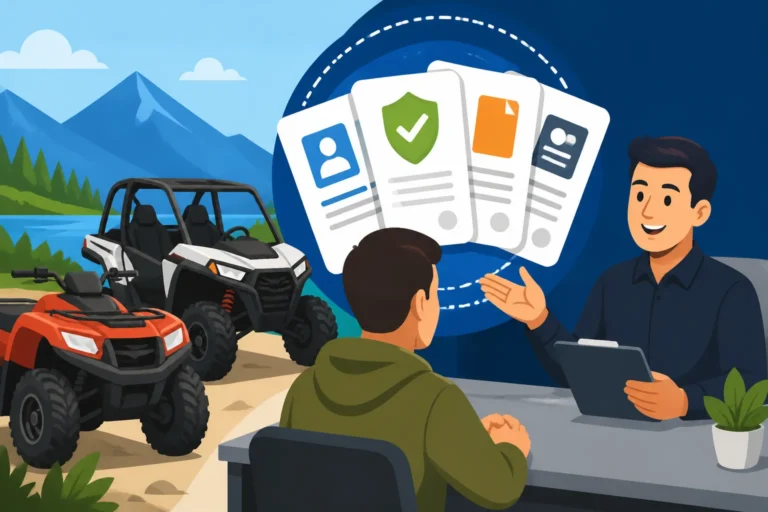
Walking into an Autoplan broker can feel a bit overwhelming, especially if you're new to the ORV world or haven't registered a machine in BC before. The good news is that these brokers are set up to help you navigate the system. They’ll process your [How to Register an ATV in BC] and, perhaps more importantly, discuss your insurance needs based on the Off-Road Vehicle Act. It's a critical step that ensures you're not only legal but also protected from unforeseen circumstances out on the trails.
Basic Third-Party Liability for Forest Service Roads
This is arguably the most common and often mandatory insurance conversation you'll have when registering your ORV. Why? Because a vast majority of us use Forest Service Roads to access our favourite riding areas. These FSRs are not just bumpy dirt tracks; they're active industrial routes, and the potential for an accident, even a minor one, is always present. The province recognizes this and mandates a minimum of $200,000 in third-party liability coverage for anyone operating an ORV on a Forest Service Road.
What does this $200,000 liability actually cover? It's there to protect you financially if you accidentally cause injury to another person or damage to their property while riding on an FSR. Imagine you accidentally clip a logging truck, or your machine veers off and damages a culvert or another recreationalist's vehicle. Without this coverage, you'd be personally responsible for those costs, which could easily run into the tens or even hundreds of thousands of dollars. This specific coverage is usually purchased directly through ICBC via your Autoplan broker when you go through the registration process. It's a foundational piece of your ORV's legal setup, making sure you're protected when you're out exploring the province's incredible wilderness via these resource roads. Understanding that [BC Resource Road Insurance of $200,000] is a non-negotiable for FSRs is key, especially when you compare it to other Crown land where [BC Liability Is Voluntary on Other Crown Land].
Voluntary Coverage for Crown Land and Private Property
While the $200,000 liability for FSRs is mandatory, much of the remaining insurance landscape for ORVs in BC falls into the "voluntary but highly recommended" category. This is where private insurers come into play, offering a range of options that go far beyond the basic liability you might get through Autoplan for FSRs. We're talking about comprehensive coverage that protects your own machine from theft, fire, or accidental damage, and extended liability that gives you a much bigger safety net than the minimums.
Think about it: you've invested a good chunk of change in your quad or side-by-side. What happens if it gets stolen from your garage or campsite? What if you're on a remote trail, take a corner too fast, and roll your machine, causing significant damage? Without comprehensive coverage, you'd be footing the entire repair or replacement bill yourself. Similarly, while basic liability on FSRs covers damage you cause to others, extended liability through a private insurer can offer broader protection, potentially covering you on non-FSR Crown land, private property (with permission, of course!), or even during transport. It’s an investment in peace of mind, allowing you to enjoy your rides without constantly worrying about the financial fallout of an unfortunate incident. Many riders find that a well-rounded policy from a private company covers their machine better for all types of adventures.
Highway Crossings and Temporary Permits
Even though our ATVs and UTVs aren't street-legal in BC, there are very specific, limited circumstances where you might need to operate them on a paved road. This usually involves crossing a highway at a designated intersection to get from one section of trail to another, or moving your machine a short distance along a highway shoulder. These aren't joyrides on public roads; they are specific, regulated movements that require a special permit. And here's where insurance pops up again!
To obtain one of these [BC Police Operation Permits for Highway Travel], which are often issued by your local RCMP detachment or municipal police, you'll need to demonstrate that you have basic Autoplan insurance on your ORV. This is the same type of basic vehicle insurance you'd get for a car, and it provides minimal third-party liability coverage while your ORV is temporarily operating on a highway. Even if you only plan to cross a highway once in a blue moon, obtaining this permit and the associated basic insurance is absolutely crucial. Ignoring this requirement could lead to significant fines and penalties, as operating an uninsured, unregistered ORV on a public highway is a serious offense. The rule is clear: [BC Requires Basic Autoplan on a Highway] for these specific, temporary movements.
Practicalities, Costs, and Ongoing Considerations
Navigating the world of ORV registration and insurance in BC isn't just about understanding the rules; it's also about managing the practical aspects. This includes knowing what to budget, where to get reliable information and coverage, and what documents you need to keep handy. It’s a bit like preparing for a backcountry trip: you need the right gear, the right knowledge, and a solid plan to avoid getting lost or running into trouble.
What You Pay and Where to Get It
Let's talk money, because that's often where the rubber meets the road (or the tire meets the trail!). When you register your ORV in BC, the registration fee itself is a one-time charge, often a modest amount that covers the administrative process and gets you your plate and certificate. [BC ORV Registration Cost] is not an annual expense. However, the insurance side of things is a different story. Unlike the registration, insurance is an ongoing expense, and you'll be paying for it regularly—usually annually or monthly, depending on your provider and policy. This is an important distinction, as many new riders confuse the one-time registration fee with the recurring insurance premium. Remember, [What You Still Pay Yearly After Registering Once] is usually just your insurance, not a renewal of the registration itself.
When it comes to actually getting your insurance, you'll typically start with an Autoplan broker for any mandatory FSR liability or highway crossing permits. For more comprehensive coverage, like protection against theft, fire, or collision, you'll need to shop around with private insurance providers. It's always a smart move to get quotes from several different companies to compare coverage and premiums. While resources like LawDepot are fantastic for getting legal document templates, such as [BC Bills of Sale for Every Prior Owner] or [BC Gift Letters Between Family], for things like proving ownership or transferring a machine, they don't provide insurance policies themselves. Insurance comes from licensed brokers and agents. Your premiums will depend on a variety of factors, including the type of machine you own, your riding history, where you live, and the level of coverage you choose.
Proof of Insurance and Penalties
Okay, so you've got your machine registered, you've got your plate, and you've secured the necessary insurance policies. Fantastic! But your responsibility doesn't end there. Just like with a road vehicle, you need to be able to prove you have valid insurance when you're out riding. The province mandates that [BC Riders Must Carry the Certificate] of registration, and this certificate often includes details of any basic FSR liability coverage purchased through ICBC. For policies from private insurers, you'll need to carry a separate insurance card or document provided by that company. Whether it's a physical copy or a digital one on your phone (just make sure your phone is charged!), having proof readily available is non-negotiable.
Why is this so important? Because if a Conservation Officer, RCMP officer, or other law enforcement official stops you on Crown land or an FSR and you can't produce proof of the required insurance, you could face significant penalties. We're talking about fines, potential impoundment of your machine, and even more severe consequences if you're involved in an accident without proper coverage. [BC Fines for Careless Operation] or riding unregistered can be costly enough, but add uninsured operation into the mix, and you're looking at a truly expensive day out. Always keep your documents dry, safe, and accessible.
The Importance of Documentation Beyond Registration
While the certificate of registration is your primary proof of registration and often includes basic FSR insurance details, a comprehensive approach to documentation goes a long way. This is particularly true when dealing with ownership transfers, proving a machine's history, or even making an insurance claim. For example, if you're ever in an accident and need to make a claim on your voluntary comprehensive insurance, the insurer will want clear proof of ownership.
This is where having proper legal documents, like a well-drafted bill of sale, becomes invaluable. If you've just bought your machine, ensuring you have a detailed and signed bill of sale from the seller is critical for both registration and insurance purposes. Resources like LawDepot can be incredibly helpful for creating clear, legally sound documents like bills of sale or even declarations of ownership. For instance, if you're dealing with a private sale where the previous owner has misplaced documentation, a properly completed bill of sale, perhaps using a template, can help bridge the gap. Similarly, if you've received your machine as a gift, a formal [BC Gift Letters Between Family] can serve as vital proof of how you acquired it. Good documentation simplifies everything, from the initial registration at the Autoplan broker to future insurance claims, ensuring a smooth ride on and off the trails.
ORV Insurance Requirements in BC: A Snapshot
To help summarize the key insurance requirements depending on where you plan to ride your ORV in British Columbia, here's a quick reference table. Remember, this is a general guide, and it's always best to confirm specifics with an Autoplan broker and private insurance providers for your unique situation.
| Riding Location | Mandatory Insurance Type | Recommended Additional Coverage | Where to Obtain |
|---|---|---|---|
| Forest Service Roads (FSRs) | $200,000 Third-Party Liability | Comprehensive (Theft, Fire, Collision), Extended Liability | ICBC Autoplan Broker, Private Insurers |
| Other Crown Land | Voluntary (No provincial mandate) | Third-Party Liability, Comprehensive (Theft, Fire, Collision) | Private Insurers |
| Private Property | Voluntary (No provincial mandate) | Third-Party Liability, Comprehensive (Theft, Fire, Collision) | Private Insurers |
| Highway Crossings | Basic Autoplan Third-Party Liability | N/A (Only temporary, specific highway movements permitted) | ICBC Autoplan Broker (with police permit) |
Disclaimer
This article is for general informational purposes only and does not constitute professional advice. Laws, prices and regulations vary by location and change over time. Consult a qualified professional for guidance on your specific situation.