BC Registration When the Seller Has No Papers
Oh, the classic scenario! You’ve found what seems like a great deal on a used ATV or UTV here in beautiful British Columbia, maybe from a private seller on a local classifieds site or even from a buddy, only to discover that the original paperwork, or even recent bills of sale, seem to have vanished into thin air. It’s a frustrating situation that many of us have faced, leaving you wondering if you'll ever be able to legally register your new-to-you machine. But don't despair – this guide is here to walk you through exactly how to navigate BC's ORV registration system when the seller has no papers, offering practical steps and reassuring you that it's often more solvable than it appears.
The Frustration of Missing Papers: Why This Happens in BC
It feels like a massive roadblock when you’re excited about a new machine, only to hit a wall because of missing documentation. You're ready to explore BC's incredible backcountry, but the thought of not being able to register your ATV or UTV is a real buzzkill. This isn't an uncommon problem, and it's important to understand why it happens before we dive into solutions.
Common Scenarios for Missing Documentation
Think about how many off-road vehicles change hands in informal ways over the years. Maybe your seller bought their quad from a friend of a friend back in the early 2000s with just a handshake and a crumpled receipt that has long since faded or been lost. Or perhaps it's an even older machine, passed down through family, and no one ever really thought about keeping meticulous records for something that was only ever ridden on private land.
Another common situation arises when a machine has had multiple owners, each sale being a casual affair, perhaps just a simple handwritten note or even just cash changing hands without any formal bill of sale. Sometimes, people are simply unaware of the future implications for registration. Before BC made ORV registration mandatory in 2015, the need for an unbroken chain of ownership wasn't on everyone's radar. So, when you encounter a seller who genuinely doesn't have the "right" papers, it's often not because anything nefarious is going on; it's just the reality of how these machines have been bought and sold for decades.
The Importance of a Complete Ownership Chain in BC
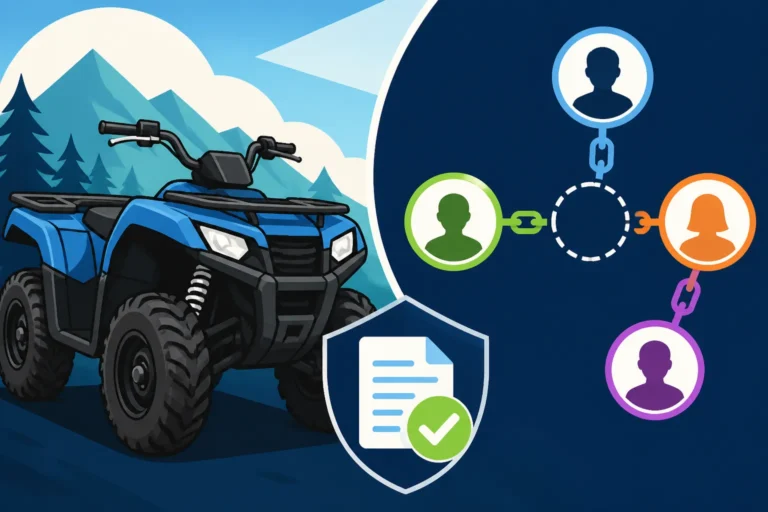
Here's where BC's registration system can feel a bit like a historical detective novel. Unlike some jurisdictions that issue a "title" document that gets transferred, BC issues a Certificate of Registration. To do this, the system needs to see a clear and continuous line of ownership from the original sale of the machine all the way to you. Every single transfer, every change of hands, needs to be documented. This is why a simple gap in the paperwork can feel so overwhelming.
The provincial registration system is designed to prevent stolen machines from being registered and to ensure that sales tax (PST) is properly collected. Without a complete paper trail, the system doesn't have the proof it needs to confidently say, "Yes, this machine truly belongs to you, and we know exactly how it got here." This is the core reason why [Why Every Past Sale Has to Be Documented] is such a crucial concept in BC's ORV world. If you're trying to register a quad that was [Registering a Quad Bought for Cash Decades Ago], you'll quickly run into this challenge.
Your Path Forward: The Statutory Declaration
Don't give up hope just yet! While the absence of a clean bill of sale might seem insurmountable, there's a powerful tool designed precisely for these situations: the statutory declaration. This is often the key to unlocking your registration when you're dealing with [BC Machines With No Paperwork].
What a Statutory Declaration Is and How It Helps
A statutory declaration is essentially a formal, sworn statement of fact. You, or ideally the seller, make a declaration before a legal professional (like a notary public or commissioner for taking affidavits) stating specific details under oath. It's a serious legal document where you attest to the truthfulness of the information provided.
For ORV registration, a statutory declaration acts as a substitute for a missing bill of sale or other ownership documents. If the seller has no formal papers, they can declare, under oath, how and when they acquired the machine, from whom, and that they are the rightful owner. If you're the one making the declaration because the seller is unreachable or unwilling, you would declare how and when you acquired the machine, from whom, and the efforts you made to get previous documentation. This declaration then becomes the missing piece of the ownership puzzle, allowing the Autoplan broker to process your registration. It fills the gap, providing the necessary legal proof of ownership when conventional documents are absent. It's truly the cornerstone of [BC Statutory Declaration for an ORV].
Crafting Your Declaration: Key Details to Include
Accuracy and detail are paramount when preparing a statutory declaration. It's not just a quick note; it needs to be comprehensive. Here's what absolutely needs to be included:
- Your (or the Declarant's) Full Legal Name and Address: This clearly identifies who is making the sworn statement.
- The Machine's Full Details: This includes the make, model, year, and crucially, the Vehicle Identification Number (VIN). Without the VIN, the declaration is almost useless. If you're struggling to locate it, check out [Serial Numbers and Where They Hide] for tips.
- How the Declarant Acquired the Machine: This is the heart of the declaration. State clearly the date of purchase, the name of the person or entity from whom it was acquired, and if possible, their contact information. If the seller is the declarant, they would describe their purchase. If you are the declarant, you would describe your purchase from them.
- Purchase Price (if applicable): While not always mandatory, including the price can help establish the bona fides of the transaction and inform PST calculation.
- Confirmation of Ownership: A statement that the declarant is the rightful owner of the machine, that it is free of liens or encumbrances, and that they have the legal right to sell/register it.
- Efforts to Obtain Prior Documentation (if applicable): If you're the one making the declaration and the seller had no papers, you'd briefly state that the seller was unable to provide prior documentation.
You can often find templates for statutory declarations online. Websites like LawDepot offer customizable legal document templates that can guide you through the process of creating a statutory declaration for various purposes, including vehicle ownership. While you'll still need to have it sworn before a commissioner, a service like LawDepot can help you structure the content correctly. Remember, getting a statutory declaration for an ORV typically costs a small fee, often around [BC Statutory Declarations Cost $15], when sworn before a notary public or commissioner of oaths.
Steps to Take Before You Visit the Broker
Okay, so you know a statutory declaration is your golden ticket. But before you rush off to the notary or an Autoplan broker, there are a few important preparatory steps that can make the process much smoother and increase your chances of success.
Gathering All Available Information
Even if the seller claims to have "no papers," press them gently for anything that might exist.
- Old Handwritten Receipts: Sometimes an old, faded receipt is all that exists. Even if it's incomplete, it's better than nothing.
- Email or Text Messages: If the sale happened digitally, old emails or text conversations discussing the sale, the VIN, or payment can serve as supporting evidence.
- Photos of the Machine: While not direct proof of ownership, photos can help verify the machine's identity, especially if they show the VIN plate clearly.
- Seller's Information: Make sure you have the seller's full name, address, and contact information. This is critical for the statutory declaration.
- VIN Check: Before you commit fully, it's always a smart move to conduct a VIN check. This helps ensure the machine isn't reported stolen and doesn't have any outstanding liens. Checking out [Running a Stolen Vehicle Check Before You Hand Over Cash] is a wise step to protect your investment and avoid headaches down the road.
If the seller is cooperative, ideally, they would be the one to sign the statutory declaration, stating how they acquired the machine. This is the cleanest path. If they are unwilling or unable, you, as the buyer, would then declare your purchase from them, explaining the lack of prior documentation.
Preparing for Your Broker Visit
Once you've got your statutory declaration in hand, along with any other scraps of information, it's time to visit an Autoplan broker. These are the folks who handle [BC Autoplan Brokers Handle ORV Registration] for the province. Here's what you should bring:
- Your Statutory Declaration: This is your primary document for bridging the paperwork gap.
- Any Other Supporting Documentation: Every little bit helps. This could be old receipts, photos, or even a basic handwritten bill of sale from the seller to you (even if it's not the full chain).
- Photo Identification: Your driver's license or another government-issued ID.
- Proof of BC Residency: If you're new to BC, you'll need this.
- Funds for Registration and PST: Be prepared to pay the registration fee and provincial sales tax on the declared purchase price.
The broker's job is to ensure all the requirements are met. They might have questions, especially when dealing with a statutory declaration. Be patient and ready to explain the situation clearly. Having a comprehensive [BC Registration Paperwork Checklist] prepared can help ensure you don't miss anything. While the process usually goes smoothly, depending on the complexity of the missing chain, [BC Registration Processing Time] might vary slightly.
Potential Hurdles and How to Overcome Them
Even with a statutory declaration, there can be a few bumps in the road. It’s important to anticipate these and know how to address them, ensuring you stay on track to get your machine legally registered and ready for the trails.
When the Seller Has Vanished or Is Uncooperative
This is perhaps the most challenging situation. What if you bought the machine a while ago, and now the seller is unreachable, or worse, outright refuses to sign a statutory declaration? This creates what's known as a "gap in the ownership chain," and it can feel like a dead end. However, it's not always hopeless.
In such cases, you will need to be the one making the statutory declaration. You would declare the details of your purchase, including the seller's name (if known) and the date of the transaction. Crucially, you would also need to state that you have made reasonable efforts to contact the seller or obtain further documentation, but have been unsuccessful. The broker will assess this. Sometimes, if the machine is very old and the gap is substantial, you might need to provide additional details, perhaps even proving continuous possession over a period of time. It's a trickier path, but brokers are familiar with [Registering a Quad With a Gap in Its Ownership Chain] and can guide you. However, it’s always best if the seller can sign the declaration, as it provides a clearer paper trail. If the seller has truly vanished, as discussed in [BC Registration When the Seller Has Vanished], the declaration becomes your only recourse, and its acceptance might depend on the specific details and the broker's assessment.
Costs and Time Considerations
While a statutory declaration is a cost-effective solution compared to the headache of not being able to register your machine, it does involve a small fee. Having a notary public or commissioner for taking affidavits witness your signature and stamp the document typically costs around the amount indicated for [BC Statutory Declarations Cost $15]. This is a minor expense in the grand scheme of things, but it's one to be aware of.
Beyond the fee, there's the investment of your time. Gathering all the necessary information, preparing the declaration (even with a template from LawDepot), finding a notary, and then visiting an Autoplan broker all take time and effort. It might not be a single-trip affair, especially if the ownership history is particularly murky. Be prepared for potential follow-up questions from the broker or even a need to amend your declaration if crucial details are missing. The key is patience and persistence. Don't rush through the process, as errors can lead to delays. Taking the time to get it right the first time will save you headaches and multiple trips later on.
It might feel like a bureaucratic maze, but with the right approach and the power of a statutory declaration, you can absolutely get your ATV or UTV registered in BC, even if the seller didn't have all the pristine paperwork you might have hoped for. Get that declaration sorted, visit your local Autoplan broker, and you'll be hitting the trails in no time!
Disclaimer
This article is for general informational purposes only and does not constitute professional advice. Laws, prices and regulations vary by location and change over time. Consult a qualified professional for guidance on your specific situation.