Private Insurers Versus the Public One
Riding an ATV or UTV in British Columbia can be an incredible way to explore our stunning backcountry, but navigating the insurance requirements can feel like slogging through a mud bog after a heavy rain. Many riders find themselves confused about whether they need to deal with ICBC, private insurance companies, or both, leading to worries about being properly covered or even breaking the rules. This guide is here to untangle the complexities of BC's off-road vehicle insurance system, helping you understand the roles of public and private insurers so you can ride with confidence and peace of mind.
Understanding BC's Insurance Landscape for Off-Road Vehicles
When you think of vehicle insurance in British Columbia, your mind probably jumps straight to ICBC, our public insurer. And for good reason – they handle the vast majority of on-road vehicle insurance in the province. However, off-road vehicles (ORVs) like ATVs, UTVs, dirt bikes, and snowmobiles operate under a slightly different set of rules, creating a unique insurance landscape that blends public and private options. This can be a source of real head-scratching for new and experienced riders alike, especially since the province only made ORV registration mandatory in 2015, fundamentally changing how insurance works for these machines.
The Role of ICBC in ORV Insurance
For most of us, ICBC is synonymous with car insurance. When it comes to ORVs, their involvement is specific and, for many riders, somewhat limited. ICBC's primary role for off-road vehicles is to provide the mandatory third-party liability insurance required when you operate your machine on a [BC Forest Service Road]. These roads, often the gateways to incredible riding areas, are considered part of the provincial road network and come with specific legal obligations.
If you plan to ride your ATV or UTV on a Forest Service Road, you are legally required to carry a minimum of $200,000 in third-party liability coverage. This is where ICBC steps in. When you register your ORV at an Autoplan broker, you'll typically purchase this basic liability coverage through them. It's often called "Resource Road Insurance" or "Off-Road Vehicle Liability." This coverage protects you financially if you're found at fault for an accident on an FSR that causes injury to another person or damage to someone else's property. Without it, you could be on the hook for significant costs. It's important to remember that this specific coverage from ICBC is generally limited to that mandatory minimum and primarily applies to FSRs. It doesn't typically cover damage to your own machine or provide higher liability limits for other types of riding.
Why Private Insurers Enter the Picture
Given ICBC's focused role, private insurance companies have a vital place in the BC ORV world. They step in to fill the gaps that ICBC doesn't typically cover, offering a much broader range of protection for your off-road adventures. Many riders, especially those with newer, higher-value machines or those who venture out into remote areas, find that the basic ICBC offering simply isn't enough.
Private insurers offer policies that can cover your machine for physical damage (things like collision and comprehensive coverage), provide higher liability limits than the mandatory minimum, and often extend protection to a wider variety of riding locations beyond just FSRs. Think about it: if you've invested heavily in a specialized UTV with performance upgrades from a company like SuperATV, you're going to want more than just basic liability protection for a forest service road. You'll want to protect that investment from theft, fire, or accidental damage no matter where you're riding. This is where private companies really shine, allowing you to tailor your policy to your specific machine, riding habits, and risk tolerance.
Deciphering Mandatory vs. Voluntary Coverage
One of the biggest sources of confusion for off-road enthusiasts in BC is understanding exactly when insurance is mandatory and when it's voluntary. This isn't just a minor detail; misunderstanding these rules can lead to fines, financial hardship, or even your machine being seized. The legal framework attempts to balance public safety on shared infrastructure with the freedom of private recreational use.
Mandatory Insurance on Forest Service Roads
Let's get straight to it: [BC Forest Service Road Requirements] dictate that if you plan to operate your ORV on a Forest Service Road (FSR), you absolutely must have valid third-party liability insurance. The minimum requirement is $200,000. This isn't just a suggestion; it's a legal obligation. These roads are often used by industrial traffic, like logging trucks, as well as other recreational users, so the potential for serious accidents is real. Without this insurance, you're not only risking hefty fines but also personal financial ruin if you cause an accident involving another vehicle, person, or property.
This mandatory coverage is typically obtained through ICBC when you complete your ORV registration. The process is straightforward: you go to an Autoplan broker, register your machine (if you haven't already), and purchase the "Resource Road" liability coverage. It's a fairly inexpensive policy, especially considering the protection it offers. Remember, this specific ICBC policy is usually for third-party liability only, meaning it covers damage you cause to others, not damage to your own machine. For many, riding FSRs is an unavoidable part of getting to their favourite trails, so this coverage becomes a non-negotiable part of their riding setup.
Voluntary Liability Everywhere Else
Now, here's where things get a bit more nuanced. Beyond Forest Service Roads, on most other Crown land in BC where ORV use is permitted, third-party liability insurance is generally voluntary. This means the government doesn't legally compel you to carry it. However, "voluntary" doesn't mean "unnecessary." Far from it. This is a critical point that many riders overlook, often to their detriment.
Consider a scenario: you're riding with friends on a popular trail system deep in the interior. You take a corner a bit too wide, lose control, and collide with another rider coming the other way, causing significant injury and damage to their high-performance UTV. If you only have the basic ICBC FSR coverage, you're likely not covered for this incident, as it didn't occur on a designated FSR. You could be facing massive legal bills, medical expenses, and repair costs out of your own pocket. This is why private insurance policies, which can offer broad liability coverage that applies across various types of Crown land, are so valuable. Many clubs and organized events will also require proof of adequate liability coverage, even if the law doesn't, underscoring the importance of going beyond the bare minimum. [BC Liability Is Voluntary on Other Crown Land] is a key concept to grasp.
What Private Insurers Offer Beyond the Basics
While ICBC provides a foundational layer of mandatory liability for FSRs, private insurers truly empower you to protect your investment and mitigate a wider range of risks associated with off-road adventures. This is where you can secure the kind of comprehensive protection that truly gives you peace of mind, whether you're taking your machine to its limits or just enjoying a casual ride.
Comprehensive and Collision for Your Machine
One of the biggest advantages of private ORV insurance is the ability to get comprehensive and collision coverage for your own machine. Let's face it, these aren't cheap toys. A new side-by-side or a well-equipped ATV represents a significant financial investment, often in the tens of thousands of dollars. The basic ICBC liability won't do a thing if your machine is stolen from your garage, catches fire, rolls over on a steep climb, or gets damaged in a transport accident.
This is where collision and comprehensive policies from private insurers come in.
- Collision coverage helps pay for repairs or replacement if your ORV is damaged in an accident with another vehicle or object, regardless of who is at fault. If you accidentally drive into a tree or roll your quad down an embankment, collision coverage is what helps you pick up the pieces.
- Comprehensive coverage handles everything else – theft, vandalism, fire, hail, falling objects (like a tree branch during a storm), or even hitting an animal. Imagine returning to your truck after a long hike only to find your trailer broken into and your expensive ORV from SuperATV gone. Without comprehensive coverage, you're out of luck.
These types of coverage are crucial for anyone who has a significant investment in their off-road machine and wants to protect against the many unpredictable incidents that can occur both on and off the trail. They offer a financial safety net that the public system doesn't provide for your personal assets.
Specialized Coverage for Modified ORVs
Another area where private insurers shine is in offering specialized coverage for modified off-road vehicles. It's no secret that many ORV enthusiasts love to customize their machines, adding aftermarket parts, lifts, winches, upgraded suspension, light bars, and performance enhancements. These modifications can significantly increase the value of your ATV or UTV, but they also might not be fully covered under a standard policy.
A private insurer can often provide endorsements or specific clauses to ensure that these aftermarket additions are adequately covered. If you've spent thousands of dollars outfitting your side-by-side with a top-tier lift kit, custom wheels, or a powerful sound system, you'll want to make sure your insurance policy reflects that increased value. Without it, in the event of a total loss, you might only be compensated for the factory value of the machine, leaving you out of pocket for all those expensive upgrades. Some insurers are more adept at handling these custom builds than others, so it pays to shop around and discuss your specific modifications with potential providers. [BC Insurance Price Gaps Riders Talk About] often stem from these very issues.
Navigating Your Insurance Choices as a Rider
Making the right insurance choices for your ORV in BC isn't about finding the cheapest option; it's about finding the right option that balances cost with adequate protection for your specific needs and riding style. It requires a bit of homework and a clear understanding of where and how you plan to use your machine.
Comparing Costs and Benefits
When it comes to ORV insurance, comparing costs and benefits between ICBC and private insurers is paramount.
Let's break it down in a table:
| Feature/Coverage Type | ICBC (Public Insurer) | Private Insurers |
|---|---|---|
| Primary Focus | Mandatory liability for Forest Service Roads | Comprehensive coverage for machine and broad liability |
| Mandatory Coverage | Yes, $200,000 liability for FSRs | No, usually voluntary |
| Voluntary Coverage | Limited to specific FSR liability add-ons | Collision, Comprehensive, higher liability, special risks |
| Coverage for Your Machine | Generally None | Yes, Collision and Comprehensive available |
| Liability Limits | Minimum $200,000 for FSRs | Often $1M, $2M, or higher available for broader use |
| Modified ORV Coverage | Unlikely to cover aftermarket parts | Often available with endorsements |
| Ease of Purchase | Via Autoplan brokers during registration | Via independent insurance brokers or directly online |
| Price | Generally low for basic FSR liability | Varies widely based on machine, coverage, and rider |
As you can see, the offerings diverge significantly. The basic ICBC FSR liability is generally very affordable, often just a fraction of the overall ORV registration cost. However, its benefits are narrowly defined. Private insurance, while costing more, provides a much broader safety net. You'll need to weigh the value of your machine, your financial risk tolerance, and how often and where you ride. For a casual rider with an older, lower-value quad that only sees occasional use on private property, the basic ICBC option (if riding FSRs) combined with self-insurance for damage might suffice. For someone with a new, high-end UTV they ride extensively across varied terrain, investing in comprehensive private coverage is a no-brainer. [BC ATV Insurance Cost Per Year] will depend heavily on these choices.
When to Stick with ICBC, When to Go Private
Deciding whether to rely solely on ICBC or to augment it with private insurance really boils down to your personal circumstances and riding habits.
You might stick primarily with ICBC's offering if:
- You only ever ride on designated Forest Service Roads and require only the mandatory [BC Resource Road Insurance of $200,000].
- Your machine is older, has a low market value, and you're comfortable self-insuring against physical damage or theft.
- You ride almost exclusively on private land where the landowner's insurance or your own homeowner's policy might offer limited liability (always check these policies carefully, as ORV use is often specifically excluded).
- You participate in very few organized events or club rides that might require higher liability limits.
You should strongly consider private insurance if:
- You own a newer, higher-value ATV or UTV and want protection against physical damage (collision, comprehensive) or theft.
- You've invested in significant aftermarket modifications, like those from SuperATV, and want them covered.
- You ride extensively on various types of Crown land beyond just FSRs and want broad third-party liability coverage (often $1 million or $2 million) to protect yourself from potential lawsuits.
- You transport your machine frequently, as private policies can offer coverage during transit or storage.
- You participate in club events, poker runs, or other organized rides where proof of higher liability coverage is often a requirement. [What the Provincial Federation of ATV Clubs Does] often involves advocating for riders and sometimes even offers insurance discounts for members, making private policies more attractive.
- You rent your machine out or use it for commercial purposes (though this requires highly specialized policies).
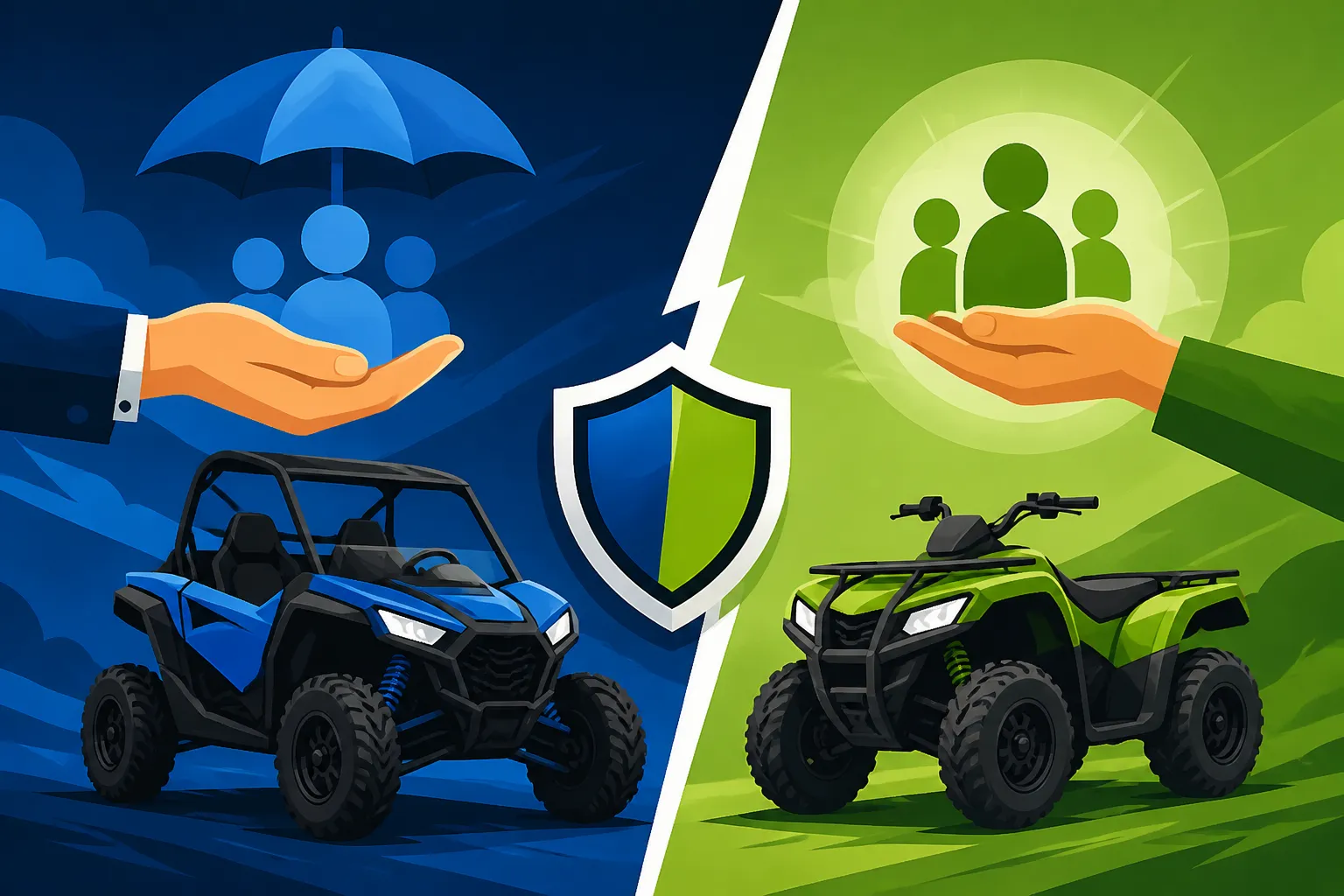
Ultimately, the best approach for most serious BC ORV riders is a hybrid one: secure the mandatory ICBC FSR liability if you'll be on those roads, and then layer on a robust private policy for comprehensive machine protection and broader liability coverage. This dual approach ensures you're legally compliant where required and financially protected in almost all other scenarios, allowing you to focus on the thrill of the ride rather than the worries of an accident.
Disclaimer
This article is for general informational purposes only and does not constitute professional advice. Laws, prices and regulations vary by location and change over time. Consult a qualified professional for guidance on your specific situation.