BC Seat Belt Rules on a Side-by-Side
It’s a common scenario for many side-by-side owners in British Columbia: you’re out on a beautiful forest service road, the sun is shining, and the trails are calling. But then you hear a murmur among fellow riders or see a social media post that makes you second-guess everything you thought you knew about seat belts. The truth is, figuring out the exact BC seat belt rules for a side-by-side can feel like trying to navigate a new trail without a map – confusing, with plenty of twists and turns. This guide aims to clear up that confusion, giving you a comprehensive breakdown of what's expected of you and your passengers when you hit the trails in your side-by-side.
The Core Rule: If It Has Them, Wear Them
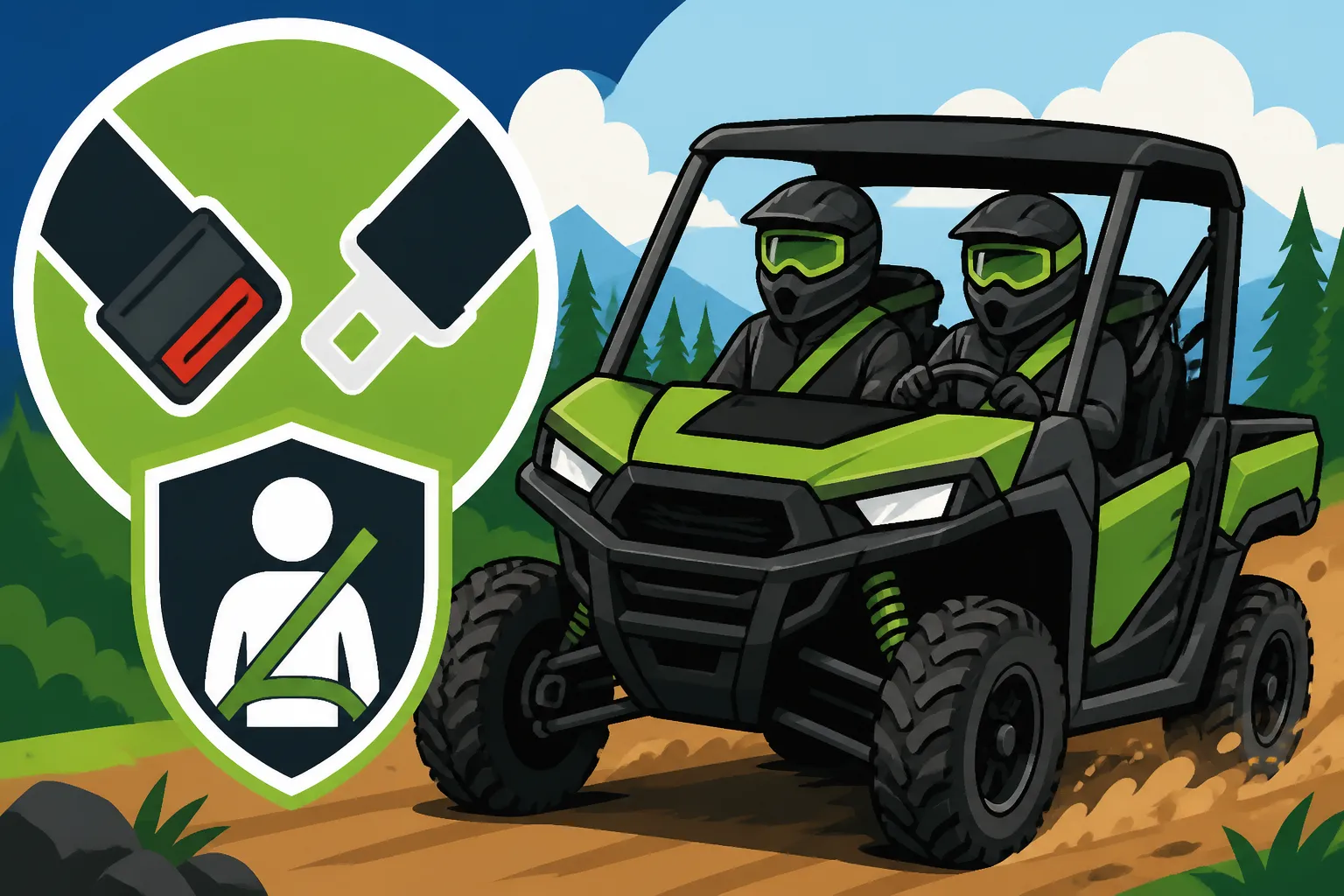
Let's get straight to the point because this is where a lot of the initial confusion clears up: if your side-by-side, also known as a UTV, comes equipped with seat belts from the factory, then you and your passengers are legally required to wear them while operating on Crown land, including forest service roads and designated trails. It's not just a recommendation; it's a rule designed to keep you safe. Many riders assume that because they're not on a highway, the rules are more relaxed. While some aspects of highway traffic laws don't apply, the core safety requirements, like wearing installed seat belts, absolutely do. This is spelled out quite clearly in the Off-Road Vehicle Act and its supporting regulations, which govern most of your riding in BC.
Why the Manufacturers Put Them There
Manufacturers design side-by-sides with a full safety cage and seat belts for a reason: these machines are capable of traversing challenging terrain, often at speed, and rollovers are a very real possibility. Unlike an ATV where the rider is meant to shift their weight and potentially separate from the machine in a dangerous situation, a side-by-side is built to contain its occupants. The roll cage is your primary protection, but it only works if you stay inside it. The seat belt is what keeps you firmly planted within that protective zone. Without it, in the event of a rollover or even a sudden stop, you could be ejected from the vehicle, turning a minor mishap into a serious injury. Think of it like a race car driver; their harness system is there to keep them secure in a high-impact environment. Your side-by-side, in its own way, puts you in a similar risk profile when you're pushing its limits on rugged terrain.
The Legal Expectation on Crown Land and FSRs
The Off-Road Vehicle Act in BC specifies that if an off-road vehicle is equipped with a seat belt assembly, it must be worn by the operator and any passenger. This applies universally across Crown land, which, let's be honest, is where most of us are doing the bulk of our riding. This means whether you're exploring the vast backcountry near the Kootenays, navigating the trails around Chilliwack, or enjoying a scenic ride in the Okanagan, that seat belt needs to be buckled. Conservation officers, RCMP, and other enforcement personnel regularly patrol these areas, and they are well within their rights to ticket you for non-compliance. It's not just about getting caught; it's about making sure everyone gets home safely at the end of the day. Remember, your [BC Crown Land Triggers the Registration Rule] means that if you're riding on public land, you're subject to these regulations.
The Consequences of Not Buckling Up
Beyond the obvious safety risks, not wearing a seat belt in a side-by-side that has them can lead to fines. While specific dollar amounts can change, you can expect a violation ticket for failing to wear an available seat belt. These fines are often similar to those issued for failing to wear a seat belt in a regular car on the highway, signaling the seriousness with which this safety measure is viewed. More importantly, consider the potential for injury. Being ejected from a side-by-side can result in severe head trauma, broken bones, or worse. An injury can mean weeks or months off work, extensive medical bills, and a long recovery period, not to mention the emotional toll on you and your family. No scenic view or adrenaline rush is worth that kind of risk. Ensuring everyone is buckled in is a simple, effective way to mitigate a lot of that danger.
Highway Crossings and Operation Permits: Different Rules?
This is where things can get a little murky in the minds of many riders. Most side-by-sides aren't street legal in BC, meaning you can't just cruise down the highway to your favorite trail. However, there are specific, limited circumstances where your side-by-side might briefly operate on paved roads, primarily for crossing purposes or under a special permit. Do the seat belt rules change then? Generally, no, they don't. The rule of "if it has them, wear them" tends to be the overarching principle.
When Your Side-by-Side Briefly Touches Pavement
BC law allows for very specific scenarios where an ORV, including a side-by-side, can cross a highway. These are typically at intersections, under conditions that minimize disruption to regular traffic, and often involve crossing directly at a stop sign or a traffic light. During these brief moments of highway travel, even though it's not sustained operation, your side-by-side is still a vehicle, and its built-in safety features are expected to be utilized. In fact, if you're on a highway, even for a crossing, you're now technically subject to the Motor Vehicle Act in addition to the Off-Road Vehicle Act, and that act is very clear about seat belt usage. So, while the duration is short, the expectation of buckling up remains firm. You'll also need to be aware of other requirements like holding a valid driver's licence for these crossings. For more details on these specific rules, look into [BC Rules for Crossing a Highway] and [BC Crossings at a Stop Sign].
Operation Permits and Their Conditions
In some specific cases, local police detachments might issue an operation permit that allows for limited use of an ORV on a highway or municipal road, perhaps for a community event, specific work, or to access a remote trail network that requires a short stretch of road travel. These [BC Operation Permit Application Steps] typically come with very strict conditions. While the police issue these permits, they rarely override basic safety rules. The permit might specify routes, times, and other operational requirements, but it's highly improbable it would ever exempt you from wearing an installed seat belt. In fact, it would likely reinforce the need for all safety measures, as you'd be operating in an environment with greater exposure to other traffic. Always read any permit conditions carefully, but assume the seat belt rule applies.
Children, Passengers, and Aftermarket Modifications
Bringing passengers, especially children, along for a side-by-side adventure is one of the joys of these machines. They're designed for it! But with that capacity comes added responsibility regarding safety, and that includes seat belts. Also, many riders love to customize their machines, often upgrading safety features, which also brings up questions about compliance.
Protecting Your Youngest Riders
Children are particularly vulnerable in any vehicle, and side-by-sides are no exception. The BC Off-Road Vehicle Act has specific [BC Youth Riding Rules and Supervision] that apply to children operating ORVs, but when it comes to passengers, the general rule about wearing an installed seat belt applies equally, if not more stringently. It’s crucial to ensure that any child passenger can be properly secured by the machine's seat belt system. If the child is too small for the factory seat belt to fit correctly – meaning it doesn't cross their shoulder and lap appropriately – then they are not safely secured. In such cases, a properly fitted child restraint system, similar to those used in cars, might be necessary, provided it can be safely installed in the side-by-side. The manufacturer's guidelines for passenger age and weight are also incredibly important here and should always be followed. Never let a child ride if they cannot be safely restrained.
The Role of Aftermarket Harnesses and Cages
Many side-by-side enthusiasts upgrade their machines with enhanced safety features. This can include stronger roll cages, door inserts, and multi-point harness systems (like 4-point or 5-point harnesses) to replace the factory 3-point seat belts. Companies like SuperATV offer a range of these aftermarket products, from heavy-duty harnesses to full cage extensions and improved seating solutions. If you install an aftermarket harness system, the legal expectation is that you will use it, and it will provide at least the same level of safety as, if not greater than, the factory-installed seat belt.
It's vital that any aftermarket safety equipment is installed correctly and is appropriate for your machine. While the law mandates wearing installed seat belts, upgrading to a high-quality harness system from a reputable provider like SuperATV goes beyond mere compliance; it significantly enhances occupant safety, especially during aggressive riding or in the event of a rollover. Always ensure your modifications are installed per the manufacturer's instructions and that they don't compromise other safety features of your side-by-side. These types of upgrades are often an excellent investment for peace of mind and enhanced protection on rugged trails.
Beyond the Law: Why Safety Matters Most
While the law provides a baseline for safe operation, the true spirit of responsible off-roading extends beyond simply avoiding a ticket. For side-by-side riders, prioritizing safety, especially concerning seat belts, is paramount to enjoying the sport for years to come and protecting everyone who comes along for the ride.
The Real Risks of Unbuckled Riding
It’s easy to think, "I'm just going slow," or "It's a really smooth trail," but accidents can happen in an instant, often in unexpected ways. A sudden dip, an unseen rock, or an abrupt turn to avoid an obstacle can quickly destabilize a side-by-side. If you or your passengers aren't buckled in, the risk of being thrown around inside the cage, hitting your head on the roll bar, or being completely ejected from the vehicle skyrockets. Even at low speeds, being ejected can lead to serious injuries.
Imagine you're on a gentle grade, not thinking much of it, and hit a patch of loose gravel. The side-by-side slides slightly, then suddenly catches, lurching to one side. If you're unbuckled, you could easily be thrown against the door or the passenger next to you. If a tire then catches something and the machine rolls over, being outside the protection of the cage – or even partially outside – can have catastrophic consequences. The seat belt is your last line of defense, designed to keep you within the protective zone of the roll cage. This critical piece of safety equipment, along with a properly fitted helmet as per [BC Helmets Required on an FSR], can mean the difference between walking away from a mishap and a life-altering injury.
Setting a Good Example and Protecting Your Investment
As an operator, you're not just responsible for your own safety; you're also responsible for the safety of your passengers. Setting a clear example by always buckling up yourself and ensuring all passengers do the same reinforces a culture of safety. This is especially true if you're riding with younger, less experienced individuals who look to you for guidance. When you lead by example, you help foster a community of responsible riders who prioritize safety on every single adventure.
Furthermore, consider the investment you've made in your side-by-side. These machines are not cheap, and neither are repairs from a rollover. More significantly, the emotional and financial cost of an injury can far outweigh the minor inconvenience of buckling up. Proper use of seat belts helps protect both your physical well-being and your cherished machine. Riding off-road in BC is an incredible experience, offering access to breathtaking landscapes and thrilling adventures. By always adhering to the seat belt rules, and considering enhanced safety equipment from brands like SuperATV, you ensure that these adventures remain fun and safe for everyone involved.
| Riding Scenario | Seat Belt Requirement | Notes |
|---|---|---|
| Crown Land / Forest Service Roads | Mandatory if factory-installed | Applies to operator and all passengers. |
| Designated ORV Trails | Mandatory if factory-installed | Included under Crown land regulations. |
| Highway Crossing | Mandatory if factory-installed | Even for brief periods, the general rule applies. Subject to Motor Vehicle Act. |
| Private Land (with permission) | Recommended (Legally varies by specific bylaw) | While not always legally mandated by provincial ORV Act on private land, highly recommended for safety. |
| Under Police Operation Permit | Mandatory if factory-installed | Permits typically reinforce safety rules; unlikely to grant exemption. |
| With Aftermarket Harnesses | Mandatory to use the installed harness system | Assumes proper installation; often provides enhanced safety. |
Disclaimer
This article is for general informational purposes only and does not constitute professional advice. Laws, prices and regulations vary by location and change over time. Consult a qualified professional for guidance on your specific situation.