BC Rules for Riding at Night
The lure of the B.C. backcountry doesn't fade with the setting sun. For many ATV and UTV enthusiasts, riding at night offers a unique thrill—cooler temperatures, different wildlife, and a whole new perspective on familiar trails. However, navigating B.C.'s diverse terrain in the dark also brings its own set of challenges and, crucially, specific legal requirements. Getting caught unprepared or unknowingly breaking a rule can lead to significant fines or, worse, put your safety and the safety of others at risk. This comprehensive guide will illuminate the specific rules and best practices for riding your off-road vehicle after dusk in British Columbia, ensuring your nocturnal adventures are both memorable and compliant.
Navigating the Dark: BC's Lighting Rules for ORVs
When the sun dips below the horizon, your ORV transforms. What was perfectly visible by day becomes a potential hazard without proper illumination. B.C.'s Off-Road Vehicle Act and its associated regulations are quite clear about the minimum lighting requirements for any off-road vehicle operating in low-light conditions, including night. Ignoring these rules isn't just a minor oversight; it's a safety gamble and a ticket magnet.
The Legal Lowdown on Front and Rear Lights
Let's start with the absolute essentials. The law isn't ambiguous here: if you're riding after sunset or before sunrise, or anytime visibility is poor due to weather, your ORV must have functional headlights and taillights. Specifically, you need at least one white or amber light visible from the front and at least one red light visible from the rear. These lights aren't just for show; they need to be bright enough to serve their purpose.
Think about it: the front light is there to illuminate your path, revealing obstacles, dips, and turns that could otherwise sneak up on you in the darkness. It's about seeing where you're going. The rear red light, equally vital, is about being seen by others. Whether it's another rider, a conservation officer, or someone in an industrial vehicle on a resource road, they need to know you're there. Just having a light isn't enough; it must be operational and clearly visible. Conservation officers conducting [BC Equipment Checks by Conservation Officers] will absolutely be looking for this, especially after dark.
Beyond just the lights themselves, the regulations also speak to the condition of these lights. They need to be clean and unobstructed. Dust, mud, or snow can quickly obscure your lights, drastically reducing their effectiveness. A light covered in grime is almost as bad as no light at all. Before every night ride, make it a habit to check your lights for function and cleanliness. It's a small task that makes a huge difference to your safety and compliance with [BC Lighting and Seat Belt Requirements].
Beyond the Basics: Enhancing Visibility with Aftermarket Lighting
While the law sets minimums, any experienced night rider will tell you that "minimum" isn't always "optimal" or "safest." Modern ORVs often come with decent stock lighting, but for serious night riding, many choose to upgrade. This is where the aftermarket really shines, offering a vast array of options to turn night into day on the trails.
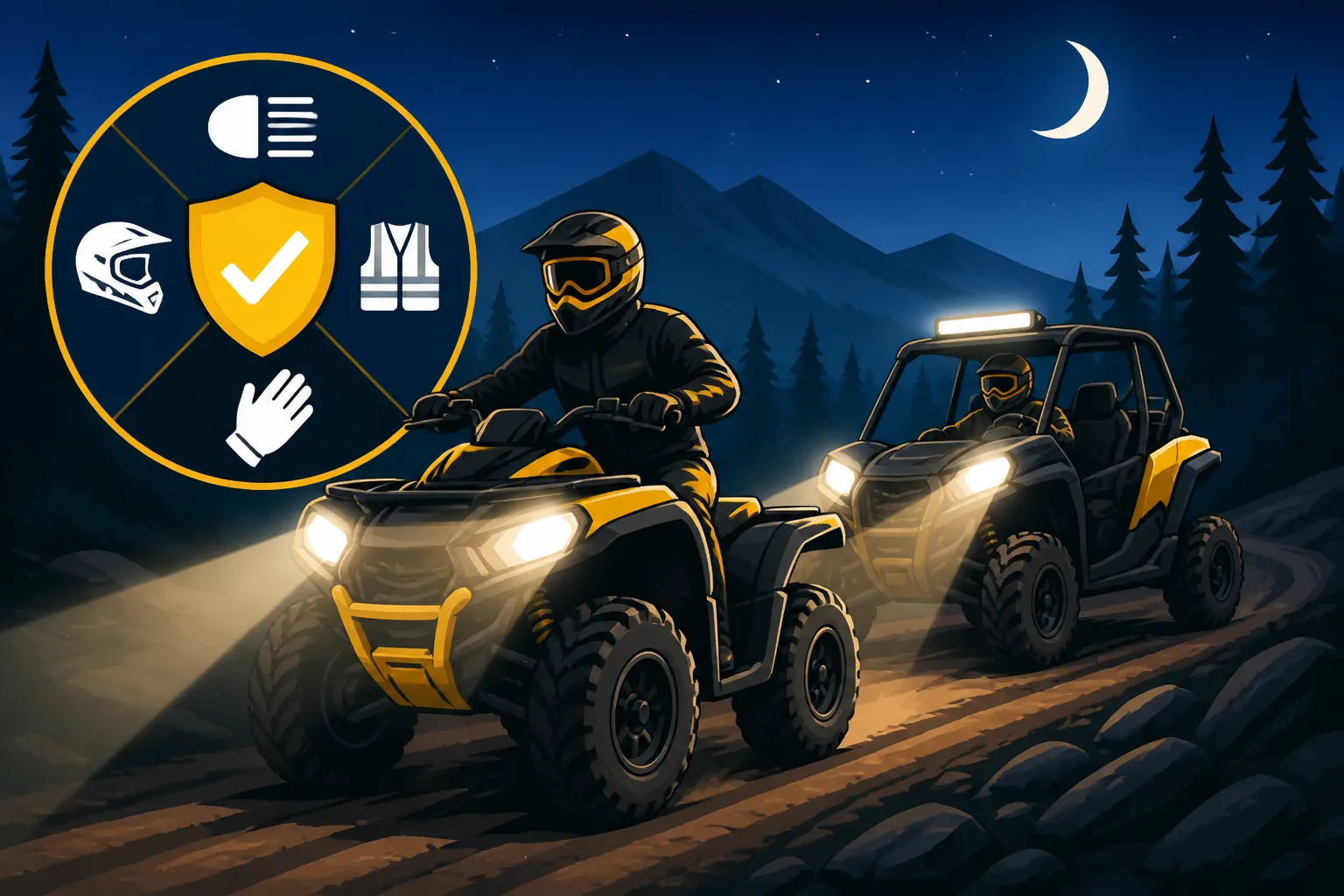
Consider adding a powerful LED light bar to the front of your ATV or UTV. These can dramatically increase your forward visibility, casting a wide and bright beam that far outstrips standard headlights. They help you spot hazards much further down the trail, giving you more time to react. Similarly, supplementary floodlights can broaden your field of vision, helping you see what's lurking in the ditches or alongside the trail. You might even consider rock lights for technical terrain, illuminating the ground directly beneath your machine to help you pick your line carefully. Brands like SuperATV offer a wide range of high-performance lighting solutions specifically designed for off-road use, from robust LED light bars to auxiliary pods and work lights.
Of course, with more lights comes more power draw. If you're planning extensive aftermarket lighting, you'll need to consider your ORV's charging system and battery capacity. An alternator that can't keep up will leave you with a dead battery and, ironically, in the dark. It's a good idea to consult with an expert or research your machine's electrical system before decking it out with a full suite of auxiliary lights. Remember, the goal is enhanced safety and enjoyment, not a trailside breakdown. Good planning here makes all the difference for your night adventures.
[BC Lighting Rules in Low Visibility]
Night riding isn't the only scenario where lighting becomes crucial. British Columbia's diverse weather means you can encounter low visibility conditions at any time of day, whether it's a dense fog rolling in off the coast, a heavy downpour in the mountains, or a late-season snowfall in the interior. These conditions demand the same, if not greater, attention to your ORV's lighting setup.
When fog or heavy rain descends, the effectiveness of even powerful lights can be diminished by glare reflecting off moisture particles. In these situations, specific fog lights, often mounted lower on the machine, can be incredibly helpful. Their wider, flatter beam is designed to cut under the fog, illuminating the immediate foreground without bouncing light back into your eyes. It’s not just about what you can see; it’s about how visible you are to others who might be navigating the same reduced visibility conditions, whether they are other recreational riders or industrial vehicles on [BC Forest Service Road Rules for ORVs].
Even during twilight hours—dusk and dawn—when it's not fully dark but natural light is fading, your lights should be on. This is often a tricky time for visibility, as your eyes are adjusting, and shadows play tricks. Don't wait until it's pitch black to flip on your lights. Being proactive about visibility is a cornerstone of safe riding. It shows respect for your own safety and that of others sharing the trails, and helps prevent unexpected encounters with wildlife or other users.
Safety First: Essential Gear and Practices for Night Riding
Riding at night adds a layer of complexity and risk to any off-road adventure. While proper lighting is paramount, it's just one piece of the safety puzzle. A truly safe night rider considers their personal gear, their machine's condition, and their riding techniques. Neglecting these aspects can turn a thrilling experience into a dangerous ordeal, regardless of how many light bars you have installed.
The Importance of Reflective Gear and Helmet Lights
Your ORV's lights make it visible, but what about you? In the event of a breakdown, getting separated from your machine, or even just stepping off to scout a tricky section, you want to remain visible. This is where reflective gear comes into play. Wearing a high-visibility vest with reflective strips, or clothing with integrated reflective elements, can make you stand out when caught in someone else's headlights or a flashlight beam. It’s a simple, affordable way to dramatically increase your personal safety margin.
Beyond reflective clothing, consider a helmet-mounted light. While your ORV’s headlights illuminate your direction of travel, a helmet light follows your gaze. This is incredibly useful when you're turning your head to check a blind spot, looking over your shoulder, or trying to spot something just off the trail. It's also invaluable if you need to dismount and investigate something in the dark. Moreover, don't forget the primary safety feature: your helmet. Always ensure you are wearing a helmet that meets the required safety standards, as mandated by [BC Helmet Law Covers Every Rider]. Some riders even add reflective decals to their helmets for extra visibility from all angles.
The combination of your machine's powerful lights, your reflective clothing, and a helmet-mounted light creates a "360-degree" approach to visibility. You're not just relying on one source of light; you're actively ensuring you can see and be seen from multiple perspectives. This multi-layered approach to safety is especially critical when exploring unfamiliar trails or areas where you might encounter other users or wildlife that could be startled by sudden, unannounced presence.
Preparing Your Machine: Maintenance and Pre-Ride Checks
A daytime breakdown is an inconvenience; a nighttime breakdown can be a serious predicament, especially in remote areas. Before venturing out after dark, a thorough pre-ride check of your machine is non-negotiable. This goes beyond just kicking the tires and checking the fuel gauge.
Focus on elements critical to night operations:
- Battery and Charging System: Ensure your battery is fully charged and your charging system (stator/alternator) is functioning correctly. All those lights draw significant power, and you don't want to lose power mid-ride. Test your battery with a multimeter if you have one.
- All Lights: Double-check every single light—headlights, taillights, brake lights, and any aftermarket additions. Confirm they are all working, clean, and properly aimed. Carry spare fuses.
- Tires: Inspect tire pressure and condition. A flat in the dark is far more challenging to deal with than during the day. Consider carrying a portable air compressor and a tire repair kit.
- Brakes: Ensure your brakes are in top working order. Reduced visibility inherently means reduced reaction time, making reliable braking even more vital.
- Fluids: Check oil, coolant, and brake fluid levels.
- Winches and Recovery Gear: If you have a winch, ensure it's functioning and your recovery gear (straps, shackles) is easily accessible. Getting stuck in the dark is stressful enough without fumbling for equipment.
Beyond your machine, pack essential tools, a first-aid kit, extra layers of clothing, a fully charged cell phone (though service might be spotty in the backcountry), and a reliable, powerful flashlight or headlamp (with spare batteries) as a backup to your ORV's lights. Carrying extra fuel is also a smart move, as finding a gas station at night in remote B.C. is often impossible. Many riders will even outfit their machines with additional storage solutions from companies like SuperATV to securely carry all this extra emergency gear, ensuring it's protected from the elements and readily available.
Riding Techniques for Reduced Visibility
Riding at night isn't just about having good lights; it's about adjusting your riding style to match the conditions. You can't ride at the same speeds or with the same aggression you might during the day. Patience and caution become your best friends.
The golden rule for night riding is slow down. Your visible range is limited by your lights, no matter how powerful they are. By reducing your speed, you give yourself more time to react to unexpected obstacles like fallen trees, washouts, or wildlife. Even a familiar trail can look completely different under the cover of darkness, making turns sharper and obstacles less defined. [BC Fines for Careless Operation] can be issued for riding unsafely, and speeding in the dark would certainly fall under that.
Learn to "read the light." Don't just stare at the immediate foreground. Scan further ahead with your eyes, looking for changes in terrain, shadows that might indicate drops or bumps, and reflections that could signal water or ice. If you're riding with a group, maintain greater distances between machines than you would in daylight. This reduces dust (which can severely impair visibility) and gives each rider their own space to react. Communicate clearly with hand signals or comms systems, as verbal communication might be harder over engine noise.
Finally, always be prepared for the unexpected. Wildlife activity often increases at night. Deer, elk, bears, and other creatures are more active after dark and can suddenly appear on the trail. Be extra vigilant for glowing eyes or sudden movements in your periphery. If you encounter an animal, slow down, give it space, and avoid sudden movements or loud noises that could provoke it. Understanding [BC Rules for Riding Crown Land] means respecting the natural environment and its nocturnal inhabitants.
Where You Can Ride: Night Rules on Crown Land and FSRs
While the thrill of night riding is undeniable, where you can actually engage in it legally is just as important as how you do it safely. British Columbia has a vast network of Crown land and Forest Service Roads (FSRs) that are popular among ORV riders, but specific rules and considerations apply to these areas after dark. Ignorance of these rules is not an excuse, and can lead to confrontation or costly penalties.
Understanding [BC Forest Service Road Rules for ORVs] After Dark
Forest Service Roads are the lifeblood of B.C.'s resource industries, and while they offer incredible access for recreational riders, they are not solely recreational trails. Logging trucks, utility vehicles, and other industrial traffic operate on FSRs, often 24 hours a day. This means that when you're riding an FSR at night, you could encounter heavy machinery coming around a blind corner.
The most critical rule on FSRs, day or night, is to yield to industrial traffic. These vehicles are massive, heavy, and often cannot stop or maneuver quickly. If you see headlights approaching, pull over to the side of the road, turn off your lights if asked (so as not to blind the driver), and wait for them to pass. This isn't just courtesy; it's a safety imperative. Many FSRs also operate with radio call-in systems. If you're on a known active FSR at night, having a radio and knowing the appropriate channels and call-in procedures is highly recommended. It allows you to announce your presence and hear about oncoming traffic, drastically reducing the risk of a head-on collision.
Furthermore, some FSRs may have gates or access restrictions that are closed at certain hours, or for specific industrial operations. Always check for current road conditions and restrictions before you head out, especially for a night ride. A sudden gate across the road in the dark can be a real headache, or worse, a dangerous obstruction if you're traveling at speed. Respecting these rules and being prepared for industrial traffic is a core part of [BC Rules for Riding a Forest Service Road], particularly when visibility is limited by darkness.
Crown Land Considerations: [BC Rules for Riding Crown Land] and Respecting Wildlife
British Columbia boasts a vast expanse of Crown land, much of which is open to ORV use. Night riding on Crown land offers a unique experience, allowing you to observe nocturnal wildlife and enjoy the solitude of the wilderness. However, this privilege comes with responsibilities, especially after dark.
Firstly, while there aren't always specific "night rules" for noise on general Crown land, common courtesy and respect for other users are paramount. If there are campers nearby, keep your engine noise to a minimum, particularly around established campsites or remote cabins. Your ORV might be exhilarating, but its engine sound can easily disturb the peace for others. This falls under general [BC Trail Etiquette Locals Expect].
Secondly, as mentioned earlier, wildlife is far more active at night. While it's exciting to potentially spot a deer or a bear, it also means you need to be extra cautious. Avoid disturbing wildlife. Never chase, harass, or intentionally shine bright lights directly into the eyes of animals. This is not only unethical but can also be illegal under wildlife protection laws. Stick to established trails and avoid venturing into sensitive habitats after dark, such as riparian areas or known animal bedding grounds. Riding responsibly on Crown land means being a good steward of the environment, regardless of the time of day.
Avoiding Highway Crossings and Prohibited Areas at Night
The Off-Road Vehicle Act in B.C. clearly delineates where ORVs can and cannot operate, and highways are generally off-limits. This rule becomes even more critical and potentially dangerous at night. Even with your ORV's lights blazing, the speed and size difference between an ORV and highway traffic make any interaction incredibly risky in the dark.
While there are specific, limited circumstances where an ORV might be permitted to cross a highway—such as at designated intersections with a stop sign or traffic light, provided specific rules are followed—these crossings are inherently more dangerous at night. The visibility of both the ORV rider and highway drivers is reduced, increasing the chances of misjudgment. Always use extreme caution and ensure you have ample time and space before attempting any legal highway crossing after dark. Always be mindful of the rules for [BC Crossings at a Stop Sign] and [BC Crossings at a Traffic Light], which detail the specific procedures that must be followed.
Furthermore, ensure you are not inadvertently straying into prohibited areas. Some parks, ecological reserves, or private lands may have strict curfews or outright bans on motorized vehicles after dark. Always check local signage and regulations before you ride. Planning your route carefully to avoid these restricted zones, especially at night when landmarks are less visible, can save you from potential fines or, even worse, getting lost in unfamiliar territory. Your night ride should be an adventure, not a brush with the law or a terrifying navigational challenge.
Table: Essential Night Riding Gear Checklist
| Category | Item | Purpose | Aftermarket Example (SuperATV) |
|---|---|---|---|
| Lighting | Headlights (Functional) | Illuminate path, meet legal minimum | |
| Taillights (Functional) | Be seen from the rear, meet legal minimum | ||
| Auxiliary Light Bar/Pods | Enhanced forward visibility, wider beam | SuperATV LED Light Bars | |
| Helmet-mounted Light | Follows gaze, hands-free illumination for tasks | ||
| Spare Fuses | Quick fix for blown lights | ||
| Visibility | High-Visibility/Reflective Vest | Personal visibility if off machine or in an emergency | |
| Reflective Tape/Decals (on helmet) | Extra visibility from all angles | ||
| Safety & Tools | First-Aid Kit | Address minor injuries | |
| Portable Air Compressor | Re-inflate tires after a puncture | ||
| Tire Repair Kit | Patch a punctured tire | ||
| Basic Tool Kit | On-the-fly repairs | ||
| Flashlight/Headlamp (with spare batteries) | Backup light source, hands-free work | ||
| Cell Phone (fully charged) | Emergency communication (where service available) | ||
| Satellite Messenger (optional) | Emergency communication in areas without cell service | ||
| GPS Device/Offline Map | Navigation, especially if lost or disoriented | ||
| Comfort | Extra Layers of Clothing | Stay warm as temperatures drop at night | |
| Rain Gear | Stay dry in unexpected precipitation | ||
| Snacks & Water | Maintain energy and hydration | ||
| Bear Spray (if applicable) | Personal protection in bear country | ||
| Communication | Two-Way Radio (on FSRs) | Communicate with other riders/industrial traffic |
Disclaimer
This article is for general informational purposes only and does not constitute professional advice. Laws, prices and regulations vary by location and change over time. Consult a qualified professional for guidance on your specific situation.