BC Rules for a Child Passenger
It's completely understandable to want to bring your kids along for the adventure when you head out on your ATV or UTV. After all, sharing the thrill of the B.C. backcountry with family is what it's all about! But the rules around child passengers can feel like a tangled mess of regulations, leaving many parents scratching their heads and worried about doing something wrong. This guide aims to untangle those knots, explaining B.C.'s specific rules for child passengers on off-road vehicles so you can ride safely and legally with your little ones.
The Basics of Child Passengers in British Columbia
When it comes to bringing children along for a ride on your ATV or UTV in British Columbia, the first thing to understand is that it's not a free-for-all. There are clear guidelines, and they're in place for very good reasons: safety. The Off-Road Vehicle Act and its associated regulations have specific provisions that dictate who can be a passenger, under what conditions, and on what type of machine. Ignoring these rules isn't just a risk for a ticket; it's a direct threat to the safety of your most precious cargo.
Manufacturer Guidelines: Your First and Foremost Rule
Before you even glance at the B.C. regulations, your off-road vehicle's manufacturer guidelines are the absolute bedrock for passenger safety. Every ATV and UTV comes with an owner's manual that explicitly states its intended use, including the maximum number of passengers, age recommendations, and weight limits. This isn't just some suggestion; it's engineered safety. If your ATV is designed for a single rider, putting a passenger on it fundamentally alters its balance, handling, and braking characteristics. The machine simply isn't built to safely accommodate the extra weight and shifting centre of gravity that comes with a second person, especially a child. This is critical for preventing rollovers and maintaining control on uneven terrain.
Think of it like this: your family car might have five seat belts, but the manufacturer also specifies a maximum payload weight. Exceeding that, even if everyone has a seatbelt, compromises the vehicle's safety. The same principle applies here, but with much higher stakes due to the dynamic and often unpredictable nature of off-road riding. Always check your specific machine's manual. It will tell you if it's "designed by the manufacturer to carry more than one person." If it doesn't say that, assume it's a single-rider machine.
Who Can Ride as a Passenger? It's Not Just About Age
The B.C. Off-Road Vehicle Act is quite clear when it comes to passengers, especially children. One key point is that a child who is operating an off-road vehicle generally cannot carry passengers. [BC Children Cannot Carry Passengers] This makes perfect sense; a young operator is still developing their riding skills and judgment, and adding the responsibility of a passenger would significantly increase the risk. The focus for a child operator should be solely on safely controlling their machine.
For passengers themselves, the rules hinge on the type of machine and its design. For example, a traditional ATV (quad) is almost always a single-rider machine. Placing a child on the front or back of a single-rider quad, even if they're holding on tight, puts them in a very vulnerable position. Their feet might not reach the footpegs, they could interfere with your steering, or they could be easily thrown off during a sudden bump or turn. This is why the regulations emphasize machines "designed to carry more than one person."
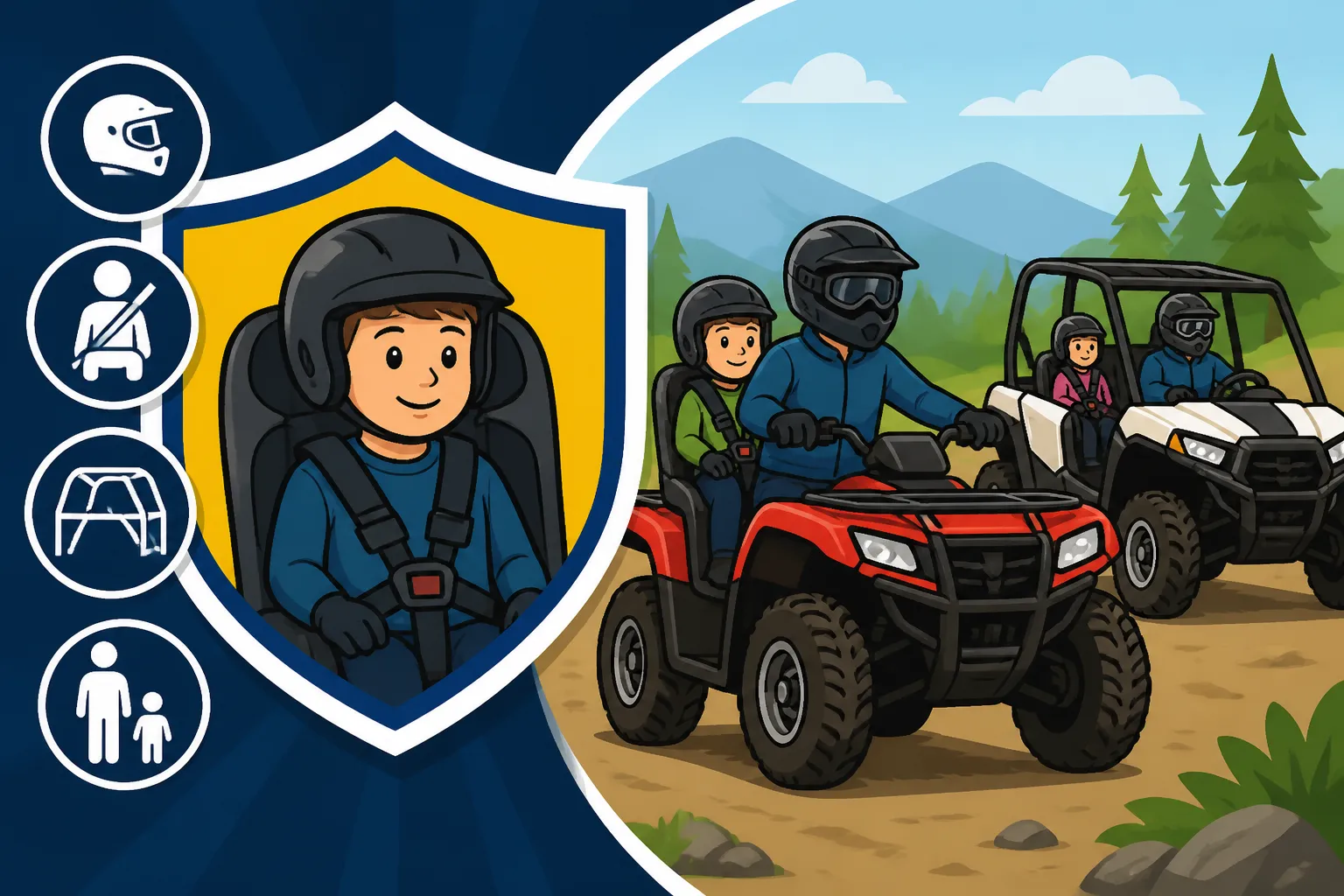
On the other hand, a side-by-side (UTV) is explicitly designed with passenger seating, often featuring multiple seats, seat belts, and roll cages. In these cases, children can be passengers as long as they meet manufacturer age and size guidelines for that specific seating position and are properly restrained. The supervising adult plays a crucial role here, not just in operating the machine safely, but in ensuring that any child passengers are always secure, attentive, and prepared for the ride. You need to understand the distinction between a child being old enough to ride as a passenger and a child being old enough to operate a machine, as those rules are different and apply in different contexts. [BC Rules for a Child Under 16]
Understanding Different Machine Types and Passenger Seating
The type of off-road vehicle you own makes a huge difference when it comes to carrying child passengers in British Columbia. What's perfectly acceptable on a side-by-side could be illegal and incredibly dangerous on a quad. It's crucial to understand these distinctions to ensure everyone's safety and stay compliant with the law.
Quads (ATVs) and the Single-Rider Rule
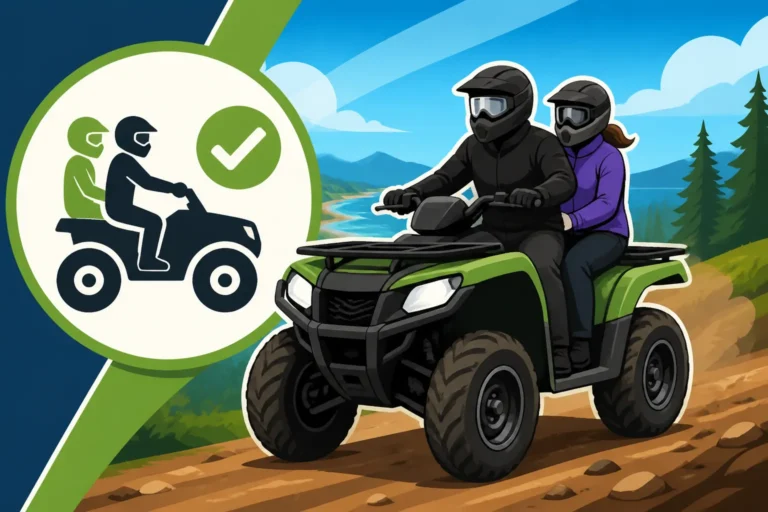
Let's get straight to it: most traditional ATVs, or quads, are designed for one rider only. Period. The entire machine—its suspension, braking, steering, and weight distribution—is calibrated for a single operator. The seat is typically narrow, the footpegs are positioned for a single rider, and the handlebars are meant for two hands to control the machine's full range of motion. Trying to squeeze a child on the seat in front or behind you creates a dangerous situation.
Imagine this scenario: you're riding with your child perched in front of you on a quad. A sudden bump or turn means your child's weight shifts, potentially throwing off your balance. They might instinctively grab the handlebars, interfering with your steering. If they're behind you, they could slide off the back, or their feet might dangle dangerously close to the rear wheels. The danger here is not just theoretical; it's a common cause of serious injury. The machine simply cannot be controlled as effectively with an extra, unsecured person on board.
Even if you've seen after-market passenger seats advertised or installed on quads, B.C. regulations focus on the manufacturer's original design. If the manufacturer didn't build it to safely carry two people, adding a bolt-on seat doesn't magically make it safe or legal for passenger use. These modifications often create a false sense of security, encouraging practices that undermine the ATV's inherent safety design. Always remember the fundamental rule: if your ATV isn't designed for a passenger, don't carry one. This is a core safety principle that supersedes any desire to bring everyone along on a single machine. [BC Rules for Passengers on a Quad]
Side-by-Sides (UTVs) and Their Passenger Capacity
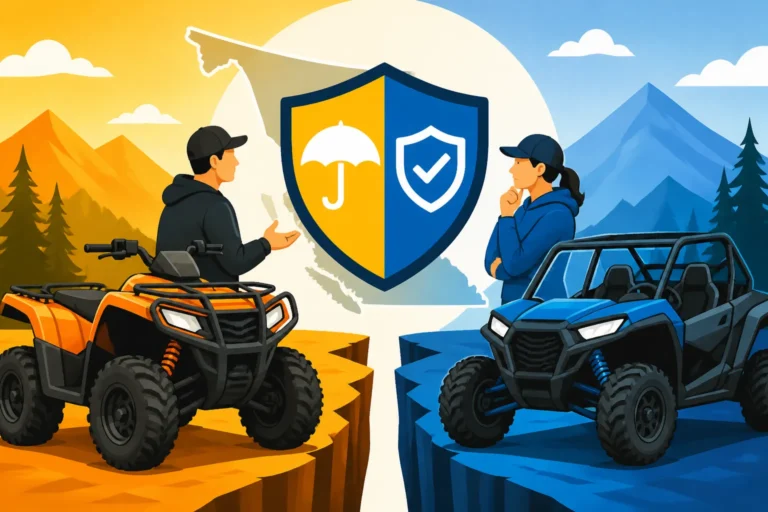
Now, this is where the conversation shifts considerably. Side-by-sides, also known as UTVs or Utility Task Vehicles, are a completely different animal when it comes to carrying passengers. Unlike most quads, UTVs are specifically designed to carry multiple occupants, often in car-like seating arrangements with bucket seats or bench seats, seat belts, and robust roll cages. This design makes them a much safer and more appropriate choice for family outings where you want to bring children along. [BC Rules for Riding a Side-by-Side]
When riding in a UTV, each passenger should have their own designated seat and be properly restrained with the vehicle's seat belt system. The roll cage provides a critical layer of protection in case of a rollover, and the wider stance and lower centre of gravity of many UTVs offer greater stability than a typical ATV. Companies like SuperATV offer a wide range of accessories for UTVs, from windshields to roof panels, that can further enhance comfort and protection for all occupants, including children, though these are typically comfort or minor protection items and not primary safety devices like the roll cage or seatbelts.
However, even with a UTV, manufacturer limits are still paramount. Just because there are multiple seats doesn't mean you can pack in as many people as possible. Always adhere to the stated passenger capacity and weight limits for your specific UTV model. Ensure that children are large enough to fit properly in the seat and that the seat belt system provides adequate restraint. If a child is too small for the seat belt to fit correctly, they might need an appropriate booster seat or restraint system, similar to what you'd use in a car, to ensure their safety. A child should never be riding unrestrained or in a position not designed for a passenger.
Safety Gear and Best Practices for Young Riders
Getting out on the trails with your kids is fantastic, but it comes with a serious responsibility to keep them safe. Beyond understanding the rules for carrying passengers, equipping them with the right gear and instilling safe riding habits is absolutely crucial. This isn't just about avoiding tickets; it's about protecting them from serious injury.
Helmets, Helmets, Helmets: Non-Negotiable Protection
In British Columbia, the helmet law for off-road vehicles is crystal clear: if you're riding a "ride-astride" machine (like an ATV or a dirt bike), both the operator and any passenger must wear an approved helmet. There's no exception for age. [BC Helmet Law Covers Every Rider] This means if you're somehow riding with a child on a quad (which we've already established is highly discouraged and often illegal), that child absolutely needs a properly fitted, certified helmet.
For UTVs, while the enclosed nature of the vehicle with a roll cage and seat belts might feel safer, a helmet is still highly recommended, especially for younger passengers or during more aggressive riding. While not always legally mandated for UTV passengers in the same way as ride-astride machines, protecting a child's head from impacts, even inside a UTV, is just plain smart.
When choosing a helmet for a child, fit is paramount. A helmet that's too large can shift around, obstruct their vision, and offer little protection. It should be snug, not uncomfortable, and not move when they shake their head. Look for helmets that meet recognized safety standards like DOT, Snell, or ECE. These certifications indicate that the helmet has passed rigorous testing for impact protection. Remember, a helmet is a one-time impact protection device; if it takes a significant hit, it needs to be replaced, even if there's no visible damage. [BC Helmet Standards in the Regulation] Investing in a good quality helmet for your child is one of the most important safety decisions you'll make.
Other Essential Safety Gear and What to Look For
Beyond the helmet, a full suite of protective gear is vital for any rider, especially children, whether they are operating or riding as passengers.
- Eye Protection (Goggles): Dust, mud, branches, and insects are constant threats on the trail. Goggles protect a child's eyes from these hazards, ensuring clear vision for both the child and you, the operator. Clear lenses are good for most conditions, but tinted or photochromatic options can be great for varying light.
- Gloves: Gloves protect hands from blisters, cuts, and scrapes, and can also provide a better grip on handholds (if applicable). They also add a layer of warmth in cooler conditions.
- Long Sleeves and Pants: This isn't just about modesty; it's about protection from abrasions, scrapes, and impacts with branches or debris. Sturdy materials like denim or specialized riding gear are far better than shorts and a t-shirt.
- Sturdy Footwear: Closed-toe boots that cover the ankle are essential. They protect feet from impacts, provide grip on footrests, and prevent feet from slipping off inadvertently. Sandals or open-toed shoes are an absolute no-go on any off-road machine.
When you're outfitting your child, think about layers suitable for the variable B.C. weather. What starts as a cool morning can turn into a warm afternoon, or vice versa. Proper layering allows for adjustment. While SuperATV doesn't typically specialize in apparel, they do offer sturdy parts and accessories for UTVs that can contribute to overall ride safety and enjoyment, reminding us that a well-maintained and accessorized machine is part of the safety equation, alongside personal protective equipment.
Pre-Ride Checks and Responsible Riding Habits
Finally, the best gear in the world won't matter if you're not riding responsibly and preparing your machine. Before every single ride, especially when children are involved, conduct a thorough pre-ride inspection of your ATV or UTV. Check tire pressure, brake function, fluid levels, and ensure all lights are working. Confirm that all seat belts are functioning correctly in a UTV and that no essential parts are loose or damaged.
As the supervising adult, you are the role model. Ride within your skill limits, and always within the limits of the machine. Explain the trail rules to your child passengers and emphasize the importance of keeping their hands and feet inside the vehicle (for UTVs) or holding on tight (if applicable on a permitted multi-rider ATV). Avoid excessive speeds, sharp turns, or stunts when carrying passengers. [BC Forest Service Road Requirements] Remember that off-road vehicles are meant for designated trails and appropriate terrain. Staying on marked trails and respecting signage helps protect both the environment and everyone's safety. Your actions as a rider directly influence the safety and experience of your child passengers.
Common Misconceptions and Legal Considerations
Even with the best intentions, there are a lot of misunderstandings surrounding child passengers on ATVs and UTVs. It's easy to assume things or rely on what you've seen others do, but when it comes to the law and, more importantly, safety, assumptions can be dangerous. Let's clear up some of those common misconceptions and look at the legal repercussions of not following the rules.
Is an Aftermarket Seat Allowed on My Quad?
This is perhaps one of the most common questions, and a major source of confusion. You've probably seen ads for, or even quads equipped with, bolt-on rear seats or extra padded extensions. The misconception is that adding one of these aftermarket seats somehow transforms your single-rider ATV into a safe, legal two-person machine.
Let's reiterate: in British Columbia, the law, and indeed safety, hinges on whether the machine was "designed by the manufacturer to carry more than one person." An aftermarket seat, no matter how sturdy it looks or how comfortable it feels, does not change the manufacturer's original design intent. It doesn't magically alter the ATV's weight distribution, braking capacity, suspension travel, or stability characteristics, all of which are critical factors for safely carrying a passenger. The ATV remains a single-rider vehicle in the eyes of safety experts and often, the law.
The risks of using an aftermarket seat on a single-rider quad are significant. It raises the centre of gravity, making the machine more prone to rollovers. The passenger, especially a child, is often not properly secured and can be easily ejected. Furthermore, their presence can hinder the operator's ability to shift their weight effectively, which is crucial for controlling an ATV on varied terrain. From a legal standpoint, riding with a passenger on a machine not designed for it could lead to fines and, more critically, could heavily impact liability if an accident were to occur. It's simply not worth the risk.
What About Riding on Private Property?
Another frequent question revolves around private land. "If I'm just riding on my own acreage or a friend's private property, do these rules still apply?" While the B.C. Off-Road Vehicle Act primarily governs the operation of ORVs on Crown land, Forest Service Roads, and other public areas, the safety principles and manufacturer guidelines are always relevant, regardless of where you're riding. [BC Private Land and the Registration Question]
On private property, the landowner generally sets the rules for usage. However, this doesn't mean you can throw caution to the wind. Common sense and a duty of care still apply. If an accident occurs due to unsafe practices, even on private land, there can still be significant liability implications for the operator and the landowner. The physical risks to your child are the same whether you're on a public trail or a private field. For example, if you're riding a single-rider quad with a child passenger on private land and they get injured, the fact that you were on private property doesn't magically make the situation safe or absolve you of responsibility for choosing an unsafe method of transport.
So, while specific enforcement of the ORV Act's passenger rules might be less likely on strictly private land, adhering to manufacturer guidelines and general safety practices remains paramount. You should always prioritize the safety of your child over any perceived leniency on private property.
Potential Penalties for Non-Compliance
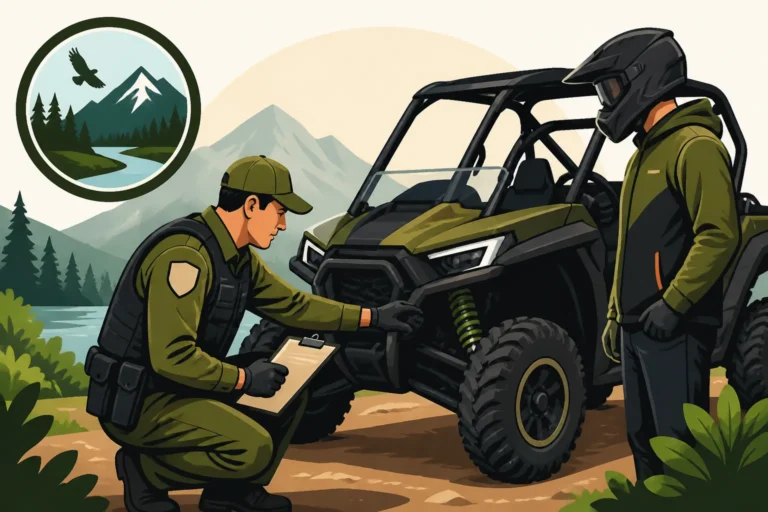
Ignoring B.C.'s rules for child passengers on off-road vehicles isn't just a theoretical safety concern; it carries real-world consequences, including financial penalties and, most importantly, the risk of injury or worse. Enforcement officers, including RCMP and Conservation Officers, take child safety very seriously.
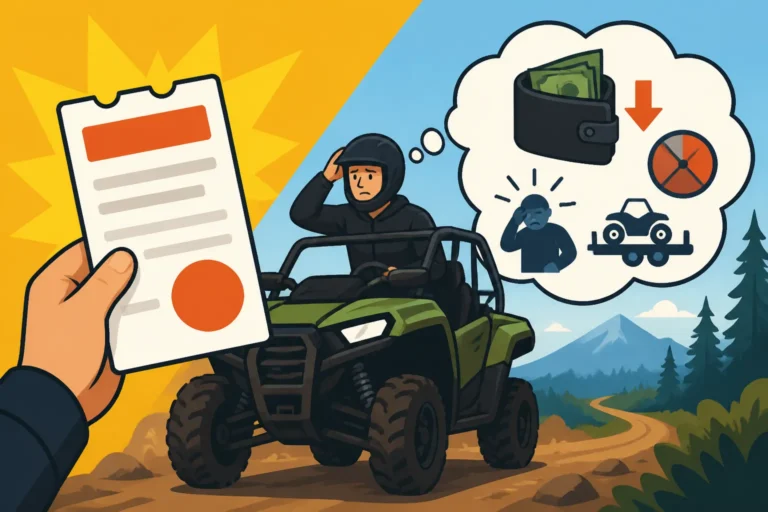
If you are caught carrying a passenger on an ORV not designed for it, or if your child passenger is not wearing a helmet on a ride-astride machine, you could face violation tickets. These fines are designed to deter unsafe behaviour and reinforce the importance of the regulations. While specific amounts can vary, they are certainly enough to make you think twice about cutting corners. [BC Fines for Careless Riding]
Beyond fines, there's the much more serious matter of liability. In the event of an accident where a child passenger is injured due to non-compliance with these rules, the operator could face significant legal repercussions, including lawsuits. Insurance coverage might also be affected if the vehicle was being operated outside of its intended design or in violation of safety laws.
Ultimately, these rules exist to prevent accidents and protect lives, especially those of children who are dependent on adults for their safety. Educating yourself on [BC Youth Riding Rules Explained] and ensuring strict adherence to all passenger guidelines, manufacturer recommendations, and helmet laws is the best way to ensure that your family's off-road adventures are filled with joy, not regret.
| Feature | Traditional ATV (Quad) | Side-by-Side (UTV) |
|---|---|---|
| Primary Design | Single rider | Multiple occupants (2, 3, 4+ seats) |
| Child Passengers | Generally NOT permitted | Permitted in designated seats |
| Seating Type | Ride-astride, narrow seat | Bench or bucket seats, car-like |
| Restraint | Operator holds on | Seat belts (often 3-point or harnesses) |
| Roll-Over Prot. | Operator skill/body positioning | Integrated roll cage (ROPS) |
| Helmet Req. (BC) | Mandatory for operator & passenger | Recommended, but not always mandatory for passengers |
| Stability | High centre of gravity, active rider input | Wider stance, lower centre of gravity, stable |
| Modifications | Aftermarket seats do not change legal status | Accessories like windshields, roofs enhance experience |
Disclaimer
This article is for general informational purposes only and does not constitute professional advice. Laws, prices and regulations vary by location and change over time. Consult a qualified professional for guidance on your specific situation.