BC Rules for Riding Crown Land
Riding your ATV or UTV in British Columbia offers some of the most spectacular scenery and diverse terrain anywhere, but navigating the rules for Crown Land can feel like trying to find your way through a dense forest without a map. Many riders get frustrated, unsure of where they can legally go, what paperwork they need, or how to avoid costly fines. This guide is here to cut through that confusion, giving you a clear, comprehensive understanding of BC's rules for riding your machine on Crown Land.
Understanding BC's Crown Land Landscape and What It Means for Riders
British Columbia is a province of incredible natural beauty, and a huge portion of that beauty—over 94% of the land base, in fact—is Crown Land. This vast expanse includes everything from dense coastal rainforests and arid interior grasslands to towering mountain peaks and winding river valleys. While the idea of having so much open space to explore on your ATV or UTV is exhilarating, it’s crucial to understand that "Crown Land" isn't a blanket invitation for unrestricted riding. Just because it's not private property doesn't mean you can go anywhere.
What Exactly is Crown Land in BC?
Crown Land is essentially public land, managed by the provincial government on behalf of all citizens. It's meant to serve a multitude of purposes, including forestry, mining, recreation, conservation, and Indigenous land use. This shared ownership means that there are often competing interests and specific regulations governing various activities, including off-road vehicle use. One of the biggest misconceptions I hear from riders is that if it's not fenced or signed as private, it must be fair game. Unfortunately, that's not always true, and operating under that assumption can lead to fines, environmental damage, and conflict with other users or land managers.
The sheer scale and diversity of Crown Land in BC means you'll encounter different types of terrain, ecosystems, and management zones, each potentially carrying its own set of rules. For example, some areas are designated for intensive forestry, while others are protected as critical wildlife habitat. Knowing how to identify and respect these various designations is the first step toward responsible and legal riding. It's not about memorizing every single land parcel, but understanding the categories and where to find information about restrictions.
The Importance of the Off-Road Vehicle Act
To bring some order to the use of off-road vehicles (ORVs) across this vast province, British Columbia introduced the Off-Road Vehicle Act (ORV Act) in 2015. This legislation is the cornerstone of ORV regulation in BC and fundamentally changed how we, as riders, interact with Crown Land. Before the Act, rules were fragmented, often leading to a lot of confusion and inconsistent enforcement. The ORV Act provides a clearer framework, aiming to ensure safety, promote environmental stewardship, and help manage the growing popularity of ORV recreation. It moved us away from a wild west mentality to a more structured approach, which, while sometimes feeling restrictive, ultimately protects our access to these incredible areas.
The Act applies specifically to off-highway use, meaning it's separate from the Motor Vehicle Act that governs vehicles on paved roads and highways. This distinction is vital: your ATV or UTV might be perfectly legal under the ORV Act on Crown Land, but it is definitely not considered a street-legal vehicle for highway travel. Its purpose is to clearly define what is an ORV, who can operate it, where it can be operated, and what equipment is required. Since its implementation, [BC Registration Became Mandatory in 2015], which was one of the biggest changes, establishing a clear link between a machine and its owner, much like a car. This helps with everything from theft recovery to ensuring accountability for environmental impact. Understanding [What the Off-Road Vehicle Act Covers in BC] is crucial for every rider.
Essential Requirements for Riding Your ORV on Crown Land
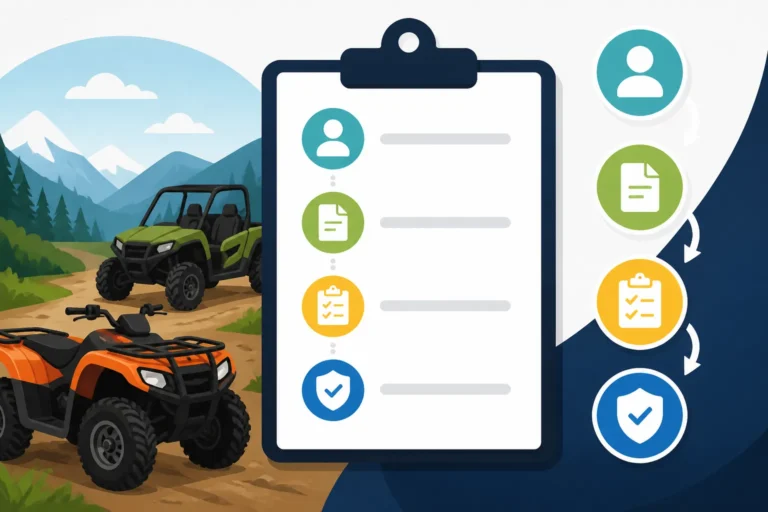
Even if you've found an incredible trail system on Crown Land, you can't just hop on your machine and go. There are fundamental requirements that apply to your off-road vehicle and to you as the operator. Skipping these steps, however minor they might seem, can lead to frustration, tickets, or even the seizure of your machine. It’s all about proving that you’re a responsible rider operating a legally compliant machine.
Vehicle Registration and Plate Display
First and foremost, any ATV or UTV that you intend to ride on Crown Land in British Columbia must be registered with ICBC. This isn't optional; it's a legal requirement under the ORV Act. Once registered, you'll receive a [BC's Certificate of Registration Explained], which is your official proof of ownership and registration. Think of it like your vehicle's birth certificate for off-road use. You absolutely need to carry this document with you every time you ride. An officer can ask to see it, and not having it can lead to fines.
Along with the certificate, your ORV will be issued a distinctive [BC ORV Number Plates and Decals]. This plate must be displayed clearly and permanently on your machine. The regulations specify that it should be mounted horizontally on the front, back, or left side of the ORV, unobstructed and visible at all times. This can sometimes be a bit of a puzzle, especially on certain quad models or if you frequently carry gear on your racks. Many riders struggle to find a spot where the plate is secure, visible, and won't get torn off by brush or mud. Thankfully, aftermarket solutions exist, and companies like SuperATV offer robust license plate brackets and creative mounting solutions that can help you meet these requirements without compromising your machine's functionality or getting your plate ripped off on a tight trail. Ensure your plate is always clean enough to be easily read, because a mud-splattered or obscured plate is essentially no plate at all in the eyes of the law.
Rider Licensing and Identification
This is an area that often causes confusion. When riding strictly on Crown Land and not interacting with public highways, you generally don't need a traditional Class 5 (car) driver's license. However, if your adventure involves crossing any public highway, even just to get from one section of trail to another, then a valid driver's license becomes a strict requirement. [BC Rules for Crossing a Highway] are very clear on this. For example, if you're riding a gravel pit and need to cross a short stretch of pavement to access another part of Crown Land, you need that license.
Regardless of whether you have a driver's license, you absolutely must carry [BC Riders Must Carry Photo ID] with you whenever you're operating your ORV on Crown Land. This ID, along with your Certificate of Registration, helps law enforcement verify your identity and ensure you're legally entitled to operate the machine. It’s a simple step that avoids a lot of potential headaches during a trailside check. Even if you're out for a quick spin, always assume you might encounter an officer or a conservation official. Being prepared means you can enjoy your ride without stress.
Insurance: More Than Just a Good Idea
Insurance is another critical component of responsible ORV operation on Crown Land, and its requirements vary depending on where specifically on Crown Land you're riding. For general Crown Land areas that aren't designated Forest Service Roads (FSRs), basic third-party liability insurance is technically voluntary. However, let me be very clear: not having it is a massive gamble. Imagine an accident where you cause damage to someone else's property, or worse, injure another person. Without liability coverage, you'd be personally responsible for all those costs, which can easily run into the hundreds of thousands of dollars. It's simply not worth the risk.
Where insurance becomes mandatory is on [BC Resource Road Insurance of $200,000] (FSRs). These are roads built and maintained primarily for industrial use (like logging or mining) but are often used by the public for recreation. Because of the potential for shared use with heavy industrial traffic, the risks are higher, and the province mandates a minimum of $200,000 in third-party liability coverage if you're operating your ORV on an FSR. Many private insurance companies offer specialized ORV policies that cover both liability and damage to your machine, providing comprehensive peace of mind. While it's an added cost, it's an investment in your financial security and allows you to explore BC's backroads with confidence. Don't cheap out on this – it could save you from financial ruin.
Navigating Access and Restrictions on Crown Land
While the vastness of BC's Crown Land is appealing, it's not a free-for-all. Specific areas are managed for different purposes, and some are entirely off-limits to ORVs. Understanding these access rules is paramount to being a respectful and legal rider. It’s not about finding loopholes, but about knowing where you truly belong and where you need to steer clear.
Identifying Restricted and Prohibited Areas
One of the biggest challenges for riders is knowing exactly where they can't go. Just because a trail looks inviting doesn't mean it's legal for ORV use. British Columbia has many [BC Motor Vehicle Closed Areas] designated for conservation, wildlife protection, or other specific uses where motorized recreation is prohibited. These closures can be permanent or seasonal and are often implemented to protect sensitive ecosystems, prevent wildlife disturbance, or mitigate environmental damage. You'll find these areas within national and provincial parks, ecological reserves, some wildlife management areas, and sensitive riparian zones. For instance, [BC Provincial Parks That Ban Machines] are numerous, and trying to ride through one can lead to significant fines.
It’s your responsibility as a rider to know before you go. The provincial government's Recreation Sites and Trails BC website is an excellent resource, as are BC Parks websites, which often provide maps and detailed information about motorized vehicle prohibitions. Local land use plans or signs posted at trailheads can also indicate restrictions. Ignoring these closures isn't just illegal; it can cause irreparable harm to fragile environments and reflect poorly on the entire ORV community, potentially leading to even more widespread restrictions. Always check the official resources for the area you plan to visit, as conditions and regulations can change, especially during fire season or after significant weather events.
Understanding Forest Service Roads and Resource Roads
Forest Service Roads (FSRs), often referred to as resource roads, are the arteries that lead into much of BC's backcountry. These roads crisscross vast tracts of Crown Land, providing access for forestry, mining, and other resource industries. For many ATV and UTV riders, FSRs are the primary means to access trails, staging areas, and remote recreation sites. It's important to recognize that [BC Resource Roads Count as Crown Land], but they come with their own set of rules, particularly regarding safety and insurance. Navigating these roads requires a different mindset than navigating a dedicated ATV trail.
The most critical aspect of riding on FSRs is safety, especially concerning active industrial traffic. You will encounter logging trucks, heavy machinery, and other industrial vehicles, which always have the right-of-way. These vehicles are often massive, travel at speed, and generate significant dust, making visibility a major concern. Familiarize yourself with [BC Forest Service Road Rules for ORVs], which include requirements like appropriate lighting, yielding to industrial traffic, and, in many cases, using a VHF radio to call out your kilometre markers, especially on active hauling roads. This practice, common in many parts of the interior, can prevent head-on collisions. As mentioned earlier, carrying that minimum $200,000 in liability insurance is also mandatory when riding these roads. Always assume there’s a loaded truck around the next blind corner and ride defensively.
Respecting Private Property and Leased Crown Land
Another common pitfall for riders is inadvertently trespassing. Even in seemingly remote areas, you can encounter private property or Crown Land that has been leased for specific purposes, such as ranching, guiding, or agriculture. These areas are not open to public ORV use without explicit permission from the leaseholder or landowner. [BC Leased Crown Land and Permission] is a critical distinction that many riders overlook. Just because there isn't a "no trespassing" sign doesn't mean you're allowed to enter. It's your responsibility to know the land status.
Imagine riding through a beautiful valley only to find out you’ve crossed into a cattle grazing lease without permission. This can lead to conflicts with ranchers, potential harm to livestock, and legal consequences under [BC Trespass Rules for Riders]. Modern mapping apps with land ownership layers can be incredibly helpful for identifying private parcels or leased areas. Always err on the side of caution. If you're unsure, try to find out who owns or leases the land and seek permission. A quick phone call or knock on a door can save you a lot of trouble and ensure you maintain good relationships with local communities and land users. Respecting these boundaries is not just about avoiding legal issues; it's about being a good neighbour and preserving access for all responsible recreationists.
| Crown Land Type | ORV Access Status | Key Considerations |
|---|---|---|
| Open Crown Land | Generally Permitted (with ORV Act compliance) | Requires registered ORV, plate, rider ID. Voluntary liability insurance recommended. Adhere to "Tread Lightly" principles. |
| Forest Service Roads | Permitted (with ORV Act & FSR-specific compliance) | Requires registered ORV, plate, rider ID, and mandatory $200,000 liability insurance. Yield to industrial traffic, consider VHF radio. Active hauling often means temporary closures. |
| Leased Crown Land | Prohibited Without Permission | Requires explicit permission from leaseholder. Often used for ranching, forestry, or commercial activities. Treat as private land. |
| Protected Areas | Generally Prohibited | Includes Provincial Parks, Ecological Reserves, some Wildlife Management Areas. Check official park/area regulations beforehand. Significant fines for non-compliance. [BC Motor Vehicle Closed Areas] |
| Riparian Zones | Generally Prohibited/Restricted | Areas adjacent to water bodies. Sensitive ecosystems; avoid riding in or near. [BC Riparian Areas to Avoid] |
| Sensitive Ecosystems | Generally Prohibited/Restricted | Alpine meadows, critical wildlife habitat, wetlands. Avoid riding off designated trails to prevent damage. [BC Alpine Meadows and Damage] |
Responsible Riding and Environmental Stewardship on Crown Land
Riding an ATV or UTV on Crown Land is a privilege, not an inherent right. With that privilege comes a significant responsibility to protect the environment, ensure your own safety, and respect other users. Being a good steward of the land means adopting practices that minimize your impact and preserve these incredible landscapes for everyone, including future generations of riders.
Minimizing Environmental Impact
The sheer power and mobility of ATVs and UTVs mean we can access some truly wild and remote places. But with that access comes the potential for damage if we're not careful. One of the most fundamental principles of responsible riding is to stay on existing trails and designated routes. Cutting new trails, riding through sensitive meadows, or churning up wet ground can cause erosion, damage vegetation, and disturb wildlife. It also creates a bad image for all ORV enthusiasts, which can lead to stricter regulations and closures. Always be mindful of your surroundings, especially in delicate areas like [BC Alpine Meadows and Damage] or [BC Riparian Areas to Avoid] near creeks and lakes. Staying out of water bodies and off their banks is not just good etiquette; it’s often a legal requirement.
Beyond staying on designated paths, every rider needs to ensure their machine is mechanically sound and properly equipped. A crucial piece of equipment for fire prevention, especially in BC's dry summers, is a functioning spark arrestor. [BC Spark Arrestor Rules and Fines] are in place for a reason: a single spark from an improperly maintained exhaust can ignite a devastating wildfire. Make sure your spark arrestor is always in good working order and regularly inspected. Furthermore, consider aftermarket parts that protect both your machine and the environment. For example, robust skid plates and A-arm guards from a company like SuperATV can prevent damage to your machine from rocks and stumps, reducing the chance of fluid leaks onto the trail, while also helping you clear obstacles without tearing up the ground beneath. These small investments protect your machine and the trails we all love.
Safety Gear and Practices
Your safety, and the safety of those riding with you, should always be the top priority. The backcountry of BC is wild, and help can be hours away. Proper safety gear isn't just about avoiding tickets; it's about protecting yourself from serious injury. For riders on ATVs (ride-astride machines), a certified helmet is mandatory. The [BC ATV Helmet Law Explained] requires that all riders and passengers wear an approved helmet. For those in UTVs (side-by-sides) with roll cages and seatbelts, the seatbelts are the primary restraint, but helmets are still highly recommended, especially on challenging terrain. Always choose gear that meets current safety standards and fits properly.
Beyond protective gear, common sense and preparedness are your best allies. Never ride alone in remote areas. Always tell someone where you're going and when you expect to return. Carry a well-stocked first-aid kit, emergency shelter, plenty of water, extra fuel, and tools for minor repairs. Communication is vital in areas with no cell service; a satellite messenger or two-way radio can be a literal lifesaver. Riding within your limits, avoiding alcohol or drugs, and being aware of weather conditions and wildlife are fundamental practices that ensure a safe and enjoyable outing on Crown Land. It might sound like a lot, but these habits become second nature and significantly reduce risks.
Youth Riders and Supervision
British Columbia has specific rules designed to protect young riders and ensure they develop safe operating habits. The [BC Youth Riding Rules Explained] apply across all of Crown Land, emphasizing supervision and appropriate machine size for age. For instance, children under 16 generally require supervision, and there are specific rules for their operation of ORVs. For a child under 16, they must be supervised by an adult who is 19 years or older and holds a valid driver’s license. This adult must be "in visible and immediate direction" of the youth, meaning they must be able to see and direct the young rider at all times.
Specifically, [BC Rules for a Child Under 16] outline that a rider between 12 and 15 years old can operate an ORV if they have written permission from a parent or guardian, and they are supervised by an adult over 19. For riders under 12, the rules are even stricter, generally requiring operation on private land or under very specific conditions on Crown Land. The supervising adult, as per [BC Rules for a Supervising Adult], has a big responsibility, ensuring the youth is riding a machine appropriate for their age and size, and that they are following all safety rules. It's not enough to just be present; active supervision means teaching, guiding, and ensuring safe practices are being followed. These rules are in place to prevent accidents and foster a culture of responsible riding from a young age, so treat them seriously.
Disclaimer
This article is for general informational purposes only and does not constitute professional advice. Laws, prices and regulations vary by location and change over time. Consult a qualified professional for guidance on your specific situation.