BC Rules for Riding a Forest Service Road
Exploring British Columbia's vast and beautiful backcountry on your ATV or UTV is an incredible experience, but it comes with a unique set of rules, especially when you venture onto Forest Service Roads (FSRs). Many riders get confused about how these roads differ from public highways or even private land, leading to frustration and, unfortunately, tickets. This guide will unravel the specific regulations governing ATV and UTV use on FSRs in BC, ensuring you're well-equipped to ride legally, safely, and responsibly.
Navigating British Columbia's Forest Service Roads: What You Need to Know
Forest Service Roads (FSRs) are the backbone of resource industries in British Columbia, providing access to remote areas for logging, mining, and other commercial activities. For recreationists, they are also gateways to stunning trails, camping spots, and unparalleled natural beauty. However, mistaking an FSR for a casual dirt track or a public highway can lead to serious legal trouble and safety hazards. Understanding their unique nature and legal status is the first step to a great ride.
Understanding the Unique Nature of FSRs
Unlike municipal roads or provincial highways, FSRs are primarily built and maintained for industrial purposes. This means they often feature heavy commercial traffic, including logging trucks and other industrial vehicles, which always have the right-of-way. The conditions can be challenging – expect rough gravel, potholes, washouts, and active construction zones. These aren't always manicured paths; they are working roads, and your approach to riding them needs to reflect that reality. The dust can be thick, visibility can be limited, and the presence of heavy machinery means you need to be constantly vigilant.
These roads also vary wildly in their maintenance levels. Some FSRs are well-graded and see regular use, while others might be overgrown and barely passable, especially after a harsh winter or heavy rains. It's crucial to do your homework before heading out. Check local conditions, talk to other riders, and be prepared for anything. Riding an FSR is an adventure, but it's one that demands respect for the environment, other users, and the specific regulations that apply. You won't find regular highway signage, shoulders, or predictable traffic patterns here. It's a different world entirely.
The Legal Framework: Off-Road Vehicle Act and FSRs
In British Columbia, FSRs fall under the jurisdiction of the Forest and Range Practices Act, but when it comes to riding your ATV or UTV, the Off-Road Vehicle Act is your primary guide. The critical distinction here is that while FSRs are not public highways in the traditional sense, they are considered "Crown land" for the purposes of ORV registration. This means that if you're riding your off-road vehicle on an FSR, you are absolutely subject to the full suite of ORV regulations. In fact, [BC Resource Roads Count as Crown Land], making them a focal point for ORV activity and regulation.
The Off-Road Vehicle Act, which became mandatory for registration in 2015, established clear guidelines for how ATVs, UTVs, dirt bikes, and snowmobiles must be operated on Crown land, including FSRs. This legal framework was put in place to enhance rider safety, protect the environment, and provide a clear system for identifying vehicles in the event of an accident or irresponsible behaviour. Understanding [What the Off-Road Vehicle Act Covers in BC] is essential, as it dictates everything from your machine's registration to the safety gear you must wear and the behaviour expected of you while riding. It's not a suggestion; it's the law, and enforcement is a real concern for conservation officers and RCMP patrols alike.
Essential Requirements for Riding Your ATV or UTV on FSRs
Before you even think about putting tires on a Forest Service Road, there's a checklist of mandatory items you need to have in order. These aren't just suggestions for a good time; they are legal requirements designed to keep you and others safe and accountable. Ignoring them can lead to significant fines and even machine seizure.
Mandatory Registration, Insurance, and Identification
First and foremost, your ATV or UTV must be properly registered with the Province of British Columbia. This isn't an option; it's a legal imperative since [BC Registration Became Mandatory in 2015]. When you registered your machine, you received a Certificate of Registration and an ORV plate. You must carry that Certificate of Registration with you whenever you're riding on Crown land, including FSRs. An officer can ask to see it at any time.
Beyond registration, you also need to have appropriate insurance. While basic third-party liability insurance is mandatory for highway crossings, [BC Resource Road Insurance of $200,000] is specifically required for FSRs. This protects you in case you cause damage or injury to another party while operating on these roads. You don't want to be caught without it. Finally, you, as the operator, must carry valid photo identification. [BC Riders Must Carry Photo ID] along with their registration certificate. This ensures that you can be properly identified by law enforcement if needed. Make sure all your paperwork is up-to-date and easily accessible, perhaps in a waterproof bag you keep on your machine.
Crucial Safety Gear: Helmets, Lights, and Machine Condition
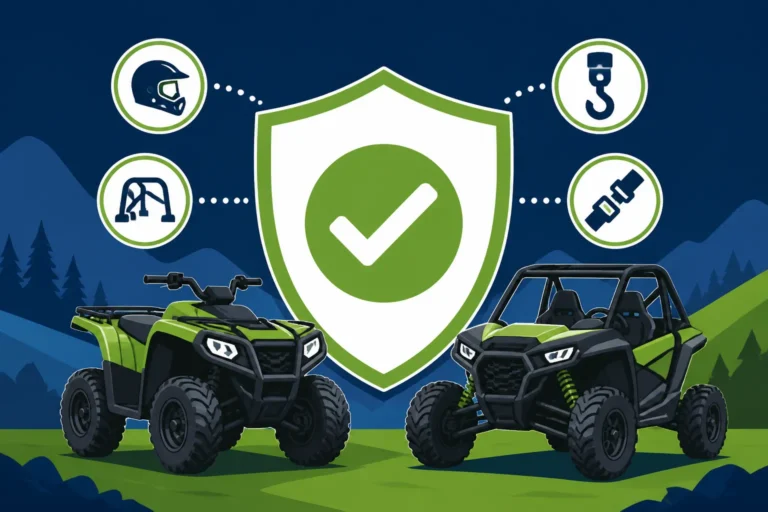
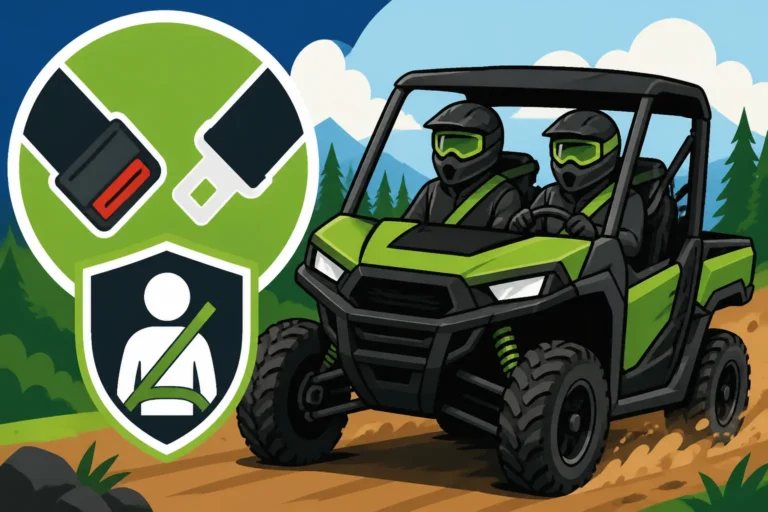
Safety is paramount on FSRs, and the law reflects that. For any ride-astride ORV (like an ATV or dirt bike), a helmet is absolutely mandatory for both the operator and any passenger. [BC Helmets Required on an FSR] are not just a good idea; they're a non-negotiable legal requirement. This helmet must meet approved safety standards, so don't just grab any old lid. Side-by-sides (UTVs) offer more protection with roll cages and seat belts, but check the manufacturer's recommendations and local regulations regarding helmets, as some specific scenarios might still require them even in a UTV.
Beyond helmets, your machine needs to be in good working order and properly equipped. This includes functioning headlights, taillights, and brake lights, especially if you might be riding at dusk, dawn, or in low visibility conditions. If you ride frequently at night, consider upgrading your lighting with aftermarket options from reputable brands like SuperATV to ensure maximum visibility for yourself and others. Your machine must also have a functioning spark arrestor to prevent wildfires – a critical detail in BC's dry summers. While [BC Has No Safety Inspection for ORVs] in the same way cars do, you are expected to ensure your machine is roadworthy for the conditions. This means checking tires, brakes, fluid levels, and overall mechanical integrity before every ride. A breakdown in a remote FSR can turn a fun day into a serious predicament.
Safe and Respectful Operation on BC Forest Service Roads
Riding on FSRs isn't just about having the right papers and gear; it's also about how you operate your machine and interact with the environment and other users. These are shared spaces, and demonstrating respect and caution is key to everyone's safety and the continued access for recreational riders.
Sharing the Road with Industrial Traffic and Radio Protocols
This is arguably the most critical aspect of FSR riding: understanding and respecting industrial traffic. Logging trucks, graders, and other heavy equipment are often large, fast, and cannot stop or maneuver quickly. They always have the right of way. If you encounter industrial traffic, pull over to the side of the road safely and give them ample space to pass. Do not assume they see you. In many areas, resource roads utilize radio channels for communication between industrial vehicles to announce their location and direction. Carrying a radio and knowing the local channel, often referred to as [BC Resource Road Radio Practice], can be a life-saving tool.
Using a radio means you can hear incoming trucks and call out your own position, which is particularly important on blind corners or single-lane sections. Even if you don't have a radio, always proceed with extreme caution on blind corners, reducing your speed and being prepared to stop. The dust kicked up by large vehicles can severely impair visibility, so maintain a safe following distance and be aware of your surroundings at all times. Yielding to loaded trucks is not just polite, it's essential for your survival. Many riders underestimate the speed and momentum of these vehicles and the consequences of a collision.
Environmental Stewardship and Responsible Riding Practices
Beyond safety, riding on FSRs demands a strong sense of environmental responsibility. Stick to marked trails and existing roads. Avoid creating new trails, riding through sensitive ecosystems like wetlands or riparian areas, or disturbing wildlife. The impacts of irresponsible riding can be long-lasting and lead to trail closures or stricter regulations for everyone. Always practice "Leave No Trace" principles: pack out everything you pack in, and leave the area cleaner than you found it. This includes any discarded parts from your machine, like old belts or broken components, which can easily be replaced with durable aftermarket options from companies like SuperATV.
Be mindful of your speed. While FSRs might tempt you to open up your throttle, excessive speed is a major contributor to accidents and environmental damage. [BC Fines for Careless Operation] can be steep, and they apply just as much on an FSR as they would elsewhere. Slow down around blind corners, near campgrounds, or when visibility is poor. Respect private property signs and leased Crown land; always seek permission before entering. Remember that the privilege of riding these amazing areas can be lost if we don't collectively act as responsible stewards of the land.
Consequences of Non-Compliance: Fines and Penalties
Riding an ATV or UTV on a Forest Service Road in British Columbia without adhering to the rules isn't just risky; it's against the law. Enforcement is taken seriously, and the penalties for non-compliance can range from significant fines to the seizure of your machine and even court appearances. It's crucial to understand what you're risking if you choose to ignore the regulations.
Understanding Violation Tickets and Administrative Penalties
The most common consequence for minor infractions is a violation ticket. These are essentially traffic tickets for ORVs, issued by law enforcement, including RCMP and Conservation Officers. Fines can vary depending on the specific offense, but they are not insignificant. For example, failing to carry your Certificate of Registration, operating an unregistered machine, or not wearing a helmet when required can all result in fines. These tickets often carry a fixed penalty that you can pay, much like a parking ticket.
However, some offenses can also lead to administrative penalties. These are fines or other sanctions imposed by a regulatory body, often related to environmental damage or repeated non-compliance. These can be more substantial than simple violation tickets and might not be as straightforward to dispute. Riders who consistently disregard spark arrestor rules during fire season, for instance, might face both violation tickets and administrative penalties, demonstrating the province's commitment to preventing wildfires. Making sure your machine is properly equipped, perhaps with an aftermarket exhaust system that meets regulations, is a simple way to avoid such issues.
When Things Go Seriously Wrong: Machine Seizure and Court Fines
For more serious infractions, or repeated offenses, the consequences escalate dramatically. Operating an impaired ORV, for instance, falls under the Criminal Code and carries severe penalties, including hefty fines, driving prohibitions, and potential jail time, much like impaired driving in a car. Even if you're not on a public highway, impaired operation on Crown land is a serious offense.
Furthermore, law enforcement has the authority to seize your off-road vehicle in certain situations. [BC Machine Seizures by Police] can occur for serious violations like operating an unregistered machine, significant environmental damage, or dangerous operation. If your machine is seized, you could face impoundment fees, storage costs, and the hassle of going through a legal process to get it back, if you can at all. In the most severe cases, particularly those involving extensive environmental damage or repeat offenses, you could face court fines that run into the tens of thousands of dollars, or even imprisonment. It's not just a minor slap on the wrist; the government views the protection of BC's natural resources and public safety with utmost seriousness.
Summary of Key BC Forest Service Road Requirements
| Requirement | Detail |
|---|---|
| Registration | Mandatory for all ORVs on FSRs (Crown land) |
| Insurance | Minimum $200,000 third-party liability for FSRs |
| Identification | Operator must carry valid photo ID |
| Certificate | [BC Riders Must Carry the Certificate] of Registration |
| Helmet | Mandatory for ride-astride ORVs (ATVs, dirt bikes) on FSRs |
| Lighting | Functional headlights, taillights, brake lights required |
| Spark Arrestor | Mandatory to prevent wildfires |
| Radio | Advised for communication with industrial traffic on active FSRs |
| Right-of-Way | Industrial traffic (logging trucks, graders) always has right-of-way |
| Environmental | Stay on marked trails; no new trail creation; pack out all trash |
In summary, riding on BC Forest Service Roads offers unparalleled access to the province's breathtaking wilderness. However, this privilege comes with a clear set of responsibilities and legal obligations. By understanding and adhering to the registration, insurance, safety gear, and operational rules, you not only protect yourself from penalties but also contribute to the safe and sustainable use of these vital access points for all. Be prepared, ride responsibly, and always respect the rules of the road – the Forest Service Road, that is.
Disclaimer
This article is for general informational purposes only and does not constitute professional advice. Laws, prices and regulations vary by location and change over time. Consult a qualified professional for guidance on your specific situation.