BC Permits Valid Up to Two Years
Riders in British Columbia often face a confusing maze of rules when it comes to taking their off-road vehicles (ORVs) anywhere near a paved road. It’s a common frustration: you need to cross a short stretch of highway to get to another trail system, or maybe just ride a few hundred meters on the shoulder to reach a gas station, but the law seems to say "no way." This guide is here to untangle the specific solution that can bridge that gap: the local police operation permit, focusing on the highly convenient fact that these permits can be valid for up to two years, offering a much-needed reprieve from annual applications.
The General Rule: Why ORVs Aren't Street Legal in BC
Before we dive into the solution, it’s crucial to understand the fundamental problem. Unlike some other jurisdictions, British Columbia has a clear distinction between vehicles designed for highways and those built for off-road use. This isn't just a suggestion; it's embedded in the law, and trying to skirt around it can lead to hefty fines and even seizure of your machine.
Understanding the Off-Road Vehicle Act's Scope
The Off-Road Vehicle Act in BC, which came into full effect in 2015, was a game-changer for anyone who owns a quad, side-by-side, dirt bike, or snowmobile. Its primary purpose is to regulate the use of these machines on Crown land, designated trails, and resource roads. It introduced mandatory registration, basic safety requirements, and rules for responsible riding. However, what it explicitly doesn't do is grant widespread access to public highways. [What the Off-Road Vehicle Act Covers in BC]
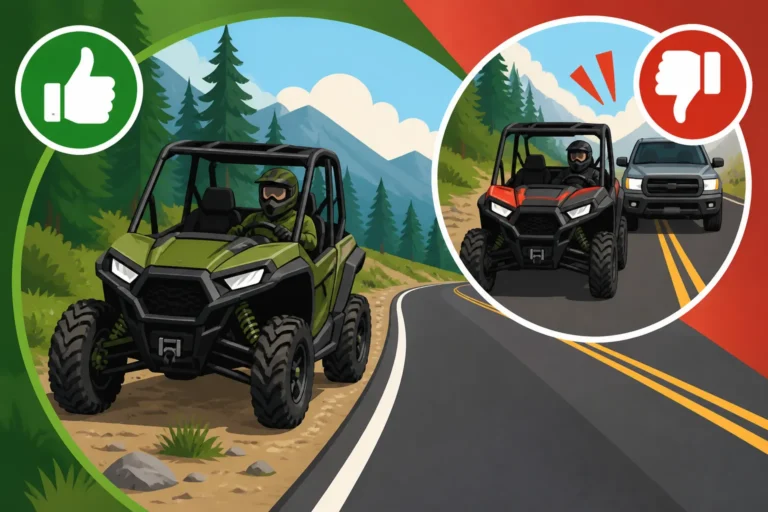
The Act effectively carves out a legal space for ORVs, acknowledging their vital role in recreation, industry, and rural life. But this space is largely off the paved road. The moment your tires touch what is legally defined as a "highway" in BC, you step out of the ORV Act's primary domain and into the realm of the Motor Vehicle Act. This distinction is critical because it means an ORV, by its very design and registration class, is not considered a "motor vehicle" suitable for highway use. It lacks the safety equipment, emissions compliance, and fundamental design parameters that road-legal vehicles must meet.
The Legal Definition of a "Highway" in BC
Many riders mistakenly believe that a remote, two-lane road with no houses is somehow less of a "highway" than a bustling four-lane thoroughfare. But in BC, the legal definition of a highway is incredibly broad. It doesn't just mean a paved, multi-lane road. According to the Motor Vehicle Act, a "highway" includes any road, street, lane, right of way, or any other place that the public is ordinarily entitled or permitted to use for the passage of vehicles.
This expansive definition means that even a quiet country road, a small municipal lane, or even certain parking lots can fall under the umbrella of a "highway." This is why navigating even short distances on these roads without proper authorization is a problem. You might think you're just quickly crossing a quiet stretch, but legally, you're operating a non-highway vehicle on a highway, which is a big no-no. It's this strict definition that makes connecting trails or reaching amenities so challenging for ORV users, and it’s precisely why the local police operation permit becomes such a valuable tool. [Why BC Highways Are Excluded From ORV Use]
The Exception: Local Police Operation Permits
Given the strict rules against ORV use on public roads, you might feel stuck. But there is a crucial exception that can provide limited, conditional access: the operation permit issued by your local police detachment. This isn't a provincial blanket solution; it's a hyper-local discretion that acknowledges the practical realities of ORV use in many BC communities.
What These Permits Allow and Their Limitations
Let's be crystal clear: an operation permit is not a license to joyride your quad through downtown Vancouver or even across town in a smaller municipality. These permits are specifically designed to allow for limited, short-distance travel on highways for purposes such as:
- Crossing a highway: For instance, if a trail continues on the other side of a provincial highway, the permit can allow you to cross safely at a designated intersection. [BC ORV Crossing Rules at Stops and Lights]
- Accessing a staging area or trailhead: Sometimes, the only way to get to a legal riding area is to travel a short distance on a public road or shoulder.
- Reaching services: This could mean a gas station, a repair shop, or a grocery store in a remote area, provided it's the most direct and reasonable path and no viable off-road alternative exists.
- Connecting trail systems: Many regions have extensive trail networks that are unfortunately severed by highways. The permit can allow you to bridge these gaps.
The key word here is "limited." These permits come with very specific conditions and usually restrict the length of travel, the specific roads or sections of roads, and the times of day you can operate. They are not intended for extended highway travel or as a substitute for trailering your machine. Any deviation from the permit's conditions can result in a violation ticket, just as if you had no permit at all. It's about practical access, not full street-legal status.
Who Issues These Permits and Why
These special permits are not issued by ICBC, Service BC, or the provincial government directly. Instead, they are issued at the local level by police detachments – either the RCMP (Royal Canadian Mounted Police) or municipal police forces, depending on where you live. [BC Police Operation Permits for Highway Travel] This local control is intentional. Local police are best positioned to understand the specific needs, road conditions, and safety considerations unique to their community. What might be a safe crossing in a quiet, rural area might be extremely dangerous and impractical in a busy urban center.
The "why" behind their issuance often stems from a recognition of the significant ORV activity in certain areas, particularly those with strong outdoor recreation economies or where ORVs are essential for work or rural living. Police understand that completely banning ORVs from any highway use can create impractical or even hazardous situations (e.g., forcing riders to trespass or load/unload in unsafe locations). Therefore, they exercise discretion to permit controlled, safe highway access when it makes sense for their community. These permits are typically issued free of charge, which is another significant benefit for riders. [BC Permits Issued by Local Police] [BC Permits Cost Nothing]
Applying for Your Two-Year Operation Permit
So, you've identified a need for this kind of permit. How do you go about getting one? It's not as complex as some might fear, but it does require a bit of preparation and direct interaction with your local police detachment. Patience and clear communication are your best allies here.
The Application Process: Steps and Requirements
The first step is to contact your local RCMP or municipal police detachment. It's often best to call ahead and ask to speak with someone who handles ORV operation permits. Not every officer will be intimately familiar with the process, so finding the right contact person can save you time. Many detachments prefer you make an appointment rather than just showing up. [Getting a Free Operation Permit From Your Local Detachment]
When you do go in, be prepared to provide the following:
- Proof of ORV registration: Your current Certificate of Registration from ICBC is essential. [BC's Certificate of Registration Explained]
- Proof of ownership: This often goes hand-in-hand with registration, but ensure you have all your paperwork in order.
- Valid driver's license: You will need to demonstrate that you are a licensed driver, as operating any vehicle on a highway, even under permit, requires this.
- Specific route details: This is crucial. Don't just ask for a general permit. Have a clear, concise explanation of exactly where you need to travel, including specific road names, intersections, and the approximate distance. A map highlighting your proposed route can be incredibly helpful. Explain why this route is necessary (e.g., "to connect Trail A with Trail B," or "to access the gas station at X intersection").
- Vehicle information: Be ready to provide your ORV's make, model, year, and VIN (Vehicle Identification Number). Ensure your machine is in good working order, especially its lights, brakes, and tires. While not a formal inspection, police will be looking for a safe vehicle. You might even consider upgrading your lighting with robust aftermarket kits, like those offered by SuperATV, to ensure maximum visibility, especially if your permitted travel includes dusk or dawn.
Remember, these permits are typically free, so you won't be handing over any cash at the counter. The "cost" is your time and effort in preparing your request.
What to Expect During the Discussion with Police
When you meet with the officer, be polite, respectful, and prepared to explain your situation. They might ask detailed questions about your intended use, the specific hazards of the roads you want to use, and why you can't simply trailer your machine. They are assessing the safety and reasonableness of your request. It's not just about what you want to do, but what can be done safely within their jurisdiction.
The officer may consult local knowledge, check for existing bylaws, or even drive the proposed route themselves to evaluate it. They have the discretion to:
- Approve your request: With or without specific conditions.
- Approve a modified request: Suggesting an alternative route or limiting your travel to certain hours.
- Deny your request: If they deem it unsafe, impractical, or if there are local bylaws that prohibit such access.
It’s important to understand that there's no automatic right to these permits. Their issuance is a judgment call by local law enforcement, based on community safety and practicality. If your request is denied, ask for clarification on why, as this might help you refine your approach or understand local restrictions better. [What Conditions Police Attach to an Operation Permit] A clear, concise explanation of your need, backed by specific route details, significantly increases your chances of approval.
Maximizing the Two-Year Permit's Benefit
Once you've successfully obtained your operation permit, the fact that it can be valid for up to two years is a huge advantage. This longevity provides stability and convenience that riders truly appreciate.
The Practicality of a Two-Year Validity Period
Imagine having to apply for permission every single season just to cross the same road or access the same trail. That would be a bureaucratic nightmare for both riders and police. The two-year validity period (and sometimes even longer, depending on local policy, though two years is common) eliminates this hassle. [Two Years on a Single Permit]
For the rider, this means:
- Reduced administrative burden: No need to spend time each year contacting the detachment, explaining your situation, and reapplying. This frees up more time for riding!
- Consistent access: You can plan your rides and activities with confidence, knowing your permitted highway access is secure for a significant period. This is especially beneficial for those who use their ORV regularly for work, accessing remote cabins, or frequent recreational trips.
- Predictability: It allows for better long-term planning, whether you’re part of a local riding club organizing events or an individual adventurer exploring new areas.
This extended validity period is a testament to the police recognizing the consistent, ongoing need for limited highway access in many parts of BC. It’s a pragmatic approach that benefits everyone involved by reducing repetitive paperwork and discussions.
Keeping Your Permit Current and Compliant
While the two-year validity offers great convenience, it doesn't mean "set it and forget it." You still have responsibilities to uphold during that period to ensure your permit remains valid and you remain compliant.
- Carry your permit: Always, always, always carry a physical copy of your operation permit with you when you are riding, especially if there's any chance you'll be on a highway section covered by it. [BC Riders Must Carry the Certificate] This, along with your Certificate of Registration and photo ID, is your proof of legal operation.
- Adhere to conditions: Review the specific conditions printed on your permit regularly. Did you get it for a specific route? Are there time-of-day restrictions? Is there a maximum distance? Sticking to these conditions is paramount. Violating them is like not having a permit at all.
- Maintain your machine: Your ORV must remain roadworthy according to basic safety standards. This includes functional lights, brakes, and tires. If your permit allows for night crossings, ensure your headlights and taillights are bright and visible. Many riders choose to enhance their visibility with aftermarket LED light bars or auxiliary lights from reputable brands like SuperATV, not just for the trail but for those brief moments on the road.
- Stay informed: Local regulations or road conditions can change. While your permit is valid for two years, a new municipal bylaw might restrict ORV use on a specific road, or a construction project might temporarily close your permitted route. Staying aware of local news and signage can prevent accidental non-compliance.
Treating your two-year permit with respect and diligence ensures that this valuable privilege continues to be available for yourself and other riders in the future.
Crucial Companion Rules for Highway Travel
An operation permit is a critical piece of the puzzle, but it's not the only piece. When you operate an ORV on a highway, even for a short, permitted distance, you're also subject to other fundamental rules that apply to all vehicles on BC roads. Missing these details can lead to fines, even if you have a valid permit.
Driver's License and Basic Insurance Requirements
This is non-negotiable. The moment your ORV enters a highway, regardless of whether you have an operation permit, the Motor Vehicle Act applies regarding operator licensing. This means you absolutely must have a valid driver's license (at least a Class 5 or 6, or equivalent from another jurisdiction) to operate the machine. [BC Requires a Driver's Licence on a Highway] This isn't just a suggestion; it's a legal requirement designed to ensure that anyone controlling a vehicle on a public road has demonstrated a basic level of driving competence.
Beyond the license, insurance is another critical factor. While your basic ORV registration through ICBC provides some liability coverage for off-road use, when you venture onto a public highway, you need Basic Autoplan liability insurance. This is the same minimum coverage required for cars, trucks, and motorcycles on BC roads. [BC Requires Basic Autoplan on a Highway]
Many riders think their off-road insurance is sufficient, but for any highway travel, even a brief crossing, you need to ensure you have that additional layer of basic Autoplan liability. Your ICBC Autoplan broker can help you navigate this, often by adding specific, limited highway use coverage to your ORV policy. Without it, you could face significant financial penalties and personal liability in the event of an accident on a highway. It's a small cost for substantial peace of mind and legal compliance.
Crossing Highways and Riding Shoulders Safely
The operation permit gives you permission to be on the highway, but it doesn't exempt you from the rules of the road, especially regarding safety. When crossing a highway or using a shoulder, extreme caution is paramount.
- Crossing at 90 Degrees: When crossing a highway, you are generally required to do so at a 90-degree angle to the flow of traffic. This is a quick, direct path across the road, minimizing your exposure to other vehicles. It is not permitted to drive along the highway in a lane, unless explicitly allowed by your permit or local police for an extremely short distance. [BC Rules for Crossing a Highway]
- Stop, Look, and Yield: Before crossing, come to a complete stop, look in both directions (multiple times!), and yield to all highway traffic. Do not attempt to cross if there isn't ample time and space to do so safely. Motorists on the highway often don't expect an ORV, so make yourself as visible as possible.
- Riding the Shoulder: If your permit allows for limited travel on the shoulder, stick as far right as possible. Maintain a safe speed, usually significantly lower than highway speeds. Be acutely aware of road debris, drainage ditches, and uneven surfaces that can be present on shoulders. Again, maximize your visibility. This might involve wearing high-visibility gear, using flags, and ensuring your machine's lights are on, even during the day. Aftermarket mirrors, particularly robust ones designed for off-road use but suitable for short road sections, can be an excellent addition for awareness, and companies like SuperATV offer a variety of options that bolt on easily to most side-by-sides. [BC Rules for Riding a Shoulder]
It's about making your presence known and minimizing risk. Remember, the vast majority of traffic on a highway will be conventional vehicles traveling at much higher speeds. Your ORV is smaller, less visible, and handles differently, so a defensive and hyper-aware approach is always best.
Avoiding Common Pitfalls and Misconceptions
Even with a valid two-year operation permit, there are common mistakes and misunderstandings that riders encounter. Being aware of these can save you a lot of grief and ensure you continue to enjoy your ORV safely and legally.
The Permit is Not a Free Pass for Joyriding
This cannot be stressed enough: the operation permit is a conditional privilege, not a blanket exemption from the rules. It's designed for necessary, limited, and specific highway access. It is absolutely not intended for:
- Cruising around town: If you're seen driving your ORV through residential streets or main arteries just for leisure, even with a permit, you're likely violating its conditions and risking a ticket.
- Commuting: While it might seem convenient, using your ORV as a regular commuter vehicle, even for short distances, typically falls outside the intent of these permits.
- Recreational touring on highways: These permits do not transform your ORV into a street-legal touring machine. The spirit of the permit is to bridge gaps, not to create a new category of highway-legal vehicles.
Police detachments issue these permits to solve practical problems for their local communities. If the privilege is abused, it makes it harder for everyone to get permits in the future, and an officer may revoke your permit or issue fines. Respect the intent behind the permit, and use it only for the specific, necessary purposes for which it was granted.
Understanding Local Variations and Enforcement
One of the biggest sources of confusion for riders is the variability of these permits. Since they are issued at the local police detachment level, there can be significant differences in:
- Willingness to issue: Some detachments, especially in very rural areas with extensive trail networks and few highway alternatives, might be more amenable to issuing permits. Others, particularly in denser communities or areas with stricter local bylaws, might be far less willing or impose very tight restrictions.
- Conditions imposed: The specific conditions attached to a permit can vary wildly. One detachment might allow a 2 km stretch on a certain road, while another might only allow a 100-meter crossing at a single intersection. [What Conditions Police Attach to an Operation Permit]
- Enforcement approach: While the rules are provincial, the day-to-day enforcement falls to local officers. Some might have a zero-tolerance policy for any deviation from permit conditions, while others might exercise more discretion depending on the situation.
This means that what works in the Cariboo might not work in the Fraser Valley, or even from one town to the next. Before you assume your permit for one area applies to another, or before you try to apply in a new region, it's always best to contact that specific local detachment. Don't rely on what a friend told you about their experience in a different region. Always get information directly from the source for the area you plan to ride in.
Navigating the world of ORV road use in BC requires diligence and an understanding of the specific tools available, like the two-year operation permit. It's a nuanced system, but one that, when used correctly, can greatly enhance your riding experience by providing safe, legal, and convenient access where it's truly needed.
| Feature | ORV Operation Permit (Police Issued) | General Highway Use (Standard Vehicle) |
|---|---|---|
| Purpose | Limited, specific highway access for ORVs | General travel on public roads |
| Issuing Authority | Local RCMP or Municipal Police Detachment | ICBC (for vehicle registration) |
| Validity Period | Typically up to two years | Ongoing as long as registration is current |
| Cost | Usually free | Varies (registration fees, insurance premiums) |
| Allows | Crossing highways, short shoulder travel, accessing services/trails (conditional) | Unlimited travel on all public roads |
| Does NOT Allow | General leisure riding on highways, commuting, extended highway travel | (N/A for standard vehicle) |
| Required Equipment (ORV) | Basic ORV registration, operational lights/brakes. Often requires enhanced visibility. | Standard road-legal equipment (lights, signals, mirrors, horn, etc.) |
| Required Operator Docs | Valid Driver's Licence, ORV Registration, Operation Permit | Valid Driver's Licence, Vehicle Registration |
| Required Insurance | Basic Autoplan Liability (for highway section) | Basic Autoplan Liability (mandatory) |
| Flexibility | Highly conditional, route-specific, local discretion | General, wide-ranging |
Disclaimer
This article is for general informational purposes only and does not constitute professional advice. Laws, prices and regulations vary by location and change over time. Consult a qualified professional for guidance on your specific situation.