BC Youth Riding Rules and Supervision
Many parents and guardians in British Columbia find the rules around youth ATV and UTV riding confusing, leading to worry about compliance and safety. This guide aims to demystify BC's youth riding regulations, providing clear, empathetic, and actionable insights to help families ensure their young riders enjoy the trails safely and legally, without the stress of navigating complex legal jargon.
Understanding the "Why" Behind BC's Youth Riding Rules
It’s an undeniable part of the BC off-roading culture: the joy of introducing a young person to the trails, watching their excitement as they learn to navigate a machine, and sharing the beauty of our province’s backcountry. However, with that joy comes immense responsibility, and British Columbia's Off-Road Vehicle Act includes specific, often stringent, rules for youth riders for very good reasons. These aren't arbitrary restrictions; they're thoughtfully designed safeguards.
The Core Intent: Safety First
At its heart, the entire framework of youth riding rules in BC is built on the principle of safety first. While the thrill of riding an ATV or UTV is undeniable, the inherent risks associated with these powerful machines, especially for developing riders, are significant. The regulations aren't there to dampen the fun or put up unnecessary roadblocks; they are carefully crafted to prevent accidents, minimize injuries, and ultimately protect our children and teenagers as they explore the vast outdoor opportunities BC offers. From mandatory helmet use to strict supervision requirements, every rule funnels back to keeping young riders out of harm's way and ensuring that their adventures remain positive.
We often see eager young faces, keen to jump on the quad just like their parents or older siblings. It’s a natural inclination, but it’s crucial for adults to remember that an ORV is not a toy. These machines, even the smaller youth models, possess considerable power and weight, requiring a level of physical coordination, judgment, and risk assessment that develops over time. The rules acknowledge that a child's understanding of consequences, their reaction time, and their ability to handle unexpected situations are simply not on par with an adult's. By setting clear boundaries around age, supervision, and training, the province aims to reduce the likelihood of serious incidents, ensuring that a day on the trails doesn't turn into a day at the emergency room.
Think about it from a common-sense perspective: a child’s skeletal system is still developing, making them more vulnerable to fractures and internal injuries in a collision or rollover. Their heads, in particular, are disproportionately large relative to their body size, increasing the risk of severe head trauma if proper head protection isn't worn or if they're thrown from the machine. These are not minor concerns. The rules are in place precisely because the potential for severe, life-altering injuries is very real. They act as a critical buffer, requiring adults to take proactive steps to mitigate these dangers and guide young riders safely through their formative years on the trails.
Ultimately, these safety measures are about creating a culture of responsible recreation. By instilling these habits and adhering to these rules from a young age, we help ensure that youth riders not only stay safe in the present but also grow into cautious, knowledgeable adult riders who understand and respect the power and potential hazards of their machines. It's an investment in their long-term well-being and the continued enjoyment of this beloved pastime for generations to come. [BC ATV Helmet Law Explained]
Protecting Developing Minds and Bodies
Beyond the immediate physical risks, the rules for youth riding in BC also acknowledge the unique developmental stage of children and teenagers. Their cognitive abilities, especially in areas like impulse control, hazard perception, and multi-tasking, are still very much in progress. What might seem like an obvious danger to an adult might not register the same way for a 14-year-old whose brain is still wired for exploration and immediate gratification, often overriding cautious thought. This is why strict supervision and age limitations are so vital; they provide an external layer of judgment and experience that young riders simply haven't had the time to develop internally.
The sheer physical demands of operating an ORV can also be underestimated. Steering, braking, accelerating, and maintaining balance, particularly on uneven terrain, requires strength, stamina, and precise motor skills. Smaller bodies might struggle to reach controls comfortably, exert enough force to steer through challenging sections, or react quickly enough to prevent a loss of control. The rules implicitly recognize these physical limitations, aiming to prevent situations where a child is placed in control of a machine that is simply too much for them to handle effectively and safely, even if they possess a certain level of natural aptitude.
Furthermore, the types of injuries sustained by young riders in ORV accidents can be particularly devastating. Rollovers, for instance, are a significant risk, and a child's smaller frame and developing musculoskeletal system offer less protection against crushing injuries. Being ejected from a machine can result in complex fractures, spinal injuries, or severe concussions. The regulations surrounding helmets and appropriate machine sizing are not just about preventing scrapes and bruises; they are about safeguarding against catastrophic outcomes that could impact a child’s entire future. [BC Helmet Standards in the Regulation]
Therefore, when we discuss youth riding rules, it’s not just about what a child can do, but what they should do, given their stage of development. The Off-Road Vehicle Act sets a minimum baseline to protect them from themselves, from the inherent dangers of the sport, and from the potential for life-altering accidents that their still-developing minds and bodies are not yet equipped to handle on their own. It’s a collective effort to nurture their passion for riding responsibly, ensuring they have the opportunity to grow into capable and safe operators.
Minimizing Risk to Others and the Environment
While the primary focus of youth riding rules is undoubtedly the safety of the young operator, it’s also crucial to consider the broader impact on other trail users, passengers, and the delicate backcountry environment. An inexperienced or unsupervised youth rider isn't just a potential danger to themselves; they can pose a significant risk to anyone else sharing the trails, whether they are other ORV enthusiasts, hikers, mountain bikers, or even wildlife. Unpredictable movements, sudden stops, or a loss of control can lead to collisions that involve innocent third parties, turning an innocent family outing into a tragic event.
Imagine a scenario where a young rider, lacking experience in yielding or reading terrain, unexpectedly swerves or stops on a narrow trail, causing another rider to crash. Or perhaps, an unsupervised youth attempts a challenging hill climb they're not ready for, resulting in a machine rollover that could injure nearby spectators or fellow riders. These are not far-fetched scenarios; they highlight why the rules extend beyond individual safety to encompass the well-being of the entire community that utilizes our shared outdoor spaces. The regulations are a proactive measure to ensure that all users can enjoy the backcountry safely and without undue risk from those who might lack the judgment or training to operate a powerful machine responsibly.
Beyond human safety, there's the critical aspect of environmental stewardship. While not exclusively a youth riding issue, instilling responsible riding habits from a young age includes respect for the land. Uncontrolled or careless riding, often seen when experience is lacking, can lead to trail braiding, damage to sensitive riparian areas, and disturbance of wildlife habitats. While specific environmental infractions usually carry their own penalties, the general framework of youth supervision and training contributes to fostering a generation of riders who understand and respect the need to stay on designated trails and minimize their ecological footprint.
Ultimately, these rules are about fostering a harmonious and sustainable environment for all. By ensuring that young riders are properly supervised, trained, and understand their responsibilities, we’re not just protecting them; we’re also safeguarding the safety of everyone else on the trails and preserving the natural beauty of British Columbia for future enjoyment. It's about collective responsibility and making sure that the pursuit of outdoor adventure doesn't come at the expense of others or the environment.
Age-Specific Rules for BC's Young ATV and UTV Riders
Navigating the various age requirements for youth riding in British Columbia can feel a bit like reading a complicated instruction manual. It's not a one-size-fits-all situation, and the rules change significantly depending on whether a rider is under 14, between 14 and 15, or 16 and over. Understanding these distinctions is crucial for parents and guardians who want to ensure their young enthusiasts are not only having fun but also staying within the bounds of the law.
Riders Under 14: No Operating on Crown Land
Let's get the clearest rule out of the way first: in British Columbia, no child under the age of 14 is permitted to operate an off-road vehicle (ORV) on Crown land. This includes not just designated trails but also forest service roads, public recreational areas, and any other land managed by the provincial government. This is a non-negotiable, hard-and-fast rule designed to protect the youngest and most vulnerable riders. There's no amount of skill, no level of supervision, and no special training that bypasses this fundamental age restriction for public lands.
The decision to set this age limit isn't arbitrary. It aligns with general developmental benchmarks that suggest children under 14 typically lack the full physical strength, cognitive maturity, and judgment required to safely operate a powerful machine in varied and often unpredictable off-road environments. Their ability to react to sudden changes in terrain, other trail users, or mechanical issues is still developing, making public access for this age group a significant safety concern. The province has drawn a clear line in the sand, prioritizing the safety of these young individuals above all else. [BC Youth Riding Rules Explained]
Now, this doesn't mean a child under 14 can never experience the joy of operating an ORV. The key distinction here is "Crown land." Children under 14 are permitted to operate an ORV on private property, provided they have the express permission of the landowner. This could be your own acreage, a friend's farm, or a designated private riding park. Even on private land, however, the spirit of the law, which prioritizes safety, should always guide your actions. Proper supervision, appropriate machine size, and all necessary safety gear (like helmets) remain absolutely critical. The legal leniency on private land doesn't diminish the inherent risks or the need for vigilant adult oversight.
The implications for families with younger children are straightforward: if your child is under 14 and wants to ride, their adventures must be confined to private land where permission has been granted. This means carefully planning where you ride and ensuring you understand the land ownership. Taking a child under 14 onto a forest service road or a public trail, even for a short distance, puts both the child and the supervising adult at risk of fines and potential legal issues. It's a clear boundary that all parents must respect to ensure compliance and, most importantly, the safety of their young riders. [BC Crown Land Triggers the Registration Rule]
Riders Aged 14 and 15: The Written Permission and Supervision Rule
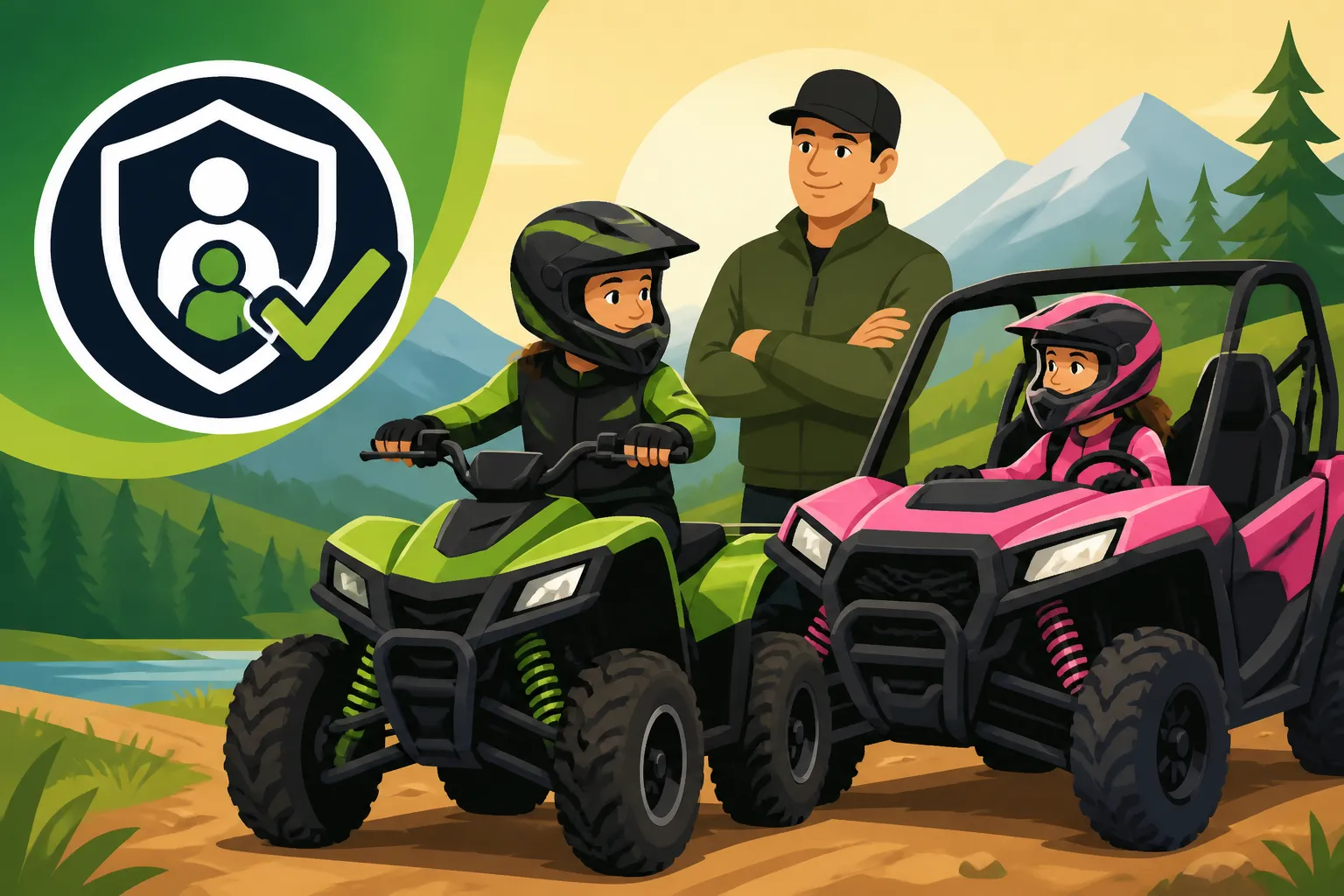
Once a rider turns 14, the rules in British Columbia shift, offering a pathway for them to experience ORV riding on Crown land, but only under very specific and tightly controlled conditions. This age group (14 and 15 years old) is permitted to operate an ORV on Crown land, including resource roads, if they meet two critical requirements: they must have written permission from a parent or guardian, and they must be under the direct supervision of a qualified adult. This isn't an open invitation; it's a carefully regulated opportunity designed to allow supervised skill development.
Let's break down the "written permission" requirement. This isn't just a verbal agreement; it needs to be a physical document carried by the youth rider or their supervisor. While the Off-Road Vehicle Act doesn't specify an exact template, a good practice is to include the full name and date of birth of the youth rider, the identifying details of the ORV they will be operating (make, model, VIN), the name and contact information of the parent/guardian providing permission, the name of the supervising adult (if different from the parent), and the date the permission is granted. This document serves as verifiable proof that the youth has consent to operate the machine. [BC Written Permission Letters]
Even with written permission, supervision is non-negotiable for 14 and 15-year-olds on Crown land. The supervisor must be at least 19 years old and hold a valid driver's licence. Crucially, the supervisor must also be "visible and able to provide immediate direction" to the young operator. This isn't about simply being in the same general area or waiting at the staging point; it means the supervisor must be close enough to see the youth's every move, communicate effectively, and intervene quickly if a dangerous situation arises. Often, this means riding directly behind or alongside the youth, never letting them out of sight.
The practicalities of "visible and able to provide immediate direction" often mean a supervisor cannot be riding a significantly faster or more challenging route while the youth struggles behind. The supervisor’s primary focus during these rides must be the young rider. This close supervision ensures that any developing unsafe habits can be corrected immediately, and that the youth can receive real-time guidance through tricky terrain or unexpected situations. It's a mentorship role, combining legal compliance with practical, on-the-spot training that helps mold them into responsible riders. [BC Rules for a Supervising Adult]
Riders 16 and Over: The Driver's Licence Requirement
Once an individual reaches the age of 16 in British Columbia, the rules for operating an ORV on Crown land shift once more, aligning them more closely with adult responsibilities. At this age, a person is permitted to operate an ORV on Crown land if they hold a valid BC driver's licence. This is the key: any class of driver's licence (even a learner's permit or novice licence) is sufficient, but the restrictions of that particular licence still apply. For instance, if they have an "L" (learner's) licence, they would still need a fully licensed driver (not necessarily on an ORV) present to operate a highway vehicle to and from the riding area, but the ORV rules themselves would apply to their off-road operation.
It's important to clarify a common point of confusion: if a 16-year-old does not hold a valid BC driver's licence, they generally cannot operate an ORV on Crown land. In such a scenario, they would effectively be treated under the same rules as a 14 or 15-year-old, meaning they would need written permission from a parent or guardian and direct supervision from a qualified adult (19+ with a driver's licence) to ride on Crown land. The driver's licence is the gatekeeper for independent operation for this age group. [What the Off-Road Vehicle Act Covers in BC]
While direct adult supervision is not legally mandated for 16-year-olds with a valid driver's licence when they are operating an ORV on Crown land, this legal freedom doesn't absolve them (or their parents, in a broader sense) of the responsibility to ride safely and judiciously. It's crucial to foster a continued understanding of the Off-Road Vehicle Act, including rules around registration, insurance (especially on forest service roads), helmet use, and responsible trail etiquette. Just because the law allows them to ride unsupervised doesn't mean they shouldn't continue to make smart choices and exercise caution.
Ultimately, the 16+ rule recognizes that by this age, individuals are generally closer to full cognitive and physical maturity and have demonstrated a basic understanding of road rules by obtaining a driver's licence. This milestone grants them more independence on the trails, but it also places the full burden of responsible and legal operation squarely on their shoulders. It's a critical step in their journey from supervised youth rider to self-reliant adult adventurer, necessitating ongoing education and a commitment to safety from both the rider and their family. [BC Resource Roads Count as Crown Land]
| Age Group | Crown Land Access | Supervisor Required? | Supervisor Criteria | Written Permission? | Passenger Allowed? (Youth Operator) |
|---|---|---|---|---|---|
| Under 14 | No | N/A | N/A | Not Applicable | No (on any machine operated by youth) |
| 14-15 | Yes (conditional) | Yes | 19+ years, valid driver's licence, visible, immediate direction | Yes | No (on any machine operated by youth) |
| 16+ (with valid BC Driver's Licence) | Yes | No (legally) | N/A | Not Applicable | Only if machine designed for it (UTV), and within manufacturer specs |
| 16+ (without valid BC Driver's Licence) | No (unless supervised as a 14-15 year old) | Yes (if riding on Crown Land) | 19+ years, valid driver's licence, visible, immediate direction | Yes | No (on any machine operated by youth) |
The Critical Role of Adult Supervision in BC
For young riders aged 14 and 15, and for any 16+ rider who doesn't yet hold a driver's licence and wishes to operate an ORV on Crown land, adult supervision isn't just a good idea—it's a legal mandate in British Columbia. This requirement goes far beyond simply having an adult somewhere in the vicinity; the Off-Road Vehicle Act is quite specific about who can supervise and what that supervision entails. This emphasis reflects the province's commitment to ensuring that young riders are not only safe but also learning responsible habits from experienced mentors.
Who Qualifies as a Supervisor in BC?
The law in British Columbia is clear: a supervisor for a young ORV operator must be at least 19 years of age and hold a valid driver's licence. This means that an older sibling or a young adult friend, no matter how experienced they are on the trails, cannot legally supervise a 14 or 15-year-old rider if they are under 19 or don't possess a full driver's licence. The requirement for a driver's licence is not arbitrary; it ensures that the supervisor has a demonstrated understanding of road safety, rules of the road, and general responsibility as recognized by provincial authority.
Merely meeting the age and licence requirements, however, doesn't automatically make someone an effective supervisor. The spirit of the law implies that the supervisor should also be an experienced, capable, and responsible ORV operator themselves. They should be familiar with the machine the youth is riding, understand the terrain, and be prepared to handle common trail scenarios and emergencies. A supervisor who is new to ORV riding themselves might not be adequately equipped to guide a novice youth through challenging conditions, even if they meet the legal minimums.
Furthermore, a qualified supervisor should ideally be riding their own capable machine. This allows them to stay in close proximity to the youth, respond quickly to any issues, and model appropriate riding techniques. While it might be tempting for an adult to walk alongside a child or supervise from a stationary point, this often falls short of the "visible and able to provide immediate direction" standard, which we'll delve into next. A supervisor needs to be an active participant in the ride, constantly assessing conditions and the youth's performance.
This stringent qualification ensures that the person legally responsible for a young rider possesses the necessary maturity, legal standing, and (ideally) practical experience to make critical safety decisions on the fly. It's a serious responsibility that should not be taken lightly, as the supervisor is ultimately accountable for the youth's compliance and safety on the trails. [BC Supervisors Must Be 19 or Older]
Defining "Visible and Able to Provide Immediate Direction"
This particular phrase in the Off-Road Vehicle Act is perhaps the most crucial, and often misunderstood, aspect of youth supervision. It’s not enough for a supervisor to be "somewhere in the area" or to simply hear the youth’s machine in the distance. The law demands a much more engaged and active form of oversight, directly linking the supervisor's presence to their ability to prevent harm or provide immediate assistance.
Let's break down "visible." This means exactly what it sounds like: the supervisor must be able to see the youth rider at all times. They shouldn't be around a blind corner, over a hill, or so far ahead that the youth is out of their line of sight. This typically translates to riding within close proximity, often directly behind or occasionally alongside the young rider. The idea is that if the youth encounters a problem—gets stuck, loses control, or is approaching a hazard—the supervisor must immediately perceive the situation without delay.
Now for "able to provide immediate direction." This takes "visible" a step further. It means the supervisor must be close enough, and attentive enough, to verbally guide the youth, provide instructions, or even physically intervene if a dire situation demands it. This means effective communication is key, whether through clear shouting, hand signals, or even helmet-to-helmet communicators for more advanced setups. The goal is to allow the supervisor to correct unsafe behaviour instantly, point out hidden obstacles, or guide the youth through a challenging section of trail before a problem escalates. [BC's Visible and Immediate Direction Test]
Consider a typical scenario: you're riding a winding trail with your 14-year-old. "Visible and able to provide immediate direction" would mean you're riding perhaps one to three machine lengths behind them, constantly observing their line choice, speed, and body position. If they approach a mud puddle too fast, you can immediately shout "Slow down!" If they start to lose balance, you can be there in an instant. It does not mean letting them rip ahead for five minutes while you catch up, or supervising them from your parked truck while they ride a loop. This level of engagement requires the supervisor to prioritize the youth's ride over their own, ensuring constant vigilance and readiness to act.
This strict definition of supervision underscores the seriousness of the responsibility. It acknowledges that young riders, even with some experience, can make impulsive decisions or lack the seasoned judgment to navigate complex terrain safely. The supervisor acts as their real-time safety net and experienced guide, a crucial element for allowing youth to develop their skills safely and legally on BC's diverse trails.
Responsibilities Beyond Legal Compliance
While adhering to the legal definitions of who can supervise and what "supervision" means is crucial, the role of an adult supervisor extends far beyond mere compliance with the law. A truly effective supervisor is a mentor, a teacher, and an active safety officer, tasked with fostering a safe, respectful, and enjoyable riding experience for their young charge. Their responsibilities begin long before the wheels hit the dirt and continue throughout the entire ride, demonstrating a holistic approach to safety.
One of the primary responsibilities is ensuring the young rider is properly equipped and their machine is in safe working order. This means checking that the youth is wearing all the necessary personal protective equipment – a properly fitted, certified helmet, goggles, gloves, sturdy over-the-ankle boots, and long pants and sleeves. It also involves inspecting the ORV for mechanical issues: checking tire pressure, brakes, fluid levels, and ensuring that essential components like the throttle are operating smoothly. Don't forget to ensure a spark arrestor is properly installed, a crucial requirement in BC's backcountry to prevent wildfires. Brands like SuperATV offer a range of aftermarket spark arrestors and other essential parts to keep machines running safely and legally. [BC Spark Arrestor Requirements]
Beyond the gear and machine, the supervisor is responsible for appropriate route planning. This involves selecting trails that match the youth's current skill level, avoiding overly challenging terrain, or areas known for active industrial traffic (like logging trucks). Before setting out, a thorough briefing should cover the day's plan, potential hazards to watch out for, and a review of hand signals or verbal commands for communication on the trail. This pre-ride preparation is vital for setting expectations and minimizing surprises.
Finally, and perhaps most importantly, the supervisor is responsible for continuous instruction and observation throughout the ride. This means offering real-time coaching on riding techniques, identifying potential hazards before the youth encounters them, reinforcing speed limits, and ensuring the young rider is not engaging in reckless or unsafe behaviour. It's about teaching situational awareness, trail etiquette, and respect for the environment and other trail users. By leading by example and maintaining constant vigilance, a supervisor not only meets the legal requirements but also instills invaluable safety principles that will serve the young rider for a lifetime. [BC Spark Arrestor Rules and Fines]
Training and Education for Young Riders in BC
While the Off-Road Vehicle Act sets out the legal framework for youth riding, compliance alone doesn't guarantee safety or proficiency. True mastery and confident riding come from education and hands-on training. For young riders in British Columbia, investing in formal training and consistent practice can significantly enhance their skills, judgment, and overall enjoyment of the sport, fostering a lifetime of responsible adventures.
Voluntary Training Courses: A Foundation for Safety
In British Columbia, formal ORV safety training courses are generally voluntary for adult riders and youth alike, but their value cannot be overstated. These courses, often offered by certified instructors, provide a structured environment for young riders to learn essential skills, understand machine mechanics, and grasp the core principles of safe operation. They go beyond simple riding instruction, delving into critical areas like risk assessment, environmental awareness, and emergency procedures.
A typical youth ORV training course covers fundamental aspects such as proper riding posture, starting and stopping techniques, effective steering and turning, ascending and descending hills safely, and navigating various obstacles. Instructors teach young riders how to assess terrain, choose appropriate speeds, and react to unexpected situations in a controlled setting. This foundational knowledge is crucial because it builds muscle memory and decision-making skills before they encounter real-world, unpredictable trail conditions.
Organizations like the Canada Safety Council (CSC) and others offer recognized ATV safety courses that are tailored for different age groups and skill levels. These courses often include both classroom theory and practical, hands-on riding exercises. For parents, sending their child to such a course provides peace of mind, knowing that their young rider is learning from certified professionals who specialize in ORV safety education. It's an investment that pays dividends in confidence, competence, and accident prevention. [BC ATV Safety Training Options]
The long-term benefits of formal training extend far beyond just passing a course. Young riders who receive structured instruction develop better habits from the outset, reducing the likelihood of developing unsafe practices that can be hard to unlearn later. They gain a deeper understanding of their machine's capabilities and limitations, fostering respect for its power. This foundational education empowers them to make smarter decisions on the trails, making their riding experience safer and more enjoyable for everyone involved. [BC Safety Course Providers]
The Benefits of Hands-On Learning and Practice
While formal training courses lay a crucial groundwork, true proficiency in ORV riding, especially for youth, is cultivated through consistent hands-on learning and supervised practice. The skills learned in a course, no matter how well taught, need to be reinforced and adapted to various real-world conditions. This means creating regular opportunities for young riders to get on their machines in safe, controlled environments, gradually building their experience and confidence.
Starting in a safe, open area like a large field or a designated riding park is ideal. Here, youth can practice basic maneuvers—figure eights, sudden stops, gentle turns—without the pressure of tight trails, steep inclines, or other riders. This low-stress environment allows them to experiment, make mistakes, and learn from them without fear of serious consequences. Repetition builds muscle memory, making fundamental operations second nature and freeing up cognitive capacity to focus on more complex aspects of riding, such as terrain reading and hazard identification.
As skills improve, the progression should be gradual and deliberate. Introduce slightly more challenging terrain—a gentle slope, a shallow ditch, or a winding path—always under the watchful eye of a qualified supervisor. It's about incrementally pushing their comfort zone while ensuring they remain within their capabilities. This measured approach prevents young riders from getting overwhelmed or attempting maneuvers they are not yet ready for, which can lead to accidents or a loss of confidence. [What a Rider Course Teaches]
The benefits of this consistent practice are immense. It helps young riders develop better balance, refine their throttle and brake control, and improve their ability to anticipate and react to changing conditions. They learn the nuances of how their specific machine handles on different surfaces, from loose gravel to packed dirt. Moreover, these practice sessions provide invaluable opportunities for supervisors to offer real-time feedback, correct form, and discuss decision-making processes, effectively turning every ride into a learning experience. This hands-on, iterative process is what truly transforms a novice into a competent and confident ORV operator. [BC Safety Courses Are Voluntary for Adults]
Continuous Learning for All Ages
The journey of becoming a skilled and safe ORV rider is not a one-time event; it’s a process of continuous learning and adaptation that extends well beyond youth. Even for older teenagers and adults, conditions on the trail are constantly changing, and new techniques or safety considerations emerge. Encouraging a mindset of lifelong learning in young riders sets them up for ongoing success and safety throughout their riding careers.
Consider how dramatically trail conditions can vary: dry, dusty trails in summer demand different riding strategies than slick, muddy paths in spring. Riding in different regions of BC, from the dense forests of the Coast to the rocky mountains of the Interior, presents unique challenges. What works on one trail might be dangerous on another. Continuous learning means adapting to these variables, recognizing when a particular skill or technique needs to be refined, and staying open to advice and new knowledge.
As youth riders mature and gain more experience, they might want to tackle more advanced terrain or longer rides. This is an excellent opportunity to explore more specialized training courses, such as those focusing on advanced maneuvering, recovery techniques, or navigating specific types of terrain (e.g., steep climbs, technical descents). There are always opportunities to hone skills, even for those who consider themselves proficient. The goal is to never stop growing as a rider.
Moreover, adults leading the way have a significant role in modeling this continuous learning. By staying current with their own safety knowledge, perhaps even taking refresher courses, and demonstrating cautious decision-making on the trails, supervisors show young riders that safety and learning are ongoing priorities, not just boxes to check. This commitment to continuous improvement ensures that all riders, regardless of age, remain sharp, adaptable, and respectful of the challenges and responsibilities that come with off-road adventuring.
Passenger Rules: Who Can Ride Along with a Young Operator in BC?
The excitement of riding often comes with the desire to share the experience with friends or family. However, when it comes to youth operating ATVs or UTVs with passengers, British Columbia's rules are very clear and, in most cases, restrictive. These regulations prioritize safety above all else, recognizing the increased risks involved when an inexperienced or developing rider takes on the added responsibility of carrying another person. Ignoring these rules can lead to serious consequences, both legal and physical.
Manufacturer Age and Weight Guidance: The First Rule
Before even considering BC's legal framework, the absolute first rule regarding passengers on any ATV or UTV is to consult and strictly adhere to the manufacturer's recommendations. Every ORV comes with a manual that specifies its design capacity: how many riders it's designed for, the maximum weight it can safely carry, and often, age recommendations for operators and passengers. For ATVs, the vast majority are designed for a single operator only, especially most quad models. UTVs (side-by-sides) are typically designed for multiple passengers, but even then, there are strict limits.
Manufacturers include these guidelines for very critical reasons. An ORV's stability, handling, braking, and suspension system are all engineered for a specific load distribution and weight. Adding a passenger to a single-rider ATV drastically alters its center of gravity, making it much more prone to rollovers, especially during turns, on uneven terrain, or when climbing or descending hills. The extra weight also increases braking distances and places additional strain on components not designed for such loads. Ignoring these warnings isn't just risky; it's actively dangerous.
Many parents might think, "My child is small, and so is their friend; it'll be fine." This is a dangerous misconception. Even a small passenger adds weight and, more importantly, a dynamic, shifting load that can easily throw off the balance of a machine designed for one. The rider's ability to shift their own weight for balance and control is severely hampered, increasing the risk of losing control. This is why manufacturers are so adamant about their single-rider designations for most ATVs.
It's also important to note that aftermarket accessories or modifications, even from reputable brands like SuperATV that offer sturdy components, do not override core manufacturer safety warnings regarding passenger capacity. If your ATV is designed for one, adding a rear seat or footrests doesn't magically make it safe for two. The fundamental engineering of the machine for stability and control remains unchanged, and adding unauthorized seating only creates a false sense of security.
Legal Restrictions for Youth Operators Carrying Passengers
Building upon the manufacturer's foundational safety guidelines, British Columbia's Off-Road Vehicle Act imposes clear legal restrictions specifically for youth operators regarding passengers. The rule is unambiguous: a child operator (defined as someone under the age of 16) is not permitted to carry a passenger on any ORV on Crown land. This is a strict prohibition, regardless of the machine's design capacity (even if it's a multi-passenger UTV) and regardless of how experienced or supervised the youth operator might seem. [BC Children Cannot Carry Passengers]
The reasoning behind this legal mandate is rooted deeply in safety. Operating an ORV requires intense focus, quick decision-making, and the ability to react instantly to changing conditions. When a young rider, whose judgment and physical capabilities are still developing, also has the added responsibility and distraction of a passenger, the risk profile escalates dramatically. A passenger's movements, even small ones, can affect the machine's balance, and the youth operator's attention might be split between the trail and the person behind them.
This rule means that if your 14 or 15-year-old is operating an ATV or UTV on Crown land, they must be the sole occupant of that machine. There can be no friends, no siblings, and no adults riding along as passengers with a youth operator. This can sometimes be a difficult concept for families to grasp, especially if they own a multi-passenger side-by-side that seems ideal for sharing. However, the law is clear: until a rider is 16 and meets the additional requirements (like having a driver's licence), they cannot take on the responsibility of carrying a passenger.
The implications for families planning rides are significant. If you have multiple young children who want to ride, and some are under 16, each child who operates a machine must do so individually. If passengers are desired, they must ride in a multi-passenger UTV that is being operated by a qualified adult (16+ with a valid driver's licence). This ensures that the responsibility of carrying passengers, and the complex dynamics that entails, rests with a mature and legally capable operator, thereby minimizing risks for everyone involved. [BC Rules for Passengers on a Quad]
Side-by-Sides and Multi-Passenger Considerations
While the "no passenger for youth operators under 16" rule is steadfast for all ORVs, it's important to specifically address side-by-sides (UTVs) because they are inherently designed for multiple passengers. For adults and youth 16 years or older with a valid driver's licence, UTVs offer a legitimate way to share the trail experience with others. However, even with UTVs, the core principles of manufacturer recommendations and overall safety remain paramount.
For any UTV, you must strictly adhere to the manufacturer's guidelines regarding the number of passengers, their age, size, and the use of seatbelts. Most UTVs are designed with specific seating positions, often equipped with seatbelts and sometimes even child safety seat anchors. These are not suggestions; they are critical safety features. Overloading a UTV, or allowing passengers to ride in non-designated areas (like the cargo box), is extremely dangerous and compromises the vehicle's stability and protective features like the roll cage. [BC Rules for Riding a Side-by-Side]
If a youth who is 16 or older and possesses a valid BC driver's licence is operating a multi-passenger UTV, they can carry passengers, provided they are within the manufacturer's specifications for number, age, and weight. However, even in this scenario, the operator must exercise extreme caution and mature judgment. The added weight and dynamic movements of passengers will affect the UTV's handling, especially on challenging terrain. The operator is responsible for ensuring all passengers are properly seated, buckled in, and understand basic safety rules.
Furthermore, regardless of age or machine type, helmets are strongly recommended for all occupants of an ORV, and are legally required for all riders on an ATV in BC. While UTVs with roll cages and seatbelts might offer a different level of protection, wearing a helmet is still a wise choice to protect against head injuries, especially when voluntary liability insurance (like the minimum $200,000 required on Forest Service Roads) is a factor. Ultimately, sharing the ride in a UTV is a fantastic experience, but it must be done with unwavering respect for the machine's design, the law, and the safety of everyone on board. [BC Rules for a Child Passenger]
Penalties and Consequences for Breaking Youth Riding Rules
Riding an ATV or UTV in British Columbia is a privilege, not an inherent right, and that privilege comes with significant responsibilities, particularly when youth are involved. The Off-Road Vehicle Act includes robust enforcement measures to ensure compliance with its safety regulations. For parents, guardians, and young riders, understanding the potential penalties and consequences for breaking youth riding rules is critical, as ignorance of the law is no excuse and can lead to serious financial, legal, and personal repercussions.
Violation Tickets and Fines for Non-Compliance
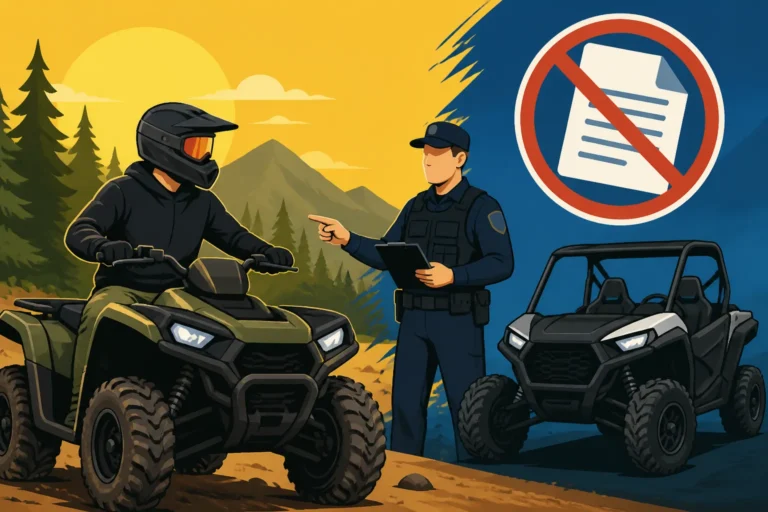
The most immediate and common consequence for violating ORV regulations, including those pertaining to youth, is the issuance of violation tickets and fines. Law enforcement officials, including the RCMP, Conservation Officers, and sometimes even park rangers or municipal bylaw officers, have the authority to pull over ORVs and issue tickets for various infractions. These fines are not trivial; they are designed to act as a significant deterrent to unsafe and illegal riding practices.
Common infractions related to youth riding that can result in fines include:
- An underage rider (under 14) operating an ORV on Crown land.
- A 14 or 15-year-old operating on Crown land without the required written parental permission.
- A 14 or 15-year-old (or a 16+ rider without a driver's licence) operating on Crown land without proper supervision (i.e., the supervisor is not 19+, doesn't have a valid driver's licence, or is not "visible and able to provide immediate direction").
- A youth operator (under 16) carrying a passenger on any ORV.
- Any rider, including youth, operating an ORV without an approved helmet.
These fines can quickly add up, especially if multiple infractions are noted during a single stop. For example, a young rider found operating without supervision, without a helmet, and on an unregistered machine could face several separate tickets. These financial penalties are intended to impress upon both the youth and their supervising adults the seriousness of adhering to the rules and the tangible cost of non-compliance. [BC Fines for Careless Operation]
Machine Seizure and Administrative Penalties
Beyond mere fines, a much more severe consequence of violating BC's ORV rules is the potential for machine seizure. Law enforcement officers have the authority under the Off-Road Vehicle Act to impound an ORV if it is being operated illegally, unsafely, or in a manner that poses a significant risk to public safety or the environment. This can happen in various scenarios, such as repeat offenses, extreme negligence, or operating while prohibited. If a youth is involved in serious or repeated infractions, their machine, or the machine they are operating, could be taken away.
Imagine the frustration and significant financial burden of having your family's ATV or UTV seized in the middle of a backcountry trip. Not only would you lose access to the machine, but you would then incur costs associated with impound fees, storage fees, and potentially other administrative charges before the machine can be released. The process of recovering a seized ORV can be complex, time-consuming, and expensive, far outweighing the cost of any initial violation tickets. [BC Machine Seizures by Police]
In addition to direct machine seizure, the Off-Road Vehicle Act and related legislation (like environmental protection acts) allow for the imposition of administrative penalties. These are fines or other measures imposed by regulatory bodies, often without requiring a court conviction, for contraventions of regulations. For instance, a youth riding in a sensitive environmental area could face not only tickets but also significant administrative penalties from an environmental agency. These penalties can be substantial, with some reaching up to $10,000 for serious environmental damage or breaches of land-use restrictions, highlighting the extensive reach of regulatory enforcement. [BC Administrative Penalties Up to $10,000]
The threat of machine seizure and administrative penalties serves as a potent reminder that the consequences of illegal ORV operation, particularly when youth are involved, extend far beyond simple traffic tickets. It underscores the importance of not just understanding the rules, but actively ensuring they are followed to protect both the riders and their valuable equipment.
Risk to Insurance Coverage and Civil Liability
Perhaps the most financially devastating consequence of breaking youth riding rules is the potential impact on insurance coverage and exposure to civil liability. Many ORV owners carry some form of insurance, whether it's the mandatory liability coverage for operating on Forest Service Roads or additional private policies. However, most insurance policies contain clauses that can void coverage if the vehicle is being operated illegally or in violation of its terms.
If an accident occurs while a youth is operating an ORV illegally—for instance, without proper supervision, under the legal age, or without a helmet where required—your insurance provider could deny coverage. This means that if there's property damage to your machine, to another vehicle, or to private property, you would be personally responsible for all repair or replacement costs. These costs can quickly escalate, turning a fun day into a financial nightmare. [BC Fines for Riding an Unregistered Machine]
Even more critical is the risk of civil liability if a youth's illegal operation leads to injury to another person. If a young rider, operating in contravention of the Off-Road Vehicle Act, causes an accident that injures a passenger, another trail user, or a pedestrian, the youth, their parents, and the machine owner could be personally sued for damages. Such lawsuits can result in judgments for medical expenses, lost wages, pain and suffering, and other compensatory damages, potentially totaling hundreds of thousands or even millions of dollars. [BC Liability Is Voluntary on Other Crown Land]
Without valid insurance coverage, these judgments would come directly out of your family's assets, potentially leading to financial ruin, loss of property, and long-term debt. This is why adherence to the Off-Road Vehicle Act's youth rules isn't just about avoiding tickets; it's about protecting your financial future and ensuring peace of mind. The legal framework is designed to prevent these catastrophic scenarios by mandating responsible operation. Understanding these risks should compel every parent and supervisor to strictly adhere to all youth riding regulations. [BC Impaired Riding Penalties]
Practical Tips for Fostering Safe and Enjoyable Youth Riding in BC
Beyond knowing the rules, creating a truly safe and enjoyable experience for young ORV riders in British Columbia requires a proactive approach to preparation, communication, and environmental choices. It's about setting up youth for success, instilling confidence, and fostering a deep respect for the sport and its responsibilities. By implementing a few key strategies, parents and guardians can transform legal compliance into a natural extension of a positive riding culture.
Equipping Young Riders for Success
The old adage "dress for the crash, not for the ride" holds especially true for young ORV operators. Proper personal protective equipment (PPE) is non-negotiable and forms the first line of defense against injuries. This starts with a DOT or ECE certified helmet that fits snugly and comfortably – a helmet too loose is almost as dangerous as no helmet at all. Goggles are essential for eye protection from dust, debris, and branches. Sturdy, over-the-ankle boots protect feet and ankles, while gloves shield hands from abrasions and improve grip. Long pants and a long-sleeved shirt, preferably made of durable material, are crucial to prevent scrapes and burns.
Ensuring the gear fits properly is paramount. Children grow quickly, so regularly check helmets, boots, and other gear for proper fit. Ill-fitting equipment can be uncomfortable, reduce visibility, and offer inadequate protection. It’s not just about having the gear; it's about having the right gear that fits correctly. For instance, SuperATV offers a wide selection of durable gear and accessories that can withstand the rigors of off-road riding, ensuring your young rider is well-protected.
Equally important is ensuring the machine itself is appropriate for the youth's size, age, and skill level, and that it's always in optimal mechanical condition. A machine that's too big or too powerful for a young rider can be intimidating and dangerous. Before every ride, a thorough pre-ride inspection is essential: check tire pressure, brakes (front and rear), throttle operation, lights, fluid levels, and ensure the kill switch works. Any minor issue on a powerful machine can quickly escalate into a safety hazard, especially for an inexperienced operator. [BC Helmet Law Covers Every Rider]
Finally, teach young riders to carry basic essentials. A small backpack with a first-aid kit, a basic tool kit (for minor adjustments or repairs), water, and snacks can be invaluable. This teaches self-sufficiency and preparedness, vital skills for any backcountry adventurer. Encouraging them to carry a whistle or a satellite messenger (in areas without cell service) can also provide a crucial layer of safety in remote locations.
Communication and Setting Clear Boundaries
Effective communication is the cornerstone of safe and enjoyable youth riding. Before every single ride, even short ones, gather for a brief safety meeting. Discuss the planned route, highlight any known hazards (e.g., active logging, slippery sections, other trail users), and review the rules for the day. This consistent pre-ride briefing reinforces safety messages and ensures everyone is on the same page.
Beyond legal requirements, establish clear "house rules" for riding. These might include "no showing off," "always ride within your limits," "respect other trail users," and "never ride alone." These boundaries foster a sense of discipline and responsibility that extends beyond the letter of the law. They help young riders develop good judgment and understand that their actions have consequences, not just for themselves, but for their riding group and the wider community.
Crucially, cultivate an environment where young riders feel comfortable speaking up. Encourage them to communicate if they feel tired, overwhelmed, scared, or if they notice something unsafe with their machine or the trail. They should know that reporting an issue, even if it means stopping the ride, is always the right decision and will be met with understanding, not frustration. This open line of communication is vital for addressing potential problems before they escalate.
Finally, and perhaps most powerfully, lead by example. Always wear your own helmet and protective gear, even for quick rides around private property. Follow all the rules of the Off-Road Vehicle Act yourself, demonstrate responsible riding behaviour, and show respect for the environment and other users. Children are incredibly observant, and they will learn more from your actions than from any lecture. Your consistent adherence to safety protocols will instill the same values in them, creating a lasting legacy of responsible riding. [BC Helmet Standards in the Regulation]
Choosing the Right Environment and Machine
One of the most critical decisions in fostering safe youth riding is matching the machine and the environment to the rider's capabilities. It's not about what your child wants to ride, but what they can safely handle. Youth-specific ORV models are designed with features like smaller engines, limited top speeds, and lighter frames, making them more manageable for developing riders. Ensure the machine's size allows the youth to comfortably reach all controls (handlebars, brakes, throttle) and place their feet flat on the footrests.
When introducing a young rider to ORVs, always start in a flat, open, and clear environment away from traffic, obstacles, or steep drops. A large field or a designated training area is ideal. Here, they can practice basic maneuvers—starting, stopping, turning, gear shifting—without the pressure of navigating complex terrain. As their skills and confidence grow, gradually introduce them to more varied but still easy terrain, such as gentle slopes, slight curves, and minor bumps. Avoid throwing them into highly technical or challenging trails prematurely, as this can lead to frustration, accidents, or a loss of interest.
Researching and selecting appropriate riding areas is also essential. Look for designated youth-friendly trails or managed riding sites that offer a range of difficulty levels. Many areas have "easy" or "beginner" loops perfect for building confidence. Resources like local ORV clubs or provincial recreation site maps can provide valuable information on suitable locations. Always check for any specific restrictions or closures in advance, especially those related to fire bans or active industrial operations. [BC ATV Trails: Where to Ride]
Lastly, make a conscious effort to avoid high-risk situations. This means strictly adhering to legal age and supervision requirements on Crown land. Avoid riding alone, especially in remote areas. Discourage riding at night without proper lighting and adequate experience. Be extremely cautious around active logging roads, and always yield to industrial traffic. By carefully managing the machine, the environment, and the situation, you significantly reduce the potential for accidents and ensure that every ride is a positive learning experience for your young adventurer. [BC Rules for Riding at Night]
Common Misconceptions About Youth Riding in BC
Even with clear regulations, many misconceptions about youth riding in British Columbia persist. These misunderstandings, often fueled by anecdotal evidence or a desire for convenience, can unfortunately lead to non-compliance and put young riders at unnecessary risk. As a responsible ORV community, it's vital to address these myths head-on and reiterate the unequivocal truths behind BC's safety-driven laws.
"My Kid is a Natural, They Don't Need Supervision"
This is perhaps one of the most dangerous misconceptions that parents can hold. While it's wonderful to see a child take to ORV riding with enthusiasm and apparent natural talent, inherent skill does not, in any way, substitute for experience, mature judgment, or legal supervision. The Off-Road Vehicle Act applies universally, not selectively, and a child's perceived aptitude doesn't exempt them from the age and supervision requirements.
Even the most "natural" young rider lacks the extensive on-trail experience that allows an adult to anticipate hazards, react to unexpected changes in terrain, or make split-second decisions under pressure. They haven't encountered countless variables like varying traction, sudden obstacles, unexpected encounters with wildlife or other trail users, or mechanical issues in remote areas. These situations demand seasoned judgment that simply hasn't developed yet, regardless of how quickly they master basic throttle control.
Furthermore, the legal aspect is non-negotiable. If a 14 or 15-year-old is caught operating an ORV on Crown land without a qualified supervisor (19+ with a valid driver's licence, visible and able to provide immediate direction), they are in violation of the law. Their natural ability won't prevent a fine, nor will it prevent machine seizure. The rules are in place precisely because relying solely on a child's inherent talent, without the oversight of an experienced adult, significantly increases the risk of accidents and negative outcomes.
Ultimately, the law recognizes that even skilled young riders can make impulsive decisions or be overwhelmed by unforeseen circumstances. The supervisor acts as a crucial safety net, providing that layer of adult judgment and experience that a child, regardless of talent, simply hasn't had the time to accumulate. It’s not about stifling talent; it’s about nurturing it safely and legally. [BC Youth Riding Rules and Supervision]
"It's Just a 'Mini' Machine, So the Rules Are Different"
Another widespread misconception is that smaller, "youth-sized" ORVs are somehow exempt from the stringent regulations that apply to full-sized machines. Parents might assume that because a quad has a smaller engine or a "youth" designation, it falls into a different, less regulated category. This is incorrect. In British Columbia, the Off-Road Vehicle Act applies to all off-road vehicles, regardless of their size, engine displacement, or whether they are marketed specifically for youth.
A youth quad, even one with a 50cc or 90cc engine, is still legally classified as an off-road vehicle. This means it is subject to the same fundamental requirements: if ridden on Crown land, it must be registered, and its operator must adhere to all age, supervision, and passenger rules. The notion that a smaller machine is somehow "less serious" in the eyes of the law is a dangerous assumption that can lead to unexpected fines and legal trouble. [BC Registration for a Youth Quad]
The danger isn't solely tied to machine size or horsepower. Even smaller ORVs can cause serious injury if misused or operated unsafely. A rollover on a youth quad can still result in severe head trauma or broken bones. A collision with another machine, a tree, or an embankment can still have devastating consequences. The fundamental physics of momentum, impact, and gravitational forces apply regardless of the machine's scale.
Therefore, parents should never assume that a child's machine being "mini" translates into "mini" rules or "mini" risks. All the same safety precautions, all the same legal requirements, and all the same needs for proper training and supervision apply. The size of the machine might be tailored for a child, but the responsibility of operating it safely and legally is adult-sized.
"Only Police Enforce These Rules"
A common misbelief among some ORV enthusiasts is that the only authority figures they might encounter in the backcountry are the RCMP. This leads to a false sense of security in remote areas, with riders believing they can operate with less vigilance regarding rules like youth supervision or registration. However, in British Columbia's vast landscapes, enforcement powers extend far beyond the provincial police force.
Conservation Officers (COs) play a significant role in enforcing rules within BC's backcountry. Their mandate often includes patrolling Crown land, protecting wildlife, and ensuring compliance with various environmental regulations, which inherently includes aspects of ORV use. If a CO observes an ORV being operated illegally, unsafely, or in a manner that harms the environment (e.g., riding in prohibited areas, damaging sensitive habitats), they absolutely have the authority to stop the operator, issue tickets, and even seize machines. This applies equally to youth riding infractions. [BC Equipment Checks by Conservation Officers]
Furthermore, park rangers in provincial parks and recreation sites also have enforcement capabilities. While many provincial parks ban motorized recreation, those that allow it or have designated staging areas will have rangers ensuring rules are followed, including those pertaining to ORV registration, insurance, and youth operation. In some cases, specific municipal bylaws might also grant local bylaw officers limited authority over ORV use within town boundaries or specific recreational zones.
This multi-agency enforcement approach means that riders, especially those with youth in tow, need to be aware that they could encounter law enforcement from various branches at any point in the backcountry. Relying on the remoteness of an area to flout rules is a risky gamble. Compliance with the Off-Road Vehicle Act is a province-wide expectation, and various authorities are empowered to uphold it, ensuring safety and responsible recreation for everyone. [BC Police Operation Permits for Highway Travel]
Disclaimer
This article is for general informational purposes only and does not constitute professional advice. Laws, prices and regulations vary by location and change over time. Consult a qualified professional for guidance on your specific situation.