BC Registration for a Second Machine
So, you’ve already been through the BC off-road vehicle (ORV) registration process once, maybe with that trusty quad you’ve had for years. You know the drill, you've got your plate, and you understand the rules. But now you’re looking at adding another machine to the stable – perhaps a new side-by-side for the family, a dirt bike for the kids, or an older ATV you snagged for a great deal. While you’ve got experience under your belt, registering a second machine isn’t always a simple carbon copy of the first time. This guide is here to walk you through the nuances, confirm what stays the same, and highlight what might be different when you’re adding another ORV to your fleet in British Columbia.
Why a "Second" Machine Isn't Just a Repeat of the First
It's easy to assume that because you’ve registered one off-road vehicle in BC, bringing another one home will be exactly the same, maybe even quicker because you know the ropes. And in many ways, you're right – the fundamental steps at the Autoplan broker's office remain consistent. However, the province treats every single ORV as its own unique entity. Your second machine, just like your first, needs to establish its own identity within the system, complete with its own distinct paperwork and legal journey.
Unique Identity for Every ORV
Think of it like this: your driver's licence is yours, and your spouse's is theirs. The fact that you both have one doesn't merge your driving records or identities. Similarly, each off-road vehicle has its own Vehicle Identification Number (VIN) or serial number, which is its fingerprint. This unique identifier is the bedrock of the entire registration process. Whether it’s a brand-new model from a dealership or a vintage find from a private seller, the VIN is what the provincial system uses to track ownership, ensure compliance, and issue its specific [BC's Certificate of Registration Explained]. This certificate is tied directly to that individual VIN, not to you as the owner. So, even if you already have one certificate for your first quad, you'll be receiving a brand-new, separate certificate for your second.
This means that while you are a known entity to the system as an ORV owner, the machine itself is not. Every vehicle needs to be properly identified, its origins confirmed, and its ownership history documented. This step is crucial for preventing theft and ensuring that all ORVs operating on Crown land meet the mandatory registration requirements that came into effect back in [BC Registration Became Mandatory in 2015].
The Paper Trail for Each Purchase
One of the most common areas where registering a second machine can feel different is in the paperwork leading up to the broker visit. When you bought your first machine, you might have gone through a dealer, making the bill of sale straightforward. But what if your second machine is a private sale? Or perhaps it's a gift from a family member? Each scenario brings its own set of documentation requirements.
For any ORV, the broker needs a clear [BC Bills of Sale for Every Prior Owner] right back to the machine's origin or the last registered owner. If you're buying privately, you'll need a comprehensive bill of sale from the seller to you. If there's a gap in the ownership history, or if a previous bill of sale is missing from an earlier owner in the chain, you might find yourself needing a [BC Statutory Declaration for an ORV]. This declaration, made under oath, helps fill those gaps and is a critical piece of the puzzle. Websites like LawDepot can be incredibly helpful for creating robust and legally sound bills of sale or gift letters, ensuring you have all the necessary details captured correctly, even for an informal transaction between friends or family. It's about ensuring every previous change of hands is accounted for, providing an unbroken chain of ownership.
Navigating the Paperwork with Existing Knowledge
Having already registered one ORV in BC gives you a significant advantage. You understand the fundamental process, the types of questions a broker will ask, and the general flow of the appointment. However, it's not simply a copy-and-paste job. There can be subtle differences based on the nature of your second purchase that might require a slightly different approach or a bit more preparation.
What Stays the Same
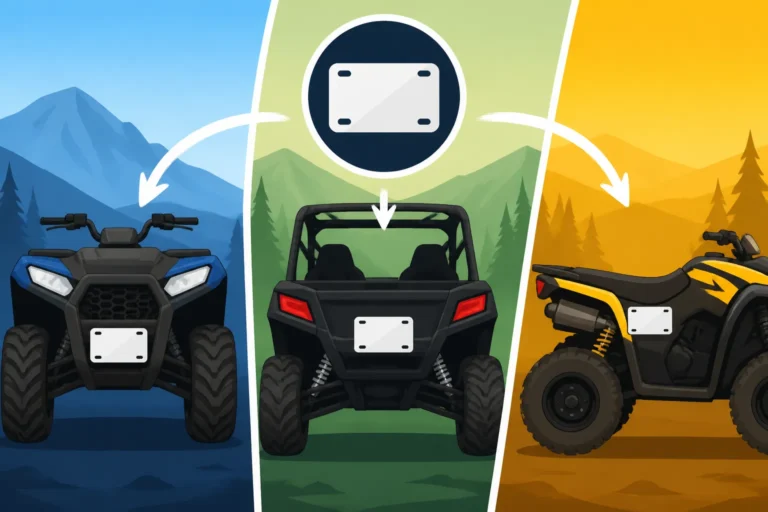
Good news! Many aspects of the registration process will feel very familiar. You'll still visit an [BC Autoplan Brokers Handle ORV Registration] office. You'll still need to bring your valid government-issued photo identification. The broker will still input the VIN and details into the provincial system. You will still receive a distinct [BC ORV Number Plates and Decals] for this new machine, which will need to be properly affixed to your ORV before you take it out on Crown land. And yes, you'll still be getting a new Certificate of Registration. The core steps outlined in a guide like [How to Register an ATV in BC] remain the same regardless of how many machines you own.
The physical act of going to the broker, presenting your documents, and receiving the plate and certificate will be a familiar experience. You'll already know about the initial registration fee and the PST (if applicable) that applies to the purchase. The good news is that [BC Registration Lasts as Long as You Own It], so once this second machine is registered, you won't face annual renewals for it either.
What Might Be Different (or Feel Different)
Where things can diverge is in the specifics of the machine itself or the circumstances of its acquisition. For instance, if your first machine was brand new, the dealer handled much of the initial paperwork. Your second machine, however, might be an [BC Registration for an Older Machine] that you bought used, potentially from a private seller who doesn't have all the pristine documentation you'd get from a dealership. In such cases, the burden of gathering a complete [BC Ownership Chains Going Back Decades] falls squarely on you.
Or perhaps you're purchasing an [BC Registration for an Imported Machine] from outside the province, say from Alberta or the US. This introduces entirely new steps, like customs declarations, that weren't part of your first registration experience. The broker will need to see proof that the machine has been properly imported into Canada before they can register it in BC.
Another scenario could be if the machine was a gift within the family. While this simplifies the financial aspect (no PST on a true gift, usually), it still requires formal documentation. A clear gift letter, detailing the donor, recipient, machine VIN, and the date of transfer, is essential. Again, resources like LawDepot can provide excellent templates for [BC Gift Letters Between Family], ensuring that even heartfelt transfers are legally watertight and acceptable to the Autoplan broker. These small but significant differences mean you need to approach each ORV registration as a unique event, even if you're the same owner.
Practical Steps and Avoiding Common Pitfalls
Even with previous experience, it’s worth going through a checklist to ensure you're fully prepared when registering your second machine. Nobody wants to make multiple trips to the Autoplan broker because of a forgotten document or a missing signature.
Gathering Documents Efficiently
The key to a smooth registration for any ORV, especially a second one, is having all your ducks in a row. Before you even head to the broker, make sure you have:
- Proof of ownership: This is usually a signed bill of sale from the person or dealership you bought it from. If it’s an older machine with multiple previous owners, you’ll need a chain of bills of sale going back to the last registered owner, or a statutory declaration if some are missing.
- Proof of identity: Your valid BC driver's licence or other government-issued photo ID.
- The ORV's VIN: Ensure it's legible and matches what's on your bill of sale. Take a photo of it if you can.
- Any previous registration documents: If the machine was previously registered in BC by a different owner, bring those papers if you have them.
- Payment: For the registration fee and PST (if applicable).
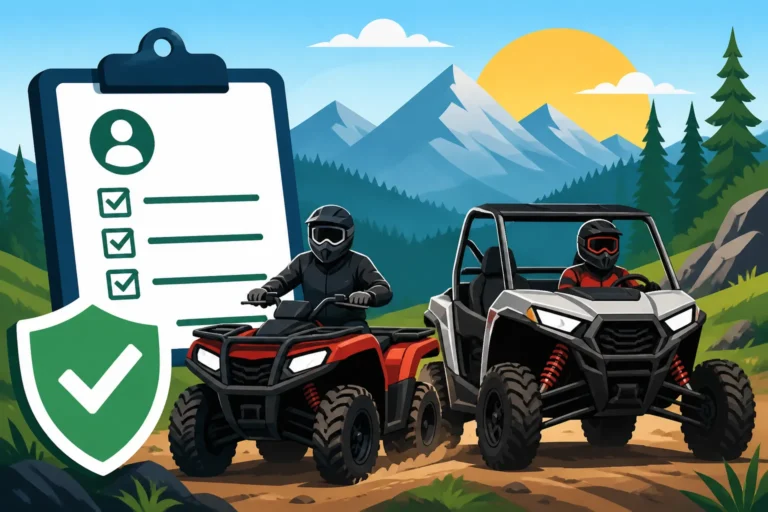
If you are dealing with a private sale, especially for an older machine, consider using a standardized form. LawDepot provides customizable bill of sale templates that ensure all necessary fields are included, such as the VIN, make, model, year, and clearly state the purchase price and date. This minimizes the chances of rejection due to incomplete information. A comprehensive [BC Registration Paperwork Checklist] can be incredibly helpful here.
The Cost and What to Expect
The financial aspect of registering your second machine will mirror your first. There's a one-time registration fee, which is a nominal amount to get the machine into the provincial system. Remember that this fee applies per machine. So, yes, you'll pay it again for your second ORV. Beyond that, you'll be subject to Provincial Sales Tax (PST) on the purchase price of the ORV, unless it's a genuine gift from an immediate family member. The broker will calculate this based on the stated value on your bill of sale, or a fair market value if the declared price seems unusually low. You can find more specific details on what to expect regarding fees in [BC ORV Registration Cost]. There are no ongoing annual renewal fees, which is a relief. [BC Has No Annual Renewal Sticker] to worry about after the initial setup.
| Item/Action | First Machine Registration | Second Machine Registration | Notes |
|---|---|---|---|
| Broker Visit | Required | Required | Each ORV needs its own processing. |
| VIN Verification | Required | Required | Every machine has a unique identifier. |
| Bill of Sale | Required | Required | Critical for proving ownership transfer; may be more complex for older/private sales. |
| Statutory Declaration | Possible | More Possible | More likely if buying older/private machines with missing history. LawDepot can help create these documents. |
| Certificate of Registration | Issued | Issued | A new, unique certificate for each ORV. |
| ORV Plate & Decals | Issued | Issued | A distinct plate and decal set for the new machine. |
| Registration Fee | Paid once | Paid once (per machine) | Applies to each individual ORV. |
| PST (Sales Tax) | Paid (if applicable) | Paid (if applicable) | Calculated on the purchase price unless exempt (e.g., family gift). |
| Annual Renewal | None | None | BC ORV registration is a one-time process per machine. |
Post-Registration Essentials
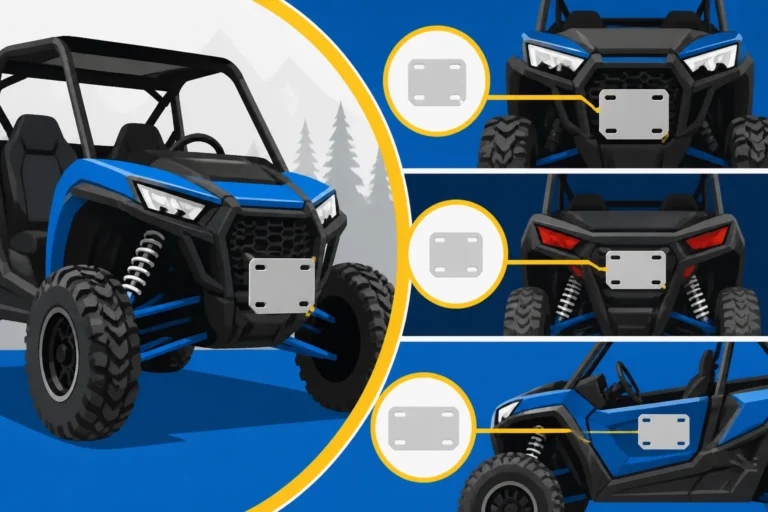
Once you walk out of the broker's office with your new certificate and plate for your second machine, the responsibilities don't end there. Just like your first ORV, this one needs its plate properly displayed. The rules for [BC Plate Placement on Front, Back or Left] are important to follow to avoid issues with enforcement officers. Ensuring the plate is visible and kept clean enough to read is part of responsible riding.
And speaking of enforcement, remember that [BC Riders Must Carry the Certificate] of Registration for each ORV they operate on Crown land. Keep the original in a safe place, but carry a copy (physical or digital, though physical is often preferred in remote areas with no cell service) with you whenever you ride this new machine. Carrying [BC Riders Must Carry Photo ID] along with it is also essential. Even though you're an experienced owner, it's easy to overlook these details when you're excited to hit the trails with your new toy. Double-check everything before you head out, and enjoy the ride!
Disclaimer
This article is for general informational purposes only and does not constitute professional advice. Laws, prices and regulations vary by location and change over time. Consult a qualified professional for guidance on your specific situation.