BC Registration for a Side-by-Side
Let's face it, getting your side-by-side legally ready to hit the trails in British Columbia can feel like navigating a maze blindfolded. You've got your machine, you're itching to explore those incredible FSRs and Crown land trails, but then you hit the wall of paperwork and regulations. This guide is here to cut through the confusion and walk you through everything you need to know about registering your side-by-side in BC, ensuring you're compliant and ready for adventure.
Understanding Why Your Side-by-Side Needs to Be Registered in BC
It’s easy to assume that because a side-by-side isn’t a regular road vehicle, it might not need the same level of bureaucratic attention. But that couldn't be further from the truth in British Columbia. For years, there was a bit of a Wild West mentality when it came to off-road vehicles (ORVs), but those days are long gone. The province has specific legislation to ensure accountability and safety, and your side-by-side falls squarely under its umbrella.
The Legal Requirement for ORVs on Crown Land
The big game-changer for ORV owners in BC was the introduction of the Off-Road Vehicle Act, which made registration mandatory. Since November 1, 2015, if you plan on operating your side-by-side (or any other ORV) on Crown land, you absolutely must have it registered. This isn't just a suggestion; it's a legal requirement that carries real consequences if ignored.
Why Crown land? Well, BC is blessed with an abundance of it – vast tracts of forests, mountains, and wilderness areas that are perfect for off-road adventures. But this also means regulating access and use to protect the environment and ensure everyone's safety. The government considers resource roads, which we all love to ride, as part of Crown land for these purposes. So, whether you're heading out for a day of trail riding, hunting, or just exploring, if you touch public land, your side-by-side needs to be registered. You can read more about what triggers this rule in our guide, [BC Crown Land Triggers the Registration Rule]. This also covers [What the Off-Road Vehicle Act Covers in BC].
What "Registration" Means for a Side-by-Side in BC
Now, let's talk about what "registration" actually entails, because it's a bit different from registering your car or truck. When you register a side-by-side in BC, you're not getting a traditional vehicle "title" in the way you might in other provinces or states. Instead, you'll receive a "Certificate of Registration." This document is your proof of ownership and registration, linking your machine's Vehicle Identification Number (VIN) to you as the legal owner.
This system can be confusing for folks accustomed to vehicle titles, but it’s crucial to understand the distinction. [BC's Certificate of Registration Explained] delves into this in more detail. Essentially, it's a system designed to track ORV ownership without the complexities of a highway vehicle title system. The good news is that once you've gone through the process and paid the registration fee, it's generally a one-time thing. You won't have to deal with annual renewal stickers or fees for the registration itself as long as you own that specific side-by-side. Our article, [BC Registration Lasts as Long as You Own It], explains this benefit.
The Step-by-Step Process for Registering Your Side-by-Side
Alright, let's get down to brass tacks. Registering your side-by-side might seem daunting, but by breaking it down into manageable steps, you'll see it's quite achievable. The key is preparation and understanding what documents you need to bring to the table.
Gathering Your Essential Paperwork
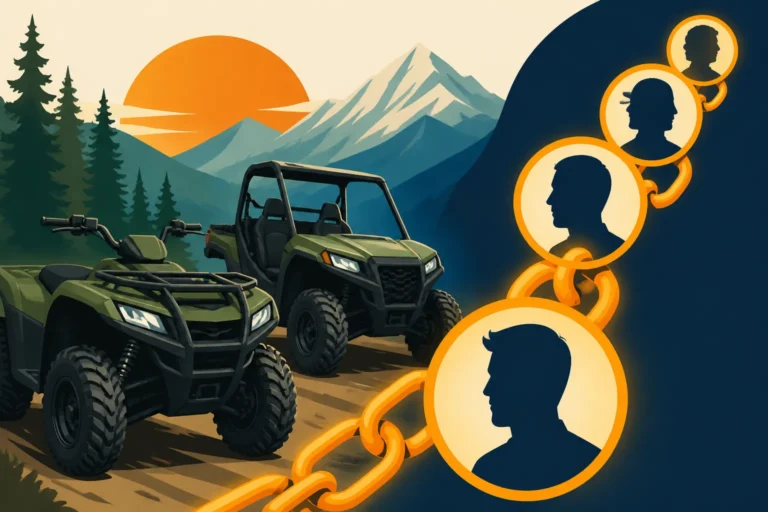
This is often where the rubber meets the road, or where the frustration begins. For a smooth registration process, you'll need to present a complete chain of ownership for your side-by-side. This means every bill of sale from the original purchase right up to you. Yes, every single one! If you're buying a brand-new side-by-side from a dealer, this is usually straightforward, as they'll handle most of the initial paperwork. However, if you're buying used, especially an older machine, this can quickly become a headache.
- Bills of Sale: You need a bill of sale for every transfer of ownership from the point the machine was first sold until it landed in your hands. This is probably the most common sticking point for many riders. If you've ever wondered [Why Every Past Sale Has to Be Documented], you're not alone! It's a system designed to prevent the registration of stolen machines and ensure clear ownership.
- Proof of Identity and Address: Just like any government-related transaction, you'll need valid photo identification and proof of your current BC address.
- Vehicle Identification Number (VIN): Make sure you know where your side-by-side's VIN is located. It's typically stamped on the frame and is critical for registration.
- Dealing with Missing Paperwork: Statutory Declarations: This is a lifesaver for many. If you've purchased a side-by-side from a private seller who no longer has the original bill of sale from their purchase, or if there's a gap in the ownership chain, a Statutory Declaration can often fill that void. This is a sworn statement, signed in front of a Commissioner for Oaths, affirming your legal ownership of the machine. It's a serious document, but it's often the only way forward for older machines or those with hazy histories. You might find services like LawDepot incredibly helpful for generating the correct template for a [BC Statutory Declaration for an ORV], making sure you don't miss any critical details in your statement. The cost for having a statutory declaration commissioned is usually quite modest.
It's a common scenario: you bought that trusty side-by-side from a buddy a decade ago, paid cash, and never got a formal receipt. Now you want to register it. Without that paper trail, the Statutory Declaration becomes your essential document.
Visiting an Autoplan Broker
Once you have all your ducks in a row with the paperwork, your next stop is an ICBC Autoplan broker. These are the same offices where you handle your car insurance and registration, and they are authorized to process ORV registrations.
- Where to Go: Look for any ICBC Autoplan broker office in your area. They are equipped to handle the ORV registration process.
- What to Expect: The broker will review all your documentation, including your bills of sale and any statutory declarations. They'll verify your identity and the machine's details. They might ask questions about the history of the side-by-side, especially if there were gaps in the paperwork. Be patient, as they need to ensure everything is above board. This is where [BC Autoplan Brokers Handle ORV Registration] comes into play.
- The Cost: There's a one-time registration fee for your side-by-side. If you've purchased the machine recently, you might also be subject to Provincial Sales Tax (PST), unless an exemption applies (like certain family transfers). The broker will calculate this for you. While I can't give you current figures, expect the registration fee itself to be a relatively small, one-time charge. The PST, however, will be a percentage of the purchase price or market value.
- Receiving Your Plate and Certificate: Once everything is processed and fees are paid, the broker will issue you a metal ORV licence plate and your official Certificate of Registration. This is the moment all that paperwork pays off! Our guide [What the Broker Hands You After You Register] outlines what to expect to receive.
What to Do After Registration
Getting your plate and certificate isn't the absolute final step. There are a couple more things you need to do to ensure you're fully compliant when you head out.
- Plate Placement: Your new ORV plate needs to be securely mounted on your side-by-side. The rules state it must be clearly visible on the front, back, or left side of the machine, mounted horizontally. Make sure it's not obscured by cargo, mud, or anything else. We've got all the details in [BC Plate Placement on Front, Back or Left].
- Carrying Your Documents: When you're out riding, you must carry your Certificate of Registration with you. It’s also a good idea to have your photo identification handy, as law enforcement or conservation officers might ask to see it. Remember, you can't just leave it at home; it needs to be with you on the trail. [BC Riders Must Carry the Certificate] explains why this is so important.
- Understanding Ongoing Responsibilities: While registration is a one-time fee, don't forget about other responsibilities like insurance. If you plan to ride on Forest Service Roads (FSRs), specific liability insurance is mandatory. While not directly part of the registration process, it's a critical component of responsible ORV use. Our article [BC Forest Service Road Requirements] goes into depth on this.
Common Challenges and Solutions for Side-by-Side Registration
It’s rare that someone sails through the registration process without a single hiccup, especially with older or privately purchased machines. Knowing the common pitfalls ahead of time can save you a lot of grief.
The Missing Ownership Chain Conundrum
As mentioned, this is probably the biggest hurdle for many riders. The requirement for a complete chain of ownership, sometimes going back decades, can feel impossible to fulfill. Think about it: that 1995 side-by-side you just bought might have had four owners before you, and trying to track down those original bills of sale can be like looking for a needle in a haystack. [BC Ownership Chains Going Back Decades] is a common headache for many.
Solutions:
- The Statutory Declaration is Your Best Friend: If you can’t get all the bills of sale, a Statutory Declaration is your primary workaround. You’ll need to outline how you acquired the machine, who you bought it from, and declare that you are the rightful owner. If you can only track down the immediate prior owner's bill of sale to you, and they can attest to how they acquired it (even if verbally), that information can be incorporated into your declaration. Again, online resources like LawDepot can be invaluable for drafting these forms accurately, ensuring your sworn statement covers all the necessary legal points. This is particularly helpful for situations like [BC Registration Without a Bill of Sale] or when facing [BC Registration When the Seller Has No Papers].
- Contacting the Prior Owner: If possible, try to reach out to the previous owners. Sometimes, a quick phone call or email can unearth a forgotten receipt or lead you to someone else in the chain who has the paperwork. It’s worth the effort before resorting to a declaration.
Registering an Imported Side-by-Side
If you've brought your side-by-side into BC from another province or even another country, there are a few extra steps.
- Inter-Provincial Transfers: If it's from another Canadian province, you'll still need to provide proof of ownership (like the registration or bill of sale from that province). The process is generally similar to a local sale, but ensure you have all documentation from your previous jurisdiction.
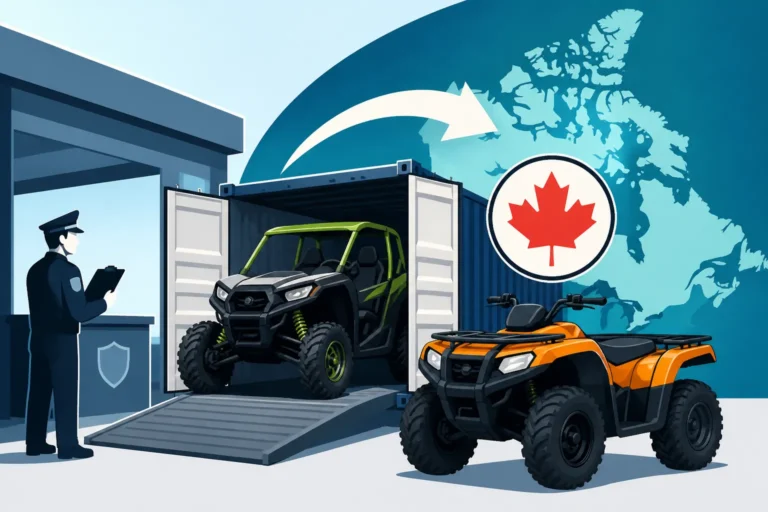
- International Imports: Importing a machine from the United States, for example, adds another layer of complexity. You'll need customs documentation to prove it was legally imported into Canada and that all duties and taxes were paid at the border. Without this, an Autoplan broker won't be able to register it. Our article, [BC Registration for an Imported Machine], covers these specifics. Even though BC doesn't have a safety inspection for ORVs, you'll still want to ensure it generally meets Canadian standards for things like emissions (though not tested for ORVs). And yes, expect to pay PST on the declared value if it hasn't already been applied.
Transferring Ownership When You Buy or Sell
The registration process doesn't just apply to new machines; it's also crucial when a side-by-side changes hands.
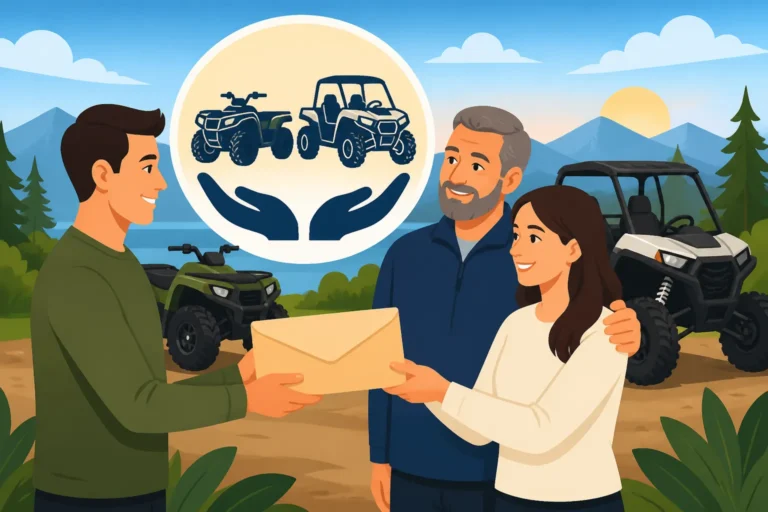
- Selling Your Registered Machine: When you sell your side-by-side, you'll provide the buyer with a bill of sale. It's then the buyer's responsibility to go to an Autoplan broker to transfer the registration into their name. Make sure you both sign the bill of sale and keep a copy for your records.
- Buying a Used Machine: As the buyer, you are responsible for initiating the transfer of ownership. You'll need the bill of sale from the seller (and ideally the full chain of ownership if it's not a new machine). Head to the Autoplan broker with your documents to complete the transfer. There's a specific fee for transferring ownership, which is a nominal charge. Our detailed guide, [BC Transfer of Ownership Steps], will walk you through it. Don't delay this step; until it's in your name, you're not officially the registered owner, and that can cause issues down the road.
| Scenario | Required Documents | Key Action/Tip |
|---|---|---|
| New Side-by-Side | – Dealer's Statement of Origin/Bill of Sale – Photo ID – Proof of Address |
Dealer usually handles much of the initial paperwork. Verify all details before signing. |
| Used, Full Paper Trail | – Bill of Sale from current seller – All previous Bills of Sale – Photo ID – Proof of Address |
Gather every bill of sale. Ensure they form an unbroken chain. This is the ideal scenario for a used machine. |
| Used, Missing Papers | – Bill of Sale from current seller – Statutory Declaration of Ownership – Photo ID – Proof of Address |
This is where a Statutory Declaration (potentially created with help from LawDepot) becomes essential. Be ready to explain the history to the broker. This often applies for [BC Registration Without a Bill of Sale]. |
| Imported Machine | – Customs Import Document – Bill of Sale (from seller in originating location) – Photo ID – Proof of Address |
Ensure all customs duties are paid and you have your import paperwork from the border. |
Avoiding Penalties and Riding Responsibly
Beyond just the process of getting your side-by-side registered, it's vital to understand the "why" behind these rules and the consequences of ignoring them. Responsible ORV ownership in BC is about more than just fun; it's about legality, safety, and preserving access to our incredible backcountry.
The Consequences of Riding Unregistered
Thinking about skipping the registration process? Please don't. The penalties for operating an unregistered side-by-side on Crown land in BC can be significant.
- Fines: You can receive a substantial fine if caught riding an unregistered ORV. This isn't a slap on the wrist; it's a serious ticket that will impact your wallet. Our article [BC Tickets for an Unregistered Machine] lays out what these can look like.
- Machine Seizure: In some cases, law enforcement or conservation officers have the authority to seize your side-by-side if it's being operated illegally, including being unregistered. Imagine having your prized machine hauled away. This is a very real possibility and one you definitely want to avoid. The hassle, cost, and stress of getting it back are simply not worth trying to bypass a simple registration fee. [BC Penalties for Riding Unregistered] outlines this further.
Ignorance of the law is never an excuse. Officers on the trails are well-versed in the ORV Act, and they expect riders to be compliant. Registering your side-by-side is a small investment for peace of mind and legal access to the trails.
Beyond Registration: Other Key Rules for Side-by-Sides
While this guide focuses on registration, it's part of a larger picture of responsible side-by-side operation in BC. Once your machine is registered, make sure you're aware of these other critical rules:
- Helmets: Helmets are mandatory for all riders on ride-astride ORVs (like quads and dirt bikes). While side-by-sides with a roll cage and seatbelts may not always require helmets, always check the specific regulations and your manufacturer's recommendations. Safety first! For a deeper dive, check out [BC Helmet Law Covers Every Rider].
- Insurance: As mentioned earlier, if you're riding on Forest Service Roads (FSRs), you need a minimum of $200,000 third-party liability insurance. This is crucial coverage, as accidents can happen. Private land riding might not require it, but FSRs are a different story. [BC ATV Insurance Requirements] offers more information.
- Youth Riding Rules: If you have younger riders, there are specific age, supervision, and training requirements. Always adhere to these to ensure their safety and compliance. You can learn more in [BC Youth Riding Rules Explained].
- Environmental Responsibility: Always stay on designated trails, pack out what you pack in, and be respectful of wildlife and the environment. Our access to these incredible areas depends on all of us being good stewards. Check out [BC Crown Land Riding Explained] for general rules.
By understanding and adhering to these rules, you're not just avoiding fines; you're contributing to the sustainability of ORV riding in BC for everyone. Ride safe, ride smart, and enjoy those trails!
Disclaimer
This article is for general informational purposes only and does not constitute professional advice. Laws, prices and regulations vary by location and change over time. Consult a qualified professional for guidance on your specific situation.