Do You Need to Register an ATV in BC?
It's a question that trips up so many off-road enthusiasts here in British Columbia: Do you actually need to register your ATV or UTV? The short answer for most riders is a resounding yes, but the reasons why, and what "registration" even means in our province, are often misunderstood. This guide will cut through the confusion, explaining when and why registration is mandatory, what kind of paperwork you really need, and how to get your machine legal so you can hit the trails without a worry.
The Simple Answer: Yes, Mostly!
Let's get straight to it. If you plan on riding your ATV, side-by-side, dirt bike, or snowmobile anywhere other than private property you own or have explicit written permission to ride on, then yes, your machine absolutely needs to be registered. This isn't just a suggestion; it's a legal requirement under BC's Off-Road Vehicle Act. For many folks, this comes as a bit of a surprise, especially if they've owned their machine for years before these rules came into full effect.
When Registration Became Mandatory
The Off-Road Vehicle Act came into force in British Columbia back in 2015. Specifically, on November 1, 2015, the new regulations made it mandatory for most off-road vehicles (ORVs) to be registered and display a number plate when operating on Crown land. This was a significant shift for a province with such a vast and accessible backcountry. Before this, you could pretty much just buy a quad and head out, as long as you weren't on public roads. That changed dramatically, and many riders found themselves suddenly needing to deal with bureaucracy they hadn't anticipated. It was all about creating a clearer system for accountability, identifying machines, and ensuring some baseline regulatory oversight. You can dive deeper into the history with [BC Registration Became Mandatory in 2015].
What Triggers the Registration Requirement
The key trigger for registration in BC is operating your ORV on what's defined as "Crown land" or "resource roads." Now, for anyone who loves exploring our province's incredible wilderness, that pretty much means everywhere you want to ride! Crown land encompasses vast tracts of forests, mountains, and open spaces, which is exactly where most of us want to take our machines. Resource roads, often called Forest Service Roads (FSRs), are also included in this definition. These are the gravel roads that crisscross our backcountry, providing access to logging areas, mines, and recreational sites. If you're riding your ATV down an FSR to get to your favourite fishing spot, or tearing up a trail on publicly accessible land, you need to be registered. [BC Crown Land Triggers the Registration Rule] and [BC Resource Roads Count as Crown Land] are excellent resources to understand these distinctions better. It's not about how far you go, or how fast; if you're on public land or a public access road designed for resource extraction, your machine needs to be legal.
The Grey Area: Private Property
A common question, and source of confusion, is about riding on private property. "Do I need to register my ATV if I only ride it on my farm?" or "What about my friend's five-acre parcel?" The provincial ORV Act generally doesn't apply to private land. If you are exclusively riding on private property that you own, or for which you have direct permission from the owner, then registration under the ORV Act is not strictly required. However, there are nuances. If you need to cross a short stretch of Crown land or an FSR to access that private property, then your machine suddenly falls under the Act's requirements for that brief transit. Also, local municipal bylaws can sometimes have their own rules regarding ORV use, even on private land, particularly concerning noise or nuisance. It's always best practice to check with your local government if you're unsure. While you might be exempt from registration on private land, you're certainly not exempt from other laws, like impaired operation or reckless endangerment, which still apply everywhere.
What "Registering" an ORV Actually Means in BC
This is where BC's system differs quite a bit from how cars or even ORVs are handled in some other jurisdictions. When you "register" an ORV here, you're not getting a traditional vehicle title in the same way you would for a car or truck. This can be a major point of frustration for riders who are used to having a clear 'pink slip' as proof of ownership.
The Certificate of Registration, Not a Title
Instead of a title, what you receive in BC is a "Certificate of Registration." This document serves as proof that your off-road vehicle has been registered in the provincial system. It's critically important to understand this distinction. A Certificate of Registration is essentially a record of who the province recognizes as the current owner for the purpose of operating the machine on Crown land. It does not act as a traditional title to prove property ownership in a broader sense, which is a significant difference from vehicles registered under the Motor Vehicle Act. This can sometimes make private sales feel a little less secure if you're not careful. For a full breakdown, check out [BC's Certificate of Registration Explained].
The Importance of a Complete Ownership Chain
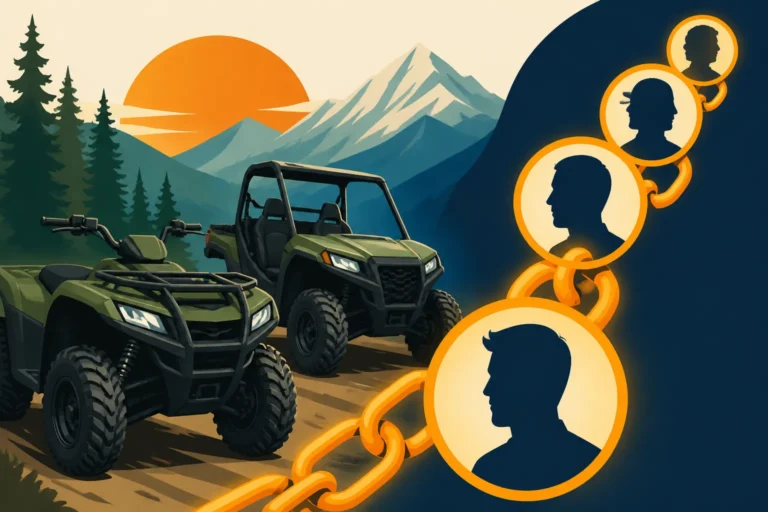
One of the biggest hurdles many ORV owners face when trying to register an older machine is the requirement for a complete "chain of ownership." The provincial government, through its Autoplan brokers, wants to see documentation (like bills of sale or gift letters) for every single transfer of the machine from its very first owner right up to you. This is where many people hit a snag, especially with machines that have been passed down through families, bought from private sellers years ago with only a handshake, or changed hands numerous times without formal paperwork. If there's a gap in this chain, it can make registration complicated, as the broker needs to confirm that you are the rightful owner. It's all about preventing stolen machines from being registered and ensuring clear accountability. You can learn more about this process and why it's so stringent by reading [BC Transfer of Ownership Explained].
Dealing With Missing Paperwork
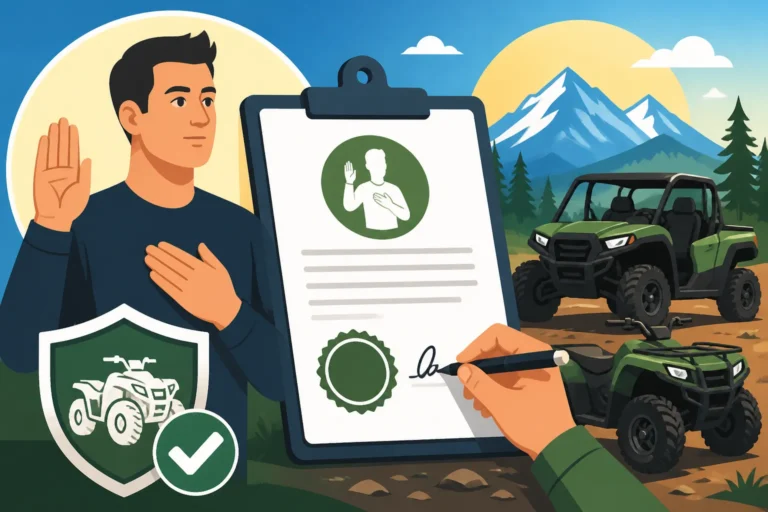
So, what happens if you've got an old machine, maybe a quad from the 90s, and you don't have all the bills of sale going back to the original purchase? This is a common predicament! Thankfully, BC has a solution: the statutory declaration. A statutory declaration is a legal document where you solemnly declare, under oath, that you are the rightful owner of the machine and you explain the circumstances around the missing paperwork. You'll typically need to provide as much information as possible about how you acquired the machine, when, from whom, and why previous documentation is unavailable. This declaration needs to be witnessed by a lawyer, notary public, or Commissioner for Taking Affidavits. While it adds an extra step and a small fee, it's often the only way to get an older machine registered when the paper trail is incomplete. Services like LawDepot can provide templates for statutory declarations, which can be a helpful starting point to ensure you include all the necessary legal language. Remember, honesty is paramount when making such a declaration, as providing false information can have serious legal consequences. For more details, see [BC Statutory Declarations Cost $15].
What Happens If You Don't Register Your Machine
Riding an unregistered ORV on Crown land or FSRs in BC isn't just a minor oversight; it carries real consequences that can quickly dampen your day on the trails. It's not worth the risk, especially when registration is a fairly straightforward, one-time process.
The Risk of Fines and Penalties
If you're caught operating an unregistered ORV where registration is required, you can face a significant fine. Conservation Officers, RCMP, and other enforcement personnel regularly patrol popular riding areas, and they are fully empowered to check for proper registration and display of plates. A ticket for an unregistered machine is a hefty penalty, and it's a quick way to turn a fun outing into an expensive headache. Beyond the financial hit, there's always the possibility that in more severe or repeated cases, your machine could even be impounded. Imagine being kilometres out in the backcountry, having your quad seized, and then having to figure out how to get yourself and your gear back to your truck. It's a scenario no rider wants to face. Learn more about the potential repercussions with [BC Tickets for an Unregistered Machine].
Why You Still Need to Carry Your Papers
Even after you've successfully registered your ATV or UTV and affixed your shiny new number plate, your responsibilities don't end there. The law requires you to carry your Certificate of Registration (or a legible copy) with you whenever you're operating your ORV off-highway. This means having it on your person, in your pack, or securely stored on your machine. When an enforcement officer requests to see your documents, you need to be able to produce them promptly. It's essentially your ORV's ID. Alongside your registration, you should also carry valid photo identification, as an officer may request to verify your identity as the registered owner. Think of it like carrying your driver's license for a car – it's just part of responsible operation. For more on this, check out [BC Riders Must Carry the Certificate].
Here’s a quick overview of when registration is typically required:
| Location of Operation | Registration Required? | Notes |
|---|---|---|
| Crown Land | Yes | Includes most trails, forests, wilderness areas. |
| Forest Service Roads | Yes | Publicly accessible roads for resource extraction. |
| Leased Crown Land | Yes (likely) | Unless explicit, recorded permission states otherwise. |
| Private Land (owned by you) | No | No provincial ORV Act requirement, but local bylaws may apply. |
| Private Land (with permission) | No | Must have explicit permission from the owner. |
| Public Roads/Highways | Generally No | ATVs are not street-legal; limited crossings allowed. |
Getting Your ATV or UTV Registered in BC
The process of registering your ORV might seem daunting, especially with the talk of ownership chains and statutory declarations, but it's designed to be handled through familiar channels.
Where to Go and What to Bring
To register your ATV or UTV in BC, you'll need to visit an ICBC Autoplan broker. These are the same offices where you typically handle your car insurance and registration. Many people don't realize that Autoplan brokers are also authorized to process ORV registrations. It's a convenient one-stop shop for many riders. When you go, be prepared to bring specific documents, which will vary slightly depending on whether your machine is new, used, or if you have missing paperwork. Generally, you'll need:
- Proof of ownership (bill of sale, gift letter, import papers, previous registration).
- Your personal identification.
- Payment for the registration fee and potentially any PST (Provincial Sales Tax) if it's a recent purchase.
- If applicable, a completed statutory declaration for any gaps in ownership.
- The Vehicle Identification Number (VIN) of your machine, which the broker will verify.
It's always a good idea to call ahead to your chosen Autoplan broker to confirm their specific requirements, especially if you have an older machine or a unique situation. Many brokers are highly experienced in [BC Autoplan Brokers Handle ORV Registration]. To make sure you're fully prepared, take a look at [How to Register an ATV in BC].
The One-Time Registration Fee
One of the great things about BC's ORV registration system is that it's largely a one-time affair. You pay a fee when you first register your machine, and that's generally it for as long as you own it. There's no annual renewal sticker or recurring charge, unlike with highway vehicles. This is a huge relief for many riders, as it simplifies budgeting and reduces ongoing administrative hassle. Of course, if you sell your machine, the new owner will need to pay a transfer fee, and there might be PST implications if it's a private sale. But for the initial registration, it's usually just a single payment. For more on this, you can check [BC ORV Registration You Pay Once].
The Plate and Decal
Once your registration is processed and approved, you'll be issued a unique ORV number plate and a validation decal. The number plate is smaller than a standard vehicle plate and is typically white with black lettering. The decal confirms the year of registration and is applied directly to the plate. You are legally required to display this number plate on your ORV whenever you're operating it on Crown land or resource roads. There are specific rules about where the plate should be mounted – it needs to be clearly visible, either on the front, back, or left side of your machine, and mounted horizontally. You also need to ensure it's kept clean and legible. Don't let mud obscure it! This plate is how enforcement officers can identify your machine, much like a license plate on a car. Make sure you understand these rules by checking [BC ORV Number Plates and Decals].
Ultimately, while the initial dive into registration paperwork can feel like a chore, getting your ATV or UTV properly registered in BC is a critical step for responsible and legal riding. It protects you from fines, helps authorities manage our precious backcountry, and ensures you can enjoy BC's incredible trails with peace of mind.
Disclaimer
This article is for general informational purposes only and does not constitute professional advice. Laws, prices and regulations vary by location and change over time. Consult a qualified professional for guidance on your specific situation.