Why BC Has No ATV Title to Transfer
Many off-road vehicle enthusiasts in British Columbia eventually hit a wall when they go looking for an ATV or UTV "title" – that elusive piece of paper that proves ownership in other places. The truth is, BC doesn't issue traditional vehicle titles for ATVs, side-by-sides, or dirt bikes. This often leads to confusion, frustration, and a lot of head-scratching when buying, selling, or trying to register a machine. This comprehensive guide will clear up that mystery, explaining why BC uses a different system, what documents you do need to prove ownership and register your ORV, and how to navigate the process smoothly.
Understanding the Core Difference: Title vs. Registration
The terms "title" and "registration" are often used interchangeably in casual conversation, but in the world of vehicle administration, they represent two very distinct concepts. In British Columbia, this distinction is particularly important for off-road vehicles (ORVs).
What a "Title" Traditionally Means
In many jurisdictions, especially across the border in the United States and some Canadian provinces, a "title" document is the ultimate proof of legal ownership for a vehicle. Think of it as the deed to your house, but for your quad or side-by-side. This document typically contains crucial information: the owner's name, the vehicle identification number (VIN), any recorded lienholders (like a bank that financed the purchase), and sometimes even a history of previous owners or major accidents.
When you buy a vehicle that has a title, the seller literally "signs over" the title to you. This act legally transfers ownership. If there's a lien, it's typically recorded on this document, giving the lender a legal claim to the vehicle until the loan is paid off. For a buyer, a clear, unencumbered title provides peace of mind, assuring them that they are indeed buying the vehicle from its rightful owner and that no one else has a claim to it. Without a title, proving absolute ownership can become a tangled mess, potentially opening the door to disputes or unknowingly purchasing a stolen machine.
What "Registration" Entails in BC
In British Columbia, for off-road vehicles, we don't have titles; we have registration. When you register an ORV with ICBC (through an Autoplan broker), you receive a [BC's Certificate of Registration Explained]. This certificate is not a document of ownership in the same way a title is. Instead, it serves as official recognition that you are the authorized operator of that specific machine, and it records details like the VIN, make, model, and the unique BC ORV plate number assigned to it.
The primary purpose of registration is to allow the provincial government to track who is operating ORVs, for purposes like law enforcement, environmental management, and collecting the provincial sales tax (PST). It ensures that ORVs operating on Crown land or resource roads are accounted for and that their operators can be identified. While your name is on the certificate, it primarily indicates that you are the individual responsible for its operation and compliance with the Off-Road Vehicle Act, not necessarily the sole, undisputed legal owner in every scenario.
Why the Distinction Matters for ORVs
The absence of a traditional title system for ORVs in BC creates both simplicity and complexity. On one hand, it avoids the administrative overhead of a full titling department, which can be expensive and cumbersome. On the other hand, it places a greater burden on buyers and sellers to meticulously document their transactions. Without a provincial title that acts as a central repository for ownership and lien information, other documents become paramount for proving who legitimately owns an ORV.
For example, if you finance an ORV purchase in BC, the lender doesn't get their lien recorded on a provincial title document. Instead, they might use a security agreement registered under the Personal Property Registry (PPR). This means that a simple "title search" for liens, as you might do for a car, doesn't exist in the same way for an ORV. Buyers need to be aware of this difference and understand that the Certificate of Registration, while important for legal operation, isn't the whole story when it comes to confirming absolute ownership or checking for financial encumbrances.
Why British Columbia Chose Registration for ORVs
British Columbia's approach to off-road vehicles, particularly the decision to implement a registration system rather than a titling system, stems from a combination of legislative priorities and historical context. It reflects a focus on regulating use and operation rather than formalizing complex ownership chains.
The Off-Road Vehicle Act and Its Purpose
The turning point for ORV regulation in British Columbia came with the introduction of the [What the Off-Road Vehicle Act Covers in BC] in 2015. Before this act, there was no comprehensive provincial law governing the registration and operation of ATVs, side-by-sides, dirt bikes, and snowmobiles on Crown land and designated trails. The primary goal of this legislation was not to create an ironclad system of ownership for every machine, but rather to enhance safety, protect the environment, and provide law enforcement with the tools needed to identify operators and hold them accountable.
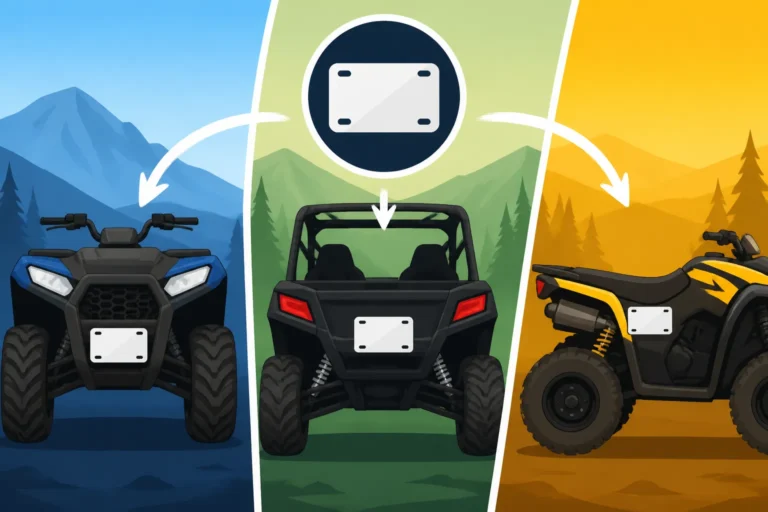
Imagine a situation where an ORV is involved in an accident on a remote forest service road, or where someone is illegally riding through a sensitive ecological area. Without a registration system, it would be incredibly difficult to identify the responsible party. The Act addressed this by mandating that almost all ORVs operating off private property must be registered and display a visible number plate. This shifted the focus from proving who owns the machine in a deep legal sense to simply knowing who is operating it legally within provincial guidelines.
A Focus on Operation, Not Absolute Ownership
The province's choice of a registration system aligns with its historical stance on recreational vehicles. Unlike cars and trucks that primarily operate on public roads and highways, ORVs spend much of their lives off the beaten path, often on private property, unmaintained trails, or vast tracts of Crown land. The provincial government's interest is less in mediating private sales disputes or acting as a central record-keeper for every single transaction, and more in ensuring responsible use of public resources and safety for all users.
When you register your ORV, the province is essentially granting you permission to operate that specific machine on regulated lands, provided you meet other requirements like carrying appropriate insurance and having the necessary safety equipment. It's about regulating the privilege of riding, not certifying who has bought and sold every single piece of metal. This pragmatic approach avoids getting bogged down in what could be incredibly complex and costly bureaucratic processes for machines that often change hands informally or have incomplete paper trails stretching back decades.
Streamlining the System
From an administrative perspective, a registration system is generally simpler and less resource-intensive to manage than a full titling system. A titling system requires robust procedures for recording liens, addressing lost or damaged titles, and often involves a more complex judicial process to resolve ownership disputes. By contrast, an ORV registration system in BC, handled by ICBC through its network of Autoplan brokers, is primarily concerned with verifying the current operator and machine details.
This streamlined approach meant that when the ORV Act came into effect, the province could leverage existing infrastructure (ICBC brokers) to implement the new registration requirements relatively quickly. This made it easier for riders to comply, as they could visit their local broker, much like they would to register a car or renew their driver's license. The focus remained on making it accessible for operators to become compliant with the new laws governing where and how they could ride.
Practicalities for BC ORV Owners: Buying, Selling, and Proving Ownership
Given that BC doesn't have a traditional title, navigating the process of buying, selling, or simply proving you own your off-road vehicle can feel a bit like sailing without a compass. It means putting more emphasis on other critical documents and understanding the administrative process.
What Serves as Your "Proof of Ownership"
Without a title, your proof of ownership in BC becomes a combination of documents that, when pieced together, form a clear picture of who legitimately owns the ORV. The most important of these is the bill of sale. This legal document records the transaction between a buyer and seller, detailing the ORV's make, model, VIN, sale price, and the names and signatures of both parties. It's crucial to obtain a [BC Bills of Sale for Every Prior Owner] – a complete chain of bills of sale from the original purchase right up to your acquisition is your strongest evidence.
Another vital document, especially if a bill of sale is missing from the chain, is a statutory declaration. This is a legal statement made under oath, declaring that you are the rightful owner and explaining how you acquired the machine. You can find templates for these documents from legal resource sites like LawDepot, which can help ensure you include all the necessary information for a legally sound declaration. Finally, your Certificate of Registration (the document you get from ICBC with your plate number) serves as proof that you are the registered operator, which indirectly supports your claim of ownership, although it isn't sufficient on its own.
The Importance of a Clear Ownership Chain
When you go to register an ORV in BC, the Autoplan broker isn't just looking at your immediate bill of sale. They're often looking for a complete lineage of ownership, all the way back to the manufacturer, or at least a reasonable chain of sales that culminates in you. This is where [Why Every Past Sale Has to Be Documented] becomes critical. If there's a gap in the ownership history – say, a previous owner can't be found or a bill of sale is missing – it can complicate your registration.
Imagine you're buying a quad from a private seller who says they've owned it for five years, but they only have a handwritten receipt from a swap meet. The broker will likely ask for more. They want to see that the machine hasn't been stolen or lost its history. If you purchase an ORV with a shaky or incomplete paper trail, be prepared for extra steps, possibly including the need for a statutory declaration. Always ask for all prior ownership documents when you buy, and keep every piece of paperwork meticulously organized.
Transferring Ownership Without a Title
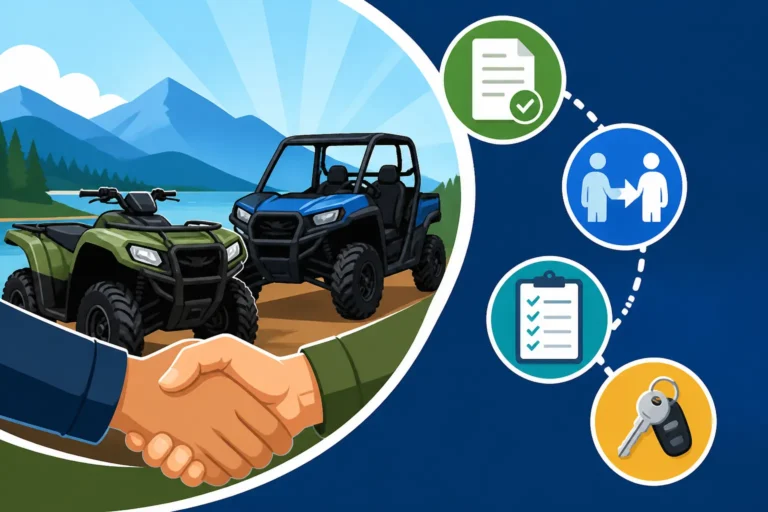
The process for transferring ownership in BC without a title primarily revolves around these supporting documents and a visit to an Autoplan broker. When you sell your registered ORV, you'll need to provide the buyer with a valid bill of sale. Both parties should ideally sign this document. The buyer will then take this bill of sale, along with the current Certificate of Registration (or information from it if you're not physically handing it over, though ideally you would), and their personal identification to an Autoplan broker.
At the broker's office, the buyer will complete an application for a new Certificate of Registration in their name. The broker will verify the details, collect any applicable Provincial Sales Tax (PST), and charge a small transfer fee – [BC Charges $28 to Transfer Ownership] for the administrative process. It's crucial that the seller removes their ORV plate and decal from the machine once sold, as these belong to the seller, not the machine, and can be used on another registered ORV or cancelled. The buyer will receive a new plate and decal, along with their new Certificate of Registration. This entire process effectively transfers the registered operation of the ORV, relying on the bill of sale as the primary proof of the change in ownership.
Dealing with Missing Paperwork and the "No Title" Reality
The lack of a centralized titling system means that missing paperwork can create significant hurdles when you're trying to register or transfer an ORV in BC. Many riders inherit machines, buy them informally, or simply lose track of receipts over the years. Understanding how to navigate these situations is key to staying compliant.
When a Bill of Sale Goes Missing
It's a common scenario: you bought a quad years ago from a friend of a friend, and now you can't find the original bill of sale. Or perhaps you've been given an old machine by a family member who has since moved away or passed on. Without that crucial link in the ownership chain, registering the ORV in your name can seem impossible. This is precisely where the [BC Statutory Declarations Cost $15] comes into play.
A statutory declaration is a sworn legal statement that declares your ownership of the ORV and outlines how you came to possess it. You'll need to detail the machine's VIN, make, model, and explain the circumstances of its acquisition, as well as why you don't have a traditional bill of sale. You must sign this document in front of a lawyer, notary public, or Commissioner for Taking Affidavits. LawDepot provides reliable templates for statutory declarations, which can guide you in creating a document that meets legal requirements. The broker will accept this declaration as substitute proof of ownership, allowing you to proceed with registration and get your ORV on the trails legally.
Registering an Older Machine with Limited History
Sometimes, you might come across a fantastic deal on an older quad that's been sitting in a barn for decades. The challenge often lies in the historical paperwork – or lack thereof. When you're trying to [Registering a Quad Bought for Cash Decades Ago], you might find that original bills of sale have been lost to time, or even that the original owner is no longer traceable. This is a classic scenario where a statutory declaration becomes indispensable.
Your statutory declaration should be as detailed as possible, explaining the circumstances of the ORV's long history and how it eventually came into your possession. The Autoplan broker needs enough information to feel confident that the machine isn't stolen and that you are its legitimate owner. While it can feel daunting to reconstruct such a history, many older machines in BC have been registered successfully through this method. The key is honesty and providing as much verifiable detail as you possibly can. Don't be surprised if the broker asks follow-up questions to ensure the declaration is credible.
The Role of an Autoplan Broker
For all ORV registration and transfer processes in BC, the Autoplan broker is your central point of contact. They are the frontline experts who process applications, verify documents, and issue Certificates of Registration and plates. This is why [BC Autoplan Brokers Handle ORV Registration] are so important. They understand the nuances of the Off-Road Vehicle Act and can guide you through the specific requirements for your situation, whether you have a complete paper trail or need to rely on a statutory declaration.
It's a good idea to call ahead to your chosen broker, especially if you have a complex scenario like a missing bill of sale or an imported machine. Ask them what specific documents you'll need to bring. They can often provide pre-emptive advice that saves you a second trip. Their expertise is invaluable in ensuring that your ORV registration is handled correctly and that you walk away with all the necessary legal documentation to ride your machine confidently and legally in British Columbia.
Common Misconceptions and Avoiding Pitfalls
The absence of a traditional vehicle title in BC for ORVs can lead to misunderstandings and potential issues for buyers and sellers alike. Knowing these common pitfalls can help you avoid costly mistakes and ensure a smooth transaction and compliant ownership.
The Myth of the "Clean Title" Search
When buying a car, many people instinctively think about doing a "clean title" search to check for liens or a salvage history. For ORVs in BC, this concept doesn't apply in the same way because there's no central title document to search. While ICBC manages the registration, it doesn't typically record liens against ORVs on the Certificate of Registration itself. This means that if you're buying a used ORV, you can't simply ask to see a "clear title."
Instead, you need to conduct your due diligence differently. Your primary method for verifying a clean ownership history is to review the complete [BC Ownership Chains Going Back Decades] through bills of sale. To check for financial encumbrances, you would typically need to do a search in the Personal Property Registry (PPR). Many financing agreements for ORVs will be registered here. If you're buying from a private seller, always ask if the machine has any liens against it, and consider performing a PPR search yourself, especially for higher-value machines. This extra step can protect you from unknowingly taking on someone else's debt.
Importing an ORV from a Titling Jurisdiction
If you're moving to BC from a province or state that does issue titles for ORVs, you might be wondering what happens to that document. When you go to register your machine in BC, your existing title from another jurisdiction will serve as a strong piece of your ownership documentation. However, BC will not issue you a new "title." Instead, your machine will be subject to BC's ORV registration system.
You will need to present your out-of-province title, along with a bill of sale (if you're the recent purchaser), and proof of identity to an Autoplan broker to initiate the [BC Registration for an Imported Machine] process. The broker will verify the VIN and details, assess any applicable Provincial Sales Tax, and then issue you a BC Certificate of Registration and an ORV plate. Your old title, while a valuable part of your ownership history, essentially becomes a supporting document rather than the core piece of active provincial administration.
Why You Still Pay PST on a Private Sale
Even without a title, the provincial government still collects its due. When you purchase an ORV from a private seller in BC, you are generally subject to Provincial Sales Tax (PST) on the fair market value of the machine. Many buyers assume that if there's no title transfer, there's no tax to pay, but this is a common misconception. The Autoplan broker, when processing your new Certificate of Registration, is legally required to collect this tax on behalf of the provincial government.
The tax is calculated based on the purchase price stated on your bill of sale, or the assessed value of the ORV if the purchase price seems unusually low. This ensures that [BC PST on a Private ATV Sale] is applied consistently, regardless of whether a formal title is issued. Always factor this tax into your budget when purchasing a used ORV, and be prepared for the broker to collect it during the registration process. Trying to under-report the sale price on a bill of sale to avoid PST is not only illegal but can also lead to complications down the road if the province's revenue agency decides to investigate.
Table: Title vs. Registration for Off-Road Vehicles in BC
To help clarify the fundamental differences, here's a quick comparison of a traditional vehicle title (as seen in many other jurisdictions) and British Columbia's Certificate of Registration for ORVs:
| Feature | Vehicle Title (Common in other jurisdictions for motor vehicles) | Certificate of Registration (BC ORV system) |
|---|---|---|
| Primary Purpose | Proves legal ownership | Records who is authorized to operate the machine |
| Key Information | Owner's name, VIN, lienholders (if any), transfer history | Operator's name, VIN, machine details, plate number |
| Transfer Process | Title is signed over from seller to buyer | Requires a bill of sale, current Certificate, and application |
| Lien Recording | Typically recorded directly on the title | Not directly recorded on the Certificate itself |
| Proof of Ownership | The title document itself | Bill of sale(s) or Statutory Declaration, plus Certificate |
| Government Body | Department of Motor Vehicles / equivalent | ICBC (through Autoplan brokers) under the ORV Act |
Disclaimer
This article is for general informational purposes only and does not constitute professional advice. Laws, prices and regulations vary by location and change over time. Consult a qualified professional for guidance on your specific situation.